
In the modern era of instant digital payments and peer-to-peer apps, the humble paper check remains a cornerstone of the global financial system. Whether you are setting up a direct deposit for a new career opportunity, authorizing an automated clearing house (ACH) payment for your mortgage, or initiating a significant wire transfer, the nine-digit routing number is the primary coordinate that ensures your funds arrive at the correct destination. Despite its prevalence, many individuals find the layout of a traditional check confusing. Understanding how to locate and verify this number is not just a matter of convenience; it is a fundamental aspect of financial literacy and security.

The routing number, often referred to as a Routing Transit Number (RTN) or an ABA number, serves as an address for your financial institution. Without it, the complex machinery of the banking world would grind to a halt. This guide provides an exhaustive look at how to identify this number on a check, its various applications in personal and business finance, and how to manage this information securely in an increasingly digital world.
Decoding the Anatomy of a Check
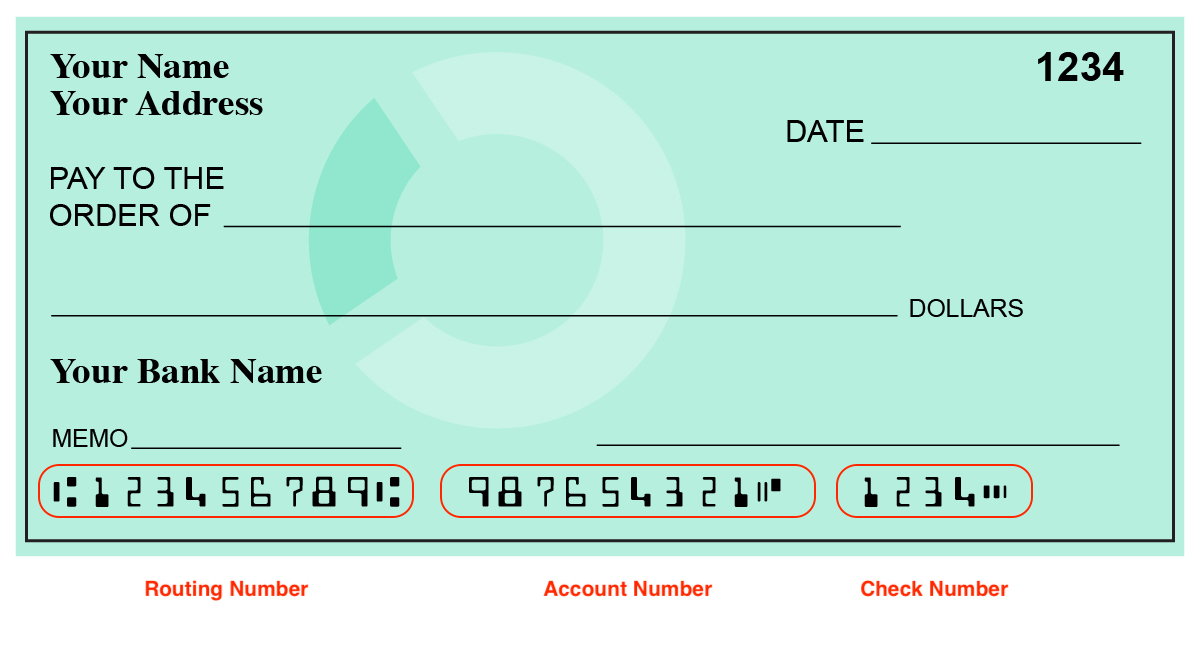
To the untrained eye, the string of numbers at the bottom of a check may look like a random assortment of digits and strange symbols. However, this line—known as the Magnetic Ink Character Recognition (MICR) line—is precision-engineered for high-speed processing by bank scanners. Each segment of the MICR line carries specific metadata about your account and your bank.
The Routing Number: The Nine-Digit Identifier
On almost every standard personal and business check, the routing number is located at the bottom-left corner. It is always exactly nine digits long and is typically flanked by a specific symbol known as a “transit” character, which looks like a vertical bar with two squares.
The nine digits are not arbitrary. They follow a specific formula established by the American Bankers Association (ABA):
-
The First Two Digits: These represent the Federal Reserve district where the bank is located.
-
The Third Digit: This indicates the Federal Reserve check processing center assigned to the bank.
-
The Fourth Digit: This signifies the specific state where the bank is headquartered.
-
The Next Four Digits: These represent the unique identifier for the financial institution itself.
-
The Ninth Digit: This is a “checksum” digit, a mathematical safeguard used to verify that the preceding eight digits were scanned correctly.
Distinguishing Between Account and Check Numbers
Confusion often arises because the routing number is situated right next to the account number. On most checks, the sequence follows this order from left to right: Routing Number, Account Number, and finally, the Check Number.
The account number is unique to you and identifies your specific checking or savings vessel within the bank. It varies in length depending on the institution. The check number is the shortest string of digits and matches the number printed in the top-right corner of the document. By understanding this tripartite structure, you can ensure that you never accidentally provide a check number when a routing number is required.
The Role of Routing Numbers in Money Management
While the routing number is printed on a physical piece of paper, its utility extends far into the digital realm. In the context of personal finance and business operations, the routing number is the “routing slip” for your electronic money.
Facilitating Direct Deposits and ACH Transfers
One of the most common reasons you will need to find your routing number is to facilitate a direct deposit. When you provide your employer or the government with your routing and account numbers, you are essentially creating a digital bridge.
The ACH network uses these numbers to batch-process transactions. For individuals, this means faster access to wages. For those involved in side hustles or online income streams, providing accurate routing information is the difference between getting paid on time and dealing with a weeks-long “returned item” headache. In business finance, ACH transfers are preferred over wire transfers for recurring payments like utility bills or vendor invoices because they are generally lower in cost.
Wire Transfers vs. Local Transfers
It is a common misconception that a bank has only one routing number. Many large national banks utilize different routing numbers depending on the type of transaction or the geographical region where the account was opened.

For instance, a “paper” routing number (found on your check) is typically used for ACH transactions and electronic bill pay. However, if you are sending or receiving a domestic wire transfer, your bank might require a specific “Wire Routing Number.” While these are often the same, it is crucial to verify this through your bank’s financial tools or customer service portal before initiating a high-value transfer. Using the wrong number for a wire can result in significant delays and potential fees.
Finding Your Routing Number Without a Physical Check
We are living in an increasingly paperless society. Many modern banking customers choose “checkless” accounts or simply never order a book of checks. If you find yourself in need of a routing number but lack a physical checkbook, there are several reliable financial tools at your disposal.
Utilizing Online Banking and Mobile Apps
The most efficient way to find your routing number in the digital age is through your bank’s secure portal. Most mobile apps have a section labeled “Account Details” or “Account Info.” Within these menus, you will typically find both your full account number and your routing number clearly displayed.
Many banks now offer a “Digital Check” or a “Direct Deposit Form” feature. This generates a PDF that mimics the look of a voided check, clearly showing the MICR line with the routing number. This is an excellent resource for personal branding in a professional context—such as when a freelance consultant needs to provide professional-looking payment instructions to a corporate client.
Official Bank Websites and Statements
If you cannot log in to your app, most banks list their routing numbers on their public-facing websites. Since routing numbers are public information (they identify the bank, not the person), you can often find them by searching “Routing Number for [Bank Name] in [State].”
Furthermore, your monthly bank statement—whether received by mail or as an e-statement—will almost always list the routing number near the top of the first page or within the account summary section. This serves as a verified document for your financial records.
Security Protocols and Financial Integrity
While the routing number itself is not a secret, it is a critical piece of the puzzle that, when combined with your account number, allows for the movement of funds. Therefore, managing this information requires a balance of transparency and caution.
Safe Sharing Practices
You should only provide your routing and account numbers to trusted entities. This includes your employer’s HR department, government agencies (like the IRS for tax refunds), and reputable utility or insurance companies.
Be wary of any request for these numbers that comes through unsolicited emails or text messages. Phishing scams often masquerade as “bank verification” requests to gain access to your MICR data. In the world of business finance, it is standard practice to provide a “voided check” to verify your banking details. When doing this, ensure you write “VOID” in large letters across the front to prevent the check from being processed, while still leaving the routing and account numbers legible for the recipient.
Monitoring for Unauthorized Transfers
Understanding your routing number also means understanding how your money moves. By regularly reviewing your transaction history, you can spot unauthorized ACH pulls. If you see a transaction that you didn’t authorize, the first thing the bank will investigate is how the routing and account numbers were used to initiate the transfer. Being proactive in your financial monitoring is the best defense against the misuse of your banking identifiers.
The Evolution of the Routing System
The ABA routing number system was developed in 1910, a testament to its enduring design. However, as we look toward the future of money, the way we use these numbers is evolving. With the rise of “Real-Time Payments” (RTP) and the Federal Reserve’s “FedNow” service, the reliance on traditional ACH batches is shifting.
Even in these high-speed environments, the routing number remains the foundational “ID” for the financial institution. Whether you are a seasoned investor managing multiple business accounts or an individual just starting their personal finance journey, knowing how to find and use your routing number is an essential skill. It is the bridge between the physical history of banking and the high-tech future of global finance. By mastering this simple nine-digit code, you gain greater control over your financial workflow, ensuring that every dollar you earn or spend moves with precision and security.
aViewFromTheCave is a participant in the Amazon Services LLC Associates Program, an affiliate advertising program designed to provide a means for sites to earn advertising fees by advertising and linking to Amazon.com. Amazon, the Amazon logo, AmazonSupply, and the AmazonSupply logo are trademarks of Amazon.com, Inc. or its affiliates. As an Amazon Associate we earn affiliate commissions from qualifying purchases.