
In the intricate landscape of modern finance, your bank account number serves as a unique identifier—a digital fingerprint that distinguishes your financial assets from billions of others. Far more than just a sequence of digits, this number is a cornerstone of personal and business financial operations, essential for everything from receiving your paycheck to setting up automated bill payments. While often overlooked until urgently needed, knowing how to quickly and securely locate your bank account number is a fundamental aspect of financial literacy and responsible money management.
This guide delves into the various reliable methods available to find your bank account number, clarifies its distinction from other important banking figures like the routing number, and underscores the critical importance of safeguarding this sensitive information. Whether you’re a seasoned entrepreneur managing complex financial flows or an individual navigating your daily personal finances, understanding these pathways will empower you to manage your money more efficiently and securely.
Why Your Bank Account Number Matters in Financial Management
Your bank account number isn’t just a random string; it’s a vital piece of information that enables a vast array of financial activities. Its importance extends across personal finance, business operations, and the secure movement of money within the broader financial ecosystem. Without it, many routine and essential transactions would simply be impossible.
Facilitating Essential Transactions
At its core, your bank account number acts as the specific destination address for money entering or leaving your account. This is crucial for a multitude of transactions that form the backbone of modern financial life. For individuals, it’s indispensable for setting up direct deposit for paychecks, government benefits, or tax refunds, ensuring that funds arrive securely and automatically in your account without the need for physical checks. Similarly, automating bill payments for utilities, rent, or loan repayments relies heavily on providing your account number to merchants or service providers. This automation not only saves time but also helps prevent late fees and maintains a good credit history. For larger, one-off transfers, such as sending or receiving funds internationally via wire transfer, your account number is absolutely mandatory to correctly identify the recipient’s specific account. Moreover, linking external financial accounts, like investment platforms, peer-to-peer payment apps, or budgeting software, often requires your bank account number to establish secure and seamless fund transfers.
Security and Verification
While it’s important to protect your bank account number, it also plays a role in verifying your identity and securing your financial dealings. When you contact your bank by phone or in person, they will frequently ask for parts of your account number, along with other personal details, to confirm your identity before discussing sensitive information or authorizing transactions. This multi-factor verification process helps prevent unauthorized access to your funds. In certain regulated scenarios, especially those involving significant financial movements or legal processes, your bank account number serves as a key piece of documentation to confirm ownership and legitimacy. It acts as a reference point for auditing and tracing transactions, providing an essential trail for financial compliance and dispute resolution. However, it’s a delicate balance: while needed for verification, its standalone exposure must be minimized to prevent misuse.
Business Operations and Payroll
For business owners, the bank account number transcends personal convenience to become a fundamental operational necessity. Businesses use their primary checking accounts to receive payments from customers, process credit card transactions, and manage incoming revenue streams. Accurately providing this number to clients and payment processors ensures that funds are deposited correctly and without delay. More significantly, it’s critical for managing payroll. Every employee’s direct deposit setup requires the business’s bank account number, often in conjunction with a routing number, to disburse salaries and wages efficiently. Beyond payroll, businesses rely on their account number for tax payments, vendor payments, and managing lines of credit or loans. Accurate financial record-keeping, a cornerstone of successful business management, begins with precise identification of accounts via their unique numbers. Any error in providing or recording these numbers can lead to significant delays, financial discrepancies, and operational headaches, underscoring its paramount importance in the business world.
Common Methods to Locate Your Account Number
Fortunately, your bank account number isn’t hidden away in an obscure vault; it’s typically available through several accessible and secure channels. Knowing where to look will save you time and potential frustration when you need it most.
Checking Your Physical Checks
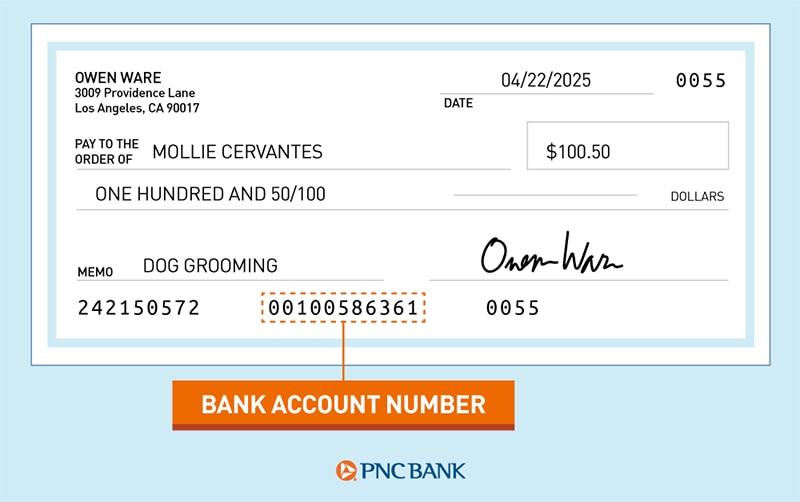
For many, especially those who still use a traditional checkbook, this is the most classic and straightforward method. Look at the bottom of any personalized check from your checking account. You’ll typically see three sets of numbers printed in a special magnetic ink (MICR line). The first set of numbers, usually nine digits, is your bank’s routing number. The second set, positioned either in the middle or to the right of the routing number, is your individual bank account number. This can vary in length, commonly between 10 and 12 digits, but sometimes up to 17. The third set of numbers is the check number itself. Always double-check to ensure you’re identifying the correct sequence for your account number, as the precise order can sometimes vary slightly by bank, though the routing number is almost always first from the left.
Reviewing Bank Statements
Bank statements, whether delivered physically through postal mail or electronically via email, are another reliable source of your account number. On a paper statement, your full bank account number is almost always printed prominently, usually near the top of the statement alongside your name and address, or within the “Account Summary” section. For those who opt for paperless banking, accessing your electronic statements through your bank’s online portal provides the same information. Once logged into your online banking account, navigate to the “Statements” or “eDocuments” section. Select a recent statement (most banks display the full number on recent statements, though older ones might redact parts for security). This method offers a comprehensive overview of your financial activity while also providing the necessary account details.
Utilizing Online Banking Platforms
In the digital age, your bank’s online banking platform or mobile app is often the quickest and most convenient way to find your account number. After logging in securely to your online banking portal or mobile app, navigate to the “Account Summary” or “Account Details” section for the specific account (checking, savings) you need the number for. Many banks will display your full account number directly on this page or require you to click a button like “View Account Details,” “Show Account Number,” or “Print Details” to reveal it. Some platforms might ask for an additional security verification (e.g., a one-time code sent to your phone) before displaying the full number, which is an important security measure. This method not only provides immediate access but also reflects the most current information, especially if your account number has changed for any reason.
Contacting Your Bank Directly
If you’ve exhausted other methods or prefer a direct conversation, contacting your bank’s customer service is always an option. You can call their dedicated support line, which is usually found on the back of your debit card, on your bank’s official website, or on a recent bank statement. When you call, be prepared to answer several security questions to verify your identity. These typically include your full name, address, date of birth, Social Security Number (or Tax ID for businesses), and possibly answers to security questions you’ve set up. Alternatively, you can visit a local branch in person. Bring a valid government-issued photo ID (like a driver’s license or passport) and possibly another form of identification. The bank teller will be able to look up your account number and provide it to you after verifying your identity through their internal systems. Both phone and in-person inquiries are secure methods, but they require you to have personal identification information readily available.
Understanding Your Account Number vs. Routing Number
While both your account number and routing number are critical for processing financial transactions, they serve distinct purposes and identify different entities within the banking system. Confusing the two can lead to significant delays or errors in money transfers, underscoring the importance of understanding each.

The Routing Number Explained
The routing number, also known as the ABA (American Bankers Association) routing transit number, is a nine-digit code that identifies your financial institution within the U.S. banking system. Think of it as the “street address” for your bank. When you make a transaction, especially one involving a transfer of funds between different banks (like direct deposit or an electronic bill payment), the routing number tells other financial institutions which bank the money needs to go to. It’s the first set of numbers on the bottom left of your checks and is typically consistent across all accounts at the same bank, although some larger banks might have different routing numbers for different regions or types of accounts. Its primary purpose is to facilitate inter-bank transfers and ensure that funds arrive at the correct financial institution before being directed to a specific account.
The Account Number’s Specific Role
In contrast to the routing number, your account number is your unique identifier within your specific bank. If the routing number is the “street address” of the bank, your account number is your individual “apartment number” within that building. It specifies precisely which account at that bank (your checking, savings, money market, etc.) the transaction should affect. As discussed, this number varies in length, typically from 10 to 17 digits, and is unique to your specific account. Its role is to pinpoint your individual financial holdings once the funds have reached the correct bank identified by the routing number. Without a correct account number, even if the routing number is accurate, the funds cannot be credited to your specific account and may be returned or held in suspense.
Why Both Are Crucial Together
For most electronic fund transfers (EFTs), such as direct deposits, automated bill payments, wire transfers, and ACH (Automated Clearing House) transactions, both your routing number and account number are absolutely essential and must be provided together. They function as a complete address for your money. The routing number ensures the funds are directed to the correct bank, and then the account number ensures they land in your specific account within that bank. Imagine sending a letter: the routing number is like the city and state, ensuring it reaches the correct postal region, while the account number is the street name, house number, and apartment number, ensuring it reaches the exact recipient. Any mismatch or error in either number can lead to transactions failing, funds being misdirected (and potentially difficult to recover), or significant delays in processing. Therefore, always verify both numbers carefully when setting up any financial transaction to ensure smooth and accurate money movement.
Best Practices for Managing Your Financial Information Securely
While knowing how to find your bank account number is vital for financial management, equally important is understanding how to protect this sensitive information. Your bank account number, especially when combined with other personal details, can be a gateway for fraud if it falls into the wrong hands.
Protecting Your Account Details
The first rule of financial security is to treat your bank account number, along with your routing number, like sensitive personal data – because it is. Avoid sharing these numbers unnecessarily. Only provide them to trusted entities (e.g., your employer for direct deposit, legitimate bill pay services, or financial institutions you initiate transfers with) and only through secure channels. Be wary of providing your full account number via unsecured email, text messages, or over public Wi-Fi networks. When inputting details online, always ensure the website uses “https://” in the URL and displays a padlock icon, indicating an encrypted connection. Keep physical documents containing your account number, such as checks and statements, in a secure location, and shred them before disposal. Similarly, protect your online banking login credentials with strong, unique passwords and enable multi-factor authentication whenever possible. This adds an extra layer of security, requiring a second form of verification (like a code sent to your phone) beyond just a password.
Regular Monitoring
Proactive monitoring of your bank accounts is a critical defense against financial fraud. Regularly review your bank statements, both physical and electronic, for any unauthorized transactions or discrepancies. Many banks offer real-time transaction alerts via text or email; signing up for these services can help you quickly identify and report suspicious activity. Consider checking your account activity every few days, especially if you have a lot of transactions, rather than waiting for monthly statements. The sooner you detect an issue, the easier it is for your bank to investigate and potentially recover lost funds. Prompt action can limit your liability and mitigate potential damage, as consumer protection laws often have time limits for reporting fraud.
When to Be Cautious
Vigilance is key to preventing financial fraud. Be extremely cautious of unsolicited requests for your bank account number, even if they appear to come from your bank or a familiar organization. Phishing scams are rampant, often using sophisticated tactics to trick individuals into divulging sensitive information. These might come in the form of emails, text messages, or phone calls that look legitimate but contain subtle errors or pressure you to act quickly. Your bank will never ask for your full account number, password, or PIN via email or text message. If you receive such a request, contact your bank directly using a verified phone number (e.g., from their official website or the back of your debit card), not a number provided in the suspicious communication. Similarly, avoid clicking on suspicious links in emails, as these can lead to fake websites designed to steal your login credentials. If something feels off, trust your instincts and err on the side of caution; a moment of skepticism can save you from significant financial loss.
What to Do If You Can’t Find It (Troubleshooting)
Despite the numerous methods available, there might be rare instances where you still struggle to locate your bank account number. If you find yourself in this situation, don’t panic. There’s a systematic approach you can take to resolve the issue.
Re-checking All Available Methods
Before reaching out to your bank directly, perform a thorough re-check of all the methods discussed earlier. Sometimes, in a rush, a detail might be overlooked.
-
Physical Checks: Carefully examine the MICR line on several checks if you have a checkbook. Look for the distinct set of digits that is neither the routing number (usually 9 digits, first on the left) nor the check number (usually last on the right).
-
Bank Statements: Review recent paper statements or systematically browse through your digital statements on your online banking portal or app. Ensure you are looking at the correct account if you have multiple accounts (e.g., checking vs. savings).
-
Online Banking/Mobile App: Log in again and meticulously navigate through the “Account Details,” “Account Summary,” or similar sections. Look for any links or buttons that say “View full account number” or “Show details.” Sometimes, the full number is partially masked and requires an extra click or verification step to reveal.
Ensure you are looking at the correct account type (checking vs. savings), as each will have its own unique account number. A calm and methodical review often reveals the information you’re seeking.
Preparing for Bank Contact
If all self-service methods fail, contacting your bank directly is the next step. To ensure a smooth and efficient process, it’s wise to be prepared with specific information. When you call their customer service line or visit a branch, the bank will need to rigorously verify your identity for security purposes before disclosing sensitive account information. Have the following ready:
-
Government-Issued Photo ID: Such as a driver’s license, passport, or state ID. This is especially crucial for in-person visits.
-
Your Full Legal Name and Address: As registered with the bank.
-
Date of Birth:
-
Social Security Number (SSN) or Tax Identification Number (TIN): Be prepared to provide the full number or the last few digits.
-
Account-Specific Information: This might include the last few transactions on the account, the approximate date the account was opened, or security questions you set up (e.g., mother’s maiden name, pet’s name). The more information you can provide, the faster and smoother the verification process will be.
Being prepared helps the bank confirm your identity quickly and reduces potential frustration or delays in getting the information you need.

Understanding Bank Security Protocols
It’s important to understand why banks are so stringent about providing account numbers, especially over the phone. These rigorous security protocols are in place to protect your money and prevent identity theft and fraud. Banks are mandated by law and industry best practices to verify the identity of anyone requesting sensitive account information. This means that while it might feel cumbersome to answer numerous questions, these steps are a necessary safeguard. Do not get frustrated if a bank representative asks for multiple pieces of personal information; they are simply doing their job to protect your financial interests. Never push them to bypass security protocols, and always be cooperative. If a representative ever seems too eager to give out information without sufficient verification, it should be a red flag, and you should consider escalating your concern. Trustworthy banks prioritize your security above all else.
In conclusion, your bank account number is a foundational element of your personal and business financial identity. Whether for direct deposits, bill payments, or linking financial tools, understanding how to securely locate and protect this number is paramount. By utilizing readily available resources like checks, bank statements, online banking platforms, and direct bank contact, you can easily access this crucial information. Remember the distinct roles of your account and routing numbers, and always practice vigilance in safeguarding your financial data. In the intricate world of money management, knowledge of these basics empowers you to navigate your financial life with confidence and security.
aViewFromTheCave is a participant in the Amazon Services LLC Associates Program, an affiliate advertising program designed to provide a means for sites to earn advertising fees by advertising and linking to Amazon.com. Amazon, the Amazon logo, AmazonSupply, and the AmazonSupply logo are trademarks of Amazon.com, Inc. or its affiliates. As an Amazon Associate we earn affiliate commissions from qualifying purchases.