
Choosing a banking partner is one of the most fundamental decisions in a personal finance journey. As one of the “Big Four” banks in the United States, JPMorgan Chase & Co. is a frequent first choice for many consumers due to its massive branch network, highly-rated mobile app, and comprehensive suite of financial products. However, before walking into a branch or clicking “Open Account” online, it is essential to understand the financial requirements involved.
When asking “how much to open a checking account with Chase,” the answer is often more nuanced than a single dollar amount. While Chase is known for having a $0 minimum opening deposit for many of its most popular accounts, the “cost” of banking there involves understanding monthly service fees, balance requirements, and the strategic movement of your capital.

Initial Deposit Requirements for Chase Checking Accounts
For the vast majority of new customers, the barrier to entry at Chase is remarkably low. Unlike some community banks or specialized investment accounts that may require $500 to $1,000 just to get through the door, Chase has designed its retail products to be accessible.
Chase Total Checking®
This is the flagship product for the bank and the most common choice for everyday consumers. Currently, there is a $0 minimum deposit requirement to open a Chase Total Checking® account. This means you can technically open the account with no money upfront. However, while you can open it with nothing, you must fund the account within a certain timeframe (usually 60 days) to keep it active and to avoid the account being closed for a zero balance.
Chase College Checking℠
Designed for students aged 17 to 24 at the time of account opening, this account also features a $0 minimum opening deposit. It is a strategic tool for young adults to begin building a financial history without the pressure of a large initial investment. The primary benefit here is the lack of a monthly service fee while the student is in school (up to five years), making the “cost” of ownership virtually zero during their education.
Chase Secure Banking℠
For those who may have had challenges with banking history in the past or prefer a “checkless” experience, the Secure Banking account is a low-barrier option. Like the others, it requires $0 to open. It is designed to help users manage their money without the risk of overdraft fees, though it does carry a fixed monthly fee that cannot be waived through a balance requirement alone.
Premium and Relationship Tiers
While the standard accounts require $0 to open, Chase’s higher-tier accounts—such as Chase Sapphire℠ Banking or Chase Private Client—are different. These are not typically “opened” with a specific deposit in the traditional sense, but rather they require a high level of “linked” assets (often $75,000 to $150,000 or more) to maintain the status and avoid significant monthly fees.
Understanding Monthly Fees and the “True Cost” of Banking
While the initial deposit might be $0, the personal finance professional knows that the real cost of a checking account is found in the monthly maintenance fees. Unless you meet specific criteria, Chase will charge a monthly service fee that can erode your savings over time.
The Mechanics of Fee Waivers
The Chase Total Checking® account typically carries a $12 monthly service fee. To make the account effectively “free,” you must meet one of the following requirements during each statement period:
-
Direct Deposits: Have electronic deposits made into the account totaling $500 or more (such as payroll, Social Security, or pension payments).
-
Minimum Daily Balance: Maintain a balance of $1,500 or more at the beginning of each day.
-
Average Beginning Day Balance: Maintain an average beginning day balance of $5,000 or more in any combination of this account and linked qualifying Chase checking, savings, and other balances.
Why the “Minimum Balance” Matters More Than the “Opening Deposit”
From a wealth-management perspective, the $1,500 minimum daily balance requirement is the number you should focus on rather than the $0 opening deposit. If you open an account with $0 and do not have a steady direct deposit of $500, you will find yourself paying $144 per year in fees. In the world of personal finance, this is a significant “negative interest rate” on your capital. Therefore, the strategic recommendation is to ensure you have a plan to meet the waiver requirements before opening the account.
Chase Secure Banking Fee Structure
The Secure Banking account is unique because its $4.95 monthly fee is generally not waivable through a balance or direct deposit. However, it is designed for a specific demographic that prioritizes fee transparency and the total elimination of overdraft fees. For these users, the $4.95 is a predictable cost for financial security.
The Financial Strategy of the Sign-Up Bonus
One cannot discuss opening a Chase account without mentioning the bank’s aggressive acquisition strategy. Chase frequently offers sign-up bonuses ranging from $200 to $300 (and sometimes more) for new checking customers.

How to Qualify for “Free Money”
While it costs $0 to open the account, qualifying for the bonus usually requires a specific financial action. Most commonly, you must:
-
Open the account using a specific promotional link or code.
-
Deposit a qualifying direct deposit within 90 days of enrollment.
-
Keep the account open for at least six months.
If you are strategically managing your cash flow, this bonus can effectively “pay” for the account’s existence for years, or serve as an immediate boost to your emergency fund. This is a classic example of making the banking system work for you rather than the other way around.
Tax Implications
From a personal finance standpoint, it is important to remember that the IRS views bank bonuses as “interest income.” You will receive a 1099-INT form at the end of the year, and you will owe taxes on that $200 or $300 bonus. When calculating the net benefit of opening a Chase account, always factor in your marginal tax rate.
Integrating Chase into Your Financial Ecosystem
Opening a checking account is rarely a standalone event; it is usually the “hub” of your financial life. Once the account is open, the way you use it determines its value.
Digital Security and Tools
Chase provides a suite of tools that add value beyond the basic deposit function. Their “Credit Journey” tool allows for free credit score monitoring, and their mobile app includes “Snapshot” features for budgeting. From a digital security perspective, Chase offers robust encryption, two-factor authentication, and the ability to “lock” your debit card instantly if it is misplaced. These features represent a form of “insurance” for your money that is included in the account’s value proposition.
The Savings Link
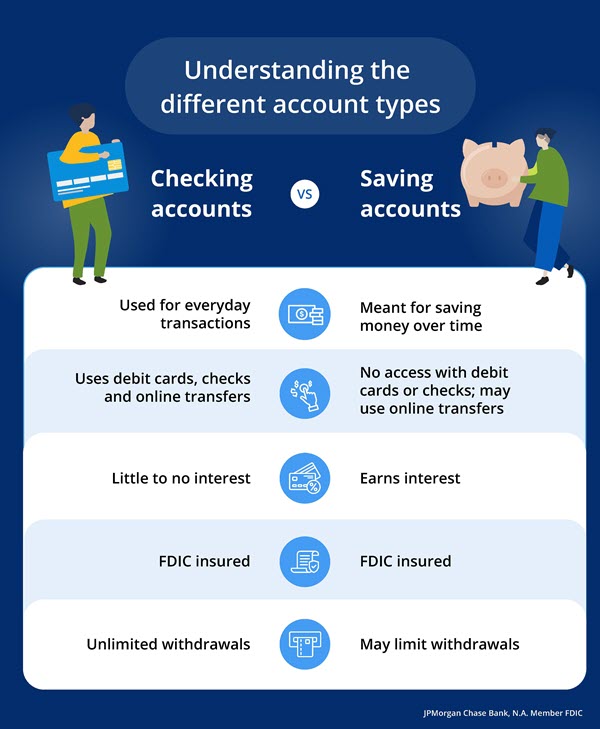
Most consumers who open a Chase checking account also consider a Chase Savings account. Unlike the checking account, the basic Chase Savings℠ account usually requires a $25 minimum opening deposit. It also has its own set of fee-waiver requirements (such as a $300 minimum daily balance). While Chase is excellent for checking and liquidity, savvy investors often note that their savings interest rates (APY) are significantly lower than those offered by online-only high-yield savings accounts (HYSA).
A sophisticated financial strategy might involve using Chase Total Checking for its convenience, ATM access, and branch availability, while sweeping excess cash into a separate high-yield environment to maximize interest earnings.
Step-by-Step: Opening the Account
If you have decided that a Chase account fits your financial profile, the process of opening one is streamlined. You can choose between the digital experience or the traditional in-person visit.
What You Need to Bring
Regardless of the method, you will need to provide:
-
Personal Identification: A Social Security Number or Individual Taxpayer Identification Number.
-
Government-Issued ID: A Driver’s License, State ID, or Passport.
-
Contact Information: Your physical address, email, and phone number.
-
The “How Much”: While you can open with $0, you should have your routing and account numbers from your current bank ready if you wish to perform an initial electronic transfer.
The Online vs. In-Branch Experience
Opening an account online typically takes less than ten minutes. However, if you are looking to open a specialized account like a Chase College Checking account, you may need to provide proof of student status, which can sometimes be easier to handle in person. Additionally, visiting a branch allows you to establish a relationship with a personal banker, which can be beneficial if you plan to apply for a mortgage or a business loan with the bank in the future.
Conclusion: Is a Chase Checking Account Right for You?
The answer to “how much to open a checking account with Chase” is technically $0, but the practical answer depends on your ability to navigate their fee structure.
Chase is an ideal choice for the consumer who values nationwide accessibility, a top-tier mobile experience, and the security of a global institution. However, it requires a level of financial discipline. To get the most value out of a Chase account, you should ensure you can meet the direct deposit or minimum balance requirements to waive the monthly fees.
By strategically timing your account opening with a promotional bonus and integrating the account into a broader financial plan that includes high-yield savings elsewhere, you can turn a simple checking account into a powerful tool for liquidity and wealth management. In the world of finance, it isn’t just about how much it costs to open an account—it’s about how much that account earns for you in the long run.
aViewFromTheCave is a participant in the Amazon Services LLC Associates Program, an affiliate advertising program designed to provide a means for sites to earn advertising fees by advertising and linking to Amazon.com. Amazon, the Amazon logo, AmazonSupply, and the AmazonSupply logo are trademarks of Amazon.com, Inc. or its affiliates. As an Amazon Associate we earn affiliate commissions from qualifying purchases.