
In the intricate world of personal finance, a few numbers hold as much quiet power as your banking routing number. While often overlooked until explicitly required, this nine-digit code is the backbone of countless financial transactions, linking your account to the broader banking system. Whether you’re setting up direct deposit for your paycheck, automating bill payments, or transferring funds, knowing where and how to find this crucial identifier is a fundamental skill for managing your money effectively.
This guide will demystify the banking routing number, explaining its purpose, why it’s indispensable, and most importantly, providing you with a clear roadmap to locate it with ease and confidence. We’ll delve into various methods, from the traditional to the digital, ensuring you’re equipped to handle any situation requiring this vital piece of financial information.

Understanding Your Routing Number: The Basics
Before we dive into the “how-to,” let’s establish a solid understanding of what a routing number is and why it occupies such a central role in your financial life.
What is a Routing Number?
A banking routing number, often referred to as an ABA (American Bankers Association) routing transit number (RTN), is a nine-digit code that identifies your financial institution in the United States. Think of it as your bank’s unique postal code within the national banking network. When money moves electronically from one bank to another, the routing number ensures it lands in the correct bank. Once at the correct bank, your specific account number then directs the funds to your individual account.
It’s critical not to confuse your routing number with your bank account number. While both are essential for transactions, they serve distinct purposes:
-
Routing Number: Identifies which bank the money should go to or come from.
-
Account Number: Identifies which specific account at that bank the money belongs to.
Together, these two numbers form the complete address for electronic funds transfers, ensuring accuracy and security in a system that processes trillions of dollars daily.
Why Do You Need Your Routing Number?
The instances where you’ll need your routing number are far more common than you might initially realize. It underpins many of the convenient financial services we often take for granted.
Here are the primary scenarios where your routing number is indispensable:
-
Direct Deposit: This is perhaps the most frequent use. To have your paycheck, government benefits (like Social Security), or tax refunds deposited directly into your bank account, your employer or the paying agency will require both your routing number and account number.
-
Automatic Bill Payments: Setting up recurring payments for utilities, mortgage, loans, or subscriptions often involves providing your bank’s routing number to link your account for seamless deductions.
-
Electronic Funds Transfers (EFTs): Any electronic movement of money between accounts at different banks, whether initiated by you or a third party, typically relies on the routing number. This includes services like Zelle (though often integrated within bank apps, the underlying mechanism uses these numbers).
-
Wire Transfers (Domestic): While wire transfers sometimes use specific wire routing numbers (which can differ from ACH numbers), the general principle is the same. For domestic wires, your bank’s routing number is a key identifier. For international transfers, a SWIFT/BIC code is used in conjunction with other details.
-
Linking External Accounts and Payment Apps: When you connect your bank account to third-party payment platforms (e.g., PayPal, Venmo, investment apps) or other financial institutions for transfers, you’ll generally be asked for both your routing and account numbers to verify and establish the connection.
-
Ordering New Checks: If you’re ordering new personal checks, especially from a third-party vendor, they will need your bank’s routing number to ensure the checks are properly encoded for your institution.
Understanding these applications underscores why accurately locating your routing number is a fundamental aspect of modern financial literacy.
Where to Easily Locate Your Routing Number
Fortunately, finding your routing number is usually a straightforward process. Banks understand its importance and make it accessible through several common channels.
On Your Checks
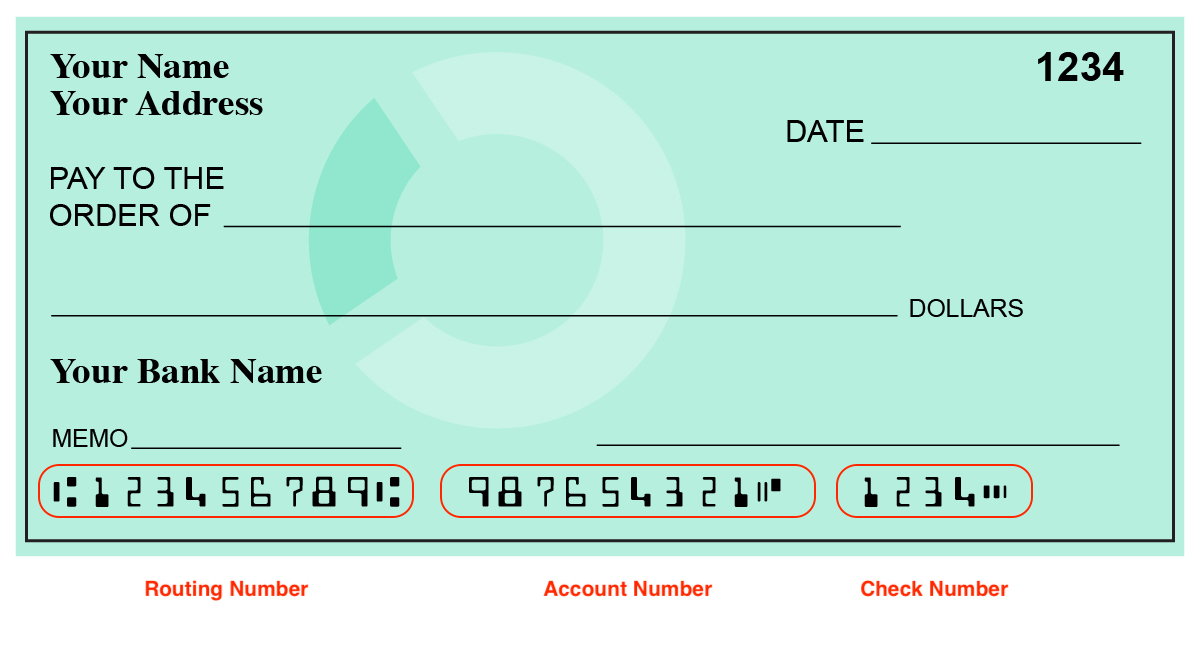
The most traditional and often quickest way to find your routing number is directly on your personal checks. Look at the bottom edge of a physical check. You’ll typically see three sets of numbers, printed in a special magnetic ink:
-
Routing Number: This is almost always the first set of nine digits on the far left.
-
Account Number: This is the middle set of numbers, which varies in length.
-
Check Number: This is the last set of numbers, matching the number at the top right of your check.
Important Note: If you are using starter checks (often given by the bank when you first open an account), these might not always have the correct routing number encoded for electronic payments or direct deposit, as they are sometimes temporary. Always verify with your bank if you’re unsure, especially for critical transactions. Once you receive your personalized checks, the number will be accurate.
Through Your Online Banking Portal or Mobile App
In the digital age, your online banking platform or mobile app is an invaluable resource for managing your finances, and locating your routing number is no exception.
-
Log In Securely: Access your bank’s official website or mobile application using your credentials.
-
Navigate to Account Details: Once logged in, look for a section related to “Account Details,” “Account Summary,” “Information,” or “Statements.” This is usually found by clicking on the specific checking or savings account you need the number for.
-
Locate the Number: Your routing number will typically be displayed clearly alongside your account number and other relevant information. Some banks may have it under a “Direct Deposit Information” or “Wire Transfer Information” tab if it differs for various transaction types.
This method is secure, convenient, and often provides the most accurate routing number for your specific account, as banks are increasingly providing different routing numbers for different transaction types (e.g., ACH vs. wire transfers).
On Your Bank Statements
Whether you receive paper statements in the mail or access e-statements online, your bank statement is another reliable source for your routing number.
-
Paper Statements: Look at the top or bottom of your statement, typically near your account number and other bank identifying information.
-
E-Statements: Access your e-statements through your online banking portal. The information will be presented similarly to a paper statement.
Bank statements provide a historical record and almost always include the routing number associated with the accounts listed.
Contacting Your Bank Directly
If all else fails, or if you simply prefer direct confirmation, contacting your bank’s customer service or visiting a local branch is always a viable option.
-
Customer Service: Call the customer service number typically found on the back of your debit card, on your bank’s official website, or on a bank statement. Be prepared to verify your identity with security questions before they provide sensitive information.
-
Visiting a Branch: A teller at your local branch can quickly look up and confirm your routing number. Remember to bring a valid form of identification.
-
Secure Messaging: Many banks offer a secure messaging system within their online banking portal. You can send a message requesting your routing number, and a bank representative will reply with the information.
When in doubt, direct contact with your bank offers the highest level of assurance regarding the accuracy of the routing number.
Important Considerations and Common Pitfalls
While finding your routing number is generally straightforward, there are nuances that can sometimes lead to confusion. Being aware of these can save you potential headaches.
Routing Numbers Vary by Transaction Type
One of the most common points of confusion is that a single bank may use different routing numbers depending on the type of transaction.
-
ACH (Automated Clearing House) Routing Number: This is the most common type, used for direct deposits, automatic bill payments, and general electronic funds transfers. This is the number you’ll usually find on your checks and in your online banking “Account Details.”
-
Wire Transfer Routing Number: Some banks use a specific routing number for incoming domestic wire transfers, which may differ from their standard ACH routing number. This is because wire transfers are typically faster and involve a different processing network.
-
Checking vs. Savings Account: While less common, some banks might even have slightly different routing numbers for checking versus savings accounts, especially if they are managed by different internal departments or systems.
Always clarify which type of routing number is needed for your specific transaction. If you’re setting up a direct deposit, ask for the “ACH routing number.” If you’re receiving a wire, specifically ask for the “wire transfer routing number.” Providing the wrong type could delay or even reject your transaction.
Multiple Routing Numbers for a Single Bank
Large banks, especially those that have grown through mergers and acquisitions, often operate with multiple routing numbers. This can also happen if a bank has distinct regional operations or processes transactions through different data centers.
For example, a bank that merged with another institution might still process accounts opened before the merger under the acquired bank’s original routing number, even if it now operates under the new bank’s branding.
The key takeaway here is to always use the routing number specifically associated with your individual account and its opening location or branch, rather than a generic routing number you might find online for the bank as a whole. Your checks, online banking portal, and bank statements will reflect the correct one for your account.
Security Best Practices
Your routing number, combined with your account number, grants access to your bank account for transactions. Therefore, protecting this information is paramount.
-
Be Discerning About Sharing: Only share your routing and account numbers with trusted entities that legitimately need them (e.g., your employer, known bill pay services, government agencies).
-
Verify Requests: If you receive an unsolicited email or phone call asking for your banking details, be extremely suspicious. Banks will rarely ask for this information via unencrypted email or over the phone unless you initiated the contact. This is a common tactic for phishing scams.
-
Secure Online Platforms: When entering your banking details online, ensure the website is secure (look for “https://” in the URL and a padlock icon).
-
Shred Old Checks/Statements: When disposing of old checks, statements, or any documents containing your banking information, always shred them to prevent identity theft.
Vigilance in protecting your financial information is a crucial aspect of personal finance security.
What to Do If You Can’t Find It (and Don’t Have Checks)
Even with all the methods listed above, there might be rare instances where you’re struggling to locate your routing number, perhaps because you don’t have physical checks, haven’t set up online banking yet, or your bank’s website isn’t immediately clear.
Using the FDIC’s BankFind Tool (or Similar Online Lookups)
The Federal Deposit Insurance Corporation (FDIC) offers a tool called BankFind, which allows you to search for banking institutions and their primary routing numbers.
-
Visit the FDIC Website: Go to www.fdic.gov and look for their BankFind tool.
-
Search by Bank Name: Enter your bank’s official name.
-
Review Results: The tool will often display the bank’s main routing number.
Important Caveat: While helpful, online lookup tools like BankFind typically provide the bank’s primary or head office routing number. As discussed, this might not always be the specific ACH or wire routing number for your individual account, especially if your bank has multiple numbers. It’s a good starting point, but always verify if you have any doubt.

The Definitive Solution: Contact Your Bank
If you’ve exhausted other options or are simply unsure, the most reliable and definitive way to get your accurate routing number is to directly contact your bank.
-
Call Customer Service: This is the most efficient method if you can’t access online banking or a branch. Have your account details ready for verification.
-
Visit a Local Branch: If feasible, a quick trip to your bank can clear up any confusion and provide you with the exact number you need.
Remember, the bank’s representatives are there to help you manage your accounts. They are the ultimate authority on which routing number is correct for your specific needs.
Knowing how to find your banking routing number is a fundamental financial skill that empowers you to manage your money effectively and securely. From setting up essential direct deposits to facilitating various electronic transactions, this nine-digit code is a cornerstone of modern personal finance. By utilizing your checks, online banking, statements, or direct communication with your bank, you can confidently locate and use your routing number whenever it’s required, ensuring your financial transactions proceed smoothly and without error. Always remember to verify the correct type of routing number needed for each transaction and to protect this sensitive information as diligently as you protect your account number.
aViewFromTheCave is a participant in the Amazon Services LLC Associates Program, an affiliate advertising program designed to provide a means for sites to earn advertising fees by advertising and linking to Amazon.com. Amazon, the Amazon logo, AmazonSupply, and the AmazonSupply logo are trademarks of Amazon.com, Inc. or its affiliates. As an Amazon Associate we earn affiliate commissions from qualifying purchases.