
The question “what year did Costco open?” might seem like a simple query seeking a factual date. However, to a brand strategist, this question unlocks a rich narrative about corporate identity, strategic vision, and the evolution of a retail giant. Understanding the precise origins of a brand like Costco is not merely about historical record-keeping; it’s about dissecting the foundational elements that shaped its unique value proposition, customer loyalty, and enduring market presence. This article delves into the inception of Costco, exploring how its formative years laid the groundwork for one of the most distinctive and powerful brands in modern retail.

The Dual Origins: Tracing Costco’s Foundational Narrative
To truly answer the question of when Costco opened, one must understand that the modern Costco Wholesale Corporation is a product of a significant merger, bringing together two pioneering concepts in warehouse retail. This dual heritage is crucial to grasping the brand’s DNA.
The Birth of Price Club: A Revolutionary Concept in 1976
The earliest precursor to what we now know as Costco was Price Club, founded by Sol Price in San Diego, California. Price Club opened its doors in 1976, marking a pivotal moment in retail history. Sol Price was a visionary, renowned for his innovative approach to business. He had previously founded FedMart, a membership-based discount department store, but Price Club took the concept of bulk sales and membership exclusivity to a new level.
Price Club’s model was revolutionary: cater primarily to businesses, offering products in bulk at significantly reduced prices, accessible only through a paid membership. This B2B focus, combined with the membership fee, created a loyal customer base and a predictable revenue stream that allowed for lower margins on goods. The warehouse format, with minimal frills, further reinforced the perception of value. This initial iteration established several core tenets that would later define the Costco brand: membership exclusivity, high-volume sales, low overheads, and a relentless focus on value for the customer. Price’s philosophy – taking care of employees and customers first, knowing that profits would follow – became an ingrained part of the culture.
The Emergence of Costco Wholesale: A New Player in 1983
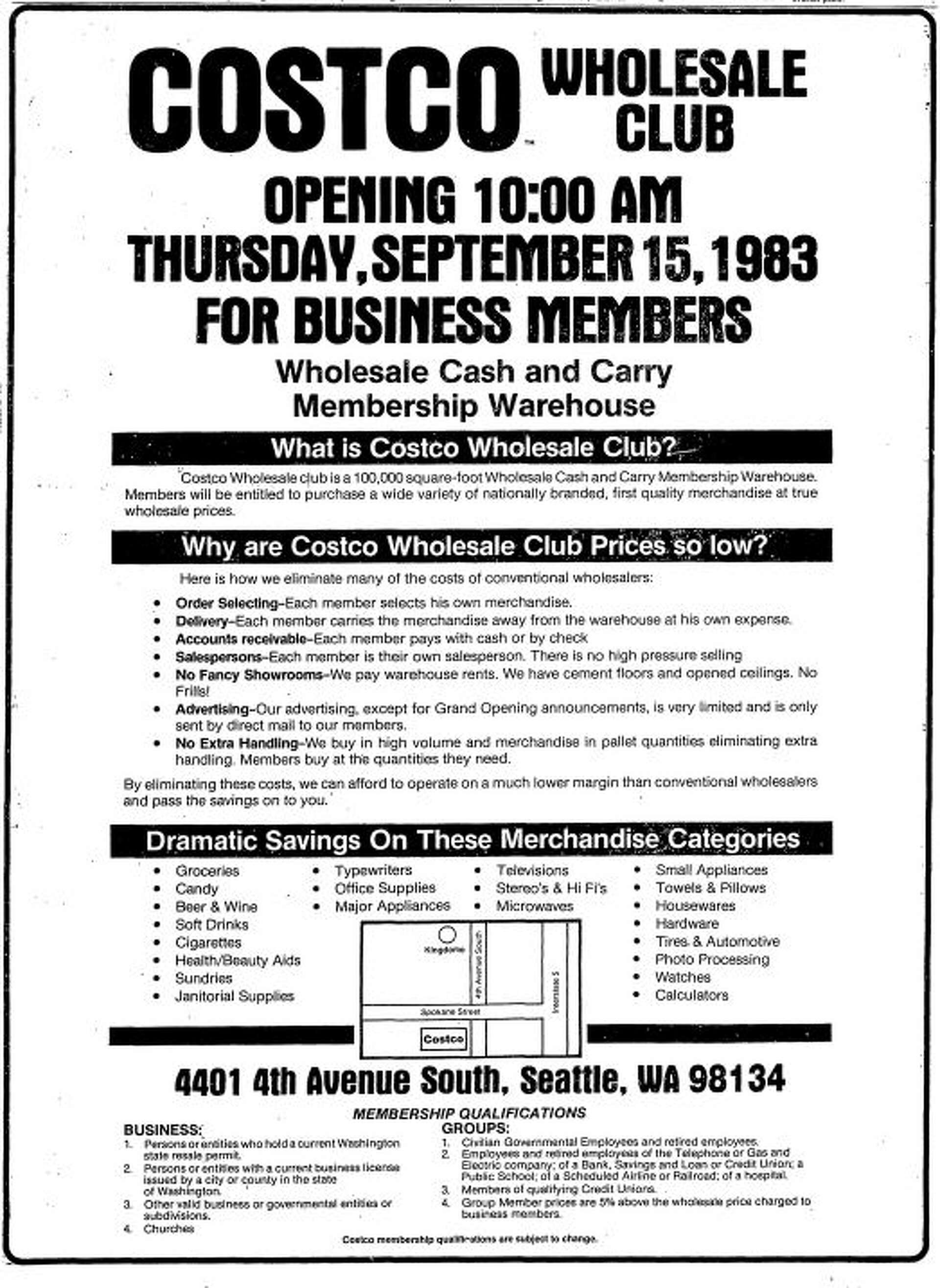
Seven years after Price Club’s inception, Costco Wholesale Corporation was founded by James Sinegal and Jeffrey Brotman, opening its first warehouse in Seattle, Washington, in 1983. Both Sinegal and Brotman brought significant retail experience to the venture. Sinegal, in particular, had worked under Sol Price at FedMart and was deeply influenced by Price’s business philosophy.
Costco Wholesale mirrored many of Price Club’s successful strategies: a no-frills warehouse environment, bulk purchasing, and a membership model. However, Costco, from its outset, placed a stronger emphasis on attracting a broader demographic, including individual consumers in addition to businesses. This subtle shift in target audience, while maintaining the core value proposition, set the stage for its rapid growth and eventual market dominance. The brand promise of Costco was clear: provide high-quality goods at the lowest possible prices, accessible only to members who valued both savings and a curated shopping experience. This period saw the rapid expansion of both Price Club and Costco, setting the stage for an inevitable consolidation in the nascent warehouse club industry.
The Strategic Unification: Forging the Modern Costco Brand in 1993
The independent success of both Price Club and Costco Wholesale created a competitive landscape, yet also highlighted the immense potential of a unified entity. The pivotal moment that truly defined the modern Costco brand arrived with their merger.
The Landmark Merger: Price/Costco, Inc.
In October 1993, Price Club and Costco Wholesale merged, forming Price/Costco, Inc. This merger was not merely a consolidation of two companies; it was a strategic unification of two pioneering brands, combining their strengths, market reach, and operational efficiencies. The decision to merge was driven by several factors: eliminating direct competition, leveraging economies of scale in purchasing and distribution, and consolidating market share to achieve an undeniable leadership position in the burgeoning warehouse club sector.
The integration of the two companies, while presenting challenges, ultimately streamlined operations and allowed the new entity to negotiate better deals with suppliers, further enhancing their competitive pricing advantage. It was a clear demonstration of strategic brand management, understanding that a combined force could achieve greater market impact and brand recognition than two separate, albeit successful, entities.
Evolving the Corporate Identity: The Rebrand to Costco Wholesale Corporation
While initially operating as Price/Costco, Inc., the combined entity eventually streamlined its corporate identity. In 1997, the company officially rebranded to Costco Wholesale Corporation, signifying a complete integration and a unified brand message. This rebranding was a crucial step in solidifying a singular, powerful brand image in the minds of consumers and the market. It marked the definitive end of the separate Price Club identity, fully embracing “Costco” as the singular banner under which all operations would proceed.
This evolution from dual entities to a single, strong brand highlights a crucial aspect of brand strategy: consistency and clarity. By standardizing the brand name, visual identity, and operational procedures under the Costco umbrella, the company was able to build a more cohesive and recognizable brand, simplifying its message and reinforcing its value proposition to a global audience. The legacy of Sol Price and his foundational principles, however, remained deeply embedded in the corporate culture and brand philosophy of the new Costco.
Cultivating a Distinctive Brand Identity: Beyond the Bargain
Costco’s brand strategy extends far beyond offering low prices. Its unique identity is meticulously cultivated through various touchpoints, creating a holistic brand experience that fosters deep customer loyalty.
The Membership Model as a Brand Cornerstone

One of the most defining features of the Costco brand is its membership model. This isn’t just a fee-collection mechanism; it’s a strategic brand element that creates a sense of exclusivity and community. By paying an annual fee, members feel they belong to a select group that gains access to unparalleled value. This psychology of exclusivity encourages deeper engagement and commitment than a typical retail transaction.
The membership model also allows Costco to understand its customer base intimately, enabling targeted product selections and personalized marketing. It reinforces the brand promise: “You pay to join because we deliver value that justifies the fee, and then some.” This commitment from the customer upfront builds a stronger, more stable relationship, turning shoppers into brand advocates.
The Treasure Hunt Experience: Curated Selection as a Brand Differentiator
Costco’s brand isn’t just about bulk; it’s about a carefully curated selection of high-quality goods, often including premium brands and unique, limited-time “treasure hunt” items. This strategy avoids the overwhelming feeling of a typical hypermarket and positions Costco as a destination for discovery. The surprise element of finding an unexpected, high-value item – be it a luxury watch, a gourmet food product, or a cutting-edge gadget – transforms shopping into an engaging experience.
This curated approach strengthens the brand’s perception of quality and discernment. Customers trust that if Costco carries a product, it meets a certain standard. This trust is a powerful brand asset, distinguishing Costco from other discount retailers and fostering a sense of excitement and anticipation with every visit. It reinforces the idea that membership provides access to not just low prices, but also a specially chosen assortment of products you might not find elsewhere.
The Global Brand Journey: Adapting and Expanding
From its humble beginnings in the U.S., Costco has evolved into a formidable global brand, demonstrating remarkable adaptability while staying true to its core values.
Scaling the Brand Globally
Costco’s global expansion is a testament to the universality of its brand proposition: value, quality, and a unique shopping experience. By translating its successful model across diverse cultures and economies, Costco has built a powerful international presence. However, global branding is not a one-size-fits-all approach. While the core tenets remain, Costco intelligently adapts aspects of its product offerings and even store layouts to cater to local tastes and preferences.
For instance, the food court menu might feature local delicacies, and product assortments are tailored to regional demands. This ability to localize while maintaining a consistent brand identity – recognizable logo, membership model, and commitment to value – is a hallmark of strong global brand management. It shows that the brand understands the importance of relevance to local consumers, rather than simply imposing a foreign concept.
Digital Integration: Extending the Brand’s Reach
In an increasingly digital world, Costco has also strategically integrated e-commerce into its brand strategy. While its primary strength remains the in-store experience, Costco.com and its mobile app extend the brand’s reach, offering convenience and supplementary product lines. The digital platform complements the physical stores, allowing members to access a broader range of items and services, including larger appliances or specialty goods not typically found in warehouses.
This digital presence reinforces the brand’s commitment to member value, providing multiple channels for interaction and purchase. It’s not about replacing the unique warehouse experience, but enhancing the overall brand ecosystem, ensuring that Costco remains relevant and accessible in a dynamic retail landscape. The brand message remains consistent: whether online or offline, members receive exceptional value and service.
The Enduring Legacy: How Founding Principles Shape Today’s Brand
The legacy of Costco’s founding year and the visionaries behind it continue to permeate every aspect of its modern brand. The principles established by Sol Price, James Sinegal, and Jeffrey Brotman are not just historical footnotes; they are active components of Costco’s ongoing brand strategy and corporate culture.
Employee-Centric Culture: A Pillar of Brand Strength
A cornerstone of the Costco brand, inherited from its founders, is its commitment to its employees. Costco is renowned for offering competitive wages, robust benefits, and fostering a positive work environment. This isn’t merely good corporate citizenship; it’s a shrewd brand strategy. Well-compensated and respected employees are more engaged, more knowledgeable, and more likely to provide excellent customer service.
This internal brand strength translates directly to external brand perception. Customers often commend the helpfulness and friendliness of Costco staff, which reinforces the brand’s image as a reliable and trustworthy entity. An employee-centric culture creates brand ambassadors out of the workforce, ensuring that the brand promise of quality and service is delivered consistently at every touchpoint. This commitment differentiates Costco from many retailers known for high turnover and low employee morale.
Customer-First Approach: The Perpetual Brand Promise
At its heart, the Costco brand is built on an unwavering customer-first philosophy. This is evident in its generous return policy, its rigorous quality control, and its dedication to keeping prices low even at the expense of higher short-term profits. The brand understands that long-term customer loyalty is its most valuable asset.
This dedication to the customer is the ultimate answer to why Costco has thrived since its initial opening years. The brand doesn’t just sell products; it sells trust, value, and a consistently positive shopping experience. Every decision, from product sourcing to warehouse layout, is filtered through the lens of what benefits the member. This perpetual brand promise, rooted in the foundational years of Price Club and Costco Wholesale, ensures that the brand continues to resonate deeply with millions of members worldwide, cementing its status as an iconic and enduring retail giant. The question of “what year did Costco open?” therefore, leads us not just to a date, but to the enduring principles that have shaped a brand synonymous with trust, value, and customer loyalty for decades.
aViewFromTheCave is a participant in the Amazon Services LLC Associates Program, an affiliate advertising program designed to provide a means for sites to earn advertising fees by advertising and linking to Amazon.com. Amazon, the Amazon logo, AmazonSupply, and the AmazonSupply logo are trademarks of Amazon.com, Inc. or its affiliates. As an Amazon Associate we earn affiliate commissions from qualifying purchases.