
The question “what company owns Costco?” is one frequently posed by curious consumers and business enthusiasts alike. In an era dominated by corporate conglomerates and intricate ownership structures, understanding the parentage of a beloved brand like Costco Wholesale Corporation offers profound insights into its operational philosophy, brand strategy, and unique market positioning. Rather than being a subsidiary of a larger holding company, Costco operates with a distinct corporate identity that has allowed it to forge an iconic brand recognized for its unwavering commitment to value, quality, and an inimitable shopping experience.

This deep dive will explore how Costco’s ownership structure directly shapes its powerful brand, from its strategic decisions to its renowned private label, Kirkland Signature, and its unparalleled customer loyalty. It’s a compelling case study in how corporate identity, when managed with foresight and integrity, can become an indelible part of a brand’s success.
Demystifying Corporate Ownership: The Costco Case Study
In an interconnected global economy, the lines of ownership can often be complex, with many iconic brands nested under vast corporate umbrellas. However, Costco’s story offers a refreshing counter-narrative, illustrating how a focused and independent corporate structure can be a cornerstone of brand strength.
The Publicly Traded Reality: Beyond a Single Parent Company
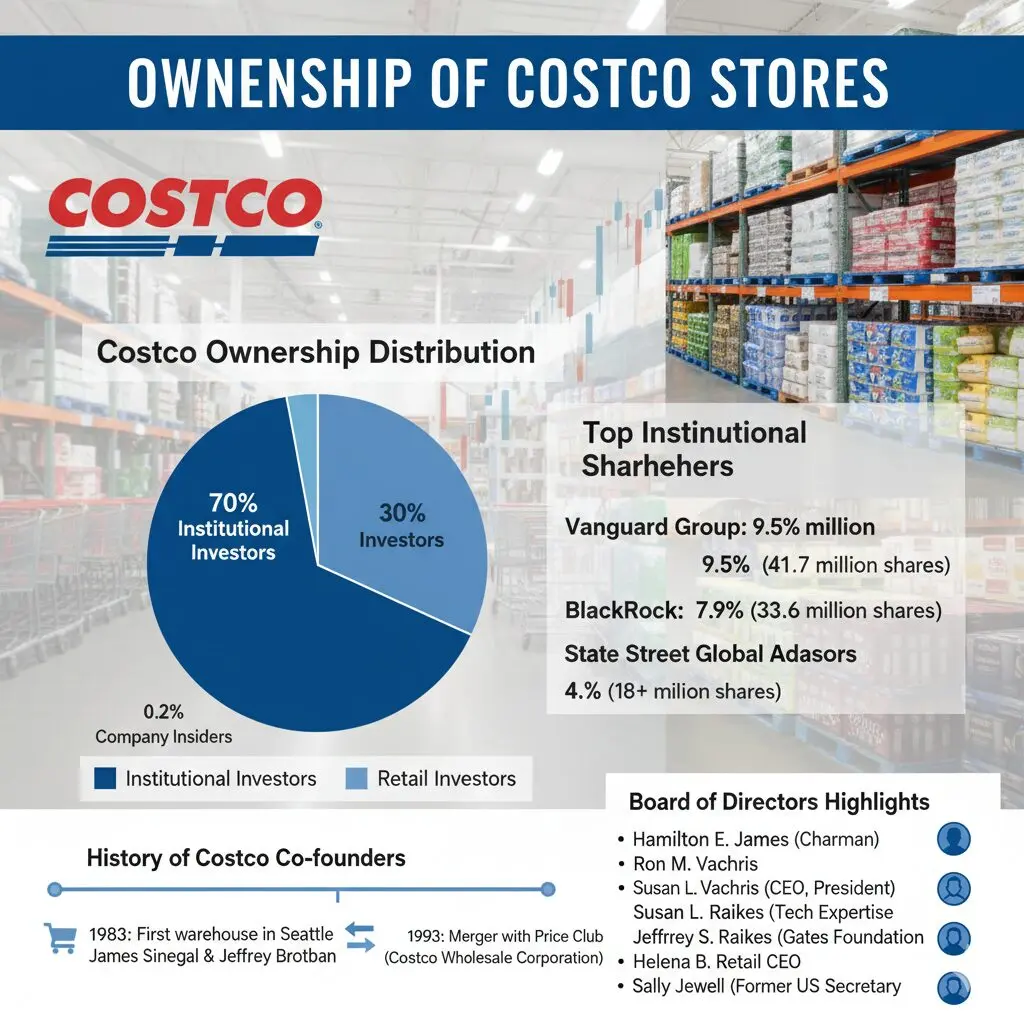
To accurately answer the question, “what company owns Costco?”, one must understand the nature of a publicly traded corporation. Costco Wholesale Corporation (NASDAQ: COST) is not owned by a single, overarching parent company in the traditional sense. Instead, it is a publicly traded entity, which means it is owned by its shareholders. These shareholders can range from individual investors and employees to large institutional investors, mutual funds, and pension funds. Each share represents a small fraction of ownership in the company.
This distributed ownership model is fundamental to Costco’s corporate identity. Decisions are made by a Board of Directors, elected by the shareholders, and executed by a management team, all with a fiduciary responsibility to maximize shareholder value while upholding the company’s long-term vision. This structure grants Costco a significant degree of autonomy in shaping its brand strategy, unlike a subsidiary that might be constrained by the dictates of a parent corporation’s broader portfolio. The brand’s independence allows for a direct, unfiltered connection between its strategic objectives and its brand presentation to the consumer.
Tracing the Genesis: From Price Club to Costco Wholesale Corporation
The origins of the modern Costco brand trace back to two pioneering retail concepts: Price Club, founded by Sol Price in San Diego in 1976, and Costco Wholesale Corporation, founded by James Sinegal and Jeffrey Brotman in Seattle in 1983. Both companies rapidly grew by offering bulk goods at low prices to members. The pivotal moment in Costco’s corporate identity came in 1993 when these two successful warehouse clubs merged, forming Price/Costco Inc., which later rebranded to Costco Wholesale Corporation in 1997.
This merger was not a takeover by an external entity but a synergistic union of two like-minded businesses, solidifying an independent corporate entity with a clear vision. This independent genesis laid the groundwork for a brand that would prioritize its unique membership model and cost-efficiency, rather than being assimilated into a larger, diverse corporate portfolio. The brand’s history is one of self-determination, which subtly but powerfully communicates an authentic identity to its customer base.
The Brand Identity Forged by Ownership Structure
Costco’s corporate structure as an independent, publicly traded entity is not merely an administrative detail; it is a foundational element that underpins its entire brand identity and market appeal. This autonomy allows the company to craft a brand narrative that is cohesive, consistent, and deeply ingrained in its operational choices.
Autonomy in Brand Strategy: The Power of Independent Direction
Without the need to conform to a parent company’s diverse brand portfolio or overarching corporate strategy, Costco enjoys unparalleled autonomy in defining and executing its brand strategy. This independence empowers its leadership to focus singularly on its core mission: providing high-quality goods and services at the lowest possible prices to its members. Every strategic decision, from store layout and product selection to supply chain management and employee compensation, is made with the Costco brand and its member base at the forefront.
This results in a consistent brand experience across all touchpoints. There’s no dilution of brand message, no conflicting corporate interests to reconcile. The brand values – efficiency, value, quality, and member satisfaction – are not just marketing slogans; they are operational imperatives directly stemming from a self-governed entity’s commitment to its unique business model. This clarity in direction resonates deeply with consumers who appreciate a brand that knows exactly what it stands for and delivers on its promises without compromise.
Kirkland Signature: A Masterclass in Private Label Branding
Perhaps one of the most compelling manifestations of Costco’s independent corporate identity is the extraordinary success of its private label, Kirkland Signature. Launched in 1995, Kirkland Signature is not just another house brand; it is a brand within a brand, meticulously developed and curated by Costco itself. Because Costco is not owned by an external conglomerate, it has the freedom and incentive to invest heavily in the quality and perception of its own label, making it a direct reflection of the Costco brand’s promise.
Costco’s direct ownership allows it to leverage its immense purchasing power and rigorous quality control to produce Kirkland Signature products that often rival or exceed national brands in quality, yet are sold at significantly lower prices. This strategy directly reinforces the core Costco brand values of “quality and value,” building an immense amount of trust with its members. When a customer buys a Kirkland Signature product, they are implicitly trusting the Costco brand itself, knowing that the company stands behind the product’s quality. This vertical integration of brand and product, made possible by its independent ownership, is a masterclass in how a private label can become a powerful brand asset, distinguishing Costco in a crowded retail landscape.
Cultivating Customer Loyalty Through Corporate Identity
Costco’s strong brand identity, cultivated through its unique ownership structure, directly translates into exceptional customer loyalty. The company’s unwavering focus on its members is not just a marketing tactic; it is embedded in its corporate DNA, forming the bedrock of its brand relationship with consumers.
The Membership Model as a Brand Cornerstone
The membership model is arguably the most defining characteristic of the Costco brand. Far from being a mere entry fee, the annual membership acts as a psychological and practical differentiator, fostering a sense of belonging and exclusivity. Members aren’t just customers; they are, in a sense, stakeholders in the Costco experience. This model, carefully nurtured by an independently run corporation, allows Costco to offer exceptional value by ensuring a consistent revenue stream and reducing marketing costs typically associated with acquiring new customers.
From a brand perspective, the membership reinforces trust and commitment. Members pay upfront for the privilege to shop, signaling a belief in Costco’s ability to deliver consistent value. In return, Costco reinforces this trust through its high-quality offerings, generous return policy, and commitment to competitive pricing. This reciprocal relationship, managed by an independent corporate entity focused solely on its members’ interests, transforms a transactional experience into a long-term, loyal brand affiliation. It’s a brand strategy that turns customers into a community, creating a powerful, self-reinforcing loyalty loop.
Transparency, Trust, and the Ethical Brand
As a publicly traded company, Costco operates under significant scrutiny regarding its financial performance, corporate governance, and ethical practices. This inherent transparency, mandated by regulatory bodies, ironically strengthens its brand. Costco has built a strong reputation for ethical business practices, including fair treatment of employees, sustainable sourcing, and community involvement. These practices are not just good corporate citizenship; they are vital components of its brand identity.
Consumers increasingly gravitate towards brands they perceive as trustworthy and responsible. Costco’s history of prioritizing employee wages and benefits, even at the expense of short-term profits, is a testament to a corporate philosophy that views people as assets, not just expenses. This approach, stemming from its independent board and management, resonates deeply with members, who often see Costco as a more ethical alternative to other big-box retailers. This builds a powerful layer of emotional connection and trust, solidifying the brand’s position as a reliable and principled entity in the minds of its loyal customer base.
Navigating Market Dynamics: The Enduring Brand of Costco
In a rapidly evolving retail landscape, maintaining a strong brand identity requires continuous adaptation while staying true to core values. Costco’s independent ownership structure provides the agility and long-term vision necessary to navigate market dynamics successfully, ensuring the enduring appeal of its brand.
Adaptability and Strategic Positioning in a Competitive Landscape
Costco’s corporate independence allows its leadership to pursue long-term strategic positioning without the immediate pressures that might be imposed by a more diversified parent company. This autonomy enables the brand to make decisions that might not yield immediate quarterly gains but are crucial for its sustained relevance and growth. For instance, Costco has been deliberate in its approach to e-commerce, choosing to integrate it thoughtfully rather than rushing into it at the expense of its core in-warehouse experience. This cautious yet strategic adaptation showcases a brand that understands its unique value proposition and is not swayed by every passing trend.
The brand’s ability to strategically position itself, emphasizing the “treasure hunt” experience and the value of bulk purchasing, stems from a clear, self-directed corporate vision. It doesn’t need to align with a digital-first parent’s mandate or diversify into unrelated product lines to meet a conglomerate’s overall growth targets. Instead, it can focus on perfecting its existing model and selectively innovating where it adds tangible value to its members, reinforcing its unique brand promise.
Future-Proofing the “Treasure Hunt” Experience and Beyond
The “treasure hunt” experience – the constantly rotating selection of unique and high-quality items – is a hallmark of the Costco brand. This element of discovery, combined with the consistent value of staple goods, creates an engaging shopping environment that encourages repeat visits. The independent ownership allows Costco to experiment with product offerings and store layouts, maintaining this dynamic appeal. Its ability to source globally and negotiate directly with manufacturers, free from external corporate purchasing directives, is crucial to sustaining this unique brand facet.
Looking ahead, the Costco brand will continue to evolve, adapting to new consumer preferences and technological advancements while staying true to its core identity. Its strength lies in its clear, self-defined corporate identity, which fosters an environment where innovation serves the brand’s fundamental promise. The absence of a “parent company” allows Costco to be the master of its own destiny, ensuring that the brand remains a formidable force in retail, consistently delivering value and an unparalleled shopping experience to its loyal global membership. In essence, Costco is owned by its shareholders, but its brand is owned by its unwavering commitment to its unique corporate identity and its members.
aViewFromTheCave is a participant in the Amazon Services LLC Associates Program, an affiliate advertising program designed to provide a means for sites to earn advertising fees by advertising and linking to Amazon.com. Amazon, the Amazon logo, AmazonSupply, and the AmazonSupply logo are trademarks of Amazon.com, Inc. or its affiliates. As an Amazon Associate we earn affiliate commissions from qualifying purchases.