
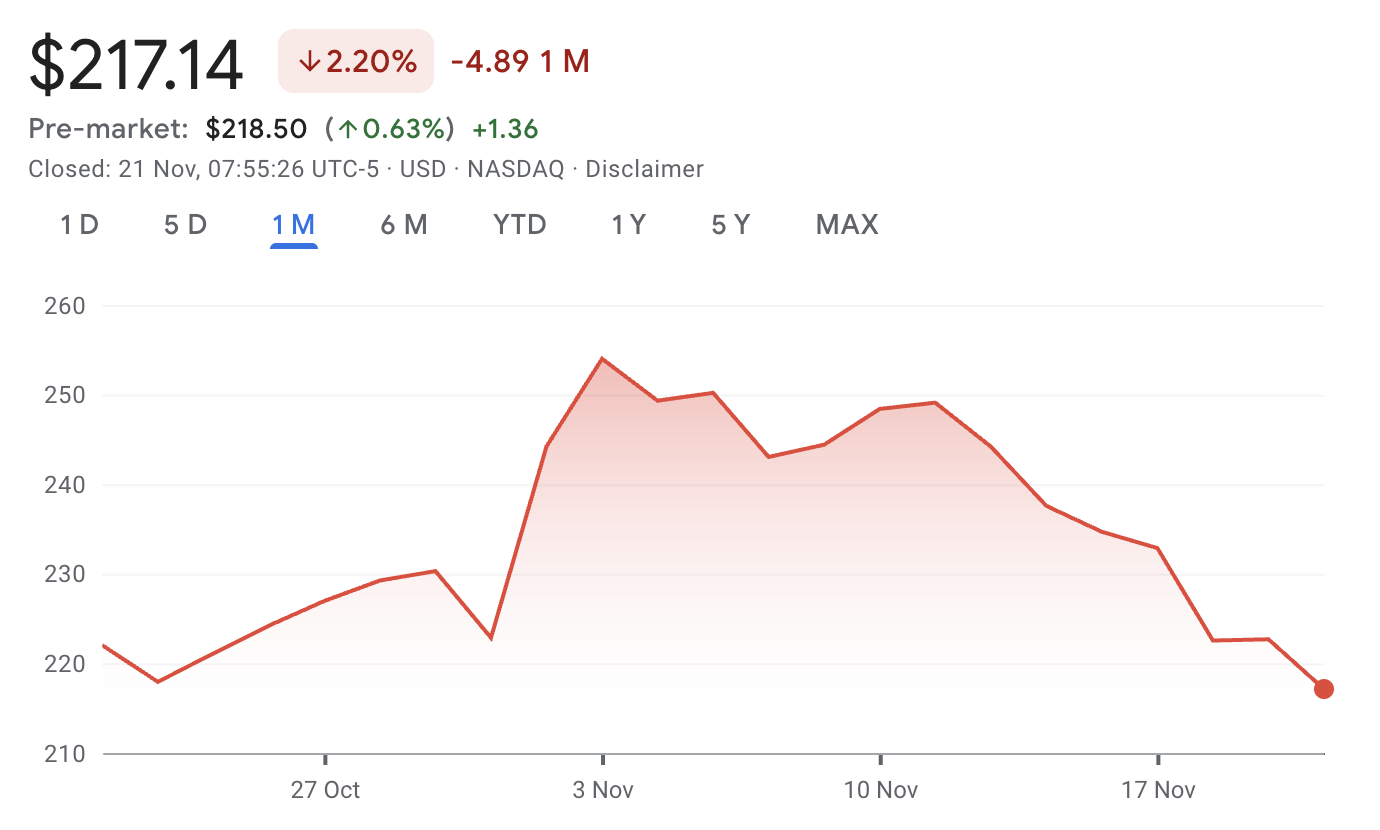
Amazon.com, Inc. (AMZN) has long been a cornerstone of the modern investment portfolio. As a dominant member of the “Magnificent Seven,” it has historically commanded a premium valuation due to its dual-engine growth: a global e-commerce monopoly and a high-margin cloud computing powerhouse. However, even market titans are not immune to volatility. When Amazon’s stock experiences a downward trend, it often sends ripples through the broader indices, prompting investors to ask: what has changed?
To understand why Amazon stock is down, one must look past the consumer-facing website and delve into the intricate financial mechanics of the company. The current pressure on the stock price is rarely the result of a single factor but rather a convergence of decelerating cloud growth, tightening retail margins, and a macroeconomic environment that is increasingly hostile to high-valuation growth stocks.
1. The Deceleration of Amazon Web Services (AWS)
For years, Amazon Web Services (AWS) has been the primary driver of the company’s operating income. While the retail division often operates on razor-thin margins, AWS has historically provided the cash flow necessary to fund Amazon’s aggressive expansions. When AWS shows signs of slowing, investors react swiftly.
The Shift in Cloud Market Share and Competition
The cloud infrastructure market is no longer a one-horse race. While AWS remains the market leader, it faces intensifying competition from Microsoft Azure and Google Cloud. These competitors have made significant strides in enterprise integration, often leveraging their existing software ecosystems to lure clients away from Amazon. As the market matures, the “easy growth” phase of cloud migration has concluded. Enterprises are now more discerning, and the pricing power that AWS once enjoyed is being tested by a more competitive landscape.
Corporate Spending Pullbacks and Cost Optimization
In an era of economic uncertainty, many corporations have shifted from a “growth at all costs” mindset to “cost optimization.” This has directly impacted AWS’s revenue. Instead of scaling up their cloud usage, many large-scale clients are working to streamline their existing cloud footprints to reduce monthly billing. Amazon has publicly acknowledged this trend, noting that they are helping customers optimize their spend to maintain long-term loyalty. While this is a sound long-term strategy, in the short term, it results in lower revenue growth rates, which the stock market tends to penalize.
2. Margin Compression in the Retail and Logistics Segments
Amazon’s retail business is a marvel of engineering, but from a financial perspective, it is a high-overhead, low-margin endeavor. Recent shifts in the global economy have put significant strain on the profitability of this core segment.
The Impact of Persistent Inflation on Operational Costs
Inflation acts as a double-edged sword for Amazon. On one side, the cost of goods sold increases. On the other, the operational costs of moving those goods—fuel, electricity, and packaging materials—have seen significant price hikes. As a “price leader,” Amazon cannot always pass these costs directly to the consumer without risking a loss in market share to competitors like Walmart or Target. This results in margin compression, where the company may be selling more items but pocketing less profit per transaction.
Labor Market Pressures and Wage Growth
Amazon is one of the world’s largest employers, and its business model relies heavily on a massive workforce for its fulfillment centers and delivery networks. Tight labor markets have forced the company to hike starting wages and provide more aggressive signing bonuses to maintain staffing levels. Furthermore, the ongoing movement toward labor unionization in various hubs presents a long-term financial risk. Increased labor costs are “sticky”—once they go up, they rarely come down—creating a permanent weight on the retail division’s operating margins.
3. Macroeconomic Pressures and the High Interest Rate Environment
Beyond the company’s internal operations, the broader financial environment plays a massive role in Amazon’s stock performance. As a growth-oriented tech stock, Amazon is particularly sensitive to the Federal Reserve’s monetary policy.
The Discounted Cash Flow (DCF) Valuation Model and Interest Rates
Professional analysts value companies like Amazon using Discounted Cash Flow (DCF) models. These models calculate the “present value” of a company based on its projected future earnings. When interest rates rise, the “discount rate” used in these models also rises. Because much of Amazon’s projected value lies in earnings that will occur years into the future, a higher discount rate significantly lowers the stock’s current theoretical value. This is why growth stocks often sell off when the Fed signals that interest rates will remain “higher for longer.”
Consumer Sensitivity to Discretionary Spending
Amazon is the ultimate barometer for the health of the consumer. As household debt reaches record highs and pandemic-era savings dwindle, consumers are becoming more selective with their discretionary spending. High interest rates on credit cards and mortgages mean less “fun money” for the average household. While Amazon’s move into grocery and essential goods provides some defense, a significant portion of its GMV (Gross Merchandise Volume) comes from non-essential electronics, apparel, and home goods. A slowdown in these categories directly affects the top-line revenue growth that investors have come to expect.
4. Massive Capital Expenditures: The Price of the AI Arms Race
To remain competitive, Amazon must constantly reinvest in its future. Currently, that reinvestment is focused on Artificial Intelligence (AI) and the infrastructure required to power it.
Balancing Heavy Infrastructure Investment with Profitability
Amazon is currently in a period of heavy Capital Expenditure (CapEx). The company is spending tens of billions of dollars on data centers, specialized chips, and generative AI models. While these investments are necessary to prevent AWS from falling behind Microsoft and Google, they weigh heavily on the company’s free cash flow. Investors are currently in a “show me” phase; they are happy to see the investment, but they are becoming impatient for these expenditures to translate into tangible bottom-line growth.
Long-term ROI vs. Short-term Earnings Pressure
The “AI tax” is real for big tech companies. The cost of training Large Language Models (LLMs) is astronomical. For Amazon, this means a temporary departure from the “efficiency” narrative that CEO Andy Jassy has been championing. When a company chooses to prioritize long-term infrastructure over short-term earnings beats, the stock price often suffers a “valuation reset” as the market adjusts to a lower-profit reality in the immediate quarters.
5. Investor Sentiment and the Search for Value
Finally, the stock’s decline can be attributed to a shift in investor psychology. For years, the market was willing to ignore a lack of dividends or high P/E (Price-to-Earnings) ratios in favor of pure growth. That sentiment has shifted toward a demand for “quality” and “yield.”
The “Magnificent Seven” Fatigue
There is a growing sentiment of “rebalancing” among institutional investors. After a massive run-up in mega-cap tech, many fund managers are rotating capital out of expensive names like Amazon and into undervalued sectors like value stocks, small-caps, or even fixed-income assets that now offer attractive yields. This rotation creates a natural selling pressure on Amazon’s stock, regardless of the company’s day-to-day performance.
Regulatory Scrutiny and Antitrust Concerns
The financial world also keeps a close eye on the legal landscape. Ongoing investigations by the FTC and international regulators regarding Amazon’s third-party marketplace practices and its “buy box” algorithms create a “regulatory overhang.” While these cases take years to resolve, they introduce a layer of risk that makes some institutional investors hesitant to maintain large positions at high valuations.

Conclusion
The downward pressure on Amazon stock is a multifaceted issue rooted in the transition of the global economy. The company is navigating a difficult period where its high-growth cloud segment is maturing, its retail segment is battling inflationary costs, and the era of “easy money” from low interest rates has ended.
However, for the long-term investor, it is important to distinguish between a broken company and a stock experiencing a cyclical correction. Amazon’s fundamentals—its market share, its logistical infrastructure, and its vast data ecosystem—remain formidable. The current decline reflects the market’s attempt to find a “fair price” for a company that is no longer a nimble startup, but a mature industrial and digital conglomerate navigating a complex financial reality. As Amazon works through its current CapEx cycle and continues to optimize its fulfillment network, the focus will eventually shift back from the headwinds of today to the profit potential of tomorrow.
aViewFromTheCave is a participant in the Amazon Services LLC Associates Program, an affiliate advertising program designed to provide a means for sites to earn advertising fees by advertising and linking to Amazon.com. Amazon, the Amazon logo, AmazonSupply, and the AmazonSupply logo are trademarks of Amazon.com, Inc. or its affiliates. As an Amazon Associate we earn affiliate commissions from qualifying purchases.