
In the rapidly evolving landscape of digital finance, peer-to-peer payment applications like Cash App have become indispensable tools for millions. From splitting dinner bills with friends to receiving payments for side hustles, their convenience is undeniable. However, a common question often arises among users, particularly those managing larger sums or frequent transactions: “How much money can Cash App hold?” This seemingly simple query delves into the heart of financial regulation, user verification, and the operational mechanics of digital banking. Understanding these limits is crucial for effective personal financial management, ensuring seamless transactions, and leveraging Cash App as a reliable component of your financial toolkit.
Cash App, like all regulated financial platforms, operates under specific constraints designed to protect users, prevent fraud, and comply with anti-money laundering (AML) regulations. These limits aren’t arbitrary; they are meticulously structured to balance user convenience with robust financial security. For casual users, these limitations might rarely be a concern. However, for those using Cash App more extensively – perhaps for business transactions, significant personal transfers, or as a primary financial conduit – a comprehensive understanding of sending, receiving, spending, and withdrawal limits becomes paramount. This article will meticulously explore the various financial thresholds within Cash App, illuminate the reasons behind their existence, and provide actionable insights for managing your money effectively within its framework.
Understanding Cash App’s Financial Thresholds: Sending, Receiving, and Spending Limits
Cash App implements a tiered system of limits, primarily distinguished by whether a user’s identity has been verified. For unverified accounts, the limits are significantly more restrictive, a standard practice across the fintech industry to mitigate risks associated with anonymous transactions. Verification, a straightforward process, dramatically expands a user’s financial capabilities within the app, aligning with regulatory expectations for higher-value transactions.
Initial Limits for Unverified Accounts
When you first sign up for Cash App, before completing any identity verification, you operate under certain default restrictions. These limits are intentionally low to minimize potential exposure to fraud and ensure compliance with basic financial regulations.
-
Sending Limit: Typically, an unverified Cash App user can send up to $250 within any 7-day period. This limit is quite restrictive and is primarily designed for very casual, low-value transactions.
-
Receiving Limit: Similarly, unverified accounts usually face a receiving limit of $1,000 within any 30-day period. While higher than the sending limit, it still places significant restrictions on the total funds an account can accumulate or handle over a month.
-
Cash Card Spending Limits: If an unverified user orders a Cash Card, its spending capabilities are also capped. These daily limits generally range from $1,000 to $2,500 for purchases, and ATM withdrawals are often limited to $250 per transaction and $1,000 per day.
These initial limits underscore the importance of verification for anyone looking to use Cash App beyond basic, infrequent transactions. They serve as a gatekeeper, guiding users toward full compliance and enhanced functionality.
Expanded Limits for Verified Accounts
The true power and utility of Cash App as a financial tool are unlocked once your identity is verified. This process, which involves providing personal information such as your full name, date of birth, and the last four digits of your Social Security Number (SSN), allows Cash App to confirm your identity, satisfying Know Your Customer (KYC) and Anti-Money Laundering (AML) regulations. Once verified, the limits expand dramatically, transforming the app into a much more robust financial instrument.
-
Sending Limit: Verified users can typically send up to $7,500 per week. This substantial increase accommodates larger personal transfers, payments for goods and services, and more frequent transactions. While still a weekly limit, it offers considerable flexibility compared to the unverified cap.
-
Receiving Limit: Perhaps the most significant advantage of verification is the removal of the receiving limit. For verified users, there is generally no limit to the amount of money you can receive into your Cash App account. This makes Cash App a viable option for receiving significant payments, whether it’s income from a freelance gig, reimbursements, or transfers from family members. This “no limit” policy for receiving is a key differentiator and a major reason why many users opt for verification.
-
Cash Card Spending Limits: Verified Cash App Card holders also enjoy significantly higher spending limits. Daily spending limits for purchases typically increase to $7,500, with weekly limits reaching $10,000 and monthly limits extending to $25,000. These higher thresholds make the Cash Card a more practical tool for everyday expenses and larger purchases.
-
ATM Withdrawal Limits: While designed for digital transactions, the Cash Card also allows ATM withdrawals. For verified users, the ATM withdrawal limits are generally $310 per transaction, $1,000 per day, $1,000 per week, and $5,000 per month. These limits provide flexibility for accessing physical cash when needed, though it’s important to remember that Cash App charges a fee for ATM withdrawals unless you have direct deposits set up, which can qualify you for free withdrawals.
It’s crucial to note that while these are the general limits, Cash App reserves the right to adjust them based on various factors, including user behavior, transaction history, and internal risk assessments. Users should always refer to the most current information available within the Cash App support section for the precise limits applicable to their account.
The Rationale Behind Limits: Security, Compliance, and Risk Management
Financial institutions, whether traditional banks or modern fintech apps, impose limits not to inconvenience users, but to serve critical functions that protect both the user and the financial system at large. These reasons are deeply rooted in financial regulation, fraud prevention, and sound operational practices.
Combating Fraud and Money Laundering (AML Compliance)
One of the primary drivers for transaction limits is the fight against financial crime. Strict Anti-Money Laundering (AML) regulations require financial service providers to monitor transactions for suspicious activity that could indicate money laundering, terrorist financing, or other illegal operations. By capping transaction amounts, especially for unverified users, Cash App reduces its exposure to these illicit activities. Large, unmonitored transfers could otherwise be exploited to move ill-gotten gains through the financial system undetected. Verification helps to tie a specific identity to transactions, making it much harder for criminals to operate anonymously.
Regulatory Requirements and Consumer Protection
Beyond AML, various consumer protection laws and regulations mandate how financial services operate. Transaction limits can be a form of consumer protection, as they limit the potential financial loss in cases of account compromise. If an account is hacked, lower limits mean a smaller amount of money can be stolen before the fraudulent activity is detected. Furthermore, regulatory bodies often set guidelines for risk exposure, prompting apps like Cash App to implement limits to stay within acceptable risk parameters. These regulations ensure that financial institutions maintain a certain level of security and accountability to their users and the broader financial system.
Risk Management for Financial Institutions
For Cash App itself, limits are a fundamental aspect of risk management. Every transaction carries a degree of risk – from potential chargebacks and disputes to the operational costs of processing and monitoring. By setting limits, Cash App manages its financial exposure and ensures the stability of its platform. Higher-value transactions naturally carry higher risks, necessitating identity verification to mitigate those risks effectively. It’s a balance between offering a convenient service and maintaining a secure, solvent operation.
Optimizing Your Cash App Experience: Verification and Beyond
Given the substantial differences in capabilities between unverified and verified accounts, the path to maximizing your Cash App experience invariably leads through identity verification. However, strategic financial planning also plays a crucial role in managing large sums and ensuring smooth operations.
The Verification Process: Unlocking Full Potential
Verifying your identity on Cash App is a straightforward process designed to be quick and user-friendly. When you attempt to send a sum exceeding the unverified limit, Cash App will typically prompt you to begin verification.
-
Provide Personal Details: You will be asked for your full legal name, date of birth, and the last four digits of your Social Security Number (SSN). This information is securely handled and used solely for identity verification purposes.
-
Confirm Address: In some cases, you might also be asked to confirm your residential address.
-
Review and Submit: Once you’ve entered the required information, review it for accuracy and submit. Cash App’s system will then cross-reference this data with public records.
The verification process is usually instant, but in some instances, it might take a few business days if manual review is required. Once approved, you will be notified, and your account limits will be significantly expanded, unlocking the full range of Cash App’s financial capabilities.
Strategies for Managing Large Transactions with Cash App
Even with increased limits, planning is essential for managing significant financial activity. While Cash App offers substantial flexibility for verified users, it’s not always the sole solution for every financial scenario.
-
Plan Ahead for Large Payments: If you anticipate needing to send a payment close to or exceeding the weekly sending limit, plan to break it down into multiple transactions over several weeks, or consider alternative payment methods.
-
Understand Receiving Capabilities: Remember that verified users have no receiving limit. This makes Cash App an excellent option for receiving large payments, such as income, refunds, or gifts. However, always be cautious about unsolicited payments or those from unknown sources, as they could be part of a scam.
-
Consider Cash App for Business: For small businesses or freelancers, Cash App offers specific tools and features under “Cash App for Business” which can help manage income and expenses. While the core limits generally remain similar, these accounts often have different tax reporting implications, requiring careful record-keeping.
-
Know When to Use Traditional Banking: For extremely large, mission-critical transactions (e.g., down payment on a house, transferring life savings), or complex international transfers, traditional banks or dedicated wire transfer services often remain the preferred and most secure option. While Cash App is powerful, it complements, rather than fully replaces, traditional banking for all financial needs.
Cash App’s Role in Your Broader Financial Ecosystem
Understanding “how much money Cash App can hold” is not just about numbers; it’s about discerning its place within your overall financial strategy. As digital payment platforms continue to evolve, they offer unprecedented convenience, but also necessitate a clear understanding of their strengths and limitations.
Balancing Convenience with Security and Stability
Cash App excels in convenience, facilitating quick, often instantaneous, transfers between individuals. For many daily financial interactions, it’s an unparalleled tool. However, it’s important to balance this convenience with a robust approach to security. Always use strong, unique passwords, enable two-factor authentication, and be wary of phishing attempts or scams. While Cash App’s limits contribute to its security framework, ultimate protection lies in informed user behavior.
Cash App vs. Traditional Banking: A Complementary Relationship
For many users, Cash App serves as an excellent complement to traditional banking, rather than a full replacement. It’s ideal for:
-
Peer-to-peer payments
-
Receiving direct deposits quickly (especially for gig workers or those needing rapid access to funds)
-
Managing a small portion of daily spending through the Cash Card
-
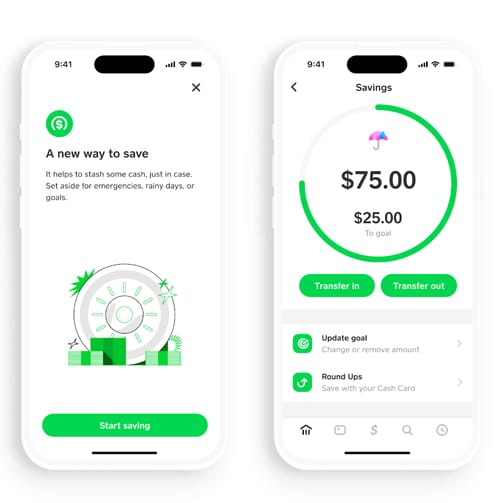
Building an emergency fund within the app’s savings feature (if available and utilized).
However, traditional banks typically offer a broader range of services, including complex lending products, investment accounts, international wire transfers, and higher-level fraud protection for very large sums. The “no limit” on receiving for verified Cash App users makes it a strong contender for income streams, but for long-term savings, significant wealth management, or complex financial planning, traditional banks or dedicated investment platforms often provide more comprehensive solutions.

The Future of Digital Payment Limits
The landscape of digital finance is dynamic. As technology advances and regulatory frameworks adapt, the specific limits imposed by apps like Cash App may evolve. Trends point towards increasingly seamless integration between various financial services, potentially leading to more flexible or personalized limits based on individual financial behavior and established trust. Staying informed about these changes will be key to continuing to leverage digital tools effectively in your personal financial journey.
In conclusion, “how much money can Cash App hold” is a question with a nuanced answer, heavily dependent on user verification. While unverified accounts face significant restrictions, a quick and simple verification process unlocks substantially higher sending and spending limits, and crucially, removes the receiving limit entirely. By understanding these thresholds and the regulatory rationale behind them, users can strategically integrate Cash App into their financial ecosystem, utilizing its convenience while maintaining security and compliance, ensuring it remains a valuable asset in managing their money.
aViewFromTheCave is a participant in the Amazon Services LLC Associates Program, an affiliate advertising program designed to provide a means for sites to earn advertising fees by advertising and linking to Amazon.com. Amazon, the Amazon logo, AmazonSupply, and the AmazonSupply logo are trademarks of Amazon.com, Inc. or its affiliates. As an Amazon Associate we earn affiliate commissions from qualifying purchases.