
In the rapidly evolving landscape of fintech, few platforms have achieved the cultural and financial resonance of Cash App. Originally launched by Block, Inc. (formerly Square) in 2013 as “Square Cash,” the app has transformed from a simple peer-to-peer (P2P) payment utility into a comprehensive financial ecosystem. Today, understanding how many people use Cash App is more than a matter of counting downloads; it is an exploration of how a digital tool has reshaped personal finance, banking accessibility, and even the cryptocurrency market for millions of users.

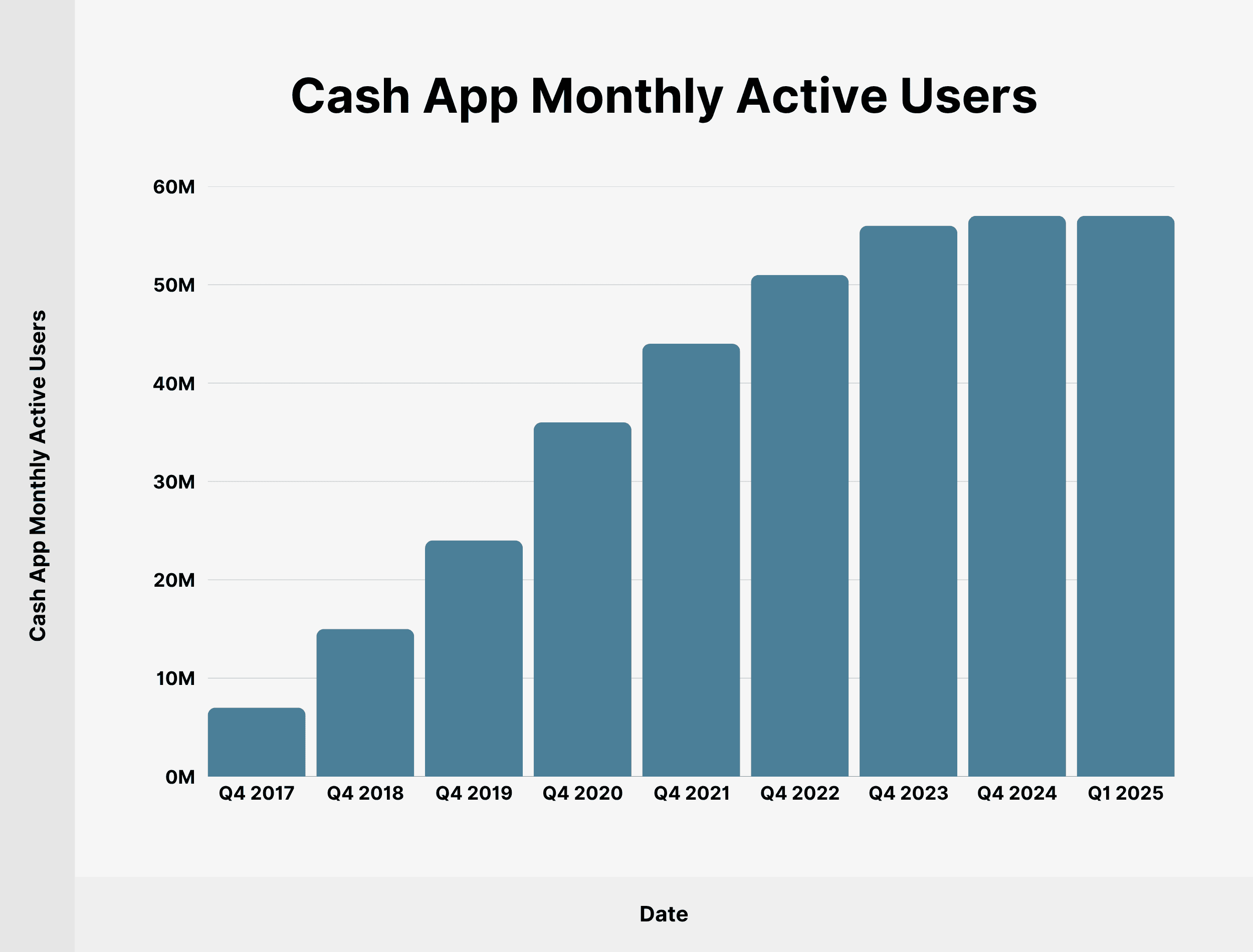
As of the latest financial reporting cycles, Cash App boasts over 55 million monthly transacting actives. This figure represents a staggering ascent from its early days, positioning it as a primary competitor to traditional banking institutions and established fintech giants like Venmo and PayPal. This growth is not merely a byproduct of convenience but a result of a calculated strategy to integrate banking, investing, and tax services into a single, mobile-first interface.
The Meteoric Rise of Cash App in the Modern Financial Ecosystem
The trajectory of Cash App’s user base offers a masterclass in market penetration. In 2017, the platform had roughly 7 million monthly active users. By the end of 2020, that number had surged to 36 million, and it continues to climb, currently sitting well above the 55 million mark. This exponential growth was fueled by a combination of aggressive marketing, social media virality, and a keen understanding of the financial needs of underserved populations.
Tracking the Growth of Monthly Active Users (MAUs)
The metric of “Monthly Transacting Actives” is the gold standard for measuring Cash App’s health. Unlike “registered users,” which can include dormant accounts, transacting actives are users who perform at least one financial action within a 30-day period. The steady climb in this metric indicates high retention and utility. Between 2021 and 2023, the platform saw a consistent year-over-year increase in users, often outstripping the growth rates of traditional retail banks. This shift suggests that for a significant portion of the population, a mobile app has become the primary hub for their financial life.
The Shift from a Simple P2P Tool to a Full Financial Suite
The secret to Cash App’s high user engagement lies in its “Super App” aspirations. While it began as a way to “split the bill,” it quickly pivoted to offer features that traditional banks historically made difficult to access. The introduction of the Cash Card—a physical Visa debit card linked to the user’s balance—bridged the gap between digital funds and physical commerce. Following this, the integration of fractional stock investing and Bitcoin trading transformed the app into a wealth-building tool. By offering these services without the complex barrier of entry found in legacy brokerage firms, Cash App successfully democratized access to the markets.
Demographic Trends: Who is Using Cash App and Why?
The “who” is just as important as the “how many.” Cash App has carved out a unique niche by appealing to demographics that were often overlooked by the “Big Four” banks in the United States. Its user base is characterized by a high concentration of Gen Z and Millennial users, as well as a significant presence in urban and lower-income communities.
Capturing Gen Z and Millennial Markets
Cash App has become a cultural touchstone for younger generations. Through “Cash App Fridays” on social media and high-profile partnerships with influencers and musicians, the brand has achieved a level of “cool” that no traditional bank can replicate. For many Gen Z users, Cash App was their first experience with a financial account. The intuitive UI/UX design, which favors speed and simplicity over the jargon-heavy interfaces of legacy banking apps, has cemented its status as the go-to financial tool for digital natives.
Banking the Unbanked: Cash App’s Role in Financial Inclusion
One of the most significant drivers of Cash App’s user volume is its role in providing financial services to the “unbanked” and “underbanked.” According to the FDIC, millions of American households do not have a traditional bank account, often due to high fees, minimum balance requirements, or a lack of physical branches. Cash App provides a solution by offering a free account with no minimum balance, early direct deposit features, and the ability to receive government stimulus or tax refunds directly into the app. For these users, Cash App isn’t just an app; it is their primary bank.
Revenue Drivers and Monetization Strategies
While the number of users is a vanity metric if not paired with profitability, Block, Inc. has successfully monetized the Cash App ecosystem. The platform generates revenue through several channels, most notably through transaction fees, interest on held balances, and the spread on Bitcoin trades.
The Impact of Bitcoin Integration
Cash App was an early adopter of Bitcoin, allowing users to buy, sell, and hold the cryptocurrency directly within the app. This move proved to be a masterstroke. Bitcoin revenue often accounts for a massive portion of Cash App’s total revenue. Even though the margins on Bitcoin trades are thinner than other services, the feature serves as a powerful customer acquisition tool. People who come for Bitcoin often stay for the P2P payments and the Cash Card, increasing the “lifetime value” of each user. The recent integration of the Lightning Network further solidifies its position as a leader in the intersection of personal finance and decentralized technology.
Transaction Fees and the Cash Card Ecosystem
Beyond crypto, Cash App generates significant income through “Instant Deposits,” where users pay a small percentage fee to move money from the app to their external bank account immediately. Additionally, the Cash Card generates interchange revenue every time a user swipes it at a merchant. The “Boost” program—a rewards system that gives users instant discounts at specific retailers—encourages users to use their Cash Card more frequently, creating a virtuous cycle of engagement and revenue.
Cash App vs. Competitors: The Market Share Battle
In the US market, the battle for dominance in the P2P and mobile banking space is primarily fought between Cash App, Venmo (owned by PayPal), and Zelle. While Venmo has long been the leader in “social” payments with its public feed, Cash App has successfully positioned itself as a more versatile financial tool.
Comparing MAUs with Venmo and PayPal
As of recent estimates, Venmo boasts a slightly higher number of total users (around 90 million), but Cash App often leads in terms of revenue per user and engagement depth. While Venmo is primarily used for P2P transfers, Cash App users are more likely to use the platform for direct deposits, investing, and daily spending via the Cash Card. This multifaceted utility makes Cash App a more integrated part of the user’s financial identity, leading to higher “stickiness” compared to platforms that are used only occasionally for splitting dinner checks.
The Power of Social Virality and Marketing
Cash App’s marketing strategy is vastly different from its competitors. Instead of traditional television commercials, Cash App utilizes “growth loops” and viral marketing. By giving away money on Twitter (now X) and Instagram, they create a massive amount of organic conversation. This “viral” nature of the app’s growth has allowed it to maintain a lower customer acquisition cost than many of its competitors, allowing for faster scaling and a more robust bottom line.
The Future of Cash App in Personal and Business Finance
Looking ahead, the question of “how many people use Cash App” will likely expand into “how many businesses use Cash App.” The platform is increasingly moving into the merchant services space, leveraging its parent company Block’s expertise in point-of-sale systems.
Expanding into Business Accounts and Merchant Services
Cash App for Business allows small businesses and side hustlers to accept payments with ease. As the “gig economy” continues to grow, the demand for simple, mobile-first business accounts is skyrocketing. By allowing individuals to toggle between personal and business profiles, Cash App is capturing the financial flow of the modern entrepreneur. This expansion into the B2C and B2B sectors represents a massive untapped market that could see the platform’s user base double in the coming decade.

Potential Risks and the Path to Long-Term Sustainability
Despite its success, Cash App faces challenges. Regulatory scrutiny regarding “Know Your Customer” (KYC) and Anti-Money Laundering (AML) protocols is increasing. Additionally, as the platform scales, it must contend with concerns over fraud and account security. However, the integration of “Cash App Taxes” (formerly Credit Karma Tax) and the acquisition of Afterpay (buy-now-pay-later) suggest that Block, Inc. is doubling down on making Cash App an indispensable financial utility.
In conclusion, the tens of millions of people using Cash App represent a fundamental shift in how society interacts with money. It is no longer just about sending five dollars to a friend; it is about a centralized, digital-first approach to earning, spending, saving, and investing. As the platform continues to innovate and expand its feature set, its influence on the global financial landscape is only set to grow, making it a critical player for anyone interested in the future of personal and business finance.
aViewFromTheCave is a participant in the Amazon Services LLC Associates Program, an affiliate advertising program designed to provide a means for sites to earn advertising fees by advertising and linking to Amazon.com. Amazon, the Amazon logo, AmazonSupply, and the AmazonSupply logo are trademarks of Amazon.com, Inc. or its affiliates. As an Amazon Associate we earn affiliate commissions from qualifying purchases.