
In the evolving landscape of personal finance, digital platforms are constantly innovating to meet the diverse needs of consumers. Cash App, primarily known for its peer-to-peer payment and investing features, has extended its utility to include a “Savings” function. This offering aims to simplify the act of setting aside money, catering especially to users who prefer managing their finances within a single, integrated application. However, understanding how Cash App Savings operates, its distinctions from traditional savings accounts, and its strategic place within a personal financial plan is crucial for maximizing its benefits.
At its core, Cash App Savings is designed to be an accessible tool for earmarking funds for specific goals, separate from your main Cash App balance. It’s a digital envelope system, offering convenience and a degree of behavioral nudging to encourage regular saving. While it shares the “savings” moniker with conventional bank accounts, its mechanics and inherent financial characteristics position it uniquely in the realm of financial tools. This article will delve into the specifics of Cash App Savings, offering a professional and insightful guide to how it functions, its benefits, limitations, and how it can be strategically integrated into your personal financial ecosystem.
Demystifying Cash App Savings: A Unique Financial Tool
Cash App Savings represents a modern approach to setting aside money, tailored for the digital-first generation. Unlike its traditional counterparts, it emphasizes ease of use and immediate accessibility within a familiar app environment. However, its differences are as significant as its similarities, particularly concerning the fundamental financial principles often associated with savings.
What is Cash App Savings and How Does It Differ?
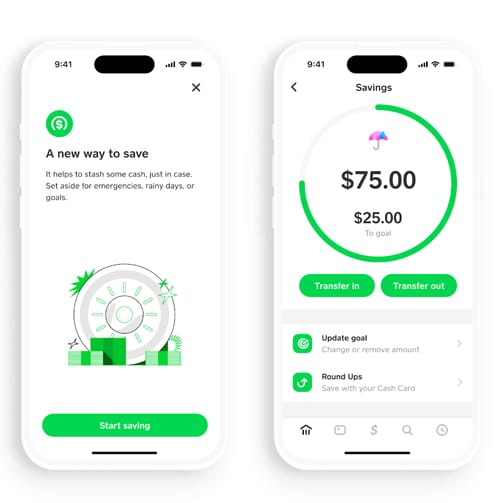
Cash App Savings is a feature within the Cash App platform that allows users to create a separate sub-account specifically for saving money. Think of it as a dedicated digital pot where you can stash funds away from your main spending balance. The primary purpose is to help users budget, save for specific goals (like a new gadget, an emergency fund, or a vacation), and generally cultivate better saving habits by clearly segregating funds.
The most critical distinction, and one that sets it apart from nearly all traditional savings accounts offered by banks, is the absence of interest earnings. Historically, and as of the latest information, Cash App Savings does not pay interest on the deposited funds. This means your money, while securely stored, will not grow through compounding returns as it would in a high-yield savings account or even a standard bank savings account. This fundamental difference redefines its role as a financial tool, shifting its utility from wealth accumulation to active money management and goal-oriented budgeting. It’s a mechanism for storage and organization rather than growth and investment.
Core Purpose: Facilitating Goal-Oriented Saving
The design of Cash App Savings is squarely aimed at facilitating goal-oriented saving. Users can label their savings accounts, providing a clear visual and mental link to the purpose of the funds. This psychological aspect is powerful in encouraging consistent contributions. For instance, you might create a “Vacation Fund” or an “Emergency Buffer” account. This separation makes it less likely for users to accidentally spend money intended for specific goals, promoting financial discipline.
Furthermore, the integration with the broader Cash App ecosystem simplifies the movement of funds. Money can be easily transferred from your main Cash App balance into your savings, or vice-versa, making the process of saving and accessing funds remarkably fluid. This friction-free experience is a significant draw for users who might find traditional banking processes cumbersome or intimidating for minor saving goals.
Key Benefits for Everyday Savers
Despite the lack of interest, Cash App Savings offers several compelling benefits, primarily centered around convenience, accessibility, and behavioral economics:
-
Simplicity and Accessibility: For existing Cash App users, setting up and managing a savings account is incredibly straightforward. There’s no need to open a separate bank account or navigate complex interfaces. It’s all within the app they already use daily.
-
Goal-Oriented Organization: The ability to name and compartmentalize savings helps users visualize their financial objectives, fostering a more disciplined approach to saving for various short-term goals.
-
Instant Transfers: Moving money between your main Cash App balance and your savings account is typically instant, offering immediate access to funds when needed or immediate gratification when saving.
-
No Minimum Balance Requirements: Unlike some traditional accounts, Cash App Savings generally doesn’t impose minimum balance requirements, making it accessible even for those starting with small amounts.
-
Encourages Saving Habits: For many, the simple act of setting aside money, even without interest, is a vital first step towards financial literacy and stability. The ease of use can lower the barrier to entry for establishing a regular saving routine.
Initiating Your Cash App Savings Journey
Embarking on your Cash App Savings journey is designed to be intuitive and user-friendly, echoing the platform’s overall commitment to simplifying financial transactions. The process involves a few straightforward steps, from setting up the account to automating your contributions.
Setting Up Your Savings Account
To begin, you typically navigate to the “Banking” or “Money” tab within the Cash App interface. Look for an option related to “Savings” or “Create New Savings.” The app will guide you through a brief setup process, which may involve:
-
Accepting Terms and Conditions: Reviewing the specific terms related to the savings feature, including information about how funds are held and the absence of interest.
-
Naming Your Savings Account: This crucial step allows you to personalize your savings, aligning it with a specific goal (e.g., “New Car Fund,” “Rainy Day,” “Holiday Trip”). This personalization is a key differentiator and motivator.
-
Initial Deposit (Optional but Recommended): While not always mandatory, the app might prompt you to make an initial transfer from your Cash App balance to kickstart your savings.
The entire process is usually completed within a few taps, reflecting the streamlined user experience that Cash App is known for. There are no credit checks or extensive paperwork required, making it highly accessible to a broad user base.
Funding Your Savings: Methods and Considerations
Once your savings account is set up, the next step is to fund it. Cash App provides several convenient ways to transfer money into your savings, primarily leveraging your existing Cash App balance:
-
Manual Transfers from Cash App Balance: The most direct method is to manually move any amount from your primary Cash App balance into your designated savings account. This offers flexibility, allowing you to save whenever you have extra funds or receive payments.
-
Direct Deposits: If you receive direct deposits (e.g., salary, benefits) to your Cash App account, you can often configure a portion of these deposits to automatically route to your savings account. This is a powerful “set it and forget it” strategy for consistent saving.
-
Adding Funds from Linked Bank Account/Debit Card: While funds must typically first reside in your main Cash App balance, you can easily add money to your Cash App from a linked bank account or debit card, and then transfer it to savings. This provides a direct path for external funds to reach your savings goals.
When funding, consider the frequency and amount. Regular, smaller contributions often prove more sustainable than sporadic large deposits. The goal is to build a habit.
Automating Your Savings: Leveraging ‘Round Ups’ and Recurring Deposits
One of the most effective strategies for consistent saving is automation. Cash App offers features that facilitate this, making saving almost effortless:
-
‘Round Ups’ (if available and enabled): Some digital finance tools, including potentially Cash App (features can vary or evolve), offer a “Round Up” feature. This allows you to automatically round up your purchases to the nearest dollar and transfer the difference into your savings. For example, a $3.75 purchase would result in $0.25 being moved to savings. This is a subtle yet powerful way to save small amounts without feeling the pinch.
-
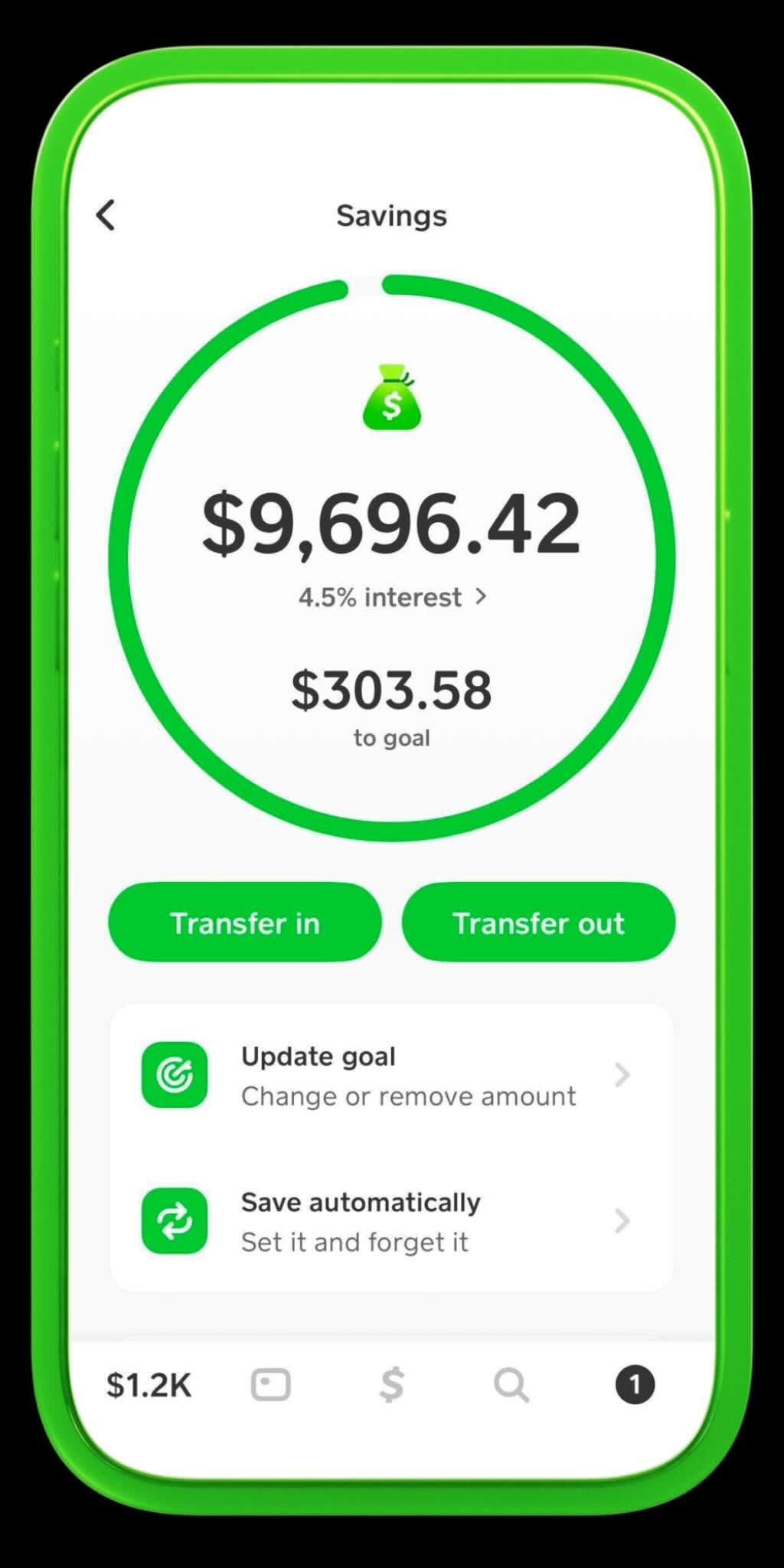
Recurring Deposits: This feature enables you to schedule regular, automatic transfers from your main Cash App balance into your savings account. You can set the amount and frequency (e.g., $25 every Friday). This is arguably the most impactful automation tool, ensuring consistent progress towards your savings goals without requiring manual intervention.
By leveraging these automation features, users can effortlessly build up their savings over time, transforming what might feel like a chore into a seamless background process. This aligns perfectly with the behavioral finance principle that making saving easy and automatic significantly increases its success rate.
Managing Your Funds and Understanding Limitations
Effectively utilizing Cash App Savings involves not only understanding how to put money in but also how to take it out, and crucially, recognizing the inherent limitations of this particular financial tool. This informed perspective is vital for making sound financial decisions.
Accessing Your Savings: Withdrawal Procedures and Speed
The convenience of Cash App Savings extends to accessing your funds. Should you need to withdraw money from your savings account, the process is generally straightforward:
-
Internal Transfer: The primary method is to transfer the desired amount from your savings account back to your main Cash App balance. This internal transfer is typically instant.
-
Spending or Cashing Out: Once the funds are back in your main Cash App balance, you can then use them for purchases via your Cash App Card, send them to other Cash App users, or cash them out to a linked bank account.
-
Instant vs. Standard Deposits: Cashing out to a linked bank account offers two options: standard deposits (usually 1-3 business days, often free) or instant deposits (typically for a small fee, arriving within minutes). The choice depends on the urgency of your need.
The speed and ease of access are significant advantages for short-term savings goals or emergency funds where liquidity is paramount. However, this very ease can sometimes be a double-edged sword, as it might make it easier to dip into savings for non-essential spending if discipline isn’t maintained.

The Absence of Interest: What This Means for Your Growth
As previously highlighted, a defining characteristic of Cash App Savings is its non-interest-bearing nature. This is a critical point that differentiates it from traditional savings accounts and significantly impacts its suitability for various financial goals:
-
No Compounding Growth: Without interest, your money will not grow over time merely by sitting in the account. This means that if you deposit $100, it will remain $100 (barring inflation) regardless of how long it stays there.
-
Not Ideal for Long-Term Wealth Building: For long-term goals such as retirement planning, buying a house years down the line, or significant wealth accumulation, Cash App Savings is not an appropriate tool. These goals require instruments that offer a return on investment, whether through interest, dividends, or capital appreciation, to combat inflation and grow wealth.
-
Focus on Preservation and Liquidity: Its value lies in preserving the nominal value of your money and providing high liquidity. It’s excellent for holding funds that you anticipate needing relatively soon, where the primary objective is safety and immediate access, not growth.
Understanding this limitation is paramount. Users should not mistake Cash App Savings for an investment vehicle or a high-yield savings account designed for substantial financial growth. Its strength lies elsewhere.
Deposit Limits and Account Balances
Like most financial platforms, Cash App has certain limits on transactions and account balances. These limits can vary based on whether your account is verified, your transaction history, and potentially other factors.
-
Deposit Limits: There might be daily, weekly, or monthly limits on how much money you can add to your Cash App balance from external sources, and consequently, how much you can transfer into your savings.
-
Account Balance Limits: While Cash App often has high limits for its overall balance, there might be specific caps on the maximum amount that can be held within a savings sub-account. It’s essential to check the most current terms within the app or on Cash App’s official support pages, as these figures can change.
These limits are typically in place for security reasons and to comply with financial regulations. For the average user saving for short-term goals, these limits are generally sufficient. However, for very large sums, traditional banking institutions or specialized investment accounts might be more suitable.
Security, Safety, and Compliance for Your Stored Funds
When entrusting any financial platform with your money, understanding the measures in place to protect your funds and personal information is paramount. Cash App, like other regulated financial services, employs various mechanisms to ensure the security and compliance of its Savings feature.
FDIC Insurance: How Your Funds Are Protected
One of the most critical aspects of financial security for any deposit account in the United States is FDIC (Federal Deposit Insurance Corporation) insurance. This insurance protects your money in case the financial institution holding it fails.
-
Cash App’s Partnership with Banks: Cash App itself is a financial technology company, not a bank. However, it partners with FDIC-insured banks (such as Sutton Bank or Lincoln Savings Bank) to hold customer funds. When you deposit money into your Cash App balance, or into your Cash App Savings, those funds are held by these partner banks.
-
Coverage Details: This means your funds, up to the standard maximum of $250,000 per depositor, per insured bank, for each account ownership category, are eligible for FDIC pass-through insurance. It’s crucial to understand that this coverage applies to your entire Cash App balance, including funds held in savings, across all accounts you have with that specific partner bank.
-
Implication for Savers: For Cash App Savings users, this provides a vital layer of security. Even though Cash App doesn’t pay interest like a traditional bank, the underlying protection for your principal is comparable to what you’d find in a standard bank savings account, provided the funds are held by an FDIC-insured partner bank. Always verify the current partner banks and insurance details through official Cash App documentation.
In-App Security Features and Best Practices
Beyond FDIC insurance, Cash App employs a range of technological and procedural security measures to protect user accounts and transactions:
-
Encryption: All data transmitted within the app is encrypted, safeguarding your personal and financial information from unauthorized access.
-
PIN/Touch ID/Face ID Protection: Users can set up a PIN, Touch ID, or Face ID to authorize payments and access their accounts, adding a robust layer of defense against unauthorized use if your device falls into the wrong hands.
-
Activity Monitoring: Cash App’s systems continuously monitor account activity for suspicious patterns, flagging and potentially blocking transactions that seem out of the ordinary.
-
Two-Factor Authentication (2FA): While not always mandatory for every action, Cash App often leverages SMS verification or email codes for certain transactions or account access, providing an extra layer of security.
-
Notification Alerts: Users receive instant notifications for all transactions, allowing them to quickly identify and report any unauthorized activity.
Best practices for users to enhance security include: using a strong, unique PIN; enabling all available biometric security features; regularly reviewing transaction history; and never sharing your account credentials or PIN with anyone.
Addressing Potential Risks and Protecting Against Fraud
While Cash App implements robust security, users also play a crucial role in protecting their funds. The digital nature of the platform means it’s a target for scammers and fraudsters.
-
Phishing Scams: Be vigilant against emails, texts, or calls purporting to be from Cash App that ask for your login details, PIN, or personal information. Cash App will never ask for your PIN or full password outside of the app.
-
Impersonation Scams: Beware of individuals claiming to be Cash App support, a lottery official, or a long-lost relative, asking for money or account details. Always verify identities through official channels.
-
Fake Customer Support: Only use official Cash App support channels found within the app or on their website. Fraudsters often set up fake support lines.
-
Peer-to-Peer Risks: Since Cash App is a peer-to-peer platform, only send money to people you know and trust. There’s generally no recourse for fraudulent payments sent directly to another user.
-
Account Hygiene: Regularly update your app, keep your device’s operating system updated, and use a strong, unique password for the email associated with your Cash App account.
By understanding these risks and adhering to security best practices, users can significantly reduce their vulnerability to fraud and ensure their Cash App Savings remain secure.
Strategic Integration: Where Cash App Savings Fits in Your Financial Plan
Understanding the mechanics and security of Cash App Savings is only half the battle; the other half is knowing how to strategically position it within your broader financial plan. Given its unique characteristics, Cash App Savings is best suited for specific financial objectives and serves as a complement, rather than a replacement, for other financial instruments.
Ideal Use Cases: Short-Term Goals and Budgeting Support
Due to its high liquidity and lack of interest, Cash App Savings excels as a tool for managing short-term financial needs and supporting daily budgeting efforts.
-
Emergency Fund (Small & Accessible): For building a readily accessible, small emergency fund (e.g., covering a minor car repair or a sudden bill), Cash App Savings is ideal. The instant transfer capability ensures you can access funds immediately when an unexpected expense arises, without waiting for bank transfer delays. However, for larger emergency funds, a high-yield savings account might be preferable due to interest earnings.
-
Specific Short-Term Goals: Saving for specific goals within the next 12-24 months is a prime use case. Examples include:
-
Vacation Fund: Gradually setting aside money for a trip.
-
Gadget Purchase: Saving for a new phone, laptop, or gaming console.
-
Event Tickets: Accumulating funds for concerts, festivals, or sports events.
-
Holiday Spending: Budgeting for gifts and seasonal expenses.
-
Bill Buffer: Creating a small reserve for upcoming bills to avoid late fees or overdrafts.
-
-
Budgeting and Expense Segregation: Cash App Savings can act as a digital envelope system, helping users segment funds for different spending categories. For instance, you could move your “Groceries” budget for the week into savings and then transfer it back to your main balance as needed, preventing overspending. This behavioral finance hack helps maintain discipline.
-
Rounding Up for Small Savings: If the ‘Round Up’ feature is active, it’s an excellent way to accumulate small, unnoticed amounts over time for minor goals, demonstrating the power of consistent micro-savings.
For these scenarios, the convenience and ease of use of Cash App Savings outweigh the absence of interest, as the primary goal is rapid accumulation and accessible storage, not long-term growth.
When to Consider Alternative Savings Instruments
While effective for short-term goals, Cash App Savings is not a universal solution for all financial objectives. There are specific situations where alternative financial instruments would be significantly more advantageous:
-
Long-Term Savings and Wealth Growth: For goals extending beyond a couple of years (e.g., retirement, down payment for a house, children’s education), the absence of interest makes Cash App Savings unsuitable. You would lose significant compounding potential and purchasing power due to inflation.
- Alternatives: High-yield savings accounts, money market accounts, Certificates of Deposit (CDs), mutual funds, exchange-traded funds (ETFs), individual stocks, and retirement accounts (401(k)s, IRAs) are designed for long-term growth.
-
Large Emergency Funds: While a small portion of an emergency fund might be kept in Cash App for instant access, a substantial emergency fund (3-6 months of living expenses) is generally better housed in a high-yield savings account to earn interest while remaining accessible.
-
Sophisticated Financial Planning: For complex financial needs, such as estate planning, tax-advantaged investing, or managing large portfolios, traditional financial advisors and established brokerage firms offer more comprehensive solutions and specialized products.
The key is to match the financial tool to the financial goal. Cash App Savings is a niche tool, not a comprehensive financial solution.
Complementing Your Broader Financial Portfolio
Rather than viewing Cash App Savings in isolation, it’s most effective when seen as one component of a diversified financial portfolio. It complements, rather than competes with, other financial tools:
-
Integrated Budgeting: Use Cash App Savings for your immediate budgeting needs and small, short-term goals, while your main checking account handles regular bill payments and direct deposits.
-
Layered Emergency Fund: Keep a small, instantly accessible emergency buffer in Cash App Savings, and a larger, interest-earning portion in a high-yield savings account.
-
Foundation for Investing: For users new to personal finance, Cash App Savings can serve as a stepping stone. Once they’ve built good saving habits and a small buffer, they can then explore Cash App’s investing features for stocks or Bitcoin, or transition to more traditional investment platforms for long-term growth.
-
Cash Flow Management: It can be used to temporarily hold funds received from peer-to-peer payments or side hustles before allocating them to more growth-oriented accounts or using them for planned expenses.
By understanding its strengths and weaknesses, Cash App Savings can become a valuable and convenient part of a well-rounded financial strategy, supporting immediate financial discipline and short-term goal achievement, while allowing other instruments to handle the heavy lifting of long-term wealth building. It empowers users to take active control of their day-to-day money management with ease and efficiency.
aViewFromTheCave is a participant in the Amazon Services LLC Associates Program, an affiliate advertising program designed to provide a means for sites to earn advertising fees by advertising and linking to Amazon.com. Amazon, the Amazon logo, AmazonSupply, and the AmazonSupply logo are trademarks of Amazon.com, Inc. or its affiliates. As an Amazon Associate we earn affiliate commissions from qualifying purchases.