
In the rapidly evolving landscape of digital finance, certain applications transcend mere utility to become integral parts of how millions manage their money. Cash App is undoubtedly one such phenomenon. For many, it’s the go-to platform for sending and receiving funds, investing in stocks, or even filing taxes. But before it became the ubiquitous fintech tool we know today, Cash App had a distinct beginning, rooted in a vision to simplify financial transactions through technology. Understanding its creation date and developmental trajectory offers valuable insight into the forces that shaped modern digital finance and the power of innovative software design.

Cash App, originally known as Square Cash, was officially launched by Square, Inc. (now Block, Inc.) in October 2013. Its debut marked a pivotal moment, introducing a streamlined peer-to-peer (P2P) payment service that aimed to democratize access to digital financial tools, making money transfers as simple as sending an email. This wasn’t merely the launch of another app; it was the birth of a technological solution designed to bridge gaps in traditional banking and facilitate instantaneous financial interactions through mobile devices.
The Genesis of a Digital Wallet: Square’s Vision
The inception of Cash App was a direct extension of Square’s broader mission to empower individuals and small businesses with accessible financial technology. Founded by Jack Dorsey and Jim McKelvey in 2009, Square initially revolutionized credit card processing for small merchants with its iconic square-shaped card reader. Building on this foundation of simplifying financial transactions, the company recognized an unmet need in the consumer P2P payment space.
From Idea to Launch: The Early Days of Square Cash
The concept behind Square Cash was elegantly simple: enable users to send money to each other via email or a unique identifier, bypassing the complexities and delays often associated with traditional bank transfers. The initial iteration, launched in October 2013, allowed users to send money by merely emailing an amount to a recipient, with Square handling the backend processing. This early design emphasized ease of use and speed, reflecting a core principle of effective software development: solving a real-world problem with an intuitive interface.
The technology underpinning this initial service was robust yet unobtrusive. Square leveraged its existing infrastructure for payment processing, adapting it for direct consumer transfers. This meant integrating with banking networks, developing secure data encryption protocols, and ensuring regulatory compliance – all crucial technical hurdles for any financial application. The decision to make it free for personal use was a strategic one, aiming for widespread adoption by removing financial barriers, a common tactic in tech for scaling user bases.
Addressing a Market Need: P2P Payments in the Mobile Era
At the time of its launch, the landscape for P2P payments was nascent but ripe for disruption. PayPal and Venmo were present, but the market still had significant room for innovation, especially concerning user experience and accessibility. Square Cash entered this arena with a distinct focus on mobile-first interaction. Its development coincided with the exponential growth of smartphone adoption, positioning it perfectly to capitalize on the increasing comfort users had with conducting various tasks, including financial ones, directly from their phones.
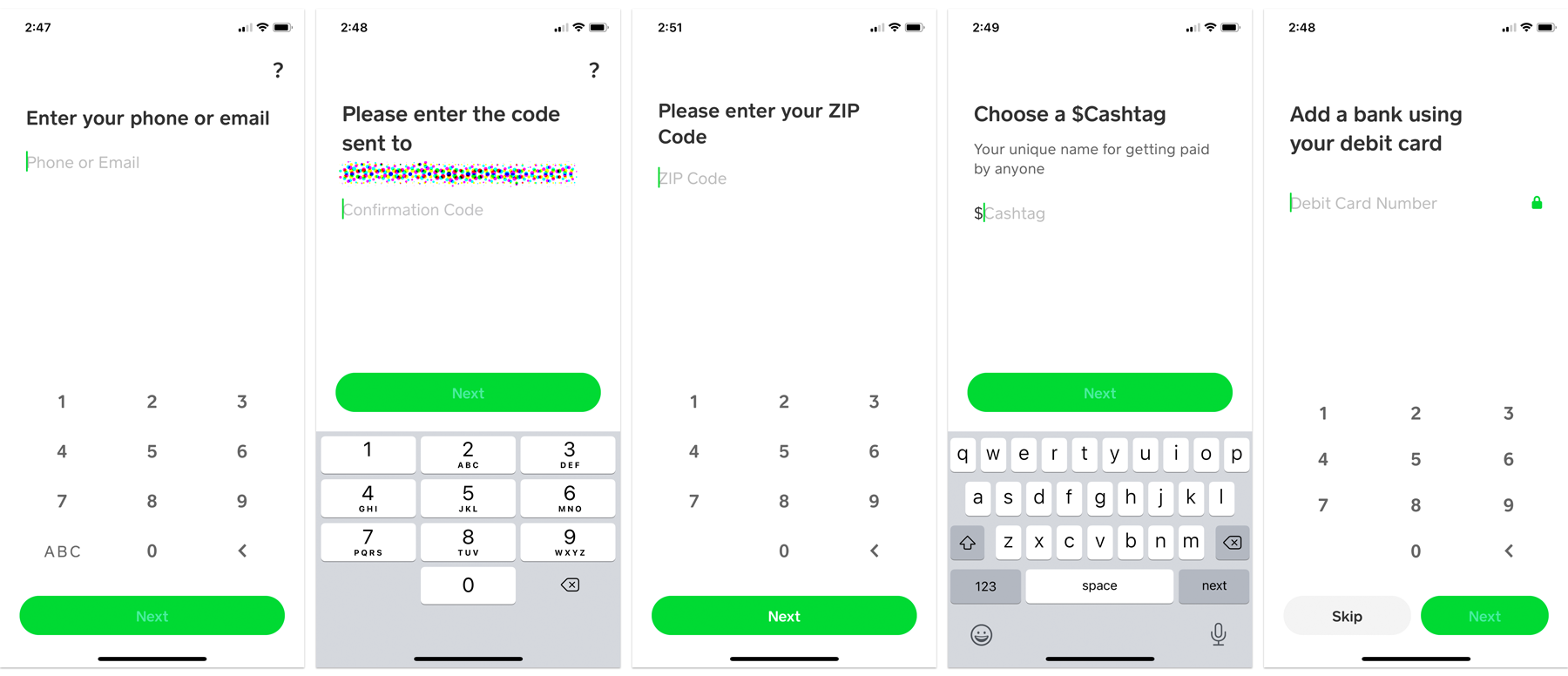
The technology wasn’t just about moving money; it was about creating a seamless digital experience. The app’s design prioritized speed and minimal friction, allowing users to link their debit cards directly and initiate transfers within seconds. This technological advancement democratized digital payments, making them accessible even to those without traditional credit cards or extensive banking relationships. It was a testament to how thoughtfully designed software could empower users by simplifying complex financial processes.
Evolution and Expansion: More Than Just Payments
Cash App’s journey didn’t stop at P2P payments. Recognizing the broader potential of its technological platform, Square steadily expanded the app’s functionalities, transforming it from a niche payment tool into a comprehensive digital financial ecosystem. This evolution showcased a strategic vision to continually enhance the app’s utility and solidify its position as a central component of its users’ digital lives.
Broadening Horizons: Investing, Banking, and Business Features
A significant turning point came with the introduction of investing capabilities. In 2017, Cash App allowed users to buy and sell Bitcoin, tapping into the burgeoning interest in cryptocurrency. This was followed by the ability to buy and sell fractional shares of stocks and ETFs in 2019, making investing more accessible by removing barriers of entry such as large minimum investments. From a technical standpoint, integrating these features required significant backend development to connect with brokerage services, manage real-time market data, and ensure regulatory compliance for trading, all while maintaining the app’s signature user-friendliness.
Beyond investing, Cash App also ventured into quasi-banking services. The introduction of the Cash Card (a customizable debit card linked to a user’s Cash App balance) and direct deposit capabilities transformed the app into a viable alternative to traditional bank accounts for many users. This move solidified its position as a “neobank” – a digital-first financial institution leveraging technology to offer services traditionally provided by brick-and-mortar banks, but with greater agility and often lower fees. For businesses, Cash App also developed features to facilitate payments and transactions, further blurring the lines between personal finance and commerce within a single technological platform.
Key Milestones in Feature Development
The chronological addition of features illustrates Cash App’s commitment to iterative development and technological enhancement:
-
October 2013: Initial launch as Square Cash, focused on email-based P2P transfers.
-
2015: Introduction of the “Cashtag,” allowing users to create a unique identifier for receiving payments, enhancing directness and social sharing.
-
2016: Launch of the Cash Card, a physical debit card linked to the app balance, expanding utility beyond digital transfers.
-
2017: Integration of Bitcoin buying and selling, marking Cash App’s foray into cryptocurrency and blockchain technology.
-
2018: Direct deposit functionality, allowing users to receive paychecks directly into their Cash App account.
-
2019: Stock investing features, enabling users to buy and sell fractional shares, democratizing access to the stock market.
-
2020-2021: Expansion of tax filing services and further enhancements to business tools, solidifying its role as a comprehensive financial platform.
Each of these milestones represents not just a new feature, but a significant technological undertaking. From secure API integrations with financial institutions to robust database management for transaction records and real-time market data, Cash App’s development team has consistently pushed the boundaries of what a mobile application can achieve in the financial sector.

Technological Foundation and Innovation
The success and enduring popularity of Cash App are deeply rooted in its robust technological architecture and continuous innovation. It’s not just the features themselves, but how they are implemented and maintained that defines the app’s performance and security.
Under the Hood: The Tech Driving Cash App’s Success
At its core, Cash App operates on a scalable cloud-based infrastructure, allowing it to handle millions of transactions daily without significant slowdowns. This infrastructure is built on modern programming languages and frameworks, prioritizing efficiency, reliability, and speed. Data encryption is paramount, with end-to-end encryption protecting sensitive user information and transaction details. The app employs advanced fraud detection algorithms, leveraging machine learning to identify and prevent suspicious activities in real-time. This sophisticated backend ensures that every transaction, whether a simple P2P transfer or a stock purchase, is processed securely and instantaneously.
Furthermore, Cash App’s user interface (UI) and user experience (UX) are hallmarks of its design philosophy. The clean, minimalist design belies the complexity of the underlying systems, offering an intuitive experience that makes financial management accessible to a broad demographic. This focus on human-centered design in a highly technical field is a key differentiator, making complex financial tools feel approachable.
Scalability and Security: Engineering for Millions
For an app managing billions of dollars in transactions and serving millions of users, scalability and security are non-negotiable. Cash App’s engineering teams continually work on optimizing its infrastructure to handle increasing user loads and feature demands. This involves distributed systems, efficient database management, and robust server architectures capable of maintaining high availability and responsiveness even during peak usage.
Security, naturally, is a top priority. Beyond encryption, Cash App employs multi-factor authentication, biometric logins, and continuous monitoring for suspicious account activity. Regular security audits, penetration testing, and adherence to financial industry security standards (like PCI DSS for card data) are integral to its operations. The challenge lies in balancing robust security measures with a seamless user experience, a balance Cash App has largely managed to achieve through sophisticated technological solutions.
Impact on the Fintech Landscape
Cash App’s creation and subsequent growth have had a profound impact on the broader fintech landscape, influencing both consumer expectations and the strategies of competitors and traditional financial institutions.
Redefining Personal Finance Technology
By making P2P payments instant and frictionless, and later by integrating investing and banking features, Cash App fundamentally redefined how many people interact with their money. It popularized the concept of a “super app” for finance, where multiple financial services are consolidated into a single, easy-to-use mobile application. This technological integration provided a compelling alternative to fragmented traditional banking services, setting a new standard for convenience and accessibility.
Its success demonstrated that consumers were eager for digital-first financial solutions that prioritized mobile experience and speed. This pushed other fintech companies to innovate faster and encouraged traditional banks to accelerate their digital transformation efforts, realizing that a clunky mobile app or slow transfer times would no longer suffice.
Paving the Way for Future Innovations
Cash App’s willingness to integrate emerging technologies, such as Bitcoin, positioned it as a forward-thinking player. This move not only broadened its user base but also legitimized cryptocurrency for a mainstream audience, contributing to the wider adoption of digital assets. By showcasing the practical application of blockchain technology within a consumer-friendly app, Cash App helped pave the way for further crypto innovation in fintech. Its continuous evolution serves as a blueprint for how technology companies can effectively enter and reshape highly regulated and traditional industries like finance.
The Future of Cash App: Continuing the Tech Journey
As Cash App continues to grow, its trajectory remains deeply intertwined with technological advancements. The future will likely see further expansion of its feature set, driven by ongoing innovation and a commitment to staying ahead in a dynamic market.
Anticipating Future Tech Integrations
We can expect Cash App to continue exploring cutting-edge technologies. This might include deeper integrations with decentralized finance (DeFi) protocols, enhanced AI-driven personalization for financial advice or insights, or even broader applications of blockchain technology beyond simple cryptocurrency transactions. As augmented reality (AR) and virtual reality (VR) mature, there could be experimental integrations to create more immersive financial experiences, though the core focus will likely remain on practical utility and ease of use. The continuous optimization of its backend infrastructure to support higher transaction volumes and real-time data processing will also be a constant endeavor.
Sustaining Growth in a Competitive Market
The fintech market is increasingly crowded, with new apps and services emerging regularly. For Cash App to sustain its growth, it will need to continually innovate, not just by adding features but by refining its core technological offering, ensuring unparalleled security, and maintaining a superior user experience. This involves investing heavily in research and development, attracting top engineering talent, and adapting quickly to evolving user needs and regulatory environments. The journey that began in October 2013 with a simple P2P payment app is a testament to the power of technological vision and agile development in reshaping the financial world. Cash App’s creation wasn’t just a date on a calendar; it was the beginning of a significant chapter in the history of financial technology.
aViewFromTheCave is a participant in the Amazon Services LLC Associates Program, an affiliate advertising program designed to provide a means for sites to earn advertising fees by advertising and linking to Amazon.com. Amazon, the Amazon logo, AmazonSupply, and the AmazonSupply logo are trademarks of Amazon.com, Inc. or its affiliates. As an Amazon Associate we earn affiliate commissions from qualifying purchases.