
Navigating the used car market can feel like a financial tightrope walk. With countless options available, both online and offline, the modern car buyer is presented with an unprecedented level of choice. However, choice without discernment can lead to costly mistakes. For the financially savvy consumer, the quest for the “best” website isn’t merely about finding a car; it’s about securing the most advantageous financial outcome, mitigating risks, and maximizing long-term value. This article will dissect the online used car marketplace through a purely financial lens, guiding you to make a purchasing decision that aligns with your monetary goals and secures your financial future on the road.
Navigating the Used Car Market: A Financial Prudent Approach
The decision to buy a used car is, inherently, a financially smart one. New cars famously depreciate the moment they drive off the lot, losing a significant chunk of their value in the first few years. Opting for a used vehicle allows you to sidestep this initial, steep financial hit, making your investment go further.
The Financial Imperative of Buying Used
Understanding depreciation is paramount for any financially astute car buyer. A new car can lose 20-30% of its value in the first year alone, and up to 50% in three to five years. By choosing a used car, you’re essentially letting the previous owner absorb this massive initial depreciation. This translates into substantial savings on the initial purchase price, often allowing you to acquire a more feature-rich or higher-segment vehicle for the same budget you might have spent on a base model new car. Beyond the sticker price, used cars typically come with lower registration fees and taxes, which are often calculated based on the vehicle’s depreciated value. Insurance premiums can also be lower for used vehicles, as the replacement cost is less than that of a brand-new counterpart, further easing your monthly financial burden.
Budgeting and Financial Preparedness
Before you even begin browsing websites, financial preparedness is key. Establishing a realistic budget is the cornerstone of a financially sound purchase. This budget should encompass not just the vehicle’s purchase price, but also other crucial elements: insurance premiums, potential maintenance costs (especially for older models), registration, and unforeseen repairs. It’s vital to consider the total cost of ownership (TCO) – a holistic view that includes fuel, maintenance, insurance, financing costs, and depreciation over your projected ownership period. Failing to account for TCO can lead to buyer’s remorse and unexpected financial strain. A critical step in this process is securing pre-approval for a car loan from a bank or credit union before you engage with sellers or dealerships. Pre-approval arms you with a clear understanding of the interest rate you qualify for and the maximum amount you can borrow, significantly strengthening your negotiation position and preventing you from being swayed by less favorable financing options offered by sellers.
Evaluating Online Marketplaces from a Financial Perspective
The myriad of online platforms available for buying used cars each present unique financial advantages and disadvantages. The “best” website for you will depend on your specific financial goals, risk tolerance, and the level of convenience you prioritize.
Key Financial Metrics for Website Selection
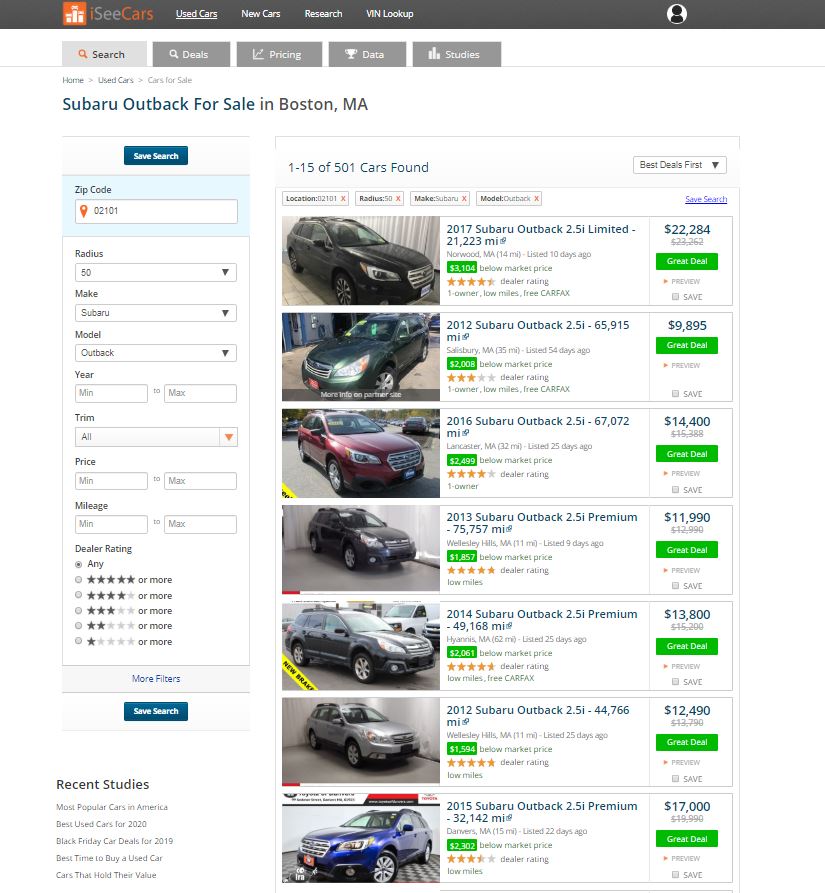
When evaluating online platforms, focus on features that directly impact your wallet. Price transparency and comparison tools are invaluable. Websites that clearly display market value, compare prices across multiple sellers, and highlight “good deals” based on data analytics empower you to make informed financial decisions. Investigate fees and hidden costs. Some platforms, particularly online-only dealers, may charge delivery fees, reconditioning fees, or administrative fees that can add hundreds or even thousands to the final price. Always ask for an “out-the-door” price. Crucially, examine the financing options offered directly by the platform or through its partners. Some sites integrate loan applications directly, allowing for quick comparisons of interest rates and terms, which can be a huge time and money saver.
Top Contenders and Their Financial Advantages/Disadvantages
-
Autotrader & Cars.com: These giants boast extensive inventories, making them excellent resources for broad price comparison across local dealerships and private sellers. They often include filtering options for financing availability and offer robust tools for comparing similar vehicles, helping you gauge fair market value. Their financial advantage lies in choice and comparison.
-
CarGurus: This platform excels in transparency, ranking listings based on their “deal rating” (great, good, fair, high) by analyzing market data. This focus on identifying good financial value is a major draw for budget-conscious buyers. They also clearly display how long a vehicle has been listed, which can be leverage for negotiation.
-
Vroom & Carvana: These online-only dealerships prioritize convenience with fixed pricing (eliminating negotiation) and home delivery. Their financial appeal is in their often streamlined financing process and the absence of high-pressure sales tactics. However, their prices can sometimes be slightly higher than traditional dealerships, and their significant delivery fees, depending on your location, can erode potential savings. They also offer their own financing options, which may or may not be as competitive as external pre-approved loans.
-
eBay Motors: The auction format of eBay Motors can be a double-edged sword financially. It offers the potential for significant deals if you win an auction at a low price, but also carries the risk of overpaying in a bidding war. Its “Buy It Now” options offer fixed pricing. Financial protection for buyers (like vehicle protection programs) is available, but understanding the terms and conditions is vital to safeguard your investment.
-
Craigslist & Facebook Marketplace: These platforms connect private sellers directly with buyers, often leading to the lowest prices because there are no dealer markups or overheads. However, they come with the highest financial risk due to the lack of intermediary protection, greater potential for scams, and misrepresentation of vehicle condition. Financial due diligence (inspections, history reports, safe meeting practices) is absolutely non-negotiable here to protect your money.
Financial Due Diligence Beyond the Purchase Price
The sticker price is just the beginning. A truly financially savvy used car purchase involves meticulous due diligence to avoid future expenditures that can quickly eclipse initial savings.
The Critical Role of Vehicle History Reports
Spending a small amount on a vehicle history report from services like Carfax or AutoCheck is one of the most financially prudent investments you can make. These reports unveil a car’s past, including accident history, salvage titles (a huge financial red flag indicating severe damage that makes the car economically impractical to repair), flood damage, odometer tampering, maintenance records, and the number of previous owners. Discovering a hidden accident or a history of neglect can save you thousands in future repairs and prevent you from purchasing a vehicle with significantly diminished resale value. A clean history report not only offers peace of mind but also protects the future financial value of your asset.
Pre-Purchase Inspections: An Investment, Not an Expense
Never skip a pre-purchase inspection (PPI) by an independent, certified mechanic. While it might cost $100-$200 upfront, a PPI can uncover existing mechanical problems, signs of impending failures, or even evidence of shoddy repairs that a quick visual check would miss. Identifying a major issue – like a transmission problem or significant rust – can save you thousands in post-purchase repairs. Even minor findings can provide powerful leverage for negotiation, potentially allowing you to secure a lower price that covers the cost of necessary fixes. Viewing a PPI as an investment in your financial security and vehicle reliability is crucial.
Understanding Warranties and Extended Service Plans
For used cars, understanding warranty options is vital for financial protection. Some newer used cars might still be under the original manufacturer’s warranty. Many dealerships offer their own limited warranties or the option to purchase extended service plans. Third-party companies also sell these plans. Carefully weigh the cost of an extended warranty against the potential financial risk of future repairs. Analyze the coverage specifics, deductibles, exclusions, and the reputation of the warranty provider. Sometimes, setting aside an emergency fund for repairs can be a more financially sound strategy than paying for an expensive extended warranty, especially if the vehicle has a strong reliability record.
Smart Financial Strategies for Negotiation and Closing the Deal
The final stages of buying a used car are where your financial preparation truly pays off. Mastering negotiation and understanding the intricacies of the financial agreement can save you hundreds, if not thousands, of dollars.
Leveraging Market Data for a Better Price
Armed with market data from resources like Kelley Blue Book (KBB), Edmunds, and NADAguides, you can confidently negotiate. These tools provide fair market value ranges based on mileage, condition, features, and geographic location. Knowing what comparable vehicles have sold for in your area gives you an objective benchmark and prevents you from overpaying. If a seller’s asking price is significantly above the market value for a specific car, you have strong grounds for negotiation.
Separating the Car Price from Financing and Add-ons
A common tactic, particularly at dealerships, is to combine the discussion of the car’s price with financing terms and various add-ons. Financially, it’s always best to negotiate the vehicle’s price first and separately. Once you’ve agreed on a price, then discuss financing. Your pre-approved loan provides you with an alternative, allowing you to reject high-interest loans offered by the seller if they aren’t competitive. Be wary of unnecessary add-ons like rustproofing, paint protection, or VIN etching, which are often high-profit items for the seller but offer questionable financial value. If you want an extended warranty, research it thoroughly after agreeing on the car price, rather than being pressured into an immediate decision.
Finalizing the Financial Agreement
Before signing any paperwork, meticulous review is essential. Scrutinize every line of the contract for hidden fees, discrepancies in the agreed-upon price, or unfavorable terms. Confirm that the interest rate, loan term, and total amount financed match what was discussed. Understand the total monthly payment and ensure it aligns with your budget. Never feel rushed; ask questions about anything unclear. Protecting your financial interests at this stage means thoroughly understanding every clause and cost within the contract. A mistake here can have long-lasting financial consequences.
The Evolving Landscape of Online Used Car Purchases: Future Financial Trends
The digital marketplace for used cars is continuously evolving, driven by technological advancements that promise even smarter financial decisions for consumers.
AI and Data Analytics for Smarter Financial Decisions
The integration of artificial intelligence and sophisticated data analytics is poised to revolutionize how we buy used cars. AI algorithms can process vast amounts of market data to offer hyper-accurate price predictions, not just for the present but also for future resale values. This can help buyers identify vehicles that are likely to retain their value better, making for a more robust financial investment. Furthermore, AI-driven platforms can analyze a buyer’s financial profile to provide personalized financing offers, matching them with the most competitive rates and terms available, often in real-time. This personalization aims to optimize the cost of ownership from the outset.
Subscription Models and Alternative Ownership
Looking ahead, we may see more widespread adoption of alternative ownership models, such as car subscription services, even for used vehicles. While not a traditional purchase, these models offer financial flexibility, bundling insurance, maintenance, and sometimes even fuel into a single monthly payment. For those who prioritize convenience and predictable monthly expenses over outright ownership and its associated long-term financial commitments, these could represent an attractive alternative. Understanding the total financial outlay of these models versus traditional buying will be key for future financially savvy consumers.

Conclusion: Making an Informed Financial Decision
In the complex landscape of online used car sales, there isn’t one single “best” website that caters to every individual’s financial needs. The optimal choice is ultimately the platform that best facilitates your financially prudent strategy. Whether it’s a transparency-focused site like CarGurus, a convenience-driven online dealer like Carvana, or the direct savings potential of Craigslist, success hinges on your commitment to thorough financial due diligence.
From meticulous budgeting and securing pre-approved financing to scrutinizing vehicle history reports, insisting on pre-purchase inspections, and mastering the art of negotiation, every step is a financial safeguard. Remember that the true cost of a used car extends far beyond its sticker price. By prioritizing financial wisdom throughout the purchasing journey, you not only acquire a vehicle but also make an informed, responsible investment that empowers your financial future. A financially savvy buyer is an empowered buyer, ready to confidently navigate the road ahead.
aViewFromTheCave is a participant in the Amazon Services LLC Associates Program, an affiliate advertising program designed to provide a means for sites to earn advertising fees by advertising and linking to Amazon.com. Amazon, the Amazon logo, AmazonSupply, and the AmazonSupply logo are trademarks of Amazon.com, Inc. or its affiliates. As an Amazon Associate we earn affiliate commissions from qualifying purchases.