
In the landscape of personal finance, few line items are as consistently overlooked—yet as potentially volatile—as vehicle maintenance. For the average consumer, a car is the second-largest purchase they will ever make, following only a home. Protecting that investment is a matter of financial survival. When drivers ask, “How much is a Jiffy Lube tune up?” they are rarely just asking for a price tag; they are seeking a way to quantify the cost of reliability.
Understanding the financial implications of a professional tune-up requires looking beyond the immediate transaction. It involves a deep dive into service tiers, regional market fluctuations, the economics of preventative care, and the strategic management of a household budget.
Decoding the Price Point: What to Expect at the Register
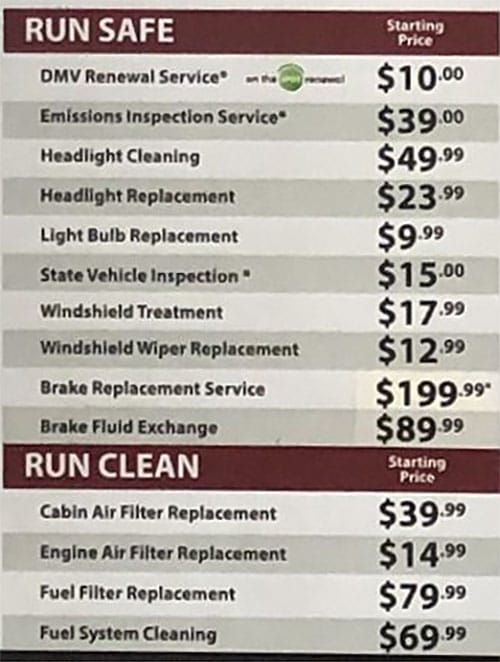
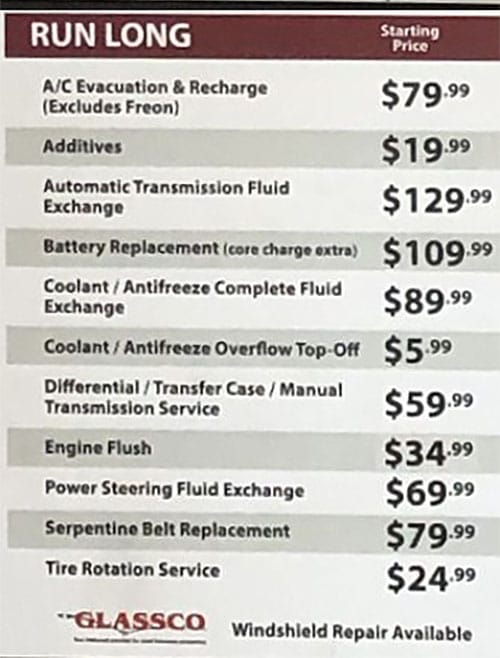
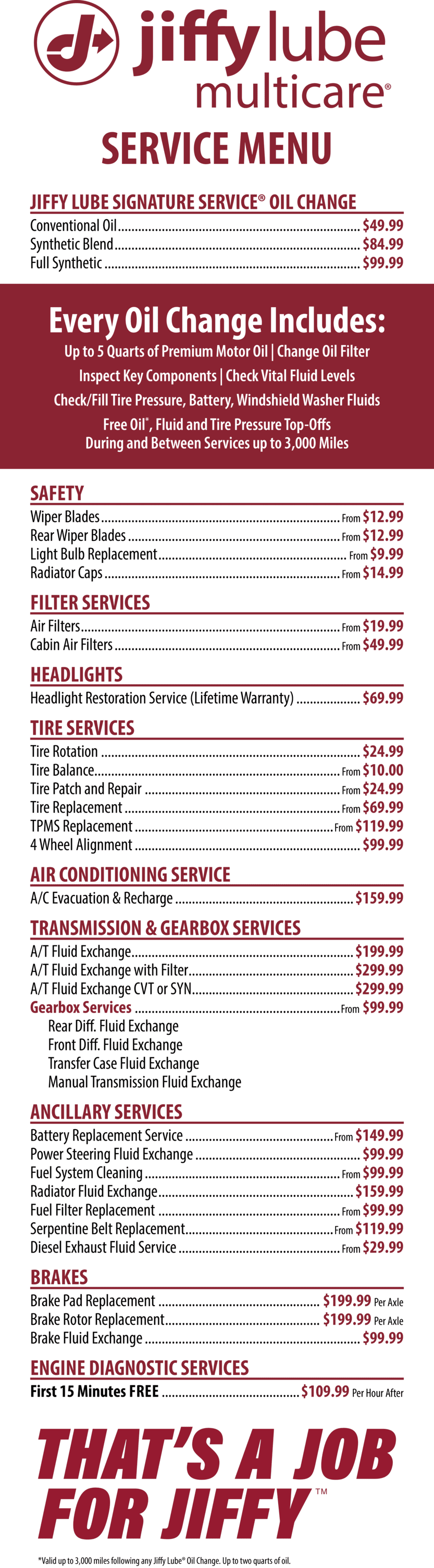
The cost of a tune-up at Jiffy Lube is not a static number. Because Jiffy Lube operates largely through a franchise model, pricing can vary significantly based on geography, local labor rates, and the specific overhead costs of the facility. Generally, a comprehensive tune-up can range anywhere from $60 to over $300, depending on the depth of the service and the specific needs of the vehicle.
Standard vs. Signature Service Tiers
At the entry level, many consumers mistake a “Signature Service Oil Change” for a full tune-up. While the oil change is the cornerstone of Jiffy Lube’s business model, starting typically between $45 and $95 (depending on whether you choose conventional, synthetic blend, or full synthetic oil), it is merely one component of vehicle health.
A true “tune-up” in the modern sense is a more invasive procedure. It typically includes an inspection of the spark plugs, fuel filters, and the ignition system. If you are opting for a spark plug replacement and a fuel system cleaning, the costs move into the $150 to $250 bracket. This investment is a direct trade-off for future repair costs, acting as a form of “insurance” against catastrophic engine failure.
Regional Variables and Labor Rates
Financial planning for vehicle maintenance must account for the local economy. A Jiffy Lube in Manhattan or San Francisco will command a higher price point than one in rural Ohio. This is driven by “The Cost of Doing Business” (CODB), which includes the technician’s wages, commercial rent, and environmental disposal fees. When budgeting, it is prudent to add a 15% buffer to national averages to account for these regional discrepancies.
The Financial Breakdown: Labor, Parts, and the “Convenience Tax”
To understand if a Jiffy Lube service is a sound financial decision, one must break down the components of the bill. In the world of personal finance, this is known as a “cost-benefit analysis” of DIY versus professional services.
The Value of Professional Labor
When you pay for a tune-up, a significant portion of the cost is attributed to labor. From a wealth-management perspective, time is a currency. A professional technician can complete a spark plug change and a multi-point inspection in under an hour—a task that might take an inexperienced vehicle owner four hours and a hundred dollars in specialized tools. For the professional whose hourly billable rate or personal time is valued highly, paying the $100–$150 labor markup is a logical financial choice.
Fluids, Filters, and Components
Jiffy Lube utilizes the “Economy of Scale” to keep part costs relatively low for consumers. However, there is always a retail markup on filters and fluids. A cabin air filter that costs $15 at an auto parts store might be billed at $40 during a service. While this appears to be a negative ROI for the consumer, it is important to factor in the “opportunity cost.” If the filter is replaced while the car is already on the rack, the consumer avoids a separate trip to a parts store and the labor of installation.
Diagnostic Fees and the Upsell
One of the most critical financial aspects of visiting a national chain is navigating the “recommended services.” Technicians are trained to identify potential issues, such as worn serpentine belts or aging batteries. From a budgetary standpoint, these are not necessarily “hidden costs” but rather “predictive costs.” A $120 belt replacement today is significantly cheaper than a $500 tow and a $1,000 emergency repair if the belt snaps on the highway.
The Cost of Neglect: Why Proactive Maintenance Saves Thousands
In personal finance, we often discuss the “Latte Factor”—the idea that small, recurring expenses add up. In automotive finance, we should discuss the “Neglect Multiplier.” The money spent at a Jiffy Lube today is a defensive maneuver against the depreciation of your asset.
Resale Value and Asset Protection
A vehicle with a documented history of professional maintenance fetches a significantly higher resale price. When it comes time to trade in or sell a car privately, a “maintenance log”—which Jiffy Lube provides digitally and in print—acts as a certificate of value. Cars with “gap-ridden” maintenance histories are often devalued by 10% to 20% on the secondary market. Thus, the $200 spent on a tune-up today could theoretically return $2,000 in retained asset value five years from now.
Fuel Efficiency as a Recurring Revenue Stream
A primary goal of a tune-up is to ensure the engine is running at peak efficiency. Worn spark plugs or a clogged air filter can reduce fuel economy by as much as 10%. For a driver spending $3,000 a year on gasoline, a 10% inefficiency is a $300 annual loss. In this light, a $150 tune-up isn’t an expense; it is an investment with a 100% annual return on investment (ROI) through fuel savings alone.
Strategic Consumerism: Maximizing Value at National Service Chains
Smart money management involves “gaming” the system to ensure you receive maximum value for every dollar spent. Jiffy Lube, like many corporate entities, offers several avenues for the savvy consumer to reduce their “Out-of-Pocket” (OOP) expenses.
The Power of the Coupon and Loyalty Program
Jiffy Lube is famous for its aggressive coupon marketing. Before setting foot in a service bay, a consumer should check the brand’s website, local mailers, and third-party aggregate sites. It is almost always possible to find a $15 to $20 discount on a Signature Service or a percentage-off deal for a full tune-up. Over the life of a vehicle, consistent coupon usage can save a household upwards of $1,000.
Avoiding the “Impulse Buy” on Recommended Services
The “upsell” is a standard part of the business model. To protect your budget, you must distinguish between “essential maintenance” and “discretionary maintenance.” If a technician suggests a transmission flush, ask to see the manufacturer’s recommended service interval in your owner’s manual. By aligning your Jiffy Lube visits with the manufacturer’s specific timeline, you avoid paying for unnecessary services that do not contribute to the vehicle’s longevity.
Bundling Services for Maximum Efficiency
If your vehicle needs an oil change, a tire rotation, and a spark plug replacement, doing them all in one visit is financially superior to three separate trips. Not only does this save on fuel and time, but many locations offer “bundle pricing” that reduces the total labor cost compared to individual “a la carte” pricing.
Integrating Vehicle Maintenance into Your Personal Budget
To truly master your finances, car maintenance should never be a “surprise” expense. It should be a forecasted line item in your monthly budget.
Creating a Sinking Fund for Car Care
Financial advisors recommend setting aside a “sinking fund” for vehicle maintenance. A common rule of thumb is to save $50 to $100 per month specifically for car repairs and maintenance. If you follow this strategy, the “sticker shock” of a $250 Jiffy Lube tune-up vanishes, as the funds have already been allocated and “expensed” in your mind.
The Total Cost of Ownership (TCO) Perspective
When evaluating the cost of a Jiffy Lube visit, it should be viewed through the lens of TCO. The Total Cost of Ownership includes the purchase price, insurance, fuel, and maintenance. By spending consistently on preventative care at a facility like Jiffy Lube, you extend the life of the vehicle. If a tune-up helps you keep a car for 10 years instead of 7, you are effectively reducing your annual capital expenditure on vehicles by 30%. This is one of the most powerful ways to build long-term wealth: keeping your assets in high-functioning condition for as long as possible.
In conclusion, while the immediate question of “how much is a Jiffy Lube tune up” can be answered with a simple dollar range, the financial reality is much broader. It is a calculated expenditure designed to protect an asset, optimize fuel consumption, and prevent catastrophic financial outlays in the future. By approaching Jiffy Lube as a strategic partner in asset management—utilizing coupons, understanding the service tiers, and budgeting proactively—the modern consumer can turn a routine chore into a savvy financial win.
aViewFromTheCave is a participant in the Amazon Services LLC Associates Program, an affiliate advertising program designed to provide a means for sites to earn advertising fees by advertising and linking to Amazon.com. Amazon, the Amazon logo, AmazonSupply, and the AmazonSupply logo are trademarks of Amazon.com, Inc. or its affiliates. As an Amazon Associate we earn affiliate commissions from qualifying purchases.