
In the intricate landscape of personal finance, understanding and minimizing recurring expenses is paramount. For many, car ownership represents one of the most significant ongoing costs, and a substantial portion of that expense is often the annual car insurance premium. The quest for the cheapest insurance isn’t merely about finding the lowest number; it’s about smart financial planning, understanding risk, and making informed decisions that impact your wallet for years to come. This comprehensive guide delves into the factors that influence car insurance costs, spotlights vehicle types typically associated with lower premiums, and offers actionable strategies to ensure you’re not overpaying for peace of mind on the road.
The Financial Equation: Understanding Car Insurance Premiums
Car insurance isn’t a one-size-fits-all product; its cost is a complex calculation influenced by a multitude of variables. For the financially savvy consumer, dissecting these factors is the first step toward finding genuinely affordable coverage. Understanding why premiums differ allows you to make choices that align with your financial goals, long before you even pick up the phone for a quote.
Driver-Specific Financial Profiles
Your personal financial history and driving record are powerful determinants of your insurance premium. Insurers assess risk, and your profile tells them how much of a risk you represent.
Driving Record and Claims History
This is arguably the most impactful factor. A clean driving record, free of accidents, speeding tickets, or other moving violations, signals lower risk to insurers. Each claim filed, especially at-fault accidents, can significantly hike your premiums for several years. Financially, this underscores the importance of safe driving not just for personal safety, but for maintaining a favorable insurance profile.
Credit Score and Financial Responsibility
In many states, insurance companies use a credit-based insurance score as part of their underwriting process. A higher credit score often correlates with financial stability and responsible behavior, which insurers interpret as a lower likelihood of filing claims. Maintaining a good credit score, therefore, is not just crucial for loans and mortgages, but also plays a direct role in the cost of your car insurance. This highlights the interconnectedness of various aspects of personal finance.
Age, Gender, and Marital Status
Statistically, younger, less experienced drivers (especially males under 25) face higher premiums due to a greater perceived risk of accidents. As drivers mature and gain experience, their rates typically decrease. Married individuals often receive slightly lower rates than single drivers, as statistics suggest they are less prone to risky driving behavior. While these factors are not directly within your financial control in the short term, they illustrate how demographic data is leveraged in actuarial science to price policies.
Location and Commute
Where you live and how you use your car significantly impact your rates. Urban areas with higher traffic density, greater rates of theft, and more accidents generally have higher premiums than rural locations. Similarly, long daily commutes for work, especially during peak hours, increase your exposure to potential accidents, leading to higher costs. If you work from home or have a short commute, inform your insurer as this could lead to savings.
Vehicle-Specific Financial Attributes
Beyond the driver, the car itself contributes heavily to the cost equation. The make, model, age, and features of your vehicle are all assessed for their financial implications regarding repair costs, safety, and theft risk.
Safety Features and Ratings
Cars with excellent safety ratings and advanced driver-assistance systems (ADAS) like automatic emergency braking, lane-keeping assist, and blind-spot monitoring often qualify for lower premiums. These features demonstrably reduce the likelihood and severity of accidents, translating to fewer claims for insurers. Investing in a car with robust safety features is a sound financial decision not just for personal well-being, but for insurance savings.
Repair Costs and Parts Availability
The expense of repairing a specific car model is a major factor. Vehicles with readily available, inexpensive parts and simpler repair processes typically cost less to insure. Conversely, luxury vehicles, high-performance cars, or those with exotic materials and specialized components will have higher repair costs, and thus, higher insurance premiums. Even a minor fender bender can become a significant claim if the parts are rare or require specialized labor.
Theft Rates and Resale Value
Cars that are frequently targeted by thieves or have a high resale value (meaning a higher payout in case of total loss) often have higher comprehensive coverage premiums. Insurers track theft statistics for various models. Installing anti-theft devices can sometimes lead to discounts, but choosing a less commonly stolen model can offer inherent savings.
Horsepower and Performance
High-performance vehicles with powerful engines are statistically associated with more speeding violations and higher-impact accidents. This translates directly to increased insurance costs. Financially, this means a sporty car might offer thrills, but it often comes with a heftier insurance bill compared to its more sedate counterparts.
Top Car Segments for Affordable Insurance
While specific models can vary by year and insurer, certain car segments consistently emerge as more budget-friendly when it comes to insurance premiums. These vehicles typically combine favorable financial attributes – lower repair costs, good safety records, and modest performance – making them attractive options for cost-conscious drivers.
Compact Sedans and Hatchbacks
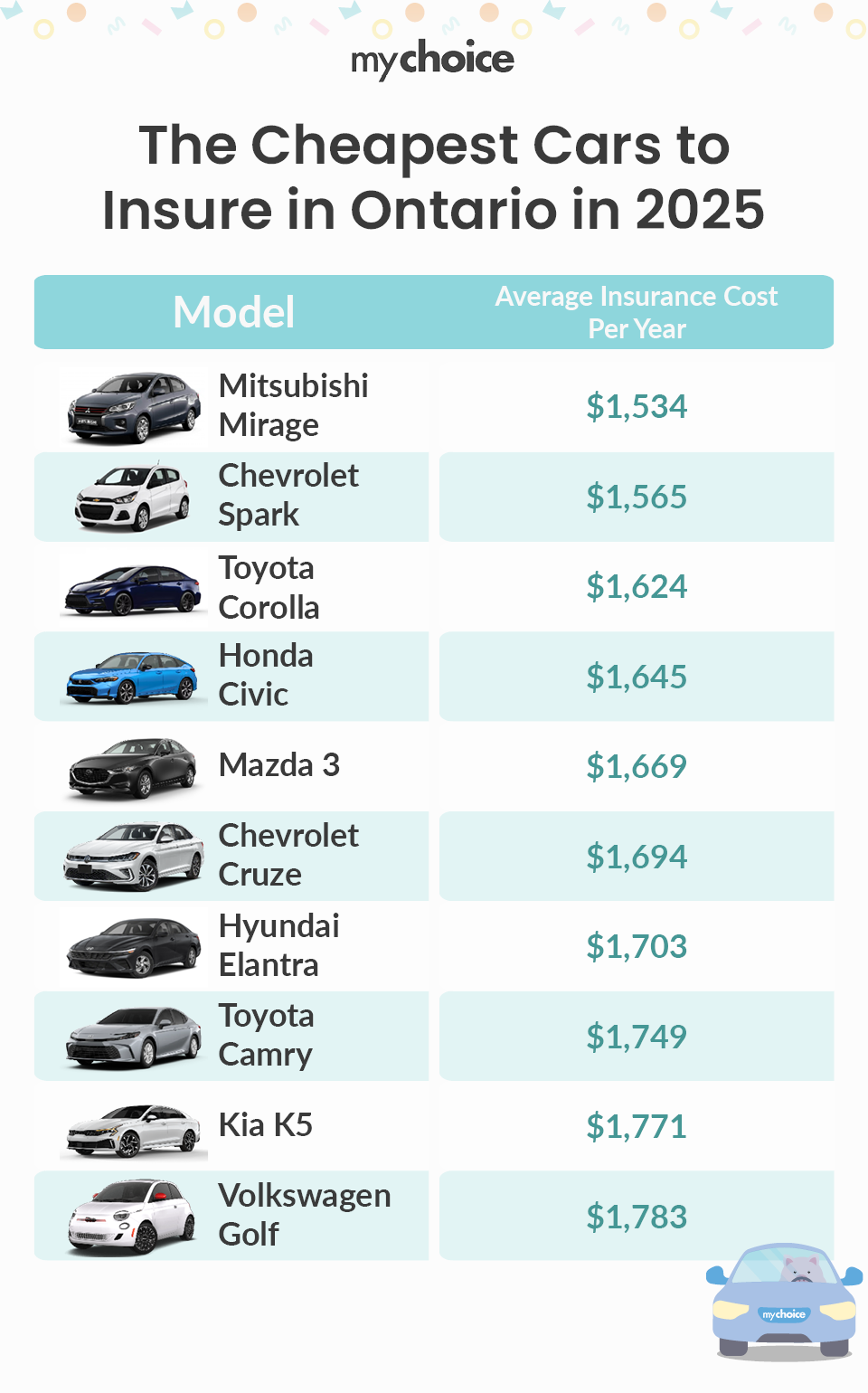
Models like the Honda Civic, Toyota Corolla, Subaru Impreza, and Hyundai Elantra are perennial favorites for affordable insurance.
Modest Purchase Price and Repair Costs
These cars are generally less expensive to buy new, which translates to a lower total loss payout for insurers in the event of a write-off. Their parts are widely available and relatively inexpensive, and most mechanics are familiar with their repair protocols, leading to lower labor costs. This financial efficiency is directly reflected in lower premiums.
Strong Safety Records
Manufacturers in this segment often prioritize mass-market appeal, which includes excelling in crash tests. Many compact sedans and hatchbacks achieve top safety ratings, and increasingly include advanced safety features as standard or optional equipment, further mitigating risk for insurers.
Small to Mid-Size SUVs
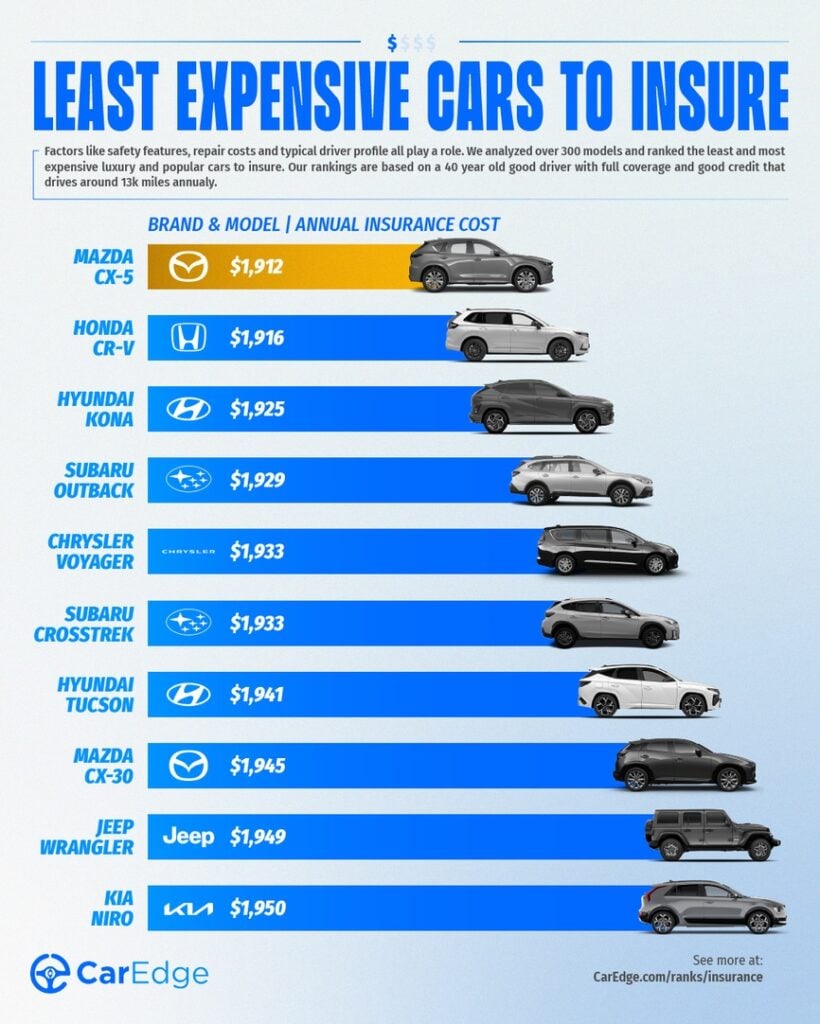
While larger SUVs can be more expensive to insure, their smaller counterparts, such as the Subaru Crosstrek, Honda CR-V, Mazda CX-5, and Toyota RAV4, often present a good balance.
Balance of Safety and Practicality
These SUVs offer the perception of safety due to their size and higher driving position, and many do indeed boast impressive safety ratings. They are popular family vehicles, driven responsibly, which can contribute to lower accident rates compared to performance-oriented cars. Their practicality often means they are not driven aggressively.
Moderate Repair Costs
Similar to compact sedans, the widespread popularity of these models means parts are generally accessible and repairs are manageable. They hit a sweet spot where they are robust enough for everyday use but not so luxurious or high-tech that repairs become prohibitive.
Minivans
Often overlooked for their “cool factor,” minivans like the Honda Odyssey and Toyota Sienna are incredibly financially savvy choices when it comes to insurance.

Ultimate Family Transport
Minivan drivers are statistically among the safest on the road. These vehicles are designed for families, promoting careful, responsible driving. This inherent driver profile significantly reduces perceived risk for insurers.
Excellent Safety and Low Theft Rates
Minivans are engineered with passenger safety as a paramount concern, consistently achieving high marks in crash tests. Furthermore, they are not typically targeted by thieves, leading to lower comprehensive coverage costs. Their practical, non-sporty nature means they are less likely to be involved in high-speed incidents.
Electric Vehicles (EVs) – A Nuanced Consideration
The insurance landscape for EVs is evolving. While some luxury EVs can be very expensive to insure due to high purchase prices and specialized repair requirements, more mainstream models like the Nissan Leaf or Chevrolet Bolt are becoming more competitive.
Emerging Market and Repair Specialization
Initially, EVs could be more expensive to insure due to their higher purchase price, the cost of specialized battery repairs, and a lack of historical claims data. However, as the market matures and more technicians are trained, these costs are gradually coming down for certain models. The financial incentives for EVs (tax credits, fuel savings) might offset slightly higher initial insurance costs for some drivers, requiring a total cost of ownership analysis.
Advanced Safety Features
Many modern EVs come standard with a suite of advanced safety features, which can help to mitigate insurance costs over time. As more affordable EV options become available and repair infrastructure expands, some electric models will likely join the ranks of low-insurance cars.
Strategies to Lower Your Car Insurance Premiums
Beyond selecting a car known for cheaper insurance, there are numerous proactive financial strategies you can employ to further reduce your annual outlay. These tactics often involve optimizing your policy, leveraging discounts, and demonstrating responsible financial behavior.
Smart Policy Adjustments
Fine-tuning your insurance policy is one of the most direct ways to cut costs.
Increase Your Deductible
A higher deductible means you agree to pay more out-of-pocket in the event of a claim. Insurers reward this assumption of greater risk by lowering your premium. This is a strategic financial decision: ensure you have sufficient emergency savings to cover your chosen deductible if an incident occurs.
Bundle Your Policies
Most insurance companies offer multi-policy discounts when you bundle car insurance with other policies like home, renters, or life insurance. This can lead to substantial savings across all your premiums and streamlines your financial management with a single provider.
Drop Unnecessary Coverage
For older vehicles with low market value, consider dropping comprehensive and collision coverage. If the annual premium for these coverages approaches or exceeds 10% of your car’s value, it might be more financially prudent to self-insure for potential damage, saving those premium dollars. Always retain adequate liability coverage, as this protects your assets in case of an at-fault accident.
Leverage Discounts and Programs
Insurers offer a wide array of discounts for various behaviors and affiliations. It pays to ask!
Good Driver and Safe Driver Discounts
Maintaining a clean driving record for several years often qualifies you for significant discounts. Some insurers also offer “accident forgiveness” or “no-claims bonus” programs for long-term safe drivers.
Telematics Programs
Many companies now offer programs where a device (or an app) tracks your driving habits – speed, braking, mileage, time of day. If you demonstrate safe driving behavior, you can earn substantial discounts. This is a direct incentive for financially responsible driving.
Anti-Theft and Safety Device Discounts
Vehicles equipped with factory-installed anti-theft systems, car alarms, or advanced safety features (e.g., adaptive cruise control, lane departure warning) often qualify for premium reductions.
Low Mileage Discounts
If you drive significantly less than the average motorist (e.g., you work from home, use public transport), you may qualify for a low-mileage discount. Less time on the road means less risk for the insurer.
Student Discounts
Good student discounts are often available for high school or college students who maintain a certain GPA, recognizing that academic responsibility can correlate with overall responsibility. Discounts for students away at school without a car are also common.
Proactive Financial Management
Your overall financial health can indirectly influence your insurance costs.
Maintain a Good Credit Score
As mentioned, a strong credit score can lead to lower premiums. Regularly checking your credit report and responsibly managing your debts are financial habits that pay dividends across many areas of your life, including car insurance.
Shop Around Periodically
Insurance rates are not static. Companies adjust their pricing based on market conditions, their own claims experience, and competitive pressures. It’s financially prudent to get quotes from multiple insurers every 6-12 months, or whenever you experience a significant life event (moving, marriage, new car purchase). Online comparison tools and independent insurance agents can simplify this process, ensuring you’re always getting the most competitive rate.
The Long-Term Financial Impact of Car Choice
Choosing a car with the cheapest insurance isn’t just about saving money on premiums; it’s a critical component of a broader financial strategy for vehicle ownership. When considering a car, it’s essential to look beyond the sticker price and factor in the “Total Cost of Ownership” (TCO), where insurance plays a significant role alongside depreciation, fuel, maintenance, and repairs.
A car that is cheap to insure often signifies a vehicle that is reliable, safe, and less costly to repair. These attributes inherently contribute to a lower TCO. Conversely, a high-performance or luxury vehicle, while perhaps appealing, often comes with a cascade of higher costs: higher purchase price, faster depreciation, premium fuel requirements, specialized maintenance, expensive parts, and, of course, significantly higher insurance premiums.
Making a financially intelligent car choice means evaluating your budget comprehensively. It means understanding that the initial savings on insurance for a modest sedan or minivan multiply over the years, freeing up capital for other financial goals – be it investments, debt reduction, or future planning. In the pursuit of financial well-being, every dollar saved on essential expenses like car insurance is a dollar earned, contributing to a more secure and prosperous future.
aViewFromTheCave is a participant in the Amazon Services LLC Associates Program, an affiliate advertising program designed to provide a means for sites to earn advertising fees by advertising and linking to Amazon.com. Amazon, the Amazon logo, AmazonSupply, and the AmazonSupply logo are trademarks of Amazon.com, Inc. or its affiliates. As an Amazon Associate we earn affiliate commissions from qualifying purchases.