
The calculator is perhaps the most ubiquitous piece of technology in the modern world. Long before the smartphone occupied every pocket, the electronic calculator represented the pinnacle of portable engineering. It was the first “smart” device many people owned, a bridge between the mechanical era of the industrial revolution and the silicon-driven digital age. Understanding when calculators came out requires more than pointing to a single date; it involves tracing a lineage from heavy brass gears to the sophisticated microchips that paved the way for the personal computer.
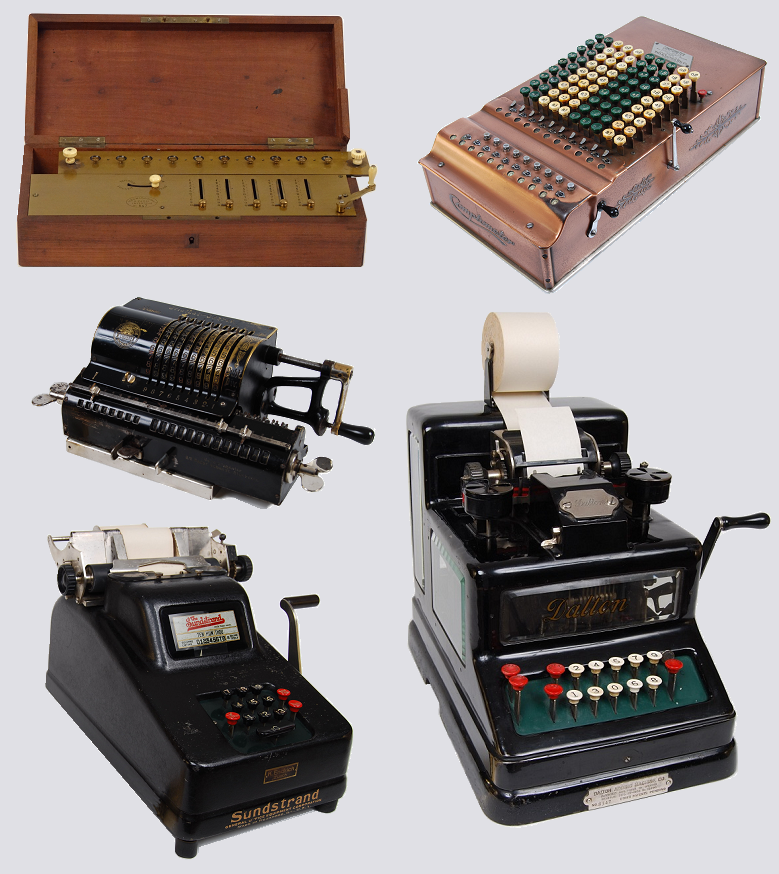
From Gears to Grains of Sand: The Mechanical Precursors
While we often associate the word “calculator” with a plastic device powered by a battery or a solar cell, the quest for automated calculation began centuries ago. The technology that led to the modern calculator was born from the necessity to reduce human error in navigation, tax collection, and astronomy.
The Pascaline and the Stepped Reckoner
The first true mechanical calculator “came out” in 1642. Invented by the French mathematician and philosopher Blaise Pascal, the Pascaline was a device designed to assist his father, a tax collector. It used a series of geared wheels to perform addition and subtraction. Though revolutionary, it was expensive and difficult to produce.
By 1673, Gottfried Wilhelm Leibniz improved upon this design with the “Stepped Reckoner.” Leibniz’s machine introduced the “Leibniz wheel,” which allowed for multiplication and division through repeated addition and subtraction. These early gadgets were the “hardware” of their time, utilizing intricate mechanical logic to process data—a conceptual precursor to the binary logic used in modern software.
The Curta: A Mechanical Marvel
Fast forward to the mid-20th century, and mechanical technology reached its zenith with the Curta calculator. Designed by Curt Herzstark while he was a prisoner in a concentration camp during World War II, the Curta was released in 1948. It was a handheld, cylindrical mechanical calculator that could perform all four basic arithmetic functions. For engineers and surveyors of the 1950s, the Curta was the ultimate “gadget”—a high-precision, portable tool that remained the standard for field calculations until the electronic revolution of the late 1960s.
The Dawn of the Electronic Age (1960s)
The transition from mechanical parts to electronic components marked the most significant shift in the history of the calculator. In the early 1960s, technology moved away from gears and levers toward vacuum tubes and transistors.
The Arrival of ANITA
The first fully electronic desktop calculator, the ANITA (A New Inspiration To Arithmetic), was released by the Bell Punch Co. in 1961. It utilized vacuum tubes (Nixie tubes) for its display and resembled a large cash register. Despite its size and its $1,000 price tag (roughly $9,000 today), it signaled the end of the mechanical era. The ANITA was silent, fast, and provided an instantaneous digital readout—a major tech trend that would soon disrupt the entire business world.
Transistor-Based Desktops
As the semiconductor industry began to mature, vacuum tubes were replaced by transistors, allowing calculators to become smaller and more reliable. In 1964, companies like Sharp (then Hayakawa Electric) and Friden released desktop models like the CS-10A and the EC-130. The Friden EC-130 was particularly notable for using “Reverse Polish Notation” (RPN) and a cathode-ray tube (CRT) display, similar to a small television screen. These machines were the heavy-duty workstations of their era, found primarily in research labs and corporate accounting departments.
The Pocket Revolution: 1970 and Beyond
The true “handheld” calculator revolution occurred in the early 1970s. This was the era when the calculator became a consumer electronics product rather than a piece of specialized office equipment. This shift was driven by the development of the integrated circuit (IC) and the microprocessor.

The First Handheld Units: Busicom and Sharp
In 1970 and 1971, several manufacturers raced to produce the first truly portable calculator. The Sharp QT-8B was the first battery-powered portable, but it was still quite bulky. The real breakthrough came with the Busicom LE-120A “Handy,” which utilized the first “calculator-on-a-chip” technology.
A pivotal moment in tech history occurred during this period: Busicom commissioned a young American company called Intel to design a set of chips for their calculators. The result was the Intel 4004—the world’s first microprocessor. While we now think of Intel in the context of high-end gaming PCs and servers, the microprocessor was originally invented specifically to power a calculator. This technological milestone essentially birthed the modern computing industry.
The HP-35: The First Scientific Pocket Calculator
In 1972, Hewlett-Packard released the HP-35. Before this, “scientific” calculations required a slide rule or a desktop-sized machine. Bill Hewlett, the co-founder of HP, challenged his engineers to fit the functionality of their desktop calculators into a device that would fit in his shirt pocket.
The HP-35 was a tech masterpiece. It featured trigonometric and exponential functions, used a bright red LED display, and cost $395. It was so successful that it rendered the slide rule obsolete almost overnight. For the tech community of the 1970s, the HP-35 was the “iPhone” of its time—a status symbol that combined extreme utility with high-end industrial design.
The LCD Era and the Rise of Modern Hardware
By the late 1970s and early 1980s, the calculator market became a battleground of hardware innovation. The focus shifted from basic functionality to efficiency, display technology, and miniaturization.
Solar Power and Liquid Crystal Displays
The early electronic calculators were notorious for their poor battery life, largely due to power-hungry LED and vacuum fluorescent displays. The introduction of the Liquid Crystal Display (LCD) in the mid-70s changed everything. LCDs required significantly less power, allowing for the development of solar-powered calculators.
In 1978, Casio released the Teal LC-801, one of the first successful credit-card-sized calculators. Shortly after, the solar-powered calculator became a staple of the classroom. This era proved that technology could become both cheaper and more efficient simultaneously, a trend that continues in the tech industry to this day.
Graphing Calculators and Education
The mid-1980s saw the birth of the graphing calculator, a specialized tool that could plot equations on a pixelated screen. The Casio fx-7000G (1985) was the pioneer in this space, but Texas Instruments eventually came to dominate the North American educational market with the TI-81 and the legendary TI-83 series. These devices were essentially specialized computers with their own operating systems and programming languages (like TI-BASIC). They became an essential part of the tech stack for students, maintaining a nearly unchanged design and market presence for decades.
The Software Shift: Calculators in the Digital Ecosystem
As we moved into the 21st century, the dedicated calculator hardware began to face competition from software. Today, while physical calculators are still used in standardized testing and professional engineering, the “calculator” has largely returned to its roots as a software application.
Integration into Operating Systems and Mobile Apps
Every major operating system, from Windows to macOS to Linux, includes a built-in calculator. In the mobile era, the calculator app is one of the most frequently used utilities on any smartphone. These apps have evolved far beyond basic arithmetic; they now include unit converters, currency exchange rate trackers, and complex scientific modes. The “gadget” has been absorbed by the “platform.”

The Future: AI and Symbolic Computation
The current trend in calculator technology is the move toward symbolic computation and Artificial Intelligence. Tools like WolframAlpha and apps like Photomath use computer vision and AI to solve handwritten equations and provide step-by-step explanations. We are no longer just asking “what is the answer,” but “how do we get there.”
In this new era, the calculator is not just a tool for processing numbers; it is an educational tutor and a sophisticated engine for data analysis. From the mechanical gears of the 1600s to the AI-driven apps of the 2020s, the calculator has consistently been at the forefront of tech trends, pushing the boundaries of what we can achieve with specialized computing tools. When we ask when the calculator “came out,” we are really looking at a continuous timeline of human ingenuity—one that transitioned from brass and wood to silicon and code.
aViewFromTheCave is a participant in the Amazon Services LLC Associates Program, an affiliate advertising program designed to provide a means for sites to earn advertising fees by advertising and linking to Amazon.com. Amazon, the Amazon logo, AmazonSupply, and the AmazonSupply logo are trademarks of Amazon.com, Inc. or its affiliates. As an Amazon Associate we earn affiliate commissions from qualifying purchases.