
At first glance, the question “What’s 1/2 of 1/3?” might seem like a relic from an elementary school math class. The answer, of course, is 1/6. Simple. Yet, beneath the surface of this seemingly trivial calculation lies a profound lesson, a fundamental principle that underpins nearly every aspect of personal finance, investing, and business. In the world of money, understanding how fractions interact – how small proportions of larger sums multiply, divide, and compound – is not merely academic; it is critical for sound decision-making, wealth accumulation, and long-term financial security.
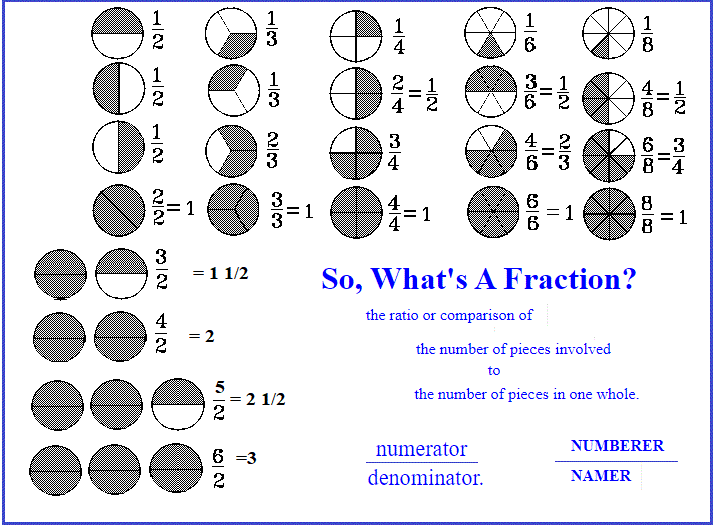
This article delves into the indispensable role of fractional thinking within the financial realm. We’ll explore how this basic mathematical concept shapes our understanding of investments, influences our budgeting habits, and defines the profitability of our ventures. By recognizing the power of these seemingly small numerical relationships, we can cultivate a more sophisticated and strategic approach to managing our money.
The Fundamental Arithmetic of Financial Decisions
The seemingly straightforward problem of multiplying fractions serves as an excellent metaphor for the intricate ways financial components interrelate. It highlights that financial outcomes are rarely about single, isolated events but rather the cumulative effect of multiple factors, each representing a fraction of a larger whole.
Beyond Simple Addition: Why Multiplication of Fractions Matters
Many people approach finance with an additive mindset: how much more can I earn? How much less can I spend? While both are crucial, a purely additive view misses the exponential potential and the compounding risks inherent in financial systems. When we ask “what’s 1/2 of 1/3,” we are engaging in multiplication, a process that scales proportions.
In finance, this translates to understanding how:
-
Percentages interact: If a stock drops by 10% and then recovers by 10%, you don’t break even. (0.90 * 1.10 = 0.99, a 1% loss).
-
Fees diminish returns: A 1% management fee on top of a 2% inflation rate effectively takes a larger bite out of your real returns than just adding percentages.
-
Multiple discounts combine: Getting 20% off an item already reduced by 10% isn’t 30% off, but rather 0.80 * 0.90 = 0.72, or 28% off.
These examples underscore that financial reality is often multiplicative. Grasping this distinction is the first step toward building a robust financial strategy. It teaches us to look beyond superficial numbers and understand the true proportional impact of various factors on our financial health.
The Cost of Overlooking Small Proportions
The very simplicity of “1/2 of 1/3” often leads to underestimation. In finance, this oversight can be costly. A 0.5% difference in mortgage interest rate, a 0.25% higher investment fee, or consistently under-saving by 1/10th of your ideal amount – these tiny fractions, when compounded over years or decades, balloon into substantial sums.
Consider a difference of just 0.5% in investment fees on a portfolio earning 7% annually. Over 30 years, that seemingly insignificant fraction can erode tens of thousands, if not hundreds of thousands, from your wealth. These small, often ignored fractions represent the friction in your financial engine, slowing down progress or even sending it backward. A fractional mindset encourages vigilance, prompting us to scrutinize the minutiae that collectively shape our financial destiny.
Investing: When Fractions Dictate Fortune
Nowhere is fractional thinking more evident and impactful than in the world of investing. From asset allocation to compounding returns and fee structures, understanding how fractions interact is paramount to building and preserving wealth.
Asset Allocation and Portfolio Diversification
The foundation of a strong investment portfolio lies in asset allocation – deciding what fraction of your total capital to assign to different asset classes like stocks, bonds, real estate, or commodities. An aggressive investor might allocate 70% to stocks (7/10), 20% to bonds (1/5), and 10% to real estate (1/10). A conservative investor might flip this. Each decision is inherently fractional.
Diversification further refines this. Within your stock allocation, you might have fractions dedicated to large-cap, mid-cap, small-cap, international, or specific sectors. Each of these represents a “fraction of a fraction.” For instance, if 70% of your portfolio is in stocks, and 1/3 of your stock allocation is in international equities, then your international exposure is (1/3) * (7/10) = 7/30 of your total portfolio. This level of granular thinking allows investors to manage risk, optimize returns, and ensure their portfolio aligns with their risk tolerance and financial goals. Ignoring these fractional relationships can lead to overexposure, lack of diversification, and suboptimal performance.
Compounding Returns: The Fractional Growth Engine
Albert Einstein reportedly called compound interest the eighth wonder of the world. It is, at its core, a fractional phenomenon. When your investments earn a return, that return is a fraction of your principal. In the next period, you earn a return on your original principal plus the accumulated returns. This is a fractional growth engine that accelerates wealth accumulation over time.
Imagine investing $10,000 at a 7% annual return.
-
Year 1: You earn 7% of $10,000 = $700. Total = $10,700.
-
Year 2: You earn 7% of $10,700 = $749. Total = $11,449.
The extra $49 in year two comes from the 7% you earned on the $700 from year one. This is the magic of earning a fraction on a progressively larger sum. The earlier you start, the more time these fractions have to multiply and produce significant returns, transforming modest initial investments into substantial wealth.
Understanding Fees and Their Fractional Erosion of Wealth
Just as fractions can multiply positively through compounding, they can also multiply negatively through fees. Investment fees, whether they are expense ratios for mutual funds, advisory fees, or trading commissions, are always expressed as fractions (or percentages, which are just fractions of 100).
A 1% annual management fee might seem small. But if your portfolio grows at an average of 7% per year, that 1% fee represents 1/7th of your annual gross return. Over decades, this seemingly small fraction can consume a significant portion of your potential wealth. For example, over 30 years, a consistent 1% annual fee on a $100,000 investment growing at 7% would result in approximately $150,000 less than a fee-free alternative (assuming the returns were the same otherwise). This is a stark illustration of how a small “1/2” (or 1/7th) of an “1/3” (or your total return) can drastically alter your financial outcome. Being acutely aware of these fractional costs is a hallmark of an astute investor.
Personal Finance: Budgeting with Fractional Precision
Beyond investing, fractional thinking is indispensable for managing your daily finances. Budgeting is inherently about allocating fractions of your income to various categories.
Income Distribution: The 50/30/20 Rule and Beyond
Popular budgeting methodologies, like the 50/30/20 rule, are perfect examples of fractional thinking in action. This rule suggests allocating:
-
50% of your after-tax income to Needs (housing, utilities, groceries, transportation).
-
30% to Wants (dining out, entertainment, hobbies, travel).
-
20% to Savings & Debt Repayment (emergency fund, retirement, high-interest debt).
Each of these percentages is a fraction of your total income (1/2, 3/10, 1/5). Adhering to such a framework helps ensure that you’re not just spending arbitrarily but thoughtfully distributing your financial resources to achieve both short-term stability and long-term goals. While the 50/30/20 rule is a popular starting point, individuals can customize their own fractional allocations based on their unique circumstances, income levels, and financial priorities. The key is to be intentional about how each fraction of your income is utilized.
Debt Repayment Strategies: Slicing Down Obligations
Debt repayment also benefits immensely from a fractional approach. Whether employing the snowball method (paying off the smallest debt first to gain momentum) or the avalanche method (paying off the highest-interest debt first to save money), both involve deciding what fraction of your available funds goes towards minimum payments versus extra principal payments.
For instance, if you have $100 extra per month for debt, you might decide to put 1/2 of that towards your highest-interest credit card and 1/2 towards building an emergency fund. Or, if you’re aggressively tackling debt, 100% of that extra $100 might go to one specific debt. Each choice is a fractional allocation that impacts how quickly you become debt-free and how much interest you pay over time. Even refinancing a loan involves reducing the interest rate by a fraction, leading to substantial savings over the loan’s lifetime.
Business Finance and Online Income: Scaling with Fractional Insights
Entrepreneurs, small business owners, and those pursuing online income ventures must also adopt a fractional mindset to ensure profitability, sustainable growth, and effective resource allocation.
Profit Margins and Revenue Shares
In business, profit margins are the ultimate fractional indicator of success. Gross profit margin (Gross Profit / Revenue) tells you what fraction of each sales dollar is left after covering the cost of goods sold. Net profit margin (Net Profit / Revenue) reveals what fraction remains after all expenses, including taxes. Understanding these fractions is crucial for pricing strategies, cost control, and evaluating the health of the business. If your net profit margin is 1/10 (10%), it means for every dollar of revenue, only $0.10 contributes to your bottom line.
Similarly, in partnerships, joint ventures, or affiliate marketing, revenue sharing models are always fractional. One partner might take 1/2, another 1/3, and a third 1/6 – precisely the scenario in our title! These fractional agreements dictate how profits are distributed and incentivize collaboration. Miscalculating these shares or failing to understand their impact can lead to disputes or an unsustainable business model.
Side Hustles and the Power of Incremental Gains
The world of online income and side hustles thrives on the aggregation of fractional gains. A single affiliate sale might earn you a small commission, perhaps 1/10th of the product price. A single online course sale might yield a 1/2 share after platform fees. Individually, these fractions seem minor. However, the scalability of online platforms means these small fractions can multiply rapidly.
An influencer might earn a fraction of a cent per view on a video, a fractional commission on a sponsored post, and a fractional revenue share from their digital products. The sum of these small, recurring fractions can accumulate into a significant income stream. The success of many online entrepreneurs lies in their ability to build systems that generate numerous small, incremental fractions of income, which collectively form a sustainable and often substantial whole. This requires a keen eye for optimizing each fractional opportunity and understanding how they compound over time.
Cultivating a Fractional Mindset for Lasting Financial Success
The simple question “what’s 1/2 of 1/3?” is a gateway to a more nuanced and powerful approach to managing money. It compels us to think proportionally, to see how individual components contribute to, or detract from, the larger financial picture. Cultivating a fractional mindset is not about becoming a mathematician; it’s about developing a keen awareness of how percentages, ratios, and distributions impact your financial reality.
Practical Tools and Habits for Fractional Financial Management
To embed this mindset into your daily financial life, consider these practical steps:
-
Analyze all fees: Whether on investments, bank accounts, or loans, understand what fraction of your money is being taken by fees. Seek out lower-cost alternatives.
-
Budget proportionally: Instead of fixed dollar amounts, think in percentages of your income. This makes your budget adaptable as your income changes.
-
Track your spending: Use apps or spreadsheets to categorize your expenses and visualize what fraction of your income goes to different areas. This highlights where adjustments can be made.
-
Review investment performance: Don’t just look at total dollar gains; understand the annual return percentage and how it compares to benchmarks and inflation.
-
Calculate long-term impact: Before making a significant financial decision, mentally (or literally) calculate the fractional impact over several years. How much will that extra 0.5% interest cost you over a 30-year mortgage? How much will a 1/10th increase in your savings rate add to your retirement fund?
-
Educate yourself: Continuously learn about financial concepts that involve proportions, percentages, and compound interest.
By embracing the power of fractional thinking, you move beyond mere arithmetic to gain a deeper, more insightful understanding of your financial world. You learn to appreciate the monumental impact of seemingly small numbers, transforming abstract mathematical concepts into tangible strategies for building and maintaining lasting financial success. The answer to “what’s 1/2 of 1/3?” might be simple, but its implications for your financial journey are anything but.
aViewFromTheCave is a participant in the Amazon Services LLC Associates Program, an affiliate advertising program designed to provide a means for sites to earn advertising fees by advertising and linking to Amazon.com. Amazon, the Amazon logo, AmazonSupply, and the AmazonSupply logo are trademarks of Amazon.com, Inc. or its affiliates. As an Amazon Associate we earn affiliate commissions from qualifying purchases.