
The US dollar is arguably the most recognizable symbol of financial power in the modern world. For the average consumer, its value is perceived through the price of groceries or the cost of a tank of gas. For the international investor, it is a barometer of global economic health and a primary vehicle for capital preservation. To understand what the US dollar value truly represents, one must look beyond the physical paper and ink. It is a multifaceted concept comprising purchasing power, international exchange rates, and its unique status as the world’s primary reserve currency.

In the world of personal finance and global economics, the value of the dollar is never static. It fluctuates based on interest rates, geopolitical stability, and the underlying strength of the American economy. Navigating these complexities is essential for anyone looking to protect their wealth, engage in international trade, or understand the broader movements of the global markets.
Defining Value: The Three Dimensions of the Dollar
The “value” of a currency is not a singular figure. Depending on who you ask—a traveler, an economist, or a central banker—the definition changes. To grasp the full picture, we must examine the dollar through three distinct lenses: internal purchasing power, external exchange value, and systemic reserve utility.
Internal Purchasing Power and Inflation
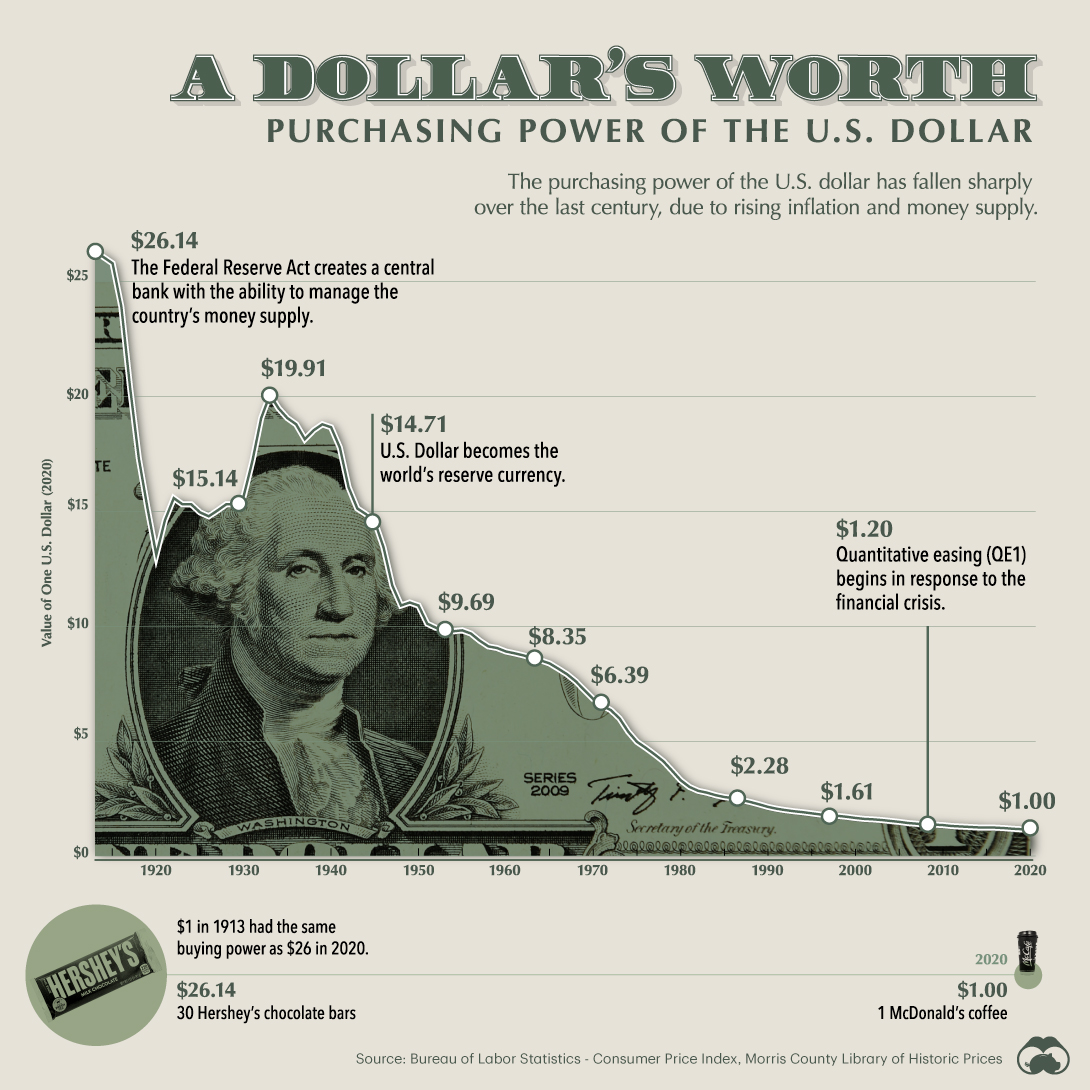
At its most fundamental level, the value of the US dollar is defined by what it can buy within the borders of the United States. This is known as purchasing power. When inflation rises, the purchasing power of the dollar decreases; essentially, it takes more dollars to purchase the same basket of goods and services.
The Consumer Price Index (CPI) is the primary tool used to measure this internal value. If the CPI rises by 5% over a year, a dollar from the previous year is effectively worth 95 cents in terms of real-world utility. For individuals focused on personal finance, this internal value is the most critical factor, as it determines the real rate of return on savings and the cost of living. Over the long term, the dollar’s internal value has historically trended downward, which is why savvy investors seek assets—such as stocks or real estate—that appreciate faster than the rate of inflation.
External Exchange Rates and the DXY Index
The second dimension of the dollar’s value is its price relative to other currencies. This is the value most often discussed in financial news. If the dollar “strengthens,” it means one dollar can be exchanged for more Euros, Yen, or Pounds than previously possible.
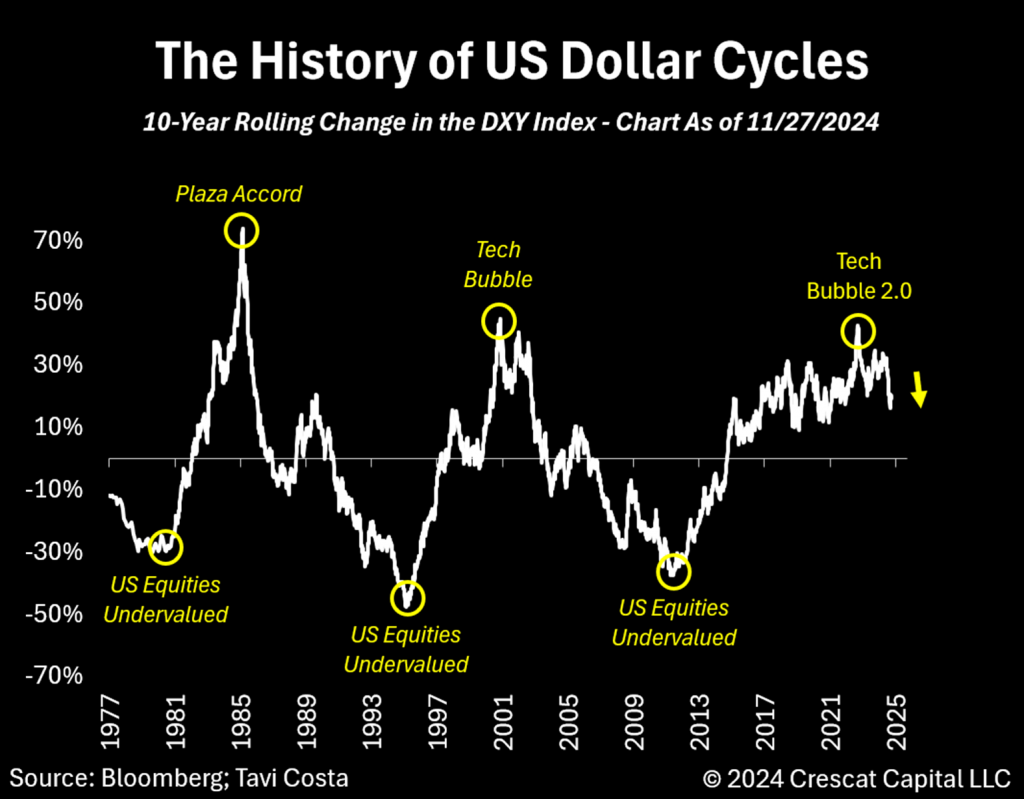
The most prominent metric for this is the US Dollar Index (DXY). This index measures the value of the dollar against a basket of six major world currencies. When the DXY is high, the dollar is strong relative to its global peers. This external value is driven by foreign demand for US assets. If international investors want to buy US Treasury bonds or invest in American tech companies, they must first buy dollars, driving the price up. Conversely, when investors seek higher returns in emerging markets, they sell dollars, causing the exchange value to dip.
The Dollar as the World’s Reserve Currency
The third dimension is the most abstract but perhaps the most powerful: the dollar’s role as the global reserve currency. Currently, roughly 60% of all central bank foreign exchange reserves are held in US dollars. Furthermore, the vast majority of international trade—including the global oil market—is denominated in greenbacks.
This “reserve status” gives the dollar an intrinsic value that defies typical market logic. It creates a constant, global demand for the currency that exists regardless of the United States’ immediate economic performance. This status allows the US to borrow money more cheaply than other nations and provides a “safety net” for the currency’s value during times of global turmoil.
Macroeconomic Drivers: What Moves the Needle?
The value of the dollar does not move in a vacuum. It is the result of a complex interplay of domestic policy and global sentiment. For those involved in business finance or active investing, understanding these drivers is crucial for forecasting market shifts.
Interest Rates and the Federal Reserve
The single most influential factor in the dollar’s value is the monetary policy set by the Federal Reserve. When the Fed raises interest rates, it increases the yield on dollar-denominated assets, such as savings accounts and government bonds. Higher yields attract foreign capital seeking the best possible return on investment.
As capital flows into the United States to take advantage of these higher rates, the demand for the dollar increases, driving up its value. This is why financial markets react so intensely to Federal Reserve meetings. Even the hint of a rate hike can cause the dollar to rally, while the prospect of rate cuts usually leads to a decline in value as investors look elsewhere for yield.
Geopolitical Stability and Safe Haven Status
In times of global crisis—be it a pandemic, a war, or a financial meltdown—the dollar often gains value regardless of the economic conditions within the US. This is known as “safe haven” behavior. Because the US has a stable legal system, a massive military, and the world’s most liquid capital markets, global investors view the dollar as the ultimate “flight to safety.”
When the world becomes unpredictable, the priority for many large institutions shifts from “return on capital” to “return of capital.” They sell riskier assets and move their wealth into US Treasuries. This massive influx of capital provides a floor for the dollar’s value, often leading to a paradoxical situation where the dollar strengthens even as the US economy faces its own challenges.
Trade Balances and Economic Productivity
The “real” economy also plays a role. The trade balance—the difference between a country’s exports and imports—influences currency demand. Historically, a trade deficit (importing more than exporting) puts downward pressure on a currency because it means more of that currency is being sent abroad than is being brought in.
However, the US has maintained a persistent trade deficit for decades without a total collapse of the dollar. This is because the “capital account” offsets the “trade account.” While the US sends dollars abroad to buy goods, foreign entities send those dollars back to the US to buy assets like real estate, stocks, and bonds. The dollar’s value, therefore, is heavily reliant on the US remaining an attractive destination for global investment.
The Global Impact of a Strong vs. Weak Dollar
The fluctuation of the US dollar value is a double-edged sword. A “strong” dollar is not inherently better than a “weak” dollar; rather, each state creates winners and losers across the global economic landscape.
Effects on International Trade and Emerging Markets
A strong dollar makes foreign goods cheaper for American consumers. It essentially gives every American a “raise” in terms of their ability to buy imported electronics, cars, or clothing. However, it makes American-made products more expensive for the rest of the world. For US-based multinational corporations, a strong dollar can be a headwind, as their foreign earnings are worth fewer dollars when converted back for financial reporting.
Perhaps the most significant impact of a strong dollar is felt in emerging markets. Many developing nations borrow money in US dollars. When the dollar increases in value, the cost of servicing that debt rises in their local currency terms. This can lead to financial instability, capital flight, and even sovereign defaults in vulnerable economies.
Impact on Commodities and Energy Prices
Most of the world’s essential commodities—gold, silver, copper, and oil—are priced in US dollars. This creates an inverse relationship between the dollar’s value and commodity prices. When the dollar is strong, it takes fewer dollars to buy a barrel of oil; therefore, oil prices often drop (all else being equal).
For investors, this makes the dollar a critical variable in commodity-based portfolios. A weakening dollar is often a signal for a “commodity super-cycle,” where the prices of raw materials surge as the currency used to buy them loses value.
Domestic Implications for Investors and Consumers
For the domestic investor, a strong dollar usually correlates with lower inflation, as the cost of imports is suppressed. This can be beneficial for those living on fixed incomes or those with significant cash holdings. Conversely, a weakening dollar can be a boon for the stock market, particularly for companies that derive a large portion of their revenue from overseas.
Understanding this balance is a key component of sophisticated portfolio management. Investors often “hedge” their currency risk by holding assets in different denominations or by using financial instruments that profit when the dollar moves in a specific direction.
The Evolving Future: Is the Dollar’s Value at Risk?
While the dollar has reigned supreme for nearly a century, the nature of its value is currently being challenged by new technologies and changing geopolitical alliances. The conversation around “de-dollarization” has moved from the fringes of economic theory into mainstream financial analysis.
De-dollarization and Alternative Assets
Several nations, most notably the BRICS bloc (Brazil, Russia, India, China, and South Africa), have actively sought to reduce their dependence on the US dollar for international trade. By settled trades in local currencies or gold, these nations aim to insulate themselves from US sanctions and the volatility of US monetary policy.
While the dollar remains the dominant force due to the sheer size of the US bond market and the lack of a viable alternative, these shifts suggest a move toward a “multipolar” currency world. For the first time in decades, the dollar’s “exorbitant privilege”—the ability to run massive deficits because the world demands its currency—is being scrutinized.
The Rise of Digital Assets and CBDCs
The digital revolution is also reshaping the concept of currency value. Central Bank Digital Currencies (CBDCs) are being explored by the Federal Reserve and other global institutions. A “Digital Dollar” could potentially increase the efficiency of transactions and maintain the dollar’s dominance in a digital-first global economy.
Furthermore, the rise of decentralized assets like Bitcoin has introduced a new variable. Some investors now view digital assets as a “digital gold”—a way to opt out of the inflationary pressures of fiat currency. While these assets do not yet threaten the dollar’s role in daily commerce, they represent a growing sentiment that the long-term value of any fiat currency, including the dollar, requires a modern alternative.
Strategic Takeaways for Personal Finance
Navigating the value of the US dollar requires a proactive approach to wealth management. For the individual, the most important takeaway is that “cash” is not a static asset. Holding large amounts of cash without an investment strategy exposes one to the silent erosion of purchasing power.
To hedge against the fluctuations of the dollar, a diversified financial strategy is essential. This includes:
-
Inflation-Protected Securities: Assets like TIPS (Treasury Inflation-Protected Securities) can help preserve purchasing power when the internal value of the dollar drops.
-
Global Diversification: Investing in international equities allows a portfolio to benefit when the dollar weakens against foreign currencies.
-
Hard Assets: Real estate and commodities often maintain their “real” value regardless of the nominal value of the paper currency.
The value of the US dollar is the heartbeat of the global financial system. It is a reflection of trust, power, and economic productivity. While its role may evolve in the coming decades, understanding its current mechanics remains the most vital tool for anyone looking to master their personal and business finances in an interconnected world.
aViewFromTheCave is a participant in the Amazon Services LLC Associates Program, an affiliate advertising program designed to provide a means for sites to earn advertising fees by advertising and linking to Amazon.com. Amazon, the Amazon logo, AmazonSupply, and the AmazonSupply logo are trademarks of Amazon.com, Inc. or its affiliates. As an Amazon Associate we earn affiliate commissions from qualifying purchases.