
For millions of Americans facing disabling conditions that prevent them from working, Social Security Disability (SSD) benefits represent a vital financial lifeline. However, the path to understanding and calculating these potential benefits can often feel like navigating a complex maze. One of the most common and pressing questions for individuals considering or applying for disability is: “How much will I receive?” This question naturally leads many to seek out a Social Security Disability benefit amount calculator, a tool that, while incredibly useful, requires careful understanding and interpretation.
This article will demystify the process, explaining the core components that determine your SSD benefit, highlighting the functionality and limitations of online calculators, and guiding you on how to best use these tools as part of a broader financial strategy when facing disability.

Navigating the Complexities of Social Security Disability Benefits
Before even touching a calculator, it’s crucial to grasp the foundational aspects of Social Security Disability benefits. This isn’t a single, monolithic program but rather a system with distinct components, each with its own eligibility criteria and benefit calculation methodologies.
What is Social Security Disability (SSD)?
Social Security Disability is a federal program administered by the Social Security Administration (SSA) designed to provide financial assistance to individuals who are unable to work due to a severe medical condition that is expected to last for at least one year or result in death. It’s not a short-term benefit; rather, it’s intended for long-term disability. The definition of disability under Social Security is very strict: you must not be able to do substantial gainful activity (SGA) because of your medical condition, and your condition must significantly limit your ability to do basic work activities.
Eligibility Requirements: A Foundation for Benefits
Eligibility for SSD isn’t solely based on your medical condition. It’s also tied to your work history and, for some programs, your financial need. To qualify for most SSD benefits, you must have worked long enough and recently enough under Social Security to have accumulated a certain number of “work credits.” These credits are earned through your earnings over the years. The number of credits required varies depending on your age when your disability began. For instance, most adults need 40 credits, with 20 of those earned in the last 10 years ending with the year you become disabled. Without meeting these work credit requirements, even a severe disability may not qualify you for Social Security Disability Insurance (SSDI).
The Difference Between SSDI and SSI
It’s vital to distinguish between the two primary types of Social Security Disability benefits, as they cater to different situations and have distinct calculation methods:
-
Social Security Disability Insurance (SSDI): This program is for those who have worked and paid Social Security taxes (FICA) for a sufficient period. It’s an “insurance” program, meaning your past contributions entitle you to benefits. The amount of your SSDI benefit is based on your average lifetime earnings. This is the program most directly addressed by typical “benefit amount calculators.”
-
Supplemental Security Income (SSI): This is a needs-based program for low-income individuals who are disabled, blind, or age 65 or older. Unlike SSDI, eligibility for SSI does not depend on your work history but rather on your income and resources (assets). The benefit amount for SSI is a federal maximum, which can be supplemented by state payments in some areas, and is reduced by any other countable income you receive. While there are “calculators” for SSI, they primarily determine eligibility and how much your benefit might be reduced by other income, rather than calculating a benefit based on earnings history.
Most online “Social Security Disability benefit amount calculators” are primarily designed to estimate SSDI benefits. Understanding this distinction is the first step toward using them effectively.
Decoding Your Potential Benefit Amount: Key Influencing Factors
For SSDI, your benefit amount is not arbitrary; it’s a direct reflection of your past earnings and contributions to the Social Security system. Several key factors intertwine to determine the monthly payment you might receive.
The Significance of Your Work History and Earnings Record
Your entire earnings record, specifically the earnings on which you paid Social Security taxes, forms the bedrock of your SSDI benefit calculation. The SSA keeps a meticulous record of your covered earnings throughout your career. Generally, the higher your average earnings over your working life, the higher your potential SSDI benefit. Consistent employment at a higher wage translates directly into a more substantial benefit.
Average Indexed Monthly Earnings (AIME) Explained
The SSA doesn’t just take a simple average of your earnings. Instead, it uses a process called “indexing” to account for changes in general wage levels over time. This ensures that your past earnings are brought up to current value, preventing benefits from being unfairly deflated by inflation.
The SSA calculates your Average Indexed Monthly Earnings (AIME) by:
-
Identifying your highest earnings years (typically 35 years for retirement, but fewer for disability, depending on your age).
-
Indexing these earnings to reflect changes in the national average wage.
-
Summing these indexed earnings and dividing by the number of months in your selected earnings period to arrive at the AIME.
This AIME is a crucial intermediate step in determining your benefit.
Primary Insurance Amount (PIA) and Its Role
Once your AIME is determined, the SSA uses a formula to convert it into your Primary Insurance Amount (PIA). The PIA is the monthly benefit you would receive if you started receiving benefits at your full retirement age. For disability benefits, your SSDI payment is typically equal to your PIA.
The PIA formula is progressive, meaning it replaces a higher percentage of earnings for lower-income workers than for higher-income workers. It uses “bend points” – specific dollar amounts that divide the AIME into segments, each segment having a different percentage applied to it. This structure ensures that even those with lower earnings receive a reasonable safety net.
Maximum and Minimum Benefit Limits
While your earnings history is paramount, there are both maximum and minimum limits on SSDI benefits. There’s a cap on the amount of earnings that are subject to Social Security taxes each year, which in turn limits the maximum possible AIME and thus the maximum SSDI benefit. Conversely, while there isn’t a specific statutory minimum SSDI benefit, the progressive PIA formula ensures that even those with modest earnings receive a foundational benefit amount. It’s important to note that families receiving SSDI benefits may also be subject to a family maximum benefit.
The Indispensable Tool: Understanding the SSD Benefit Calculator

Given the complexity of AIME, PIA, and bend points, manually calculating your potential SSDI benefit is daunting for most individuals. This is where the Social Security Disability benefit amount calculator becomes an invaluable financial tool.
Why Use an SSD Benefit Calculator?
An SSD benefit calculator serves several critical purposes:
-
Estimating Potential Income: It provides a realistic expectation of the monthly financial support you might receive, which is crucial for personal financial planning during a challenging time.
-
Informed Decision-Making: Knowing an estimated benefit amount can help you decide whether to pursue a disability claim, consider other income sources, or plan for necessary lifestyle adjustments.
-
Initial Financial Assessment: It offers a quick, albeit estimated, overview without requiring extensive interaction with the SSA initially.
-
Empowerment: Understanding how your past work history translates into future benefits can be empowering, providing clarity in an otherwise opaque process.
What Information Does a Calculator Require?
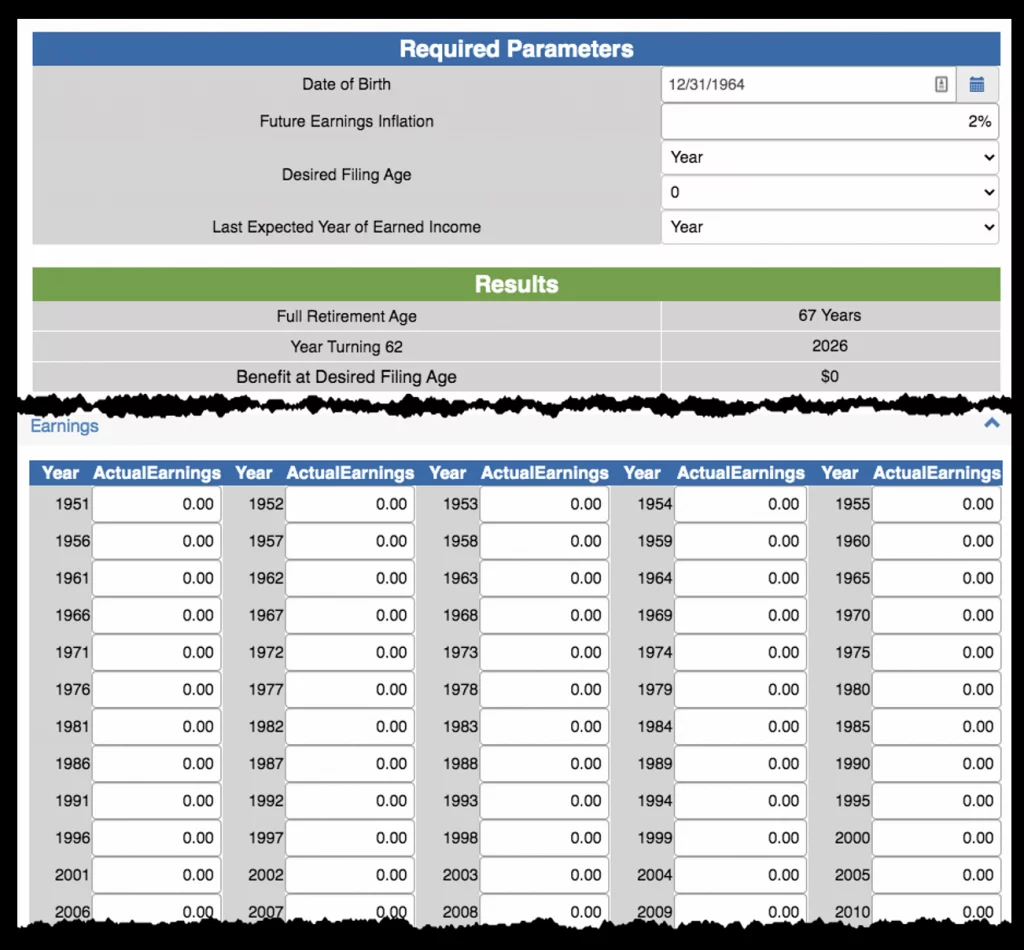
To provide an accurate estimate, a robust SSD benefit calculator will typically ask for information such as:
-
Date of Birth: To determine your age and the specific periods for earnings calculations.
-
Date of Disability Onset: This is critical because it impacts the number of years of earnings used in the AIME calculation.
-
Annual Earnings History: This is the most crucial data point. Some calculators might ask for a few recent years, while more sophisticated ones might allow you to input a more comprehensive history or link to your Social Security statement.
-
Current Year’s Earnings (if applicable): To account for any earnings prior to your disability onset in the current year.
The Limitations of Online Calculators
While incredibly useful, it’s vital to approach online calculators with a clear understanding of their limitations:
-
Estimates, Not Guarantees: No online calculator can provide a definitive, legally binding benefit amount. The final determination rests solely with the SSA after a thorough review of your application.
-
Data Accuracy: The accuracy of the estimate heavily depends on the accuracy of the data you input. Missing or incorrect earnings information will lead to skewed results.
-
Simplifications: Many public calculators use simplified formulas or averages and may not account for every nuance of the SSA’s complex calculations, such as specific non-covered earnings, certain types of benefits, or potential future legislative changes.
-
Exclusion of SSI: As mentioned, most SSDI calculators do not estimate SSI benefits.
-
No “Family Maximum” Calculation: While SSDI benefits can extend to dependents, most basic calculators won’t estimate the family maximum benefit, which could cap total payments.
Where to Find Reliable Calculators
The most reliable source for a personalized benefit estimate is directly from the Social Security Administration itself. You can:
-
Create a “My Social Security” Account: This free online account allows you to view your personalized Social Security Statement, which includes your complete earnings record and an estimated disability benefit amount based on your actual earnings. This is by far the most accurate “calculator” available.
-
Use the SSA’s Benefit Calculators: The SSA website offers various calculators, including a retirement estimator that can also give insights into potential disability benefits based on your earnings history.
-
Reputable Third-Party Websites: Some disability advocacy groups, financial planning sites, and legal firms offer calculators that aim for accuracy, but always cross-reference or verify the methodology.
Maximizing Accuracy: Tips for Using Your Calculator Effectively
To get the most meaningful estimate from an SSD benefit calculator, strategic preparation and careful interpretation are key.
Gathering Your Essential Data
Before you even open a calculator, gather the necessary information. The most crucial document is your Social Security Statement, which you can access by creating a “My Social Security” account online. This statement provides:
-
Your official earnings record year-by-year.
-
An estimate of your future retirement benefits.
-
Crucially, an estimate of your disability benefit amount if you became disabled now.
Having your actual earnings data from your statement will make any third-party calculator significantly more accurate. If you don’t have this, try to compile your earnings from W-2s or tax returns for as many years as possible.
Interpreting the Results Responsibly
Remember, the result you get from an online calculator is an estimate. It should be used for planning purposes, not as a guarantee.
-
Understand the “What If”: Use the calculator to explore different scenarios, such as how slightly higher past earnings might have affected your benefit, or how the number of “work credits” you have impacts eligibility.
-
Factor in Other Income/Resources: If you’re also considering SSI, remember that other income and resources will directly reduce your SSI benefit. An SSDI calculator won’t account for this.
-
Consider Future Changes: Social Security rules and benefit amounts can change over time due to legislative action or cost-of-living adjustments (COLAs). Your estimate is based on current laws and formulas.
Understanding Estimates vs. Guaranteed Amounts
The difference between an estimate and a guaranteed amount is profound. An estimate is a projection based on known data and current rules. A guaranteed amount is what the SSA officially awards you after their comprehensive review process, which includes evaluating your medical condition against their strict disability criteria. The calculator only tells you what your benefit might be if you are found disabled; it does not predict whether you will be found disabled.
Beyond the Calculation: Next Steps and Professional Guidance
While knowing your potential benefit amount is a critical piece of the puzzle, it’s just one step in a much larger journey.
The Application Process: What to Expect
Applying for Social Security Disability benefits is often a lengthy and complex process. It involves:
-
Completing detailed applications: Providing extensive personal, work, and medical history.
-
Submitting medical evidence: Supplying comprehensive medical records, test results, and doctor’s reports to substantiate your disability claim.
-
Potential appeals: Many initial applications are denied, requiring applicants to go through several levels of appeal, which can take months or even years.
When to Consult a Disability Attorney or Advocate
Given the complexities and high denial rates, many applicants find it beneficial to consult with a Social Security Disability attorney or advocate. These professionals can:
-
Help you understand the eligibility criteria more clearly.
-
Assist in gathering and presenting compelling medical evidence.
-
Navigate the application and appeals process.
-
Represent you at hearings.
-
Often work on a contingency basis, meaning they only get paid if you win your case, and their fees are capped by law.
While a calculator provides a financial projection, an attorney focuses on ensuring you meet the medical and technical requirements to receive that benefit.
Financial Planning Post-Disability Approval
Should your disability claim be approved, your financial planning takes on a new dimension. Your SSDI benefits, while crucial, may not replace your full pre-disability income. It’s essential to:
-
Budget carefully: Adjusting to a new income level.
-
Explore other benefits: Understanding Medicare eligibility (after 24 months of SSDI benefits) and other potential state or local programs.
-
Consider long-term financial stability: Even with SSDI, planning for the future, potential medical expenses, and ongoing financial needs remains paramount.
In conclusion, a Social Security Disability benefit amount calculator is a powerful tool for personal financial insight, offering a window into your potential financial future if you become disabled. However, it’s most effective when used with an understanding of its underlying mechanisms, its limitations, and in conjunction with official SSA resources and, when appropriate, professional legal guidance. Armed with this knowledge, you can navigate the complexities of disability benefits with greater confidence and clarity.
aViewFromTheCave is a participant in the Amazon Services LLC Associates Program, an affiliate advertising program designed to provide a means for sites to earn advertising fees by advertising and linking to Amazon.com. Amazon, the Amazon logo, AmazonSupply, and the AmazonSupply logo are trademarks of Amazon.com, Inc. or its affiliates. As an Amazon Associate we earn affiliate commissions from qualifying purchases.