
In the intricate world of finance, where every fraction of a percentage point can signify substantial gains or losses, precision isn’t just a virtue—it’s a necessity. While the question “what is 5 and 1/8 as a decimal?” might appear to be a basic mathematical query, its implications ripple through nearly every facet of personal finance, investing, business operations, and even online income strategies. Understanding how to convert fractions to decimals is not merely an academic exercise; it’s a fundamental skill that underpins sound financial decision-making, enabling individuals and businesses alike to navigate complex calculations with clarity and confidence.

From budgeting and expense tracking to calculating interest, analyzing stock prices, or determining profit margins, the ability to fluidly translate between fractional and decimal representations is paramount. This conversion acts as a bridge, transforming often archaic or unwieldy fractional figures into the universal, easily comparable decimal format that drives modern financial systems. Let’s delve into why this seemingly simple conversion holds such significant weight in the realm of money and how mastering it empowers financial acumen.
The Foundational Importance of Decimal Conversion in Finance
At its core, finance thrives on clarity, consistency, and comparability. While fractions represent divisions of a whole, they can sometimes obscure the true magnitude or precise value of a financial figure, especially when dealing with complex calculations or comparisons. Decimals, on the other hand, offer a standardized, linear representation that aligns perfectly with our base-10 number system, making them the preferred language of financial markets, banking, and accounting.
Why Fractions Persist in Financial Contexts
Despite the decimal’s dominance, fractions still occasionally surface in financial discussions, often as remnants of historical practices or in specific niche applications. For instance, stock prices were traditionally quoted in eighths, sixteenths, or even thirty-seconds of a dollar, a practice that only fully transitioned to decimals in the early 2000s in major US exchanges. While less common now, understanding these historical precedents provides context for why some financial documents or older asset valuations might still reference fractional values. Beyond historical quirks, fractions might appear in property dimensions, material costing for construction projects, or even in recipes for catering businesses where precise scaling is critical and often initially expressed in common fractions. In these scenarios, converting these figures to decimals becomes crucial for financial planning, budgeting, and accurate expense tracking.
Bridging the Gap: Decimals as the Universal Financial Language
The modern financial landscape, from digital banking apps to high-frequency trading algorithms, operates almost exclusively on decimals. Interest rates, exchange rates, asset prices, profit percentages, and even micro-transactions are all expressed with decimal precision. This standardization allows for seamless calculations, comparisons, and automated processing across diverse financial platforms. Without the ability to convert fractions to decimals, one would be ill-equipped to engage effectively with contemporary financial tools and information. Decimals provide the common denominator—pun intended—that allows for apples-to-apples comparisons, enabling informed investment choices, accurate budget allocations, and transparent financial reporting.
Deconstructing 5 and 1/8: A Step-by-Step Financial Application
To illustrate the practical application, let’s break down the conversion of 5 and 1/8 to a decimal, framing it within a financial context.
Understanding Mixed Numbers in Monetary Terms
The number “5 and 1/8” is a mixed number, comprising a whole number part (5) and a fractional part (1/8). In finance, this could represent various quantities:
-
5 and 1/8 acres of land purchased for development.
-
5 and 1/8 hours worked beyond standard payroll for an overtime calculation.
-
5 and 1/8 units of a raw material required for a production batch.
-
5 and 1/8 percentage points in an interest rate adjustment (though less common, useful for conceptual understanding).
The “5” is straightforward; it represents five whole units of whatever financial quantity we’re discussing. The challenge, and the focus of our conversion, lies in the “1/8” component.
The Conversion Process: From Fraction to Decimal
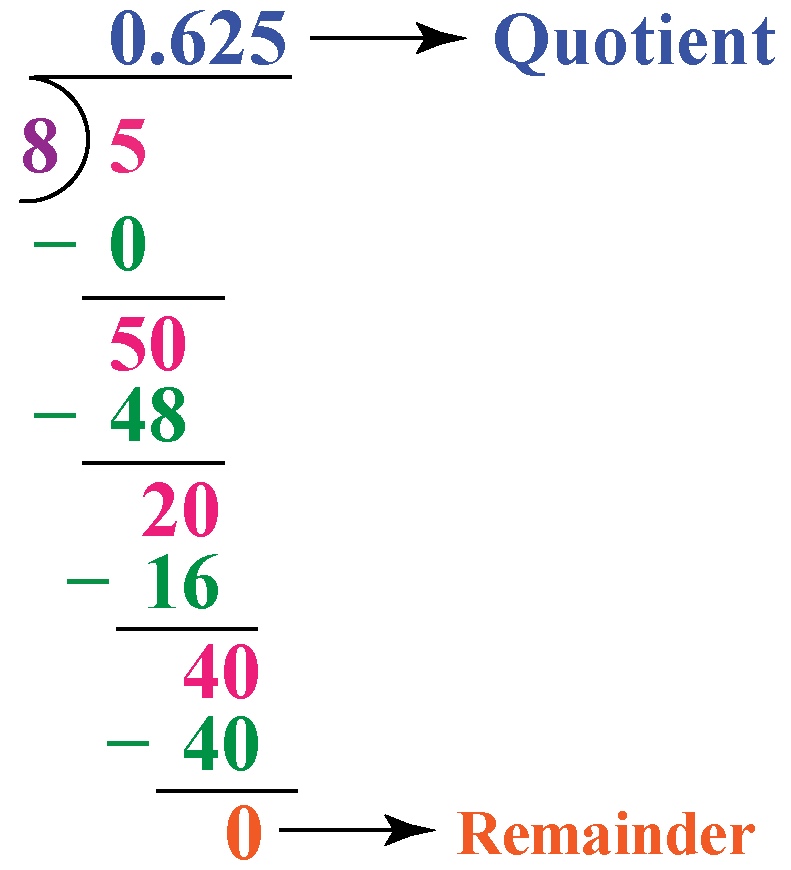
Converting 1/8 to a decimal involves simple division. A fraction represents division: the numerator divided by the denominator.
-
Divide the numerator by the denominator: 1 ÷ 8.
-
Perform the division:
-
1 cannot be divided by 8 to produce a whole number, so we add a decimal point and a zero: 1.0
-
8 goes into 10 once (8 x 1 = 8), with a remainder of 2.
-
Bring down another zero: 20
-
8 goes into 20 twice (8 x 2 = 16), with a remainder of 4.
-
Bring down another zero: 40
-
8 goes into 40 five times (8 x 5 = 40), with no remainder.
-
So, 1/8 = 0.125.
-
-
Combine with the whole number: Now, add this decimal fraction to the whole number part (5).
- 5 + 0.125 = 5.125.
Therefore, 5 and 1/8 as a decimal is 5.125.
Verifying Your Calculations: Precision for Profit
In finance, verifying calculations is not just good practice; it’s a critical safeguard against errors that could lead to financial losses or misinformed decisions. If you’re calculating an investment return, a loan payment, or even the cost of goods sold, an incorrect conversion can throw off entire financial models. Simple verification steps include:
-
Mental Estimation: You know 1/8 is less than 1/4 (0.25) and more than 1/10 (0.10). So, 0.125 makes sense. The total 5.125 is just slightly more than 5, which is logical.
-
Using a Calculator: For critical calculations, always use a reliable calculator or spreadsheet function. Inputting 5 + (1/8) or 5 + (1 ÷ 8) should yield 5.125. This step is less about “trusting” the calculator and more about double-checking your manual work or understanding how to correctly input fractional values into financial tools.
-
Contextual Review: Does the resulting decimal figure make sense within the financial context? If 5 and 1/8 represented an interest rate, would 5.125% be a plausible rate, or does it seem wildly off?
Practical Applications of Decimal Precision in Personal Finance
The conversion of fractions to decimals, exemplified by 5 and 1/8 becoming 5.125, has tangible benefits across various personal finance activities.
Budgeting and Expense Tracking: No Room for Ambiguity
When constructing a budget, every dollar, and indeed every cent, counts. If you have various income streams or expense categories that are occasionally expressed in fractional amounts (e.g., a side hustle paying based on “a quarter of the project complete,” or a utility bill that charges based on “eighths of a unit”), converting these to decimals instantly clarifies their monetary value. For instance, if you earn a bonus of “one and an eighth” times your base pay, knowing that’s 1.125 times your pay check allows for accurate income projections. Similarly, tracking expenses for a DIY project might involve quantities like “5 and 1/8 feet” of material at a certain cost per foot; converting this to 5.125 feet ensures your material budget is precise. Ambiguity stemming from fractions can lead to either under-budgeting (running out of money) or over-budgeting (tying up funds unnecessarily).
Understanding Interest Rates and Loan Payments
Interest rates, whether for savings accounts, credit cards, or mortgages, are almost universally presented as percentages, which are essentially decimals (e.g., 5.125% is 0.05125 in decimal form for calculation). While it’s rare to see a loan advertised as “five and one-eighth percent,” understanding how to convert 1/8 to 0.125 means you can readily interpret and compare rates across different lenders. For example, if a variable rate loan fluctuates by “an eighth of a percent,” knowing this equates to 0.125% allows you to accurately predict changes in your monthly payments and overall interest costs. This precision is vital for financial planning and making informed borrowing decisions.
Real Estate and Property Valuation: Beyond Whole Numbers
Real estate transactions often involve precise measurements and valuations where fractions can play a role. Land parcels might be described in acres or square footage with fractional components (e.g., 5 and 1/8 acres). When calculating property taxes, potential rental income per square foot, or even construction costs based on specific material quantities, converting these fractional dimensions to decimals ensures accuracy. A miscalculation of even an eighth of an acre could lead to significant financial discrepancies in large-scale property deals. Moreover, understanding how different parts of a property contribute to its overall value often requires breaking down costs and benefits into decimal-precise units.
Strategic Investment and Business Finance: The Decimal Advantage
For investors and business owners, decimal precision is not just about accuracy; it’s about strategic advantage, risk management, and maximizing returns.
Stock Market Analysis: Fractional Shares and Price Movements
Although major exchanges moved away from fractional stock quotes, the concept of fractional shares is very much alive, especially with the rise of commission-free trading and robo-advisors. Investors can now often buy “0.125” of a share, for example. Understanding that this 0.125 is equivalent to 1/8 of a share is crucial for comprehending your ownership stake and calculating portfolio values. Furthermore, while stock prices are quoted in dollars and cents, underlying movements and analyst targets might sometimes be described in “eighths” of a point, especially in older literature or expert discussions. A stock moving up by “one and an eighth dollars” means it increased by $1.125, which directly impacts your portfolio’s value. In options trading, where contracts are highly sensitive to small price movements, this level of precision is paramount.
Business Costing and Profit Margins
For businesses, calculating costs and profit margins with absolute precision is non-negotiable. Whether it’s the cost of raw materials (e.g., 5 and 1/8 kilograms of an ingredient), manufacturing overhead, or shipping expenses, fractional quantities need to be converted to decimals to determine true unit costs and, subsequently, accurate selling prices. If a product uses “one and an eighth” units of a component that costs $10 per unit, the component cost is $11.25. An error here, scaled across thousands of units, can significantly erode profit margins or lead to incorrect pricing strategies. Precise decimal calculations ensure that businesses understand their true financial position, enabling them to set competitive prices, manage inventory effectively, and forecast profitability accurately.
International Transactions and Currency Exchange
When engaging in international trade or managing investments across borders, currency exchange rates introduce another layer of decimal complexity. While rates are typically provided in decimals (e.g., 1 USD = 0.92 EUR), understanding how small fractional changes can impact large transactions is vital. If an analyst predicts an exchange rate will shift by “an eighth of a cent,” converting this to $0.00125 allows for precise calculation of the potential impact on import/export costs or the value of international assets. Decimal precision prevents costly errors in foreign exchange dealings and ensures that businesses and individuals accurately convert and reconcile international funds.
Leveraging Financial Tools for Seamless Conversions
While understanding the manual conversion process is essential, modern finance offers powerful tools that automate these calculations, ensuring speed and accuracy.
The Power of Spreadsheets (Excel/Google Sheets)
Spreadsheet programs like Microsoft Excel or Google Sheets are indispensable financial tools. They can instantly convert fractions to decimals using simple formulas. If you have “5 1/8” in a cell, you can directly perform calculations or use specific functions to convert it to 5.125. For example, if you input 5+1/8 into a cell, Excel will return 5.125. This capability is invaluable for building complex financial models, budgets, investment trackers, and business expense reports, where hundreds or thousands of such conversions might be needed. The ability to link these decimal values to other calculations ensures that all figures remain current and accurate.
Dedicated Financial Calculators and Software
Beyond spreadsheets, specialized financial calculators (both physical and software-based) are designed for precision. From basic scientific calculators that can handle fractions to advanced financial modeling software, these tools are built to minimize human error in calculations. Investment platforms, accounting software, and budgeting apps inherently process all figures in decimal format, often performing fractional conversions behind the scenes if any fractional input is attempted. Familiarity with these tools and trust in their decimal outputs is crucial for efficient financial management.
When Mental Math Suffices (and When It Doesn’t)
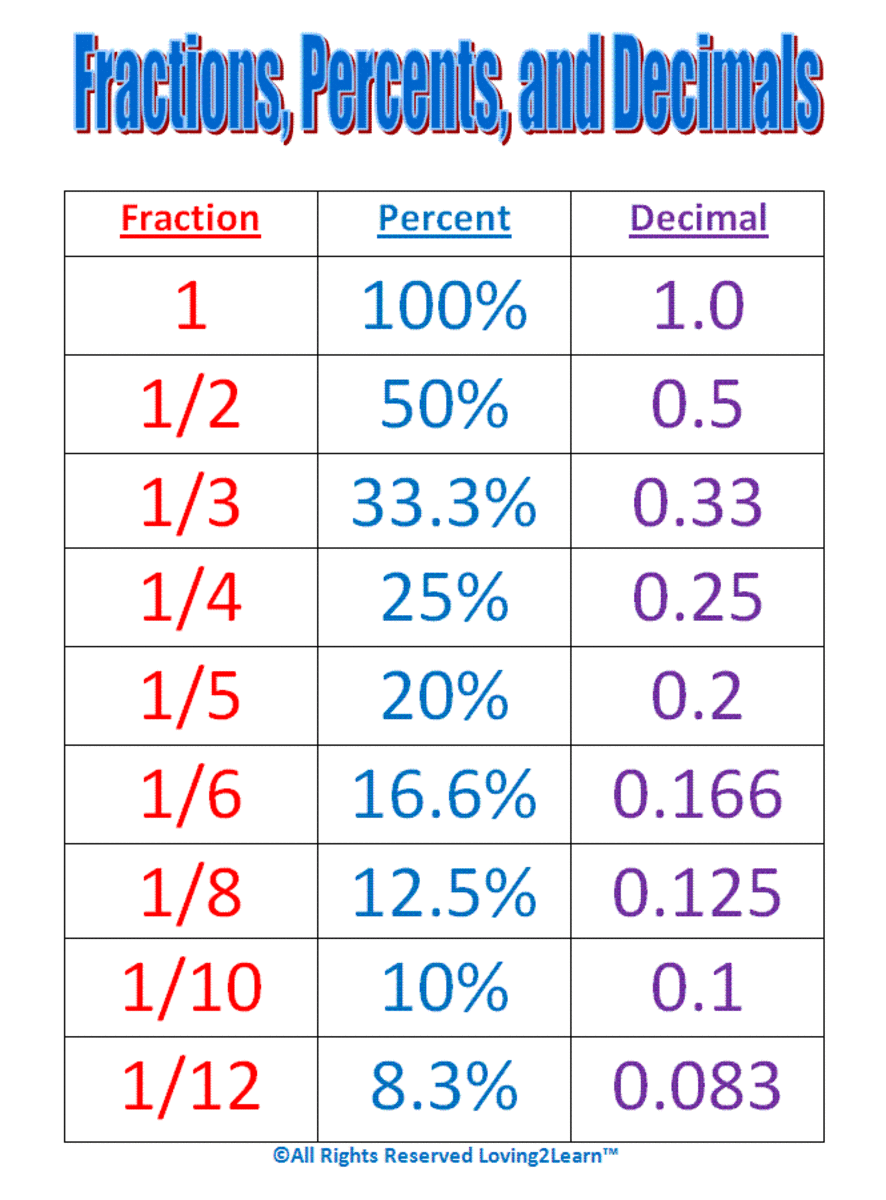
While tools are powerful, a solid grasp of mental math for common fractions (like 1/2=0.5, 1/4=0.25, 1/8=0.125) can provide quick estimations and a “sanity check” for more complex calculations. Knowing that 1/8 is 0.125 allows you to quickly estimate that 5 and 1/8 is roughly 5.1. This rapid assessment can help you spot glaring errors in calculator outputs or spreadsheet formulas. However, for critical financial decisions involving large sums, multiple variables, or legal implications, relying solely on mental math is risky. Precision demands the use of verified tools and meticulous double-checking.
In conclusion, the seemingly simple question “what is 5 and 1/8 as a decimal?” opens the door to a profound understanding of decimal precision’s critical role in the world of money. From personal budgeting to global investing, the ability to convert and interpret fractional values in their decimal equivalents is not just a mathematical skill—it’s a foundational financial literacy requirement that empowers individuals and businesses to make informed, accurate, and ultimately, more profitable decisions. Mastering this fundamental conversion is a step towards greater financial control and strategic advantage in an increasingly data-driven world.
aViewFromTheCave is a participant in the Amazon Services LLC Associates Program, an affiliate advertising program designed to provide a means for sites to earn advertising fees by advertising and linking to Amazon.com. Amazon, the Amazon logo, AmazonSupply, and the AmazonSupply logo are trademarks of Amazon.com, Inc. or its affiliates. As an Amazon Associate we earn affiliate commissions from qualifying purchases.