
At first glance, the phrase “1 and 1/3” might seem like a simple arithmetic problem, a fundamental concept taught in elementary school. However, when we delve into the intricate world of finance, this seemingly straightforward numerical relationship — equivalent to 1.33 or 4/3 — takes on profound significance. It represents a multiplier, a ratio, a growth factor, or a proportion that underpins numerous financial metrics, investment strategies, and economic analyses. Understanding “1 and 1/3” in a financial context is not merely about calculating a sum; it’s about grasping the dynamics of growth, value, and strategic allocation.
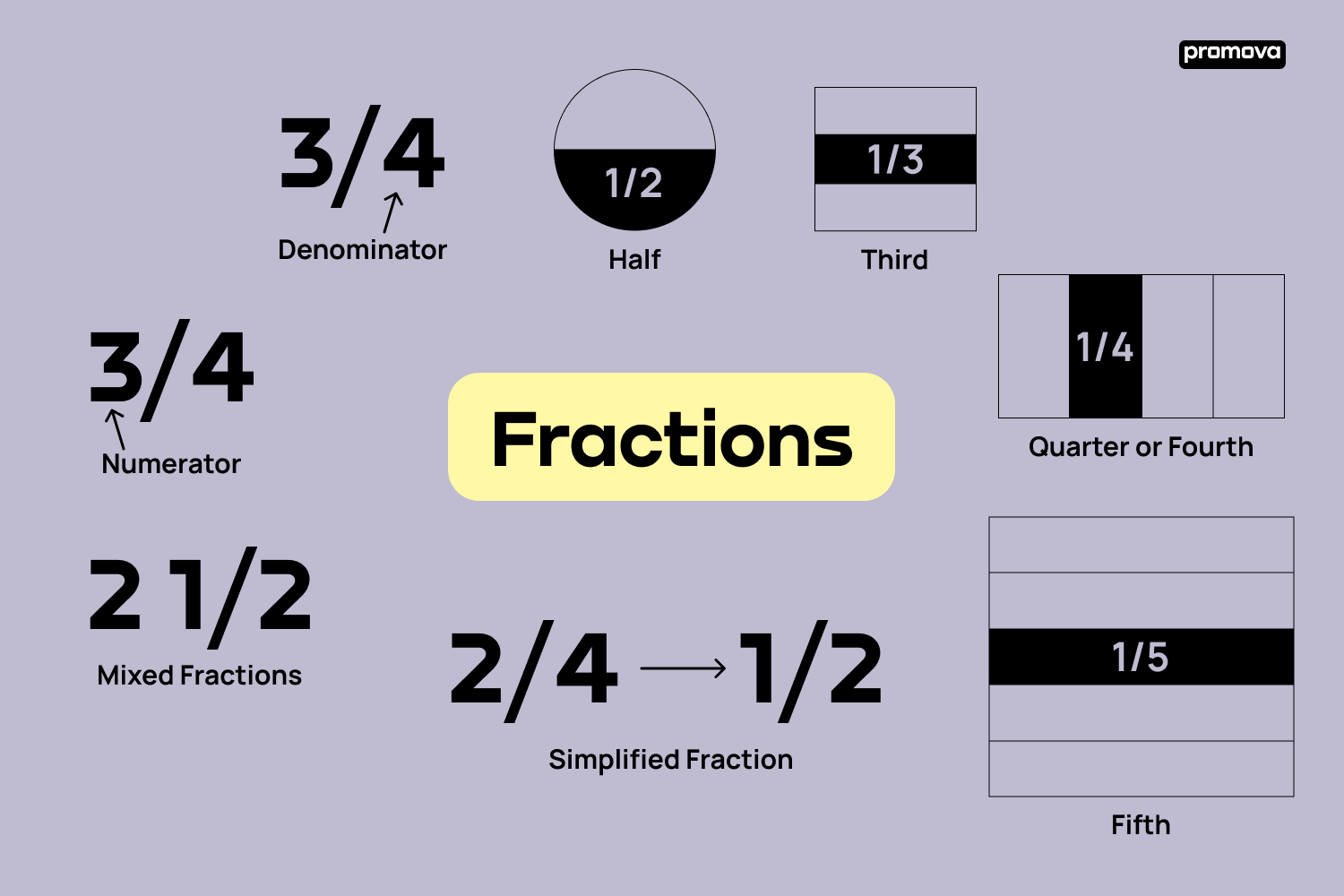
This article will explore the multifaceted role of “1 and 1/3” across personal finance, investing, and business strategy, highlighting how this specific numerical relationship can inform decision-making, illuminate trends, and help craft robust financial plans. From compound interest to profitability ratios, the concept of “1 and 1/3” serves as a versatile tool for quantifying change and opportunity in the financial landscape.
The Ubiquity of 1 and 1/3 in Financial Metrics
In the realm of finance, numbers are the language of performance, potential, and risk. “1 and 1/3” frequently appears as a critical benchmark or a component in various calculations, signifying specific rates of increase, comparative strengths, or proportional distributions. Its presence, whether explicit or implicit, carries substantial meaning for analysts, investors, and business leaders alike.
Understanding Multipliers and Growth Factors
One of the most common interpretations of “1 and 1/3” in finance is its role as a multiplier or a growth factor. When an asset, revenue stream, or investment grows by “1 and 1/3,” it means it has increased to 133.33% of its original value, or an effective growth rate of approximately 33.33%. This seemingly modest fraction can translate into significant gains over time, especially when the principle of compounding comes into play.
-
Investment Returns: Imagine an investment that consistently yields “1 and 1/3” times its initial value over a certain period. This implies a steady 33.33% return. While high, understanding this multiplier helps investors project future values. For instance, if you invest $1,000 and it grows by 1 and 1/3, it becomes $1,333.33. The power of compounding means that if this growth continues, the absolute increase in value accelerates with each subsequent period, turning modest fractional growth into substantial wealth accumulation over the long term.
-
Economic Growth Projections: Economists often use multipliers to forecast GDP growth or the impact of fiscal policies. A factor of 1.33 might represent the expected multiplier effect of government spending on the broader economy, indicating that every dollar spent generates $1.33 in economic activity. Similarly, companies might project revenue growth by a factor of 1 and 1/3 year-over-year, setting ambitious yet quantifiable targets.
Ratios and Proportions in Business Finance
Beyond growth, “1 and 1/3” is instrumental in understanding the relational health and efficiency of a business through various financial ratios. These ratios provide a snapshot of a company’s liquidity, solvency, profitability, and operational efficiency, often comparing one financial metric against another.
-
Current Ratio: This ratio measures a company’s ability to cover its short-term liabilities with its short-term assets. A current ratio of 1.33 would mean a company has $1.33 in current assets for every $1 in current liabilities. While higher is generally better, a ratio of 1.33 suggests a reasonably healthy short-term liquidity position, indicating the company can comfortably meet its immediate obligations without significant strain. It suggests a balance, not overly liquid (which could imply inefficient asset utilization) nor overly constrained.
-
Debt-to-Equity Ratio: While typically expressed differently, the concept of 1 and 1/3 can apply to the proportionality. If a company’s debt is 1.33 times its equity, it indicates a relatively higher reliance on debt financing. The interpretation of whether this is good or bad depends on the industry, company growth phase, and cost of debt, but the ratio provides a clear quantitative measure of leverage.
-
Profitability Ratios: Consider a scenario where a business generates $1.33 in gross profit for every $1 in cost of goods sold (COGS). This gross profit margin of 33.33% (or a multiplier of 1.33 on COGS) highlights a healthy mark-up and operational efficiency. Similarly, if net profit is 1/3 of revenue, it signifies a strong bottom line performance.
Interpreting Investment Returns and Valuations
For investors, “1 and 1/3” can serve as a key figure in assessing the performance of assets, understanding valuation multiples, and making informed decisions.
-
Price-to-Earnings (P/E) Ratio: While P/E ratios are typically higher numbers, the inverse, Earnings Yield (E/P), can sometimes hover around such fractions, indicating the percentage of each dollar invested in the stock that was earned by the company. Or, when comparing two investments, one might be valued at 1 and 1/3 times the P/E of another, signaling a premium based on perceived growth or stability.
-
Dividend Growth: If a company consistently grows its dividend by 1/3 year after year, this signifies an aggressive and attractive income growth strategy for dividend investors. While rare for sustained periods, such a growth rate would dramatically increase the investor’s yield on cost over time.
-
Asset Appreciation: If a specific asset class, like real estate in a booming market, appreciates by 1 and 1/3 over a five-year period, it means the asset’s value has increased by 33.33% (or, more precisely, if its final value is 1 and 1/3 its initial value, then the appreciation rate is 33.33%). This benchmark helps investors compare performance against other investment avenues or inflation.
Practical Applications in Personal Finance and Investing
The concept of “1 and 1/3” extends beyond corporate balance sheets into the realm of personal financial management, offering tangible ways to measure progress and set goals for individuals.
Budgeting and Savings Growth
For personal finance, “1 and 1/3” can be a powerful mental model for enhancing savings and managing expenses.
-
Increasing Savings Rate: If you currently save 10% of your income and aim to increase it by “1 and 1/3,” you’d be targeting a savings rate of 13.33% (10% * 1.333). This provides a concrete, yet ambitious, goal for improving financial security. Strategies to achieve this could include automating savings, reducing discretionary spending by 1/3 in certain categories, or finding ways to increase income.
-
Debt Reduction: Similarly, if you want to accelerate debt repayment, you might aim to pay 1 and 1/3 times your minimum payment each month. This extra effort, particularly against high-interest debt, can significantly reduce the total interest paid and shorten the repayment period, thereby freeing up capital for other financial goals.
-
Emergency Fund Building: Setting a goal to build an emergency fund that is 1 and 1/3 times your current monthly expenses gives you an extra buffer against unforeseen circumstances, enhancing financial resilience.
Real Estate Valuations and Rental Yields
In real estate, “1 and 1/3” can be applied to property valuations, investment returns, and rental income analysis.
-
Property Appreciation Targets: An investor might target properties in markets expected to appreciate by 1 and 1/3 over a decade, indicating an average annual appreciation rate that, compounded, reaches 33.33% over the ten years. This helps in selecting promising markets and properties.
-
Rental Income Growth: If a landlord aims to increase rental income by “1 and 1/3” every five years, it sets a clear objective for rent adjustments or property improvements that justify higher rents, ensuring the investment keeps pace with inflation and market demand.
-
Cap Rate Analysis: While cap rates are typically percentages, comparing properties might involve one having a yield that is 1 and 1/3 times another, reflecting a significant difference in perceived risk or market attractiveness.
Retirement Planning and Future Value
Calculating future wealth for retirement heavily relies on growth multipliers and compounding, where “1 and 1/3” can play a conceptual role.
-
Future Value Projections: When estimating the future value of a retirement portfolio, financial advisors use assumed annual growth rates. If your portfolio grows at a rate that allows it to effectively multiply by 1 and 1/3 every X years (where X depends on the exact annual rate), understanding this multiplier helps in projecting when financial independence might be achieved.
-
Contribution Matching: If an employer matches 1/3 of an employee’s contribution, it’s essentially adding 33.33% to their savings, significantly boosting retirement accumulation through “free money.” Understanding the impact of this “1/3” is crucial for maximizing retirement benefits.
Strategic Implications for Business Growth
For businesses, understanding “1 and 1/3” is not just about backward-looking analysis but also about forward-looking strategy, setting ambitious goals, and optimizing resource allocation.
Revenue and Profitability Targets
Businesses constantly strive for growth, and setting targets that incorporate “1 and 1/3” can be a powerful motivator and strategic guide.
-
Sales Growth Objectives: A company might set a goal to increase its quarterly sales revenue by 1 and 1/3 compared to the previous year. This translates to a 33.33% growth target, requiring specific marketing campaigns, sales team expansions, or product innovations to achieve.
-
Improving Profit Margins: If a company aims to improve its net profit margin to 1 and 1/3 times its current margin, it implies a concerted effort in cost reduction, pricing strategy, and operational efficiency. For instance, if the current margin is 10%, aiming for 13.33% requires rigorous financial management.
-
Market Penetration: A strategy to capture 1 and 1/3 times the current market share means aggressively pursuing new customers or expanding into new geographical areas, requiring substantial investment in sales and marketing.
Resource Allocation and Capital Investment
Strategic allocation of capital and resources is vital for business success. “1 and 1/3” can help frame these decisions.
-
Return on Investment (ROI) Benchmarking: When evaluating potential projects, a business might set an internal benchmark that any new capital investment must generate a return of at least “1 and 1/3” its cost over a specified period. This ensures that investments contribute meaningfully to the company’s financial health.
-
R&D Spending: Allocating 1 and 1/3 times more budget to Research & Development (R&D) in a given year signifies a strategic pivot towards innovation and future growth, acknowledging that such increased investment is likely to yield disproportionate returns in the long run.
-
Employee Productivity: If a company aims to increase employee productivity by 1/3 through training or technology investments, it signifies a direct strategy to enhance efficiency and output without necessarily increasing headcount proportionally.
Market Share and Competitive Advantage
Understanding competitive dynamics often involves comparing market shares and growth rates, where the “1 and 1/3” concept can be applied.
-
Competitive Growth Rates: If a competitor is growing its market share by 1 and 1/3 times faster than your company, it’s a clear signal that strategic adjustments are needed to avoid falling behind.
-
Acquisition Rationale: An acquisition might be justified if the acquired company is expected to boost the acquirer’s revenue or customer base by 1 and 1/3, creating synergistic value beyond the sum of individual parts.
Beyond the Numbers: The Psychological and Strategic Impact
While “1 and 1/3” is fundamentally a numerical concept, its consistent application in financial discussions also carries psychological and strategic weight.
Setting Realistic Yet Ambitious Goals
The use of “1 and 1/3” as a target allows for a blend of ambition and realism. A goal to “double” something might be too aggressive, while merely seeking “more” is too vague. Aiming for “1 and 1/3” provides a concrete, measurable increment (a 33.33% increase) that is substantial enough to be impactful yet often achievable with focused effort. It creates a measurable milestone that drives performance.
Communication and Clarity
Using clear numerical concepts like “1 and 1/3” enhances financial communication. It allows stakeholders – from employees to investors – to quickly grasp the magnitude of a target or the implications of a performance metric. Instead of abstract percentages, relating to a familiar fraction can make financial information more accessible and actionable.
Identifying Discrepancies and Opportunities
When actual financial performance deviates significantly from an expected “1 and 1/3” growth or ratio, it immediately flags an area for deeper analysis. If revenue grows by less than 1 and 1/3, management knows to investigate why. Conversely, if an investment yields far more, it presents an opportunity to understand and replicate success. The deviation itself becomes an insight.

Conclusion
The seemingly simple arithmetic expression “1 and 1/3” transforms into a powerful, versatile concept when applied to the world of finance. Whether interpreted as a multiplier for growth, a component in critical financial ratios, or a benchmark for strategic targets, its presence underscores the quantitative nature of financial decision-making. From charting personal savings goals and evaluating investment opportunities to driving corporate profitability and market expansion, understanding what “1 and 1/3” signifies in various financial contexts is crucial. It provides a tangible, measurable framework for assessing performance, projecting future outcomes, and formulating robust financial strategies, proving that even fundamental numbers hold immense power in shaping our financial destinies.
aViewFromTheCave is a participant in the Amazon Services LLC Associates Program, an affiliate advertising program designed to provide a means for sites to earn advertising fees by advertising and linking to Amazon.com. Amazon, the Amazon logo, AmazonSupply, and the AmazonSupply logo are trademarks of Amazon.com, Inc. or its affiliates. As an Amazon Associate we earn affiliate commissions from qualifying purchases.