
In the world of personal finance and global markets, precision is the bedrock of wealth creation. While a simple fraction like 1 3/4 might seem like a relic of elementary school mathematics, its decimal equivalent—1.75—serves as a critical figure in interest rates, dividend yields, and financial modeling. Understanding how to navigate the transition from fractions to decimals is not just a mathematical exercise; it is a fundamental skill for any investor, business owner, or consumer looking to optimize their financial health.
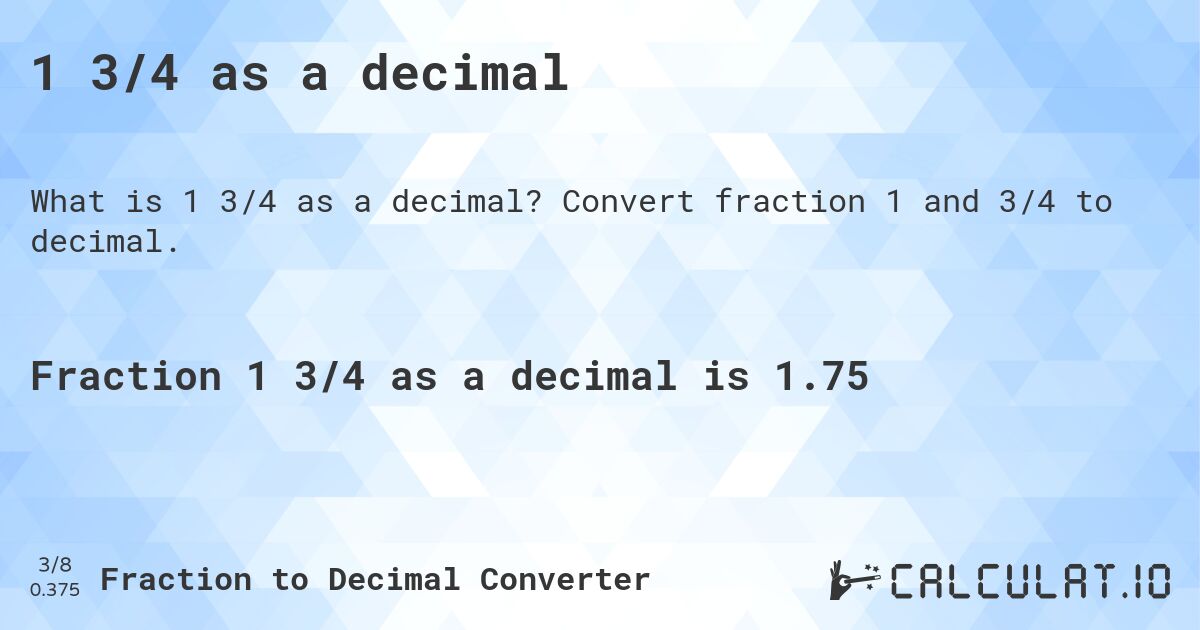
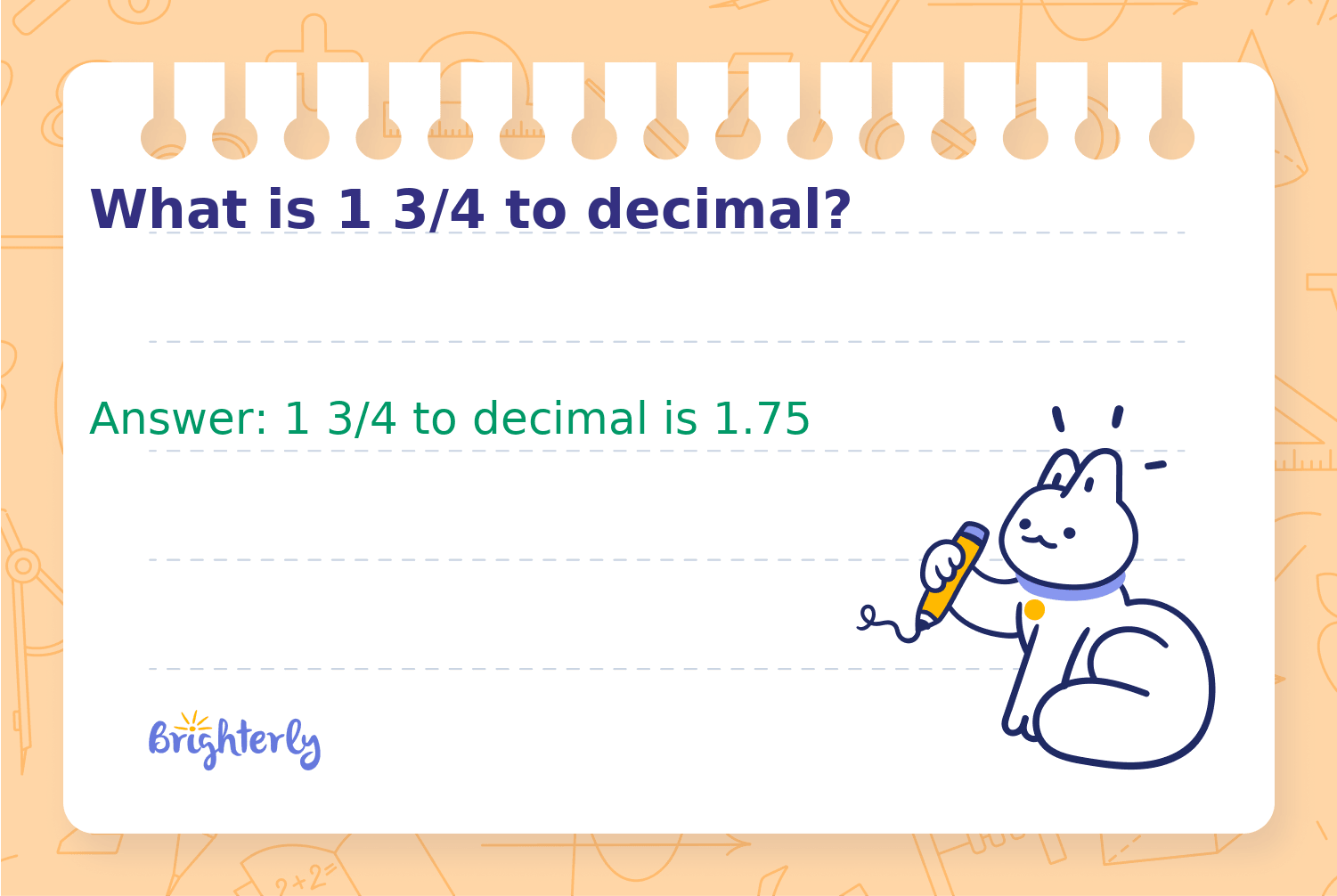
To convert the mixed number 1 3/4 into a decimal, one must first address the fractional component. The fraction 3/4 is calculated by dividing 3 by 4, which yields 0.75. When added to the whole number 1, the result is 1.75. In the context of “Money,” this figure frequently appears as 1.75%, 1.75x leverage, or a $1.75 dividend payout. The shift from fractional representation to decimal precision allows for faster calculations, better algorithmic trading, and a clearer understanding of how small percentages compound over time.
The Mathematics of Finance: Why Decimals Rule the Market
The transition from fractions to decimals was one of the most significant shifts in the history of modern finance. Until the early 2000s, major stock exchanges like the New York Stock Exchange (NYSE) quoted share prices in fractions, such as halves, quarters, and eighths. A stock might have been priced at 20 1/4, and a move to 21 3/4 represented a significant gain. However, this system was cumbersome and often resulted in wider bid-ask spreads, which increased the cost of trading for the average investor.
Decimalization and Market Efficiency
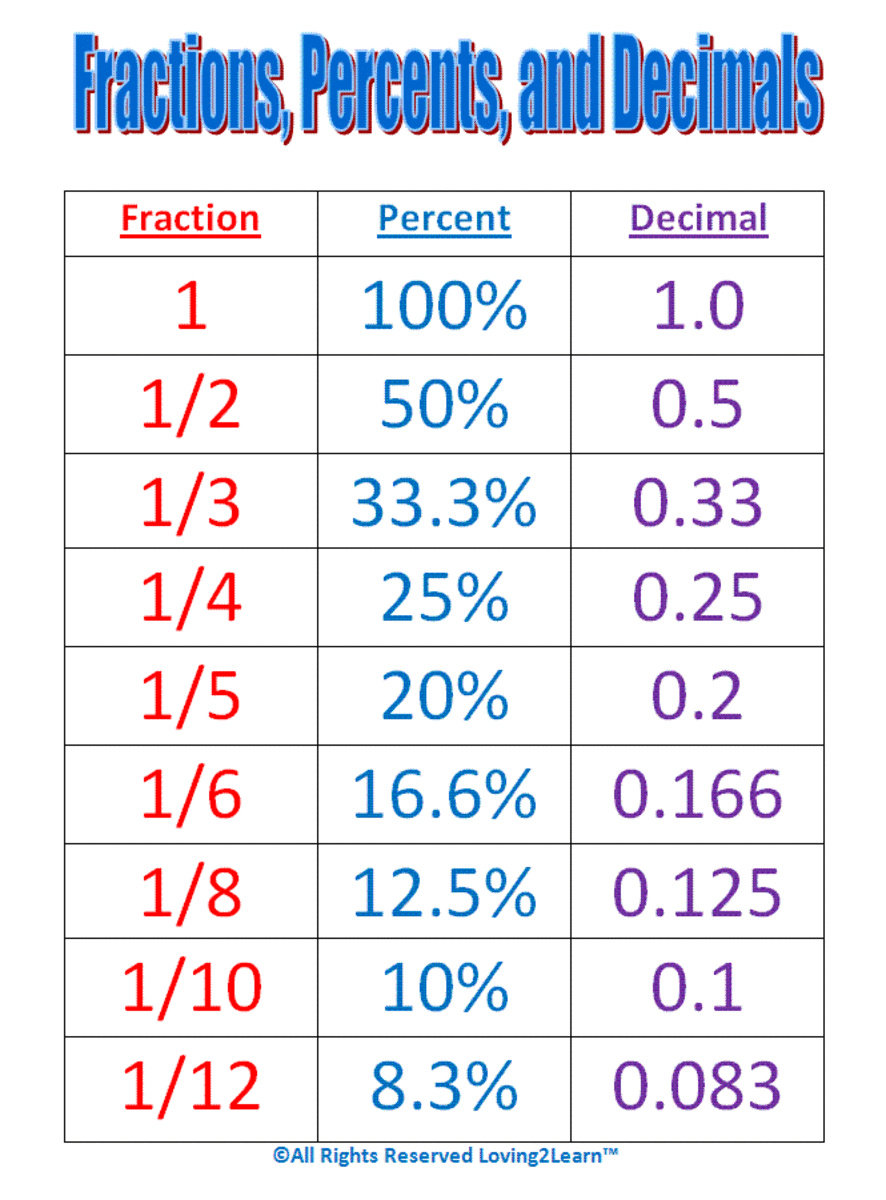
When the financial world moved to “decimalization,” the conversion of fractions like 1 3/4 into 1.75 revolutionized liquidity. By using decimals, markets could move in increments as small as one cent ($0.01) rather than the traditional 1/8th of a dollar ($0.125). For the individual investor, this meant that the cost of entering and exiting positions dropped significantly. Today, when we see a stock or a mutual fund price, we see it in decimal form, allowing for hyper-precise calculations of portfolio value.
Accuracy in Financial Modeling
In corporate finance, the difference between 1.75 and 1.76 can represent millions of dollars in valuation or debt service. Financial analysts rely on decimal precision to build “what-if” scenarios in spreadsheets. For instance, if a company is projecting a growth rate of 1 3/4% per quarter, converting that to 0.0175 allows for the application of exponential growth formulas. Without the decimal conversion, complex compounding formulas used in retirement planning or venture capital valuations would be nearly impossible to execute accurately at scale.
Interest Rates and the 1.75% Benchmark: Impact on Your Wallet
Perhaps the most common place a person encounters the decimal 1.75 is in the realm of interest rates. Central banks, such as the Federal Reserve, often move rates in “quarter-point” increments. A rate that sits at 1 3/4% is frequently referred to in the industry as 175 basis points (BPS). Understanding this terminology is vital for anyone managing a mortgage, a car loan, or a high-yield savings account.
The Power of the Quarter Point
In central banking, a move of 0.25 (or 1/4) is the standard lever for controlling inflation and economic growth. When the “Fed” sets the federal funds rate at 1.75%, it sends a ripple effect through the entire economy. For a consumer, a 1.75% interest rate on a mortgage is historically low, significantly increasing purchasing power. Conversely, when rates rise to 1.75% from a near-zero floor, the cost of borrowing for businesses increases, which can slow down expansion and hiring.
Mortgages and Long-Term Debt
For homeowners, the decimal 1.75 can be the difference between an affordable monthly payment and financial strain. On a $400,000 mortgage, the difference between a 4% interest rate and a 5 3/4% (5.75%) interest rate is hundreds of dollars per month and tens of thousands over the life of the loan. Understanding that 1 3/4 is 1.75 allows borrowers to use online mortgage calculators to compare offers more effectively. When a lender quotes “prime plus one and three-quarters,” the savvy borrower immediately translates that to “prime + 1.75%” to calculate their true cost of capital.
Investment Yields and Fractional Growth: Maximizing Returns
Investors frequently encounter 1 3/4 when evaluating dividend-paying stocks or bond yields. In these scenarios, the decimal 1.75 is a key indicator of the “yield” or the income generated by an investment relative to its price.
Dividend Yields and Income Investing
A company might announce a dividend that represents a 1 3/4% yield on the current stock price. For an income-focused investor, this decimal is the primary metric for comparing different assets. If Stock A offers a 1.75% yield and Stock B offers a 1.5% yield, the investor can easily see that Stock A provides more cash flow per dollar invested. Furthermore, many investors use the “Rule of 72” to estimate how long it will take for their money to double. By dividing 72 by the decimal rate (1.75), an investor can quickly estimate the growth trajectory of their portfolio.
The Nuance of Basis Points
In the professional investing world, fractions are often discarded in favor of “basis points.” Since 1% equals 100 basis points, 1 3/4% is equal to 175 basis points. This language is used by bond traders and hedge fund managers to discuss minute shifts in the market. When an analyst says, “the yield on the 10-year Treasury note rose by 1.75%,” they are describing a massive shift. However, if they say the yield is “at 1.75%,” they are describing a specific decimal point that dictates the pricing of almost all other consumer debt.
Digital Tools and Financial Precision: Avoiding Costly Errors
In the age of Fintech, the conversion of 1 3/4 to 1.75 is handled automatically by software, but the human element remains crucial for oversight. Whether you are using a budgeting app, a stock screener, or a professional accounting suite, understanding the underlying math prevents errors that could lead to financial loss.
Spreadsheet Accuracy and Formulas
Most financial professionals live in Microsoft Excel or Google Sheets. These programs do not naturally process the fraction “1 3/4” as a number; they treat it as text unless specifically formatted. To perform any calculation—such as finding the total interest on a loan or the future value of an investment—one must input the decimal 1.75. A common mistake in financial modeling is “rounding error,” where an analyst might round 1.75 up to 1.8 or down to 1.7. Over a 30-year projection, even a 0.05 discrepancy can result in a valuation error of millions.
The Role of Fintech and Automation
Modern apps like Robinhood, Mint, or Betterment use decimal precision to provide users with real-time data. When you see your portfolio has grown by 1.75% today, the app has performed thousands of decimal-based calculations in the background. This transition from fractional thinking to decimal reality has democratized investing, making it easier for the average person to understand their rate of return without needing a degree in advanced mathematics.
Conclusion: The Strategic Value of 1.75
While “what is 1 3/4 as a decimal” might begin as a simple question, the answer—1.75—is a gateway to deeper financial literacy. In the realms of personal finance, real estate, and professional investing, this number represents a benchmark for growth, a cost of borrowing, and a standard for market efficiency. By mastering the conversion and understanding its application in the real world, individuals can make more informed decisions about their money.
Whether you are calculating the interest on a new credit card, evaluating the yield of a government bond, or setting a growth target for your small business, the decimal 1.75 is more than just a number. It is a tool for precision in an increasingly complex financial landscape. As the global economy continues to move toward total digitization, the ability to think in decimals—and to understand the fractional roots they come from—will remain an essential asset for anyone looking to build and sustain wealth.
aViewFromTheCave is a participant in the Amazon Services LLC Associates Program, an affiliate advertising program designed to provide a means for sites to earn advertising fees by advertising and linking to Amazon.com. Amazon, the Amazon logo, AmazonSupply, and the AmazonSupply logo are trademarks of Amazon.com, Inc. or its affiliates. As an Amazon Associate we earn affiliate commissions from qualifying purchases.