
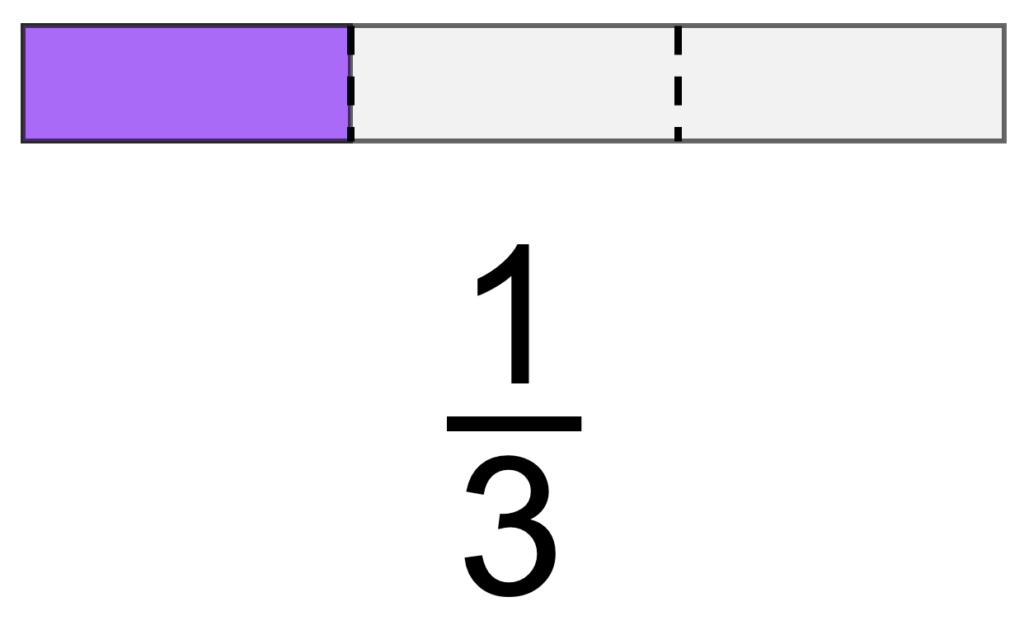
In the world of personal finance and strategic investing, the “1/3 fraction” is far more than a simple mathematical expression representing one part of a whole. It serves as a foundational benchmark for risk management, budgeting, and asset allocation. Whether you are a retail investor looking to diversify your portfolio or a homeowner trying to balance debt-to-income ratios, understanding how to apply the one-third principle can be the difference between financial volatility and long-term stability.
By breaking down complex financial structures into manageable thirds, individuals and businesses can create a balanced ecosystem that accounts for growth, security, and liquidity. This guide explores the multifaceted applications of the 1/3 fraction within the money niche, focusing on its role in budgeting, investment diversification, and the burgeoning sector of fractional ownership.
The 1/3 Rule in Budgeting and Debt Management
At the core of a healthy financial life lies the ability to allocate resources efficiently. The 1/3 fraction appears most prominently in the traditional guidelines for housing and debt. For decades, financial advisors and lending institutions have used the “30% rule”—a rounding of the 1/3 fraction—to determine housing affordability.
Housing and the 33% Threshold
When determining how much of your monthly income should go toward a mortgage or rent, the 1/3 fraction acts as a critical safety net. Financial experts suggest that housing costs should not exceed 33% of your gross monthly income. This ensures that you are not “house poor,” a state where an individual spends such a large portion of their earnings on shelter that they cannot afford other necessities or save for retirement.
In high-cost-of-living areas, maintaining this fraction is challenging, but those who adhere to it often find themselves better protected against economic downturns. By keeping housing to one-third of your budget, you leave two-thirds of your capital available for taxes, daily living expenses, and high-yield investments.
The Debt-to-Income Ratio
Beyond housing, the 1/3 fraction is a vital metric in the “Debt-to-Income” (DTI) ratio. Lenders often look for a DTI of 36% or lower. When your debt obligations—including car loans, student loans, and credit card payments—start to creep past the one-third mark of your total income, your creditworthiness begins to diminish. Viewing your debt through the lens of a 1/3 fraction allows you to visualize the “tipping point” of your financial health. If more than one out of every three dollars you earn is immediately diverted to paying off the past, your ability to build a future is severely compromised.
Strategic Asset Allocation: The Investment Rule of Thirds
In the realm of investing, the 1/3 fraction is frequently employed as a simplified version of the “Three-Legged Stool” strategy. This approach focuses on dividing capital into three distinct categories to hedge against market volatility while capturing growth.
The Traditional Three-Way Split
A classic conservative-to-moderate investment strategy involves dividing a portfolio into three equal parts:
-
Equities (Stocks): One-third of the portfolio is dedicated to stocks or equity-based mutual funds. This portion provides the primary engine for growth and capital appreciation.
-
Fixed Income (Bonds/Cash): One-third is allocated to bonds, Treasury bills, or high-yield savings accounts. This provides a cushion during market corrections and generates predictable income.
-
Real Estate or Alternatives: The final third is placed into “hard assets” or alternative investments, such as real estate, commodities, or gold. This sector often moves inversely to the stock market, providing a hedge against inflation.
By maintaining this 1/3 fraction across asset classes, investors ensure that no single market crash can wipe out more than a portion of their total net worth. It is a mathematical guardrail that forces discipline and regular rebalancing.
Fractional Investing and Accessibility
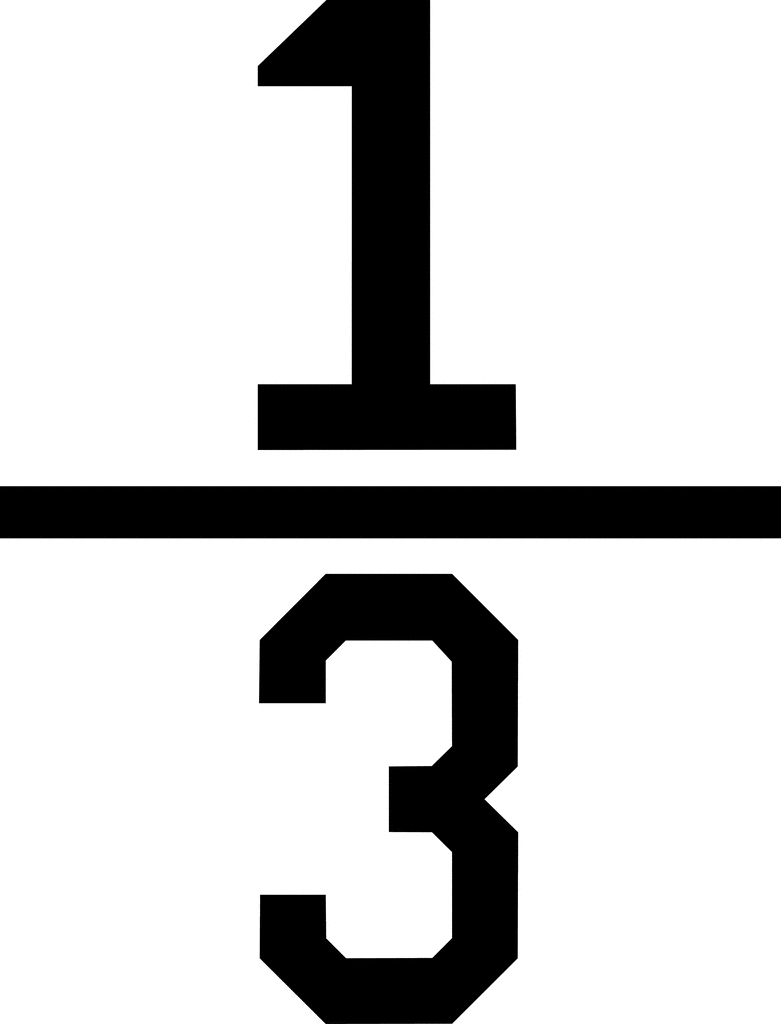
The concept of the “1/3 fraction” has also taken on a literal meaning with the rise of fractional investing platforms. In the past, high-value assets like a single share of a major tech company or a piece of commercial real estate were out of reach for the average earner. Today, the ability to buy a 1/3 fraction (or even smaller) of a share has democratized the market.
Fractional shares allow investors to practice “dollar-cost averaging” with precision. If an investor has $100 but wants to own a stock priced at $300, they can purchase exactly 1/3 of that share. This allows for total portfolio utilization, ensuring that no cash sits idle and every cent is working toward a return.
Real Estate and the 1/3 Operating Rule
For real estate investors and landlords, the 1/3 fraction is a “rule of thumb” used for quick calculations regarding the profitability of a rental property. While detailed spreadsheets are necessary for final decisions, the 1/3 rule provides an immediate filter for potential acquisitions.
The 1/3 Expense Ratio
Experienced property managers often expect that roughly 33% of the gross rental income will be consumed by operating expenses. This includes property taxes, insurance, maintenance, and vacancy costs. If a property’s projected expenses exceed this 1/3 fraction, it may indicate that the asset is overvalued or that the rent is set too low to sustain the investment.
Capital Expenditure Planning
Furthermore, savvy investors often use the 1/3 fraction to manage their cash flow. They may choose to take 1/3 of their net profit and reinvest it back into the property for capital improvements (such as a new roof or HVAC system). This “fractional reinvestment” strategy ensures that the asset appreciates in value over time rather than depreciating through neglect. By treating one-third of the profit as “untouchable” for personal use, the investor builds a robust fund for future scaling.
Business Finance: Scaling Through the One-Third Lens
In a corporate or small business context, the 1/3 fraction is often used to assess the health of a company’s margins and its ability to scale. This is sometimes referred to as the “Rule of Three” in professional services and manufacturing.
Labor, Materials, and Profit
Many service-based businesses aim for a “33/33/33” split. Under this model:
-
One-third of revenue covers the direct labor and materials required to deliver the service.
-
One-third covers overhead expenses (rent, utilities, marketing, software).
-
One-third remains as net profit.
If a business owner finds that labor costs are creeping toward 50%, they know they have a pricing or efficiency problem. By keeping these three categories in roughly equal fractions, a business remains agile. The profit margin is high enough to survive lean months, and the overhead is low enough to prevent a total collapse during a recession.
Fractional Executive Leadership
A modern trend in business finance is the rise of “Fractional C-Suite” roles, such as Fractional CFOs or Fractional CMOs. Small to medium-sized enterprises (SMEs) may not have the budget for a $250,000-a-year Chief Financial Officer. Instead, they hire a professional to work a 1/3 fraction of a standard work week. This allows the company to gain high-level financial oversight for one-third of the cost, optimizing their budget while still benefiting from expert guidance on tax strategy and capital raises.
The Psychology of the 1/3 Fraction in Wealth Building
Beyond the hard numbers, there is a psychological advantage to thinking in fractions of three. The human brain is wired to process “triads” efficiently. When we categorize our money into three distinct buckets—Save, Spend, and Invest—financial management becomes less overwhelming.
The 1/3 Lifestyle Philosophy
Some of the most successful wealth-builders follow a strict 1/3 lifestyle:
-
1/3 for the Government: Accounting for taxes immediately to avoid year-end surprises.
-
1/3 for Living: Using this fraction for all lifestyle needs, from groceries to vacations.
-
1/3 for the Future: Directing a full third of income toward debt repayment and wealth-building assets.
While a 33% savings rate is significantly higher than the national average, it is the benchmark for those seeking “Financial Independence, Retire Early” (FIRE). By living on only 1/3 of their income, these individuals create a massive surplus that compounds over time.

Risk Mitigation and the “Rule of Three”
In financial planning, we often talk about the “rule of three” for emergency funds. An emergency fund should ideally cover three months of expenses (a 1/4 of a year, or roughly 1/3 of the time it takes to find a new high-level job). This fractional buffer provides the psychological peace of mind necessary to take calculated risks in the stock market. Without that 1/3-of-a-year cushion, investors often make emotional decisions during market dips, selling low out of fear rather than holding for the long term.
In conclusion, “what is 1/3 fraction” is not just a math question; it is a strategic framework. Whether it is used to limit housing costs, diversify an investment portfolio, or manage a business’s bottom line, the 1/3 fraction serves as a symbol of balance. In an era of financial complexity, returning to these fractional fundamentals allows for clearer decision-making and a more resilient path to wealth.
aViewFromTheCave is a participant in the Amazon Services LLC Associates Program, an affiliate advertising program designed to provide a means for sites to earn advertising fees by advertising and linking to Amazon.com. Amazon, the Amazon logo, AmazonSupply, and the AmazonSupply logo are trademarks of Amazon.com, Inc. or its affiliates. As an Amazon Associate we earn affiliate commissions from qualifying purchases.