
In the intricate world of personal finance, investing, and business management, numbers are the universal language. Yet, this language can often seem ambiguous, especially when encountering expressions like “1 3 1 2 as a fraction.” While seemingly a simple mathematical query, its implications for financial understanding are profound. Misinterpreting or struggling with such fundamental numerical concepts can lead to costly errors in budgeting, investment analysis, and financial planning. This article delves into the various interpretations of “1 3 1 2” in a fractional context, emphasizing why a robust understanding of fractions is not merely an academic exercise but a cornerstone of sound financial literacy.

The Foundation of Financial Literacy: Why Fractions Matter
At its core, financial literacy is the ability to understand and effectively use various financial skills, including personal financial management, budgeting, and investing. Central to all these skills is a command of basic mathematics, and fractions stand out as a particularly critical component. Fractions represent parts of a whole, ratios, or proportions – concepts that are ubiquitous in finance.
Consider a few scenarios: you’re evaluating the percentage of your income going towards housing, calculating a partial return on an investment, or understanding a company’s debt-to-equity ratio. All these scenarios require an intuitive grasp of fractions and their decimal or percentage equivalents. Without this foundational knowledge, individuals are often left guessing or reliant on external tools without understanding the underlying mechanics, making them vulnerable to miscalculations and poor financial decisions. From splitting bills with friends to analyzing complex financial statements, the ability to decompose numbers into their fractional components provides a clearer, more granular view of financial realities. It empowers individuals to move beyond mere arithmetic to true financial insight.
Decoding “1 3 1 2”: Multiple Interpretations and Their Financial Ramifications
The phrase “1 3 1 2 as a fraction” is inherently ambiguous due to the spacing. It could represent several different mathematical expressions, each with distinct implications if applied in a financial context. Understanding these interpretations is crucial for anyone striving for precision in their financial calculations.
Case 1: Interpreting as Separate Fractions (1/3 and 1/2)
Perhaps the most common interpretation, given the spaces, is that “1 3” refers to one-third (1/3) and “1 2” refers to one-half (1/2). In finance, comparing or combining these fractions is a daily occurrence.
-
Financial Ramification:
-
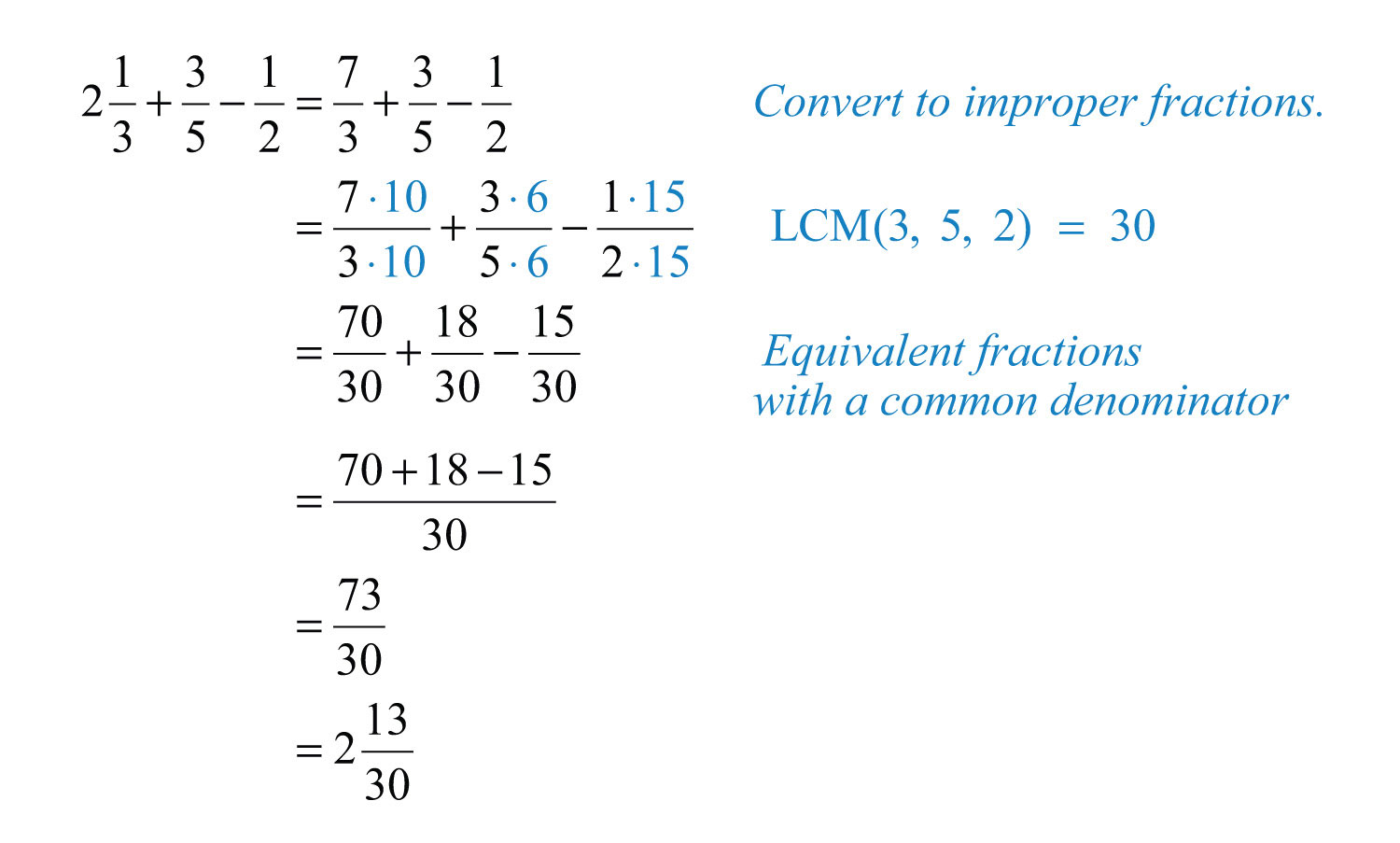
Budgeting: You might allocate 1/3 of your income to rent and 1/2 to other living expenses. Understanding how to add these (1/3 + 1/2 = 5/6) quickly tells you that 5/6 of your income is already committed, leaving 1/6 for savings or discretionary spending. If you miscalculate or don’t understand the sum, you might overestimate available funds.
-
Investment Portfolios: If 1/3 of your portfolio is in stocks and 1/2 is in bonds, knowing the combined proportion (5/6) helps you understand your overall asset allocation and risk exposure.
-
Profit Sharing: In a business venture, partners might agree to a profit split of 1/3 and 1/2. Calculating the remaining share for a third partner, or understanding how the total profit is distributed, requires fractional arithmetic.
-
Case 2: Interpreting as a Decimal (1.312)
Another plausible interpretation is that “1 3 1 2” is a poorly formatted representation of the decimal 1.312. Converting decimals to fractions is a fundamental skill. To convert 1.312 to a fraction:
-
Identify the number of decimal places: 1.312 has three decimal places.
-
Place the number over a power of 10 corresponding to the decimal places: 1312/1000.
-
Simplify the fraction: Divide both numerator and denominator by their greatest common divisor. In this case, both are divisible by 8: 1312 ÷ 8 = 164; 1000 ÷ 8 = 125.
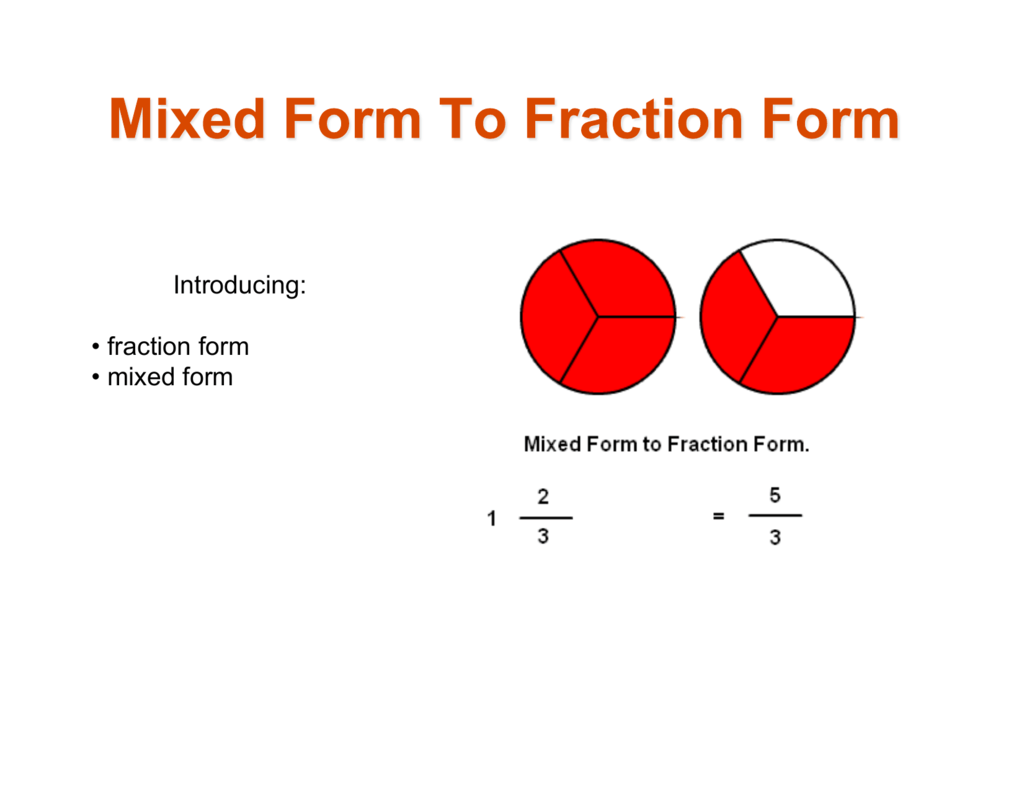
So, 1.312 as a fraction is 164/125 (or 1 and 39/125 as a mixed number).
-
Financial Ramification:
-
Interest Rates: While often expressed as percentages (e.g., 5%), underlying calculations often involve decimals (0.05). If a return on investment is quoted as “1.312 times” the initial capital, understanding this as 164/125 (or 131.2%) helps in precise calculation of profit.
-
Exchange Rates: Foreign exchange rates might be presented with several decimal places. Converting these to fractions (even if not strictly necessary for calculation) can deepen the understanding of relative currency values.
-
Financial Ratios: Ratios like Price-to-Earnings (P/E) or Debt-to-Equity are often decimals. Expressing 1.312 as a fraction like 164/125 can offer a different perspective on the relationship between two financial metrics, showing how many units of the numerator correspond to the denominator.
-
Case 3: Interpreting as an Improper Fraction (e.g., 13/12 or 131/2)
Less likely but still possible, someone might intend “1 3 1 2” to represent a combined improper fraction like thirteen-twelfths (13/12) or even one hundred thirty-one halves (131/2), depending on where they mentally place the fraction bar. If it were 13/12, it converts to a mixed number 1 and 1/12 or approximately 1.0833. If 131/2, it’s 65.5.
-
Financial Ramification:
-
Investment Multipliers: An investment that “returned 13/12 of its initial value” means it returned the original amount plus an additional 1/12. Understanding this improper fraction clearly indicates a positive return.
-
Stock Splits/Consolidations: While typically presented differently, the fundamental concept of changing the number of shares (numerator) relative to their value (denominator) can be thought of fractionally.
-
Cost-Benefit Analysis: If the benefit-to-cost ratio is 13/12, it clearly shows that benefits exceed costs, even if marginally. Misinterpreting this could lead to an incorrect assessment of project viability.
-
Practical Applications: Fractions in Everyday Finance
Beyond theoretical interpretations, the practical application of fractional understanding permeates every aspect of financial management.
Budgeting and Expense Allocation
Budgeting is fundamentally about allocating a finite resource (income) into various categories (expenses, savings, debt repayment). Fractions provide the framework for this allocation. You might aim to save 1/10 of your income, dedicate 1/4 to housing, and 1/5 to food. Without understanding how to work with these fractions – adding them, finding common denominators, and calculating remaining portions – effective budgeting becomes guesswork. For instance, knowing that 1/10 (savings) + 1/4 (housing) + 1/5 (food) = 2/20 + 5/20 + 4/20 = 11/20 of your income is committed, leaving 9/20 for other expenses, is vital for maintaining financial control.
Investment Returns and Portfolio Diversification
Investing often involves percentages, which are essentially fractions out of 100. A 7% annual return is 7/100 of your initial investment. Understanding how these returns compound or how different assets contribute to your overall portfolio’s risk and return profile requires fractional thinking. Diversification, for example, is about allocating different fractions of your capital to various asset classes to mitigate risk. A portfolio might be 1/2 stocks, 1/4 bonds, and 1/4 real estate. Understanding these proportions is key to managing risk and aligning the portfolio with financial goals. Moreover, calculating actual profit or loss, especially for partial sales of investments, directly uses fractional mathematics.
Loan Interest and Repayment Structures
Loans are built upon the concept of interest, which is calculated as a fraction (or percentage) of the principal amount. Whether it’s a mortgage, a car loan, or a personal loan, understanding the annual interest rate (e.g., 6% or 6/100) and how it applies over the loan term is crucial. Fractional concepts also come into play when considering early repayments (reducing the “whole” amount on which interest is calculated) or understanding how much of each payment goes towards principal vs. interest. Complex loan structures, such as those with variable interest rates or penalty fees, further underscore the need for a solid grasp of how fractional adjustments impact the total cost of borrowing.
Tools and Techniques for Fraction Mastery in Finance
While the conceptual understanding of fractions is paramount, modern finance also offers tools to assist in complex calculations. However, these tools are most effective when used by someone who understands the underlying mathematics.
Mental Math and Estimation
Developing strong mental math skills for fractions is incredibly beneficial in finance. Being able to quickly estimate 1/3 of $1000 or knowing that 1/4 is less than 1/3 allows for quick financial sanity checks without reaching for a calculator. For example, when comparing two investment opportunities, one offering 1/5 return and another offering 3/10, a quick mental conversion to a common denominator (2/10 vs. 3/10) immediately clarifies which offers a better return. This agility in mental fractional manipulation can save time and prevent minor errors in daily financial decisions.
Leveraging Financial Calculators and Software
For more complex calculations, financial calculators, spreadsheet software (like Excel or Google Sheets), and specialized financial software are invaluable. These tools can handle intricate fractional conversions, percentage calculations, and amortization schedules with precision. However, these tools are only as good as the input they receive and the user’s understanding of the output. If you incorrectly input a decimal instead of a fraction, or misinterpret the result because you don’t grasp the underlying fractional relationship, the tool becomes a source of error rather than assistance. Learning to use functions like “GCD” (Greatest Common Divisor) in spreadsheets to simplify fractions, or converting decimals to fractions for clearer analysis, enhances financial tool proficiency.
Beyond the Numbers: The Mindset of Fractional Thinking
Ultimately, understanding “what is 1 3 1 2 as a fraction” isn’t just about getting the right numerical answer; it’s about cultivating a mindset of fractional thinking. This involves seeing financial scenarios not just as absolute numbers but as parts of a larger whole, as ratios, and as proportions that change over time.
This mindset allows for:
-
Proportional Reasoning: Understanding that a $50,000 debt is significantly different if your income is $60,000 (a large fraction) versus $500,000 (a small fraction).
-
Comparative Analysis: Easily comparing financial metrics across different companies or investment periods by understanding them as ratios (e.g., one company’s profit margin of 1/10 vs. another’s of 1/8).
-
Long-Term Planning: Visualizing how small fractional changes (like an incremental increase in savings rate) can compound into substantial differences over time.
-
Risk Assessment: Quantifying risk by understanding the fractional exposure to different variables or market segments.
In a world awash with financial data, the ability to dissect, understand, and synthesize numerical information is a superpower. Mastering fractions—from simple concepts like 1/3 and 1/2 to converting decimals like 1.312—is a fundamental step towards achieving true financial clarity and empowering oneself to make informed, strategic monetary decisions. It transforms ambiguous numbers into actionable insights, moving individuals from passive observers of their finances to active, confident managers.
aViewFromTheCave is a participant in the Amazon Services LLC Associates Program, an affiliate advertising program designed to provide a means for sites to earn advertising fees by advertising and linking to Amazon.com. Amazon, the Amazon logo, AmazonSupply, and the AmazonSupply logo are trademarks of Amazon.com, Inc. or its affiliates. As an Amazon Associate we earn affiliate commissions from qualifying purchases.