
At first glance, the question “what is 1 2 plus 1 2” appears to be a rudimentary arithmetic problem, a simple query that yields an equally simple answer: one. Half plus half equals a whole. Yet, beneath this seemingly simplistic mathematical truth lies a profound metaphor that underpins nearly every facet of personal finance, investment strategy, and wealth building. In the complex world of money, understanding how incremental parts combine to form a greater whole is not merely academic; it is the cornerstone of financial acumen, resilience, and success.
This article delves into the metaphorical significance of this basic equation, illustrating how its principles are applied in understanding fractional values, compounding growth, portfolio construction, goal attainment, and strategic financial decision-making. We will explore how discerning individuals leverage this foundational concept to transform scattered financial elements into a cohesive, robust, and prosperous financial reality.
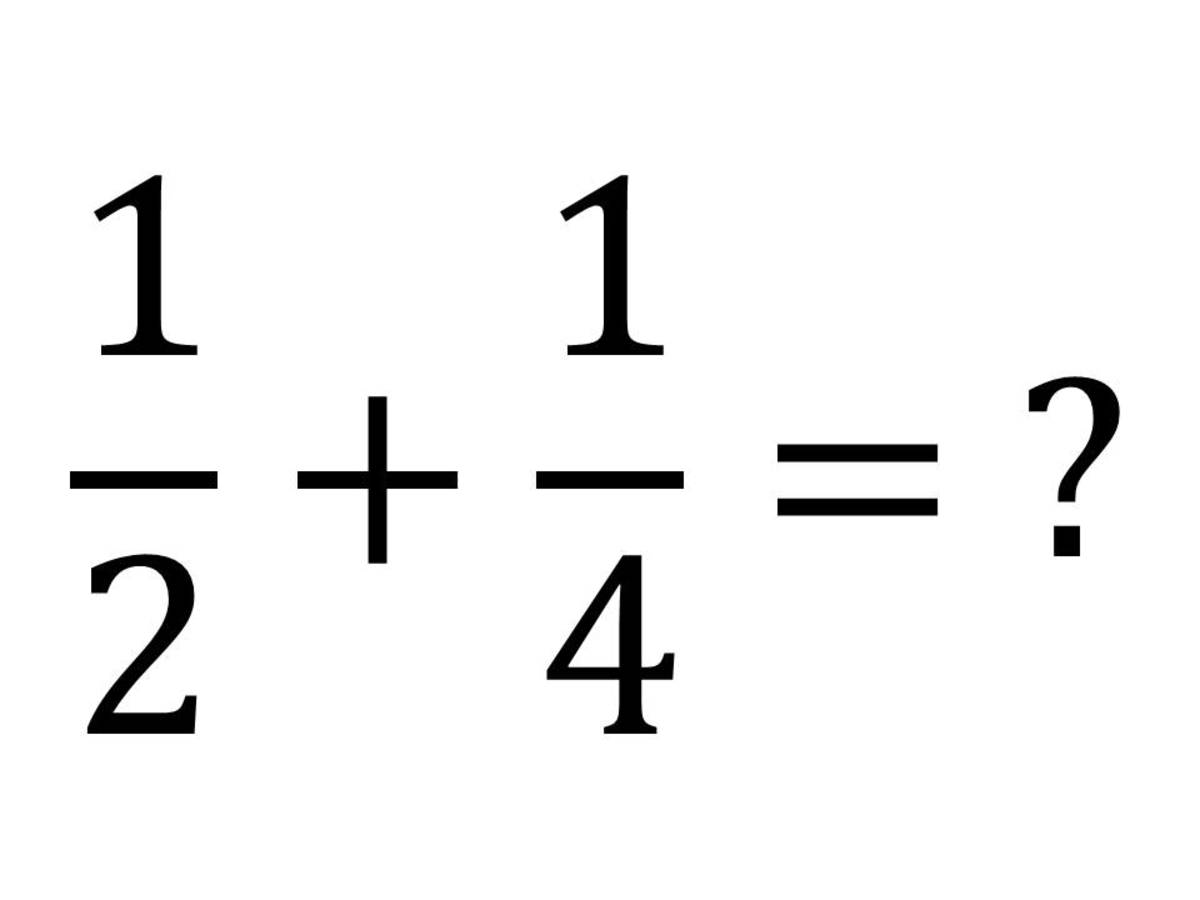
The Foundational Math of Financial Acumen
The journey to financial mastery often begins not with complex algorithms or insider trading secrets, but with a firm grasp of basic principles. The idea that “one half plus one half equals one whole” serves as a powerful analogy for how wealth is accumulated and managed. It’s about recognizing the value in smaller units and understanding their collective power.
Understanding Fractional Value in Investments
In the realm of investing, assets are rarely bought or sold as singular, indivisible units, especially for the average investor. Instead, we deal in fractions – shares, percentages of ownership, units of a fund, or portions of a cryptocurrency. Understanding “fractional value” is critical to both participation and strategic allocation.
Consider owning shares in a company. You might not own the entire corporation, but rather a fraction of it – perhaps 0.0001% or even less. Each share represents a small “half” of the company’s total equity. When you invest in an Exchange Traded Fund (ETF) or a mutual fund, you’re buying a fraction of a larger basket of securities. Similarly, buying fractional shares of high-priced stocks or cryptocurrencies like Bitcoin allows investors with limited capital to participate. The principle of “one half plus one half equals one” teaches us that these small, fractional investments, when combined, constitute your total stake, your growing portfolio, your “whole” investment identity. Without understanding the sum of these fractions, it’s impossible to gauge your true exposure, potential returns, or overall financial position. This perspective empowers investors to start small, understanding that even tiny fractions contribute meaningfully to their long-term wealth building, removing the psychological barrier that often prevents new investors from entering the market.
Compounding and Incremental Growth
Perhaps one of the most potent applications of the “half plus half equals a whole” concept in finance is the principle of compound interest. Often dubbed the “eighth wonder of the world,” compounding is the process where the interest earned on an investment also earns interest over time. It’s the ultimate demonstration of how small, incremental gains (your “halves”) accumulate to form a substantially larger “whole.”
Imagine two individuals investing £50 each month. Individually, these are small contributions, arguably “halves” in the grand scheme of their financial goals. However, over decades, with the magic of compounding, these regular “halves” don’t just add up linearly; they grow exponentially. The interest earned on the initial £50, then on the next £50, and then on the accumulated interest itself, creates a snowball effect. What starts as a series of modest contributions rapidly transforms into a formidable sum. This highlights that financial success is rarely about one large windfall, but rather the consistent, disciplined accumulation of small, regular contributions and the reinvestment of their earnings. The power lies in recognizing that each contribution, no matter how small, adds another “half” to a continuously growing “whole,” making time and consistency your most valuable assets.
Combining Financial Pieces: Building a Holistic Portfolio
Just as two halves make a whole, a robust financial strategy isn’t built on a single pillar but on the synergistic combination of various financial components. A truly effective financial plan views each element – be it a savings account, a stock investment, or an insurance policy – as a critical “half” that contributes to a larger, more resilient “whole.”
Diversification as a Sum of Parts
Diversification is a cornerstone of prudent investment strategy, embodying the “one half plus one half equals one” principle perfectly. Rather than putting all your financial “eggs” in one basket, diversification involves spreading investments across various asset classes, industries, and geographies. Each distinct investment – be it a stock, a bond, a piece of real estate, or a commodity – represents a “half” or a fraction of your entire investment portfolio.
The goal of diversification is to create a resilient “whole” that can withstand market volatility better than any single component. When one “half” (e.g., tech stocks) performs poorly, another “half” (e.g., bonds or defensive sectors) might perform well, balancing out the overall portfolio. The sum of these diverse parts aims to achieve a smoother return profile and reduce overall risk. Understanding this dynamic means recognizing that the strength of your portfolio isn’t just about the individual performance of each asset, but how they interact and collectively contribute to the stability and growth of your entire financial structure. This approach mitigates the risk associated with relying too heavily on any single “half” and instead leverages the collective strength of a well-balanced “whole.”
Synergy in Financial Planning
Beyond investment diversification, the principle of combining “halves” extends to broader financial planning. A comprehensive financial plan is a carefully constructed mosaic of various financial tools and strategies, each playing a distinct yet complementary role. Your emergency fund (a “half”) provides liquidity and peace of mind. Your retirement savings (another “half”) ensure future security. Your investment portfolio (a significant “half”) aims for wealth growth. Your insurance policies (a protective “half”) shield against unforeseen risks.
Individually, each of these components addresses a specific need. However, their true power emerges when they are viewed as interconnected parts of a cohesive financial ecosystem. An emergency fund, for instance, prevents you from having to liquidate investments during a downturn, thus preserving another “half” of your plan. Retirement savings benefit from the long-term growth facilitated by a diversified investment portfolio. Each “half” strengthens and supports the others, creating a synergistic “whole” that is far more robust and effective than the mere sum of its isolated parts. This holistic view emphasizes that true financial security and prosperity are achieved when all these elements work in harmony towards a common goal.

The “Whole” Picture: Reaching Financial Goals
The seemingly simple sum of two halves equaling a whole is an incredibly powerful framework for understanding how long-term financial goals are achieved. It demystifies the process of saving for retirement, making a down payment, or accumulating significant wealth, revealing it as a series of consistent, incremental steps rather than a single, overwhelming leap.
From Small Savings to Significant Milestones
Financial independence, a substantial down payment on a home, or a comfortable retirement fund often seem like insurmountable mountains from a distance. However, applying the “half plus half equals one” principle transforms these colossal goals into manageable objectives. Each small contribution you make to your savings, each deliberate choice to defer gratification and invest, is a “half” added to your accumulating wealth.
Consider saving for a down payment. Saving $50 or $100 from each paycheck might feel insignificant when the target is $50,000. But these consistent, albeit small, contributions are your “halves.” Over months and years, these “halves” accumulate, and especially with the added benefit of investment growth, they eventually coalesce into the desired “whole.” This process underscores the importance of discipline and patience. It teaches us that significant financial milestones are rarely achieved through sporadic, massive windfalls, but rather through the consistent, deliberate aggregation of smaller, regular efforts. Each “half” brings you closer to your financial aspirations, proving that even modest efforts, when sustained, possess transformative power.
Consolidating Debt and Building Equity
The “half plus half equals one” metaphor also extends to managing liabilities and building equity. When tackling debt, the objective is to reduce it to zero – to make it “whole” in a sense, but in reverse. Each payment you make towards a loan, whether a mortgage or credit card debt, chips away at the outstanding balance. Each payment is a “half” reducing the negative “whole.” Consolidating smaller, high-interest debts into a single, lower-interest loan can also be seen as combining several negative “halves” into a more manageable, unified “whole” that can be paid down more efficiently.
Conversely, in assets like real estate, building equity means incrementally increasing your ownership stake. With each mortgage payment, a portion goes towards the principal, reducing the amount owed and increasing the fraction of the property you truly own. Every principal payment is a “half” added to your equity, gradually transforming the bank’s “half” of ownership into your own. Over time, these consistent payments and potential appreciation combine to build significant equity, culminating in owning the “whole” asset free and clear. This demonstrates the dual application of the principle: reducing what you owe and increasing what you own, both through the power of consistent, incremental actions.
Beyond the Sum: Strategic Financial Decision-Making
While the core lesson of “one half plus one half equals one” is about accumulation, its philosophical implications stretch further into the realm of strategic financial decision-making. It compels us to consider not just how parts combine, but also the choices we make regarding which “halves” to pursue and how to maximize their collective impact.
Evaluating Opportunity Cost
In finance, resources—time, money, attention—are finite. Choosing to invest in one asset or pursue one financial strategy often means foregoing another. This concept is known as opportunity cost, and it’s a critical aspect of strategic decision-making that is subtly illuminated by our simple equation. When you have two potential “halves” to invest in, but only enough resources for one, your choice has an opportunity cost.
For example, deciding to allocate a portion of your savings to a high-risk, high-reward stock (one “half”) means you’re giving up the opportunity to invest that same money in a more stable, lower-return bond (another “half”). The “whole” here is your limited capital, and you must decide which “half” contributes most effectively to your overall financial goals. Understanding opportunity cost isn’t just about addition; it’s about evaluating the potential value and future impact of each “half” you choose versus the “half” you forgo. Strategic financial decision-making thus involves not just adding up what you have, but carefully selecting the most impactful “halves” to contribute to your desired financial “whole.”
The Future Value of Consistent Action
Ultimately, the seemingly simple question, “what is 1 2 plus 1 2,” serves as a potent reminder that financial success is rarely a spontaneous event but rather the cumulative outcome of consistent, thoughtful actions. Each small decision, each dollar saved, each prudent investment made—these are the “halves” that, over time, construct the robust financial “whole” we aspire to achieve.
The future value of consistent action emphasizes that the power lies not just in the size of individual contributions but in their regularity and the long-term perspective. A small, consistent saving habit, diligently maintained over decades, will almost invariably outperform sporadic, larger investments. It’s the continuous addition of those “halves” that creates an unstoppable momentum. This insight encourages individuals to start early, stay consistent, and maintain a long-term view, understanding that financial prosperity is a marathon built on countless deliberate steps rather than a sprint.

Conclusion
The humble arithmetic problem, “what is 1 2 plus 1 2,” transcends its mathematical simplicity to offer profound lessons in financial understanding and wealth creation. It serves as a powerful metaphor for understanding fractional values in investments, harnessing the exponential power of compounding, meticulously building diversified portfolios, and systematically achieving long-term financial goals.
From the smallest investment fraction to the grandest retirement plan, the principle remains constant: financial success is largely about the intelligent aggregation and strategic combination of various “halves” into a powerful, resilient “whole.” It emphasizes the critical role of incremental progress, consistent discipline, and the synergistic interplay of different financial components. By internalizing this fundamental concept, individuals can demystify the complexities of finance and embark on a clearer, more purposeful journey towards financial security and prosperity, understanding that the mastery of money often begins with the simplest of sums.
aViewFromTheCave is a participant in the Amazon Services LLC Associates Program, an affiliate advertising program designed to provide a means for sites to earn advertising fees by advertising and linking to Amazon.com. Amazon, the Amazon logo, AmazonSupply, and the AmazonSupply logo are trademarks of Amazon.com, Inc. or its affiliates. As an Amazon Associate we earn affiliate commissions from qualifying purchases.