
The landscape of mathematics education and professional computation has undergone a radical transformation over the last decade. Solving algebra equations—once a process confined to graphite and paper—is now an ecosystem of sophisticated software, artificial intelligence, and algorithmic solvers. For students, engineers, and data scientists, the challenge is no longer just about memorizing the quadratic formula; it is about mastering the digital tools that can solve complex systems in milliseconds. This guide explores the technological frontier of algebraic problem-solving, detailing the software, AI tools, and programming methodologies that define modern mathematical literacy.

The Digital Revolution in Algebraic Problem Solving
The transition from manual calculation to digital computation represents more than just a convenience; it is a shift in how we approach logic and structure. At its core, algebra is the language of patterns and relationships. Technology has allowed us to visualize these relationships with a level of precision that was previously impossible.
The Shift Toward Algorithmic Thinking
When we solve an algebra equation using modern technology, we are participating in algorithmic thinking. Traditional algebra requires a linear progression of steps: isolating the variable, performing inverse operations, and simplifying expressions. Modern software utilizes Symbolic Computation Engines to replicate this logic. Unlike a standard calculator that provides a numerical approximation (like 1.414 for the square root of 2), a symbolic solver maintains the integrity of the expression (keeping it as √2), allowing for exact solutions that are crucial in high-stakes fields like aerospace engineering and cryptography.
Why Tech Integration is Essential for Learning
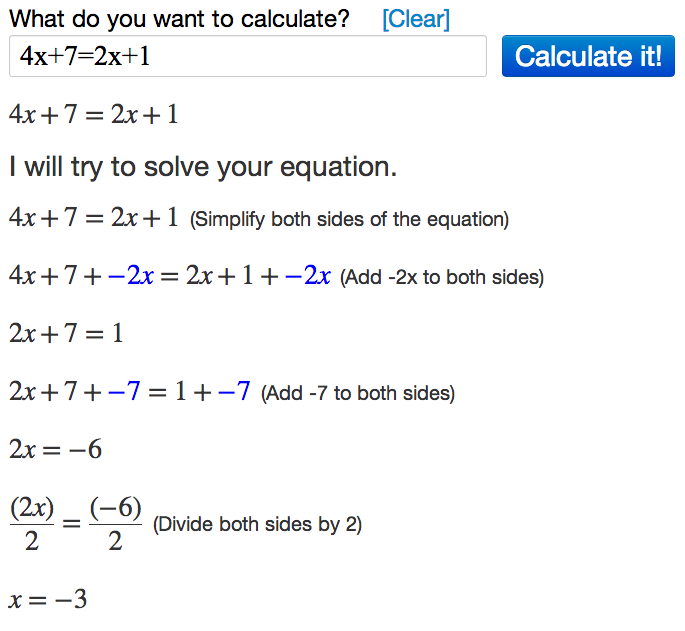
In the contemporary educational tech (EdTech) sector, the focus has shifted from “getting the right answer” to “understanding the process.” High-end algebra solvers no longer just output “x = 5.” They provide comprehensive, step-by-step breakdowns of the logic used to arrive at that conclusion. This transparency turns a static tool into an interactive tutor, helping users identify exactly where a conceptual misunderstanding might have occurred.
Top-Tier AI Tools for Solving Equations Instantly
The rise of Artificial Intelligence and Computer Vision has birthed a new generation of apps that can “see” and solve equations in real-time. These tools are powered by neural networks trained on millions of mathematical symbols and handwriting styles.
Photomath: Real-Time Scanning and Step-by-Step Logic
Photomath remains one of the most influential apps in the educational tech space. Utilizing advanced Optical Character Recognition (OCR), it allows users to point a smartphone camera at a handwritten or printed equation. The app instantly recognizes the characters and provides a solution path.
For algebra, this is particularly potent when dealing with systems of linear equations or complex polynomials. The software identifies the coefficients and variables, then applies various methods—such as substitution or elimination—to solve the problem. The pedagogical value lies in its “animated tutorials,” which show the movement of terms across the equals sign, visually reinforcing the rules of algebra.
Microsoft Math Solver: Integration with Productivity Suites
Microsoft has integrated its Math Solver directly into the Edge browser and its Office ecosystem, making it a professional-grade tool for those already embedded in the Microsoft 365 environment. It leverages a powerful AI engine that supports everything from basic linear equations to advanced calculus and statistics.
One of its standout features is the ability to generate practice problems based on the equation you just solved. If you solve a quadratic equation using the tool, the AI recognizes the pattern and offers a quiz to test your mastery of that specific algebraic structure. This feedback loop is a hallmark of adaptive learning technology.
WolframAlpha: The Computational Intelligence Engine
While apps like Photomath are excellent for quick scans, WolframAlpha is the gold standard for computational intelligence. Unlike traditional search engines, WolframAlpha doesn’t search the web; it computes answers based on a massive internal database of curated data and algorithms.
To solve an algebra equation in WolframAlpha, a user simply types the expression in natural language. For example, “solve 3x^2 + 5x – 2 = 0.” The engine provides the roots, the discriminant, a plot of the parabola, and even the alternative forms of the equation. For professionals, WolframAlpha’s ability to handle multi-variable equations and differential algebra makes it an indispensable asset.
Professional Software and Programming Libraries for Advanced Algebra
For those in technical industries—such as software engineering, data science, or finance—algebraic equations are often too large or too integrated into data sets to be solved by a simple app. In these cases, professional-grade software and programming languages are the tools of choice.
MATLAB and Mathematica: Professional Grade Computation
MATLAB (Matrix Laboratory) is the industry standard for engineers who need to solve systems of equations involving large matrices. Algebra in MATLAB is handled through a functional programming approach, where variables are treated as arrays. This is particularly useful for solving simultaneous equations in circuit analysis or structural engineering.
Mathematica, developed by Wolfram Research, uses the Wolfram Language to handle symbolic algebra. It is perhaps the most powerful tool in existence for solving symbolic equations. It can find closed-form solutions to equations that would take a human days to compute, making it the primary tool for theoretical physicists and mathematicians.
The Role of LaTeX in Algebraic Documentation
Solving the equation is only half the battle in a professional or academic setting; communicating the solution is the other half. LaTeX is the standard typesetting system used for technical documentation. It allows users to write complex algebraic equations using a plain-text syntax that is then rendered into perfectly formatted PDFs. Understanding how to “solve” an equation within a LaTeX environment—using packages like amsmath—is a critical skill for anyone in the STEM tech niche.
Tutorial: Leveraging Python and SymPy for Symbolic Math
For those with a background in technology or coding, Python has become the go-to language for mathematical computation. The library SymPy is specifically designed for symbolic mathematics, allowing you to solve algebra equations with code.
Step 1: Setting Up the Environment
To solve an algebra equation in Python, you first need to import the symbols and solve functions from the SymPy library.
from sympy import symbols, solve
Step 2: Defining Variables
In Python, you must explicitly define which characters represent your algebraic variables. This informs the compiler that these are not just strings or integers, but mathematical symbols.
x = symbols('x')
Step 3: Expressing the Equation
In SymPy, equations are often expressed as expressions that equal zero. For example, to solve $x^2 – 4 = 0$, you would define the expression as x**2 - 4.
equation = x**2 - 4
Step 4: Executing the Solver
The solve function then takes the expression and the variable you are solving for as arguments.
solution = solve(equation, x)


print(solution) # Output: [-2, 2]
This programmatic approach allows for the automation of algebra. Imagine needing to solve 10,000 equations based on shifting sensor data in an IoT (Internet of Things) network; Python makes this a trivial task, whereas manual or even app-based solving would be impossible.
The Future of Mathematics: AI Tutors and Adaptive Learning Systems
As we look toward the future, the way we solve algebra equations will become even more integrated with Large Language Models (LLMs) and Augmented Reality (AR).
Augmented Reality for Geometric Visualization
Algebra and geometry are two sides of the same coin. New AR tools are allowing students to “see” equations in 3D space. By pointing a headset or tablet at a flat surface, a user can manipulate a 3D graph of an equation. Changing a coefficient in the algebraic expression causes the 3D model to warp or shift in real-time, providing an intuitive understanding of how variables affect spatial outcomes.
Personalized AI Tutors
The next generation of AI solvers will move beyond “showing the steps” to “understanding the student.” Adaptive learning platforms are being developed to analyze the specific types of algebraic errors a user makes. If a user consistently struggles with the distributive property when solving linear equations, the AI will pivot its instruction to focus on that foundational weakness before moving on to more complex quadratic systems.
These tools represent a democratization of high-level mathematics. By stripping away the mechanical frustration of manual calculation, technology allows more people to engage with the beauty and utility of algebra. Whether through a Python script, a specialized AI app, or a professional computation engine, solving algebra equations has evolved from a rote task into a sophisticated digital discipline. For the modern professional, the goal is to master these tools to unlock the potential of data, engineering, and innovation.
aViewFromTheCave is a participant in the Amazon Services LLC Associates Program, an affiliate advertising program designed to provide a means for sites to earn advertising fees by advertising and linking to Amazon.com. Amazon, the Amazon logo, AmazonSupply, and the AmazonSupply logo are trademarks of Amazon.com, Inc. or its affiliates. As an Amazon Associate we earn affiliate commissions from qualifying purchases.