
Fractions, those seemingly simple representations of parts of a whole, often pose a unique challenge in mathematics. While understanding their fundamental concept is straightforward, performing operations and, crucially, simplifying them to their lowest terms can be a stumbling block for many. This is where the modern “reduce fractions calculator” steps in—not merely as a shortcut, but as a powerful technological aid designed to demystify and streamline a core mathematical process. In an era where digital tools are transforming every aspect of learning and problem-solving, understanding how these calculators work, their evolution, and their profound impact on education and practical applications is more relevant than ever.
This article delves into the technological backbone of fraction reduction calculators, exploring their journey from rudimentary concepts to sophisticated algorithms. We’ll examine why simplification is vital, how these digital tools perform their calculations, and the broader implications of their widespread use in fostering mathematical understanding and efficiency. Far more than just a quick answer machine, the reduce fractions calculator represents a fascinating intersection of mathematical pedagogy and technological innovation, empowering users to conquer fractional arithmetic with confidence and precision.
Understanding Fraction Reduction: The Core Mathematical Concept
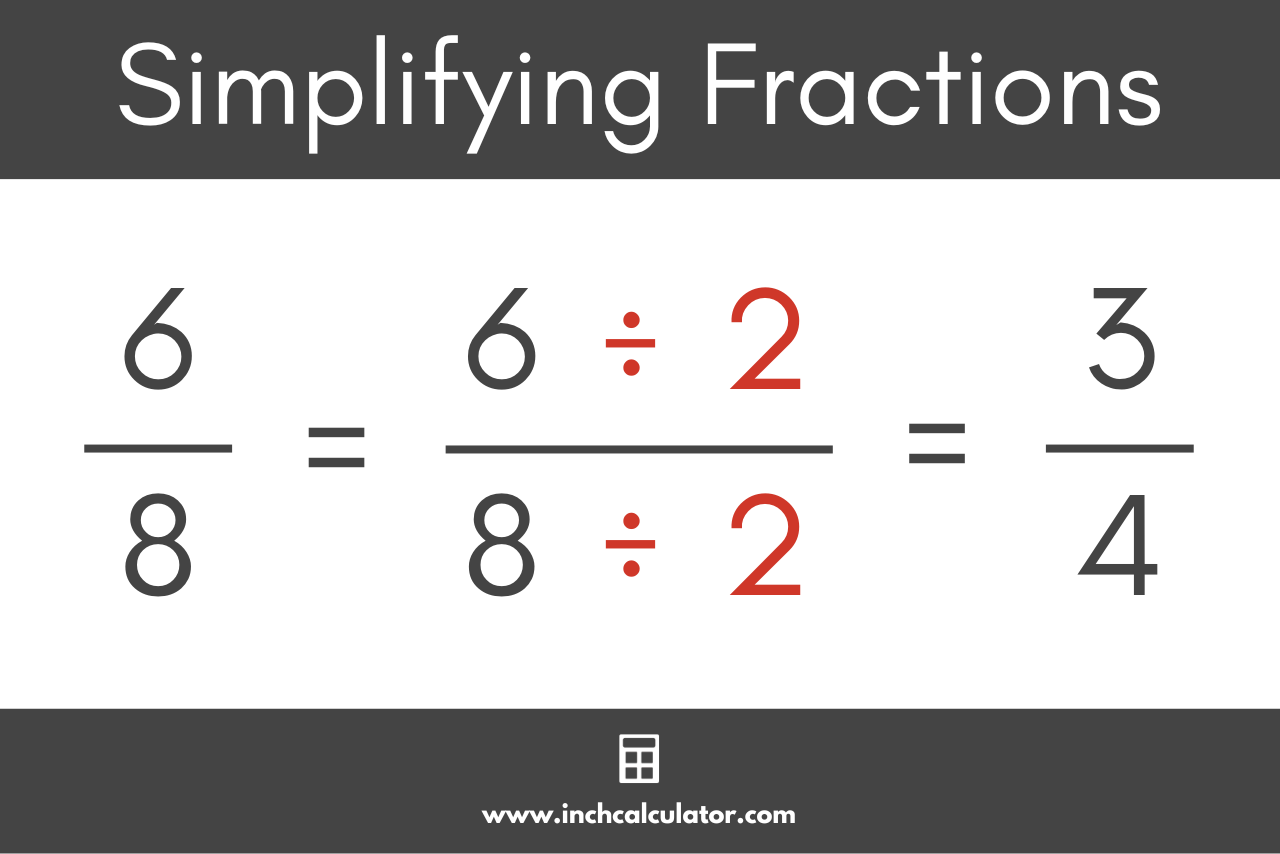
Before delving into the technology, it’s essential to grasp the fundamental mathematical principle behind reducing fractions. A fraction is considered “reduced” or “simplified” to its lowest terms when its numerator (the top number) and its denominator (the bottom number) share no common factors other than 1. This process is crucial for clarity, consistency, and ease of comparison in mathematical expressions.
Why Reduce Fractions? The Imperative for Simplification
The primary reason for reducing fractions is to present them in their simplest, most digestible form. Imagine having to work with 4/8 versus 1/2. While mathematically equivalent, 1/2 is intuitively easier to understand and operate with. Simplification ensures that everyone is speaking the same mathematical language, making calculations less prone to error and results more meaningful. It’s a standard practice in mathematics, akin to always presenting equations with variables isolated or polynomials in descending order of power. Without reduction, comparing fractions, performing further arithmetic operations, or interpreting results becomes unnecessarily complex and cumbersome, hindering both learning and practical application.
The Manual Process: The Role of GCD/GCF
Manually reducing a fraction involves finding the Greatest Common Divisor (GCD), also known as the Greatest Common Factor (GCF), between the numerator and the denominator. The GCD is the largest number that divides both numbers without leaving a remainder. Once the GCD is identified, both the numerator and the denominator are divided by this factor.
For example, to reduce the fraction 12/18:
-
Identify factors of the numerator (12): 1, 2, 3, 4, 6, 12
-
Identify factors of the denominator (18): 1, 2, 3, 6, 9, 18
-
Find the Greatest Common Divisor (GCD): In this case, the largest common factor is 6.
-
Divide both numerator and denominator by the GCD: 12 ÷ 6 = 2, and 18 ÷ 6 = 3.
-
The reduced fraction is: 2/3.
While conceptually straightforward, manually finding the GCD for larger or more complex numbers can be time-consuming and prone to errors. This is precisely the bottleneck that technology aims to resolve, transforming a potentially laborious task into an instant, error-free operation.
The Evolution of Fraction Calculators: From Manual to Digital Assistance
The journey of mathematical assistance tools, particularly for fractions, mirrors the broader evolution of technology. What started as physical aids and mental shortcuts has blossomed into sophisticated digital applications, fundamentally changing how we interact with numbers. The “reduce fractions calculator” is a prime example of this technological progression, moving from pencil-and-paper drudgery to intuitive, accessible software.
Early Tools and Manual Aids
In the pre-digital age, “calculators” for fractions were often implicit rather than explicit. Students relied on multiplication tables, prime factorization charts, and perhaps specialized rulers or slide rules for basic arithmetic. The process of reducing fractions was inherently manual, relying on a solid understanding of number theory, divisibility rules, and patience. Educators would teach students various techniques to identify common factors, often involving trial and error or exhaustive listing. While effective for building foundational understanding, these methods were inherently inefficient, especially when dealing with large numbers or in high-stakes environments like examinations. The concept of an explicit “reduce fractions calculator” was nascent, primarily existing as a set of learned mental algorithms rather than a distinct physical tool.
The Rise of Digital Calculators and Apps
The advent of electronic calculators marked a significant turning point. Initially, basic scientific calculators could perform arithmetic operations on fractions, but the explicit function to “reduce to lowest terms” was often absent or required multiple steps. The real revolution began with the widespread adoption of personal computers and, later, smartphones. Dedicated fraction calculator apps and online tools emerged, specifically designed to handle fraction-related tasks, including reduction, with a single input. These digital tools brought several advantages:
-
Speed: Instantaneous calculation, eliminating manual factorization.
-
Accuracy: Eliminating human error in division and factor identification.
-
Accessibility: Available on various platforms (web, mobile, desktop).
-
User-friendliness: Intuitive interfaces that require minimal mathematical knowledge to operate.
These digital calculators often employ algorithms based on the Euclidean algorithm for efficiently finding the GCD, allowing them to handle even very large numerators and denominators with remarkable speed and precision.
AI and Advanced Computational Tools
The evolution continues with the integration of more advanced computational power and, in some cases, artificial intelligence. While simple fraction reduction doesn’t strictly require complex AI, the underlying principles are being leveraged in more comprehensive mathematical assistants. Modern platforms often go beyond mere calculation, offering:
-
Step-by-step explanations: Breaking down the reduction process to educate the user, not just provide an answer.
-
Integration with other math functions: Combining fraction reduction with equation solving, graphing, and calculus.
-
Adaptive learning environments: Tools that can identify common mistakes and offer targeted practice.
-
Natural language processing: Allowing users to input problems in plain language, enhancing accessibility for diverse learners.
These advanced tools push the “reduce fractions calculator” beyond a simple utility to become an integral part of a dynamic learning ecosystem, blurring the lines between calculation, instruction, and intelligent tutoring.
How a Reduce Fractions Calculator Works: Behind the Scenes
The apparent simplicity of a reduce fractions calculator—input two numbers, get an instant simplified result—belies the clever algorithms working beneath the surface. Understanding this process demystifies the technology and highlights the efficiency it brings to mathematical problem-solving.
Input and Algorithm: The Engine of Simplification

The core function of any reduce fractions calculator begins with user input: two integers representing the numerator and the denominator. Once these numbers are provided, the calculator’s internal algorithm takes over. The most common and efficient algorithm employed for finding the Greatest Common Divisor (GCD) is the Euclidean algorithm.
Here’s a simplified overview of how it works:
-
Start with two numbers, ‘a’ and ‘b’ (numerator and denominator).
-
If ‘b’ is 0, then ‘a’ is the GCD.
-
Otherwise, replace ‘a’ with ‘b’, and ‘b’ with the remainder of ‘a’ divided by ‘b’.
-
Repeat steps 2 and 3 until ‘b’ becomes 0.
Let’s revisit 12/18 with the Euclidean algorithm:
-
a = 18, b = 12 (We take the larger number as ‘a’ for convenience in some implementations, or simply numerator/denominator)
-
18 divided by 12 is 1 with a remainder of 6. So, a becomes 12, b becomes 6.
-
12 divided by 6 is 2 with a remainder of 0. So, a becomes 6, b becomes 0.
-
Since b is now 0, the GCD is ‘a’, which is 6.
Once the GCD is found, the calculator simply divides both the original numerator and denominator by this GCD to produce the reduced fraction. This algorithmic efficiency is what allows for near-instantaneous results, regardless of the magnitude of the input numbers.
Output and Interpretation: Beyond the Numbers
The output of a reduce fractions calculator is typically the simplified numerator and denominator, often displayed as a new fraction. However, many advanced calculators go beyond just providing the answer. They might also:
-
Show the GCD: Explicitly stating the greatest common divisor used in the reduction.
-
Display step-by-step solutions: Illustrating the process of finding the GCD and performing the divisions, effectively serving as a tutorial. This feature is particularly valuable for students who need to understand how the answer was derived, not just what the answer is.
-
Offer alternative representations: Converting the reduced fraction to a decimal or percentage for comparison.
-
Integrate with other tools: Allowing the reduced fraction to be used directly in subsequent calculations or exported to other applications.
The interpretation of the output is crucial for learning. By providing not just the answer but also the methodology, these calculators transform from mere answer-givers into powerful educational instruments, fostering deeper understanding rather than rote memorization.
Key Features to Look For in a Reduce Fractions Calculator
When choosing or utilizing a reduce fractions calculator, several features can enhance its utility and educational value:
-
Intuitive Interface: Easy-to-use input fields and clear display of results.
-
Step-by-Step Solutions: Essential for learning and verifying understanding.
-
Error Handling: Clear messages for invalid inputs (e.g., zero denominator).
-
Cross-Platform Compatibility: Accessible via web browsers, mobile apps, or desktop software.
-
Ad-Free Experience: Especially for educational tools, an uninterrupted interface is crucial.
-
Accuracy and Reliability: The core promise of any calculator.
-
Additional Functionality: Integration with other fraction operations (addition, subtraction, multiplication, division) or conversion to other number formats.
A calculator that excels in these areas maximizes its value as both a practical tool and a pedagogical resource.
Beyond Simplification: The Broader Impact of Mathematical Calculators
The utility of a reduce fractions calculator extends far beyond merely simplifying fractions. It embodies a broader trend in educational technology and practical problem-solving: the augmentation of human capability through computational tools. These calculators, and their more sophisticated siblings, play a multifaceted role in learning, professional efficiency, and inclusivity.
Educational Benefits and Learning Aids
For students, a reduce fractions calculator can be a transformative learning aid.
-
Reinforcement: It allows students to check their manual work, reinforcing correct methods and identifying errors.
-
Focus on Concepts: By offloading the tedious calculation of GCDs, students can concentrate on understanding the broader concepts of fractions, their relative values, and how they interact in complex problems.
-
Reduced Frustration: The instant feedback and accuracy can significantly reduce mathematical anxiety and frustration, encouraging a more positive attitude towards learning.
-
Personalized Learning: Many modern calculators offer explanations, allowing students to learn at their own pace and revisit steps as needed. This self-directed learning approach is invaluable in diverse educational settings.
-
Foundation for Advanced Math: A strong grasp of simplified fractions is fundamental for algebra, geometry, and calculus. By ensuring accuracy at this basic level, calculators help build a solid foundation for future mathematical endeavors.
Professional Applications and Time-Saving
While fraction reduction might seem like a student-centric task, its principles—and the tools that facilitate them—have professional applications across various fields.
-
Engineering and Manufacturing: Precise measurements often involve fractions (e.g., 1/16th of an inch). Simplifying these fractions ensures clarity in specifications and designs.
-
Culinary Arts: Recipes often involve fractional quantities, and scaling them up or down requires accurate fractional arithmetic.
-
Finance (though less common for reducing fractions directly): While financial tools usually work with decimals, understanding fractional relationships can be vital in certain contexts, and the ability to quickly simplify ratios can be beneficial.
-
Data Analysis: When working with proportions or ratios, ensuring they are presented in their simplest form aids in clear communication and interpretation of data.
For professionals, these calculators are time-saving utilities. They eliminate the need for manual, error-prone calculations, freeing up cognitive resources for higher-level problem-solving and decision-making.
Accessibility and Inclusivity
Perhaps one of the most overlooked impacts of digital mathematical tools is their contribution to accessibility and inclusivity.
-
Learning Differences: Students with dyscalculia or other learning differences can find manual arithmetic incredibly challenging. Calculators provide an essential scaffold, allowing them to engage with mathematical concepts without being hindered by computational difficulties.
-
Visual Impairment: Screen readers and other assistive technologies can integrate with digital calculators, making mathematics more accessible for visually impaired users.
-
Language Barriers: Many online calculators are multilingual or rely on universally understood numerical inputs, bridging language gaps in mathematical education.
-
Diverse Learning Styles: For visual learners, step-by-step explanations can be incredibly beneficial. For those who learn by doing, the instant feedback loop of a calculator reinforces understanding.
By democratizing access to accurate and efficient mathematical computation, these tools empower a broader range of individuals to participate fully in academic and professional pursuits that require quantitative skills.
Conclusion
The “reduce fractions calculator” is far more than a simple digital utility; it represents a significant leap in how technology can enhance mathematical understanding and efficiency. From its humble origins as a manual process to its current incarnation as a sophisticated, algorithm-driven tool, it has consistently aimed to simplify complex tasks, making mathematics more accessible and less intimidating.
As we’ve explored, these calculators leverage powerful algorithms like the Euclidean algorithm to instantly provide simplified fractions, transforming a potentially laborious chore into a seamless operation. Their evolution reflects the broader trends in ed-tech, moving towards not just providing answers, but fostering deeper comprehension through step-by-step explanations and integrated learning environments.
Beyond the classroom, the impact of these tools resonates in various professional fields, saving time and ensuring precision. Crucially, they play a vital role in promoting accessibility, enabling diverse learners to overcome computational hurdles and engage meaningfully with mathematical concepts. As technology continues to advance, we can anticipate even more intuitive, intelligent, and integrated mathematical tools, further empowering individuals to navigate the world of numbers with confidence and competence. The reduce fractions calculator stands as a testament to the enduring power of innovation in demystifying and mastering fundamental mathematical challenges.
aViewFromTheCave is a participant in the Amazon Services LLC Associates Program, an affiliate advertising program designed to provide a means for sites to earn advertising fees by advertising and linking to Amazon.com. Amazon, the Amazon logo, AmazonSupply, and the AmazonSupply logo are trademarks of Amazon.com, Inc. or its affiliates. As an Amazon Associate we earn affiliate commissions from qualifying purchases.