
Understanding how your Social Security benefits are calculated is a fundamental aspect of comprehensive personal financial planning. For millions of Americans, Social Security represents a critical component of their retirement income, providing a stable foundation that complements savings, investments, and pensions. However, the system can seem complex, with various rules, formulas, and claiming strategies that directly impact the monthly amount you receive. This article aims to demystify the process, breaking down the essential factors and calculations to help you confidently figure out your potential Social Security benefits and make informed decisions about your financial future.

The Foundation: What is Social Security and Why Does it Matter?
Before diving into the intricacies of benefit calculation, it’s crucial to grasp the fundamental nature and purpose of Social Security. Established in 1935, it serves as a social insurance program designed to provide a safety net for workers and their families in retirement, disability, or in the event of a worker’s death.
A Brief History and Purpose
The Social Security Act was a landmark piece of legislation during the Great Depression, created to provide economic security for Americans, particularly the elderly. Over the decades, it has evolved to cover more workers and provide additional benefits, but its core mission remains: to offer a measure of protection against the economic uncertainties of old age, disability, and premature death. It operates on a “pay-as-you-go” system, where current workers’ contributions fund current retirees’ benefits.
The Three Main Benefit Types
While often primarily associated with retirement, Social Security provides three main categories of benefits:
-
Retirement Benefits: The most common type, paid to eligible workers who have reached a certain age and accumulated enough work credits.
-
Disability Benefits: Provided to workers who become unable to work due to a severe physical or mental impairment.
-
Survivors Benefits: Paid to the spouses, children, or parents of deceased workers who meet specific eligibility criteria.
Our focus will primarily be on retirement benefits, as they form the core of most individuals’ planning inquiries.
Funding Social Security (Payroll Taxes)
Social Security is primarily funded through dedicated payroll taxes, known as Federal Insurance Contributions Act (FICA) taxes. Employees and employers each contribute 6.2% of earnings up to an annual maximum taxable amount, while self-employed individuals pay the full 12.4%. These contributions are essential for maintaining the program’s solvency and ensuring future benefits for eligible individuals. Understanding this funding mechanism helps underscore the importance of accurate earnings records in determining your future benefits.
Unpacking the Variables: Key Factors Influencing Your Benefit Amount
Your Social Security benefit isn’t a one-size-fits-all figure. It’s a highly personalized calculation influenced by several key variables. Being aware of these factors is the first step toward accurately estimating your potential payout.
Your Earnings Record: The Cornerstone
The single most significant factor in determining your Social Security benefits is your lifetime earnings record. The Social Security Administration (SSA) looks at your earnings history over many years, specifically focusing on your highest-earning years.
- Emphasis on 35 Highest-Earning Years: The SSA uses your 35 years of highest indexed earnings to calculate your benefit. If you have fewer than 35 years of earnings, the missing years are counted as zeros, which can significantly lower your average. This highlights the importance of consistent employment and accurate reporting of all your wages throughout your career. Every dollar earned and reported contributes to your potential benefit.
Your Full Retirement Age (FRA): A Critical Milestone
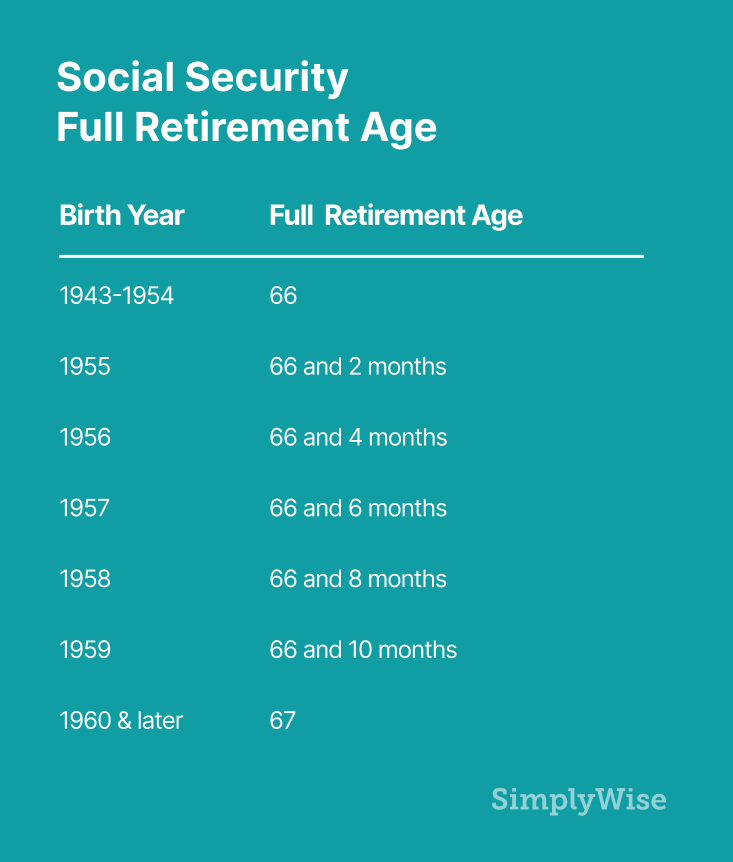
Your Full Retirement Age (FRA) is the age at which you are entitled to receive 100% of your primary Social Security benefit. This age is not universal; it depends on your birth year.
- How FRA Varies by Birth Year: For individuals born in 1937 or earlier, FRA was 65. For those born between 1943 and 1954, it is 66. For those born in 1960 or later, FRA is 67. There are incremental increases for birth years in between. Knowing your FRA is vital because it serves as the benchmark against which early or delayed claiming is measured. Claiming before your FRA results in a permanently reduced benefit, while claiming after your FRA can increase it.
Your Claiming Age: The Power of Choice
Perhaps the most impactful decision you’ll make regarding your Social Security benefits is when to start receiving them. You can begin benefits as early as age 62 or as late as age 70.
-
Early vs. Delayed Claiming:
-
Early Claiming (Age 62-FRA): Starting benefits before your FRA results in a permanent reduction. For example, if your FRA is 67 and you claim at 62, your monthly benefit could be reduced by up to 30%. While appealing for immediate income, this strategy means receiving smaller checks for the rest of your life.
-
Delayed Claiming (FRA-Age 70): If you wait to claim benefits beyond your FRA, you earn Delayed Retirement Credits (DRCs). These credits permanently increase your monthly benefit by a certain percentage for each month you delay, up until age 70. For most individuals, this increase is 8% per year. Delaying can lead to significantly higher monthly payouts, which can be advantageous if you have other income sources and anticipate a long lifespan.
-
Deconstructing the Calculation: From Wages to Your Monthly Check
The journey from your reported wages to the final monthly benefit you receive involves a specific, multi-step calculation performed by the SSA. Understanding these steps provides clarity on how your benefit amount is derived.
Average Indexed Monthly Earnings (AIME)
The first step is to calculate your Average Indexed Monthly Earnings (AIME). This process is designed to ensure that past earnings reflect today’s general wage levels, preventing inflation from eroding the value of your early career contributions.
- Explain Indexing to Account for Wage Growth: The SSA “indexes” your past earnings to adjust for changes in average wages since the year the earnings were posted. This ensures that your earnings from 30 or 40 years ago are expressed in terms of their relative value in the economy today. For example, an income of $10,000 in 1980 would be indexed to a much higher value in today’s dollars before being included in the calculation. This indexing is applied up to age 60; earnings after age 60 are included at their nominal value. After indexing your 35 highest earning years, the total is divided by 420 (the number of months in 35 years) to arrive at your AIME.
Primary Insurance Amount (PIA)
Once your AIME is determined, the next step is to calculate your Primary Insurance Amount (PIA). Your PIA is the benefit you would receive if you claim exactly at your Full Retirement Age (FRA).
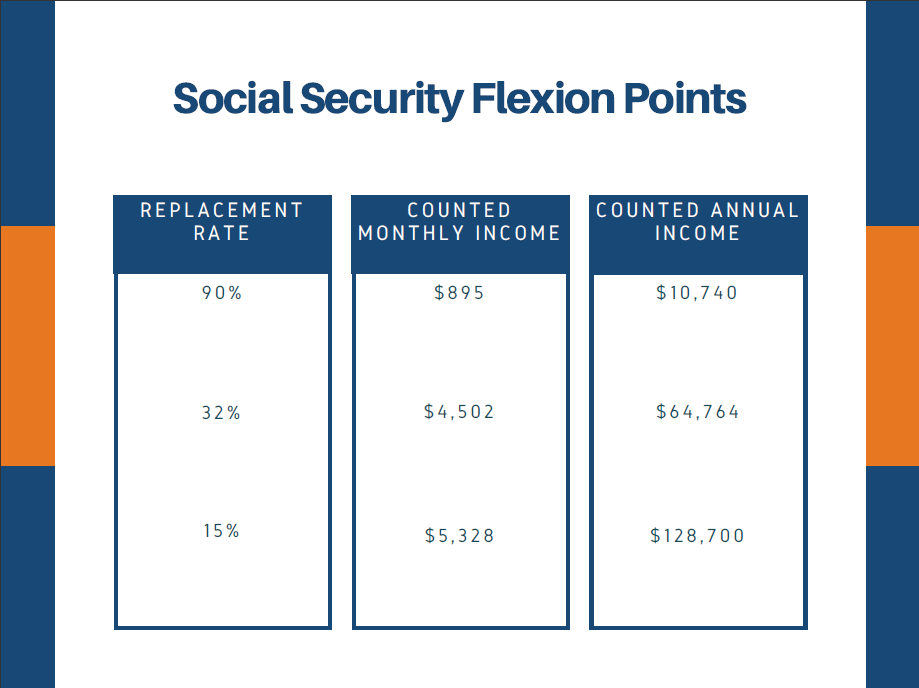
- Introduction to Bend Points and the Progressive Formula: The SSA uses a progressive benefit formula that involves “bend points.” These are specific dollar amounts for AIME at which the percentage of your earnings that convert into benefits changes. In simpler terms, lower earners receive a higher percentage of their average indexed earnings as benefits compared to higher earners. For example, a certain percentage (e.g., 90%) is applied to the first segment of AIME, a smaller percentage (e.g., 32%) to the next segment, and an even smaller percentage (e.g., 15%) to any AIME above that. These bend points are adjusted annually. This progressive structure aims to provide a more substantial safety net for those with lower lifetime earnings.
Adjustments Based on Claiming Age
Your PIA is the starting point, but it’s then adjusted based on when you decide to claim your benefits relative to your FRA.
-
Actuarial Reductions for Early Claiming: If you claim before your FRA, your PIA is reduced. This reduction is calculated on a monthly basis. For example, if your FRA is 67, claiming at 62 would result in 60 months of early claiming. Each of these months incurs a specific reduction percentage, leading to a significantly lower permanent monthly benefit. The reduction rate is generally 5/9 of 1% per month for the first 36 months and 5/12 of 1% per month for any additional months.
-
Delayed Retirement Credits (DRCs): Conversely, if you delay claiming beyond your FRA, your PIA is increased by Delayed Retirement Credits. These credits amount to 8% per year (or 2/3 of 1% per month) for individuals born in 1943 or later, up until age 70. These credits are added to your PIA, resulting in a substantially higher monthly payout for the rest of your life.
Strategic Claiming: Maximizing Your Social Security Payouts
The decision of when to claim Social Security is one of the most significant financial choices many individuals face. A well-thought-out claiming strategy can significantly impact your total lifetime benefits.
The Early vs. Late Claiming Dilemma
This dilemma is at the heart of Social Security planning. There’s no single “right” answer; the optimal claiming age depends on individual circumstances.
-
Considerations for Health, Other Income, and Longevity:
-
Health: If you have health issues or a family history of shorter lifespans, claiming earlier might make sense to ensure you receive benefits for more years.
-
Other Income/Savings: If you have substantial retirement savings or other income sources (e.g., a pension, part-time work), you might be able to afford to delay claiming to maximize your monthly benefit.
-
Longevity: If you anticipate living a long life, delaying benefits can provide a significantly higher inflation-adjusted income stream for more years, potentially outweighing the cumulative benefits of an early claim. It’s often viewed as longevity insurance.
-
Spousal/Dependant Needs: Your claiming age can also affect the benefits your spouse or other eligible family members might receive.
-
Spousal and Survivor Benefits
Social Security is not just for individual workers; it provides crucial benefits for families.
-
How These Work, Eligibility, and Claiming Strategies:
-
Spousal Benefits: If your spouse is eligible for Social Security retirement benefits, you might be able to claim a spousal benefit based on their work record, even if you haven’t worked or have a lower earning record. This benefit can be up to 50% of their PIA. However, claiming a spousal benefit early (before your FRA) will result in a permanent reduction.
-
Survivor Benefits: If a worker dies, their eligible surviving spouse, children, or dependent parents may be able to receive benefits. A surviving spouse can receive up to 100% of the deceased worker’s benefit at their FRA. Strategic claiming for survivor benefits can also involve delaying to maximize the payout. Understanding the interplay between your own benefits and potential spousal/survivor benefits is critical for couples.
-
Navigating Taxes on Social Security Benefits
While Social Security provides tax-advantaged income, a portion of your benefits may be taxable, depending on your total income.
-
Provisional Income and Its Impact: The IRS uses a figure called “provisional income” to determine if your Social Security benefits are taxable. Provisional income is calculated as your Adjusted Gross Income (AGI) + nontaxable interest + one-half of your Social Security benefits.
-
If your provisional income is between $25,000 and $34,000 for an individual (or $32,000 and $44,000 for a married couple filing jointly), up to 50% of your benefits may be taxable.
-
If your provisional income exceeds $34,000 for an individual (or $44,000 for a married couple filing jointly), up to 85% of your benefits may be taxable.
Understanding this can help in planning your other retirement withdrawals to manage your tax liability effectively.
-
Essential Tools and Resources for Personalizing Your Estimate
While understanding the underlying formulas is helpful, you don’t need to manually calculate your benefits. The Social Security Administration provides excellent tools to help you get personalized estimates.
The Social Security Administration’s Online Account
This is the single most valuable resource for anyone trying to figure out their Social Security benefits.
-
Emphasize Its Importance for Personal Statements and Estimates: By creating a free “my Social Security” account at ssa.gov, you can access your personalized Social Security Statement. This statement provides:
-
Your complete earnings record as reported to the SSA.
-
Estimates of your retirement benefits at age 62, your Full Retirement Age (FRA), and age 70.
-
Estimates of your disability and survivor benefits.
-
A review of your earnings record for accuracy, which is crucial for ensuring your benefits are calculated correctly. Regularly checking this account is highly recommended to correct any discrepancies in your reported wages.
-
Online Calculators and Financial Planners
Beyond your SSA account, other resources can help you model different claiming scenarios.
- Mention Third-Party Tools and Professional Advice: Many reputable financial planning websites offer Social Security calculators that allow you to input various factors and see how different claiming ages, spousal benefit strategies, or income levels might affect your overall payout. For complex situations, or if you’re managing significant assets, consulting a qualified financial advisor who specializes in retirement planning can be invaluable. They can help you integrate your Social Security strategy with your broader financial plan, tax planning, and investment decisions.
Understanding Future Adjustments (COLA)
Finally, it’s important to remember that the benefit amount you receive is not static; it can change over time.
- Briefly Explain Cost-of-Living Adjustments (COLA): Social Security benefits are typically adjusted annually based on the Cost-of-Living Adjustment (COLA). This adjustment is tied to inflation, specifically the Consumer Price Index for Urban Wage Earners and Clerical Workers (CPI-W). The purpose of COLA is to help maintain the purchasing power of your benefits as living costs increase. While not guaranteed to be issued every year (depending on inflation), it’s a vital feature that helps your Social Security income keep pace with the economy over your retirement years.
Figuring out your Social Security benefits doesn’t have to be an intimidating task. By understanding your earnings record, your Full Retirement Age, the impact of your claiming decision, and utilizing the readily available tools from the Social Security Administration, you can gain a clear picture of this essential component of your retirement income. Strategic planning around Social Security is a crucial step toward building a secure and financially stable future.
aViewFromTheCave is a participant in the Amazon Services LLC Associates Program, an affiliate advertising program designed to provide a means for sites to earn advertising fees by advertising and linking to Amazon.com. Amazon, the Amazon logo, AmazonSupply, and the AmazonSupply logo are trademarks of Amazon.com, Inc. or its affiliates. As an Amazon Associate we earn affiliate commissions from qualifying purchases.