
Understanding your yearly income is the cornerstone of effective personal finance management. Whether you are preparing to apply for a mortgage, filing your taxes, or simply trying to build a sustainable household budget, knowing exactly how much you earn over a twelve-month period is essential. While the concept may seem straightforward, “yearly income” can be defined in several ways depending on the context—ranging from your total earnings before taxes to the amount that actually hits your bank account.
Accurately checking your yearly income requires a systematic approach to gathering documentation and understanding the nuances of different financial statements. This guide explores the various methods for verifying your income, the distinctions between different income types, and the tools you can use to maintain an accurate record of your financial health.
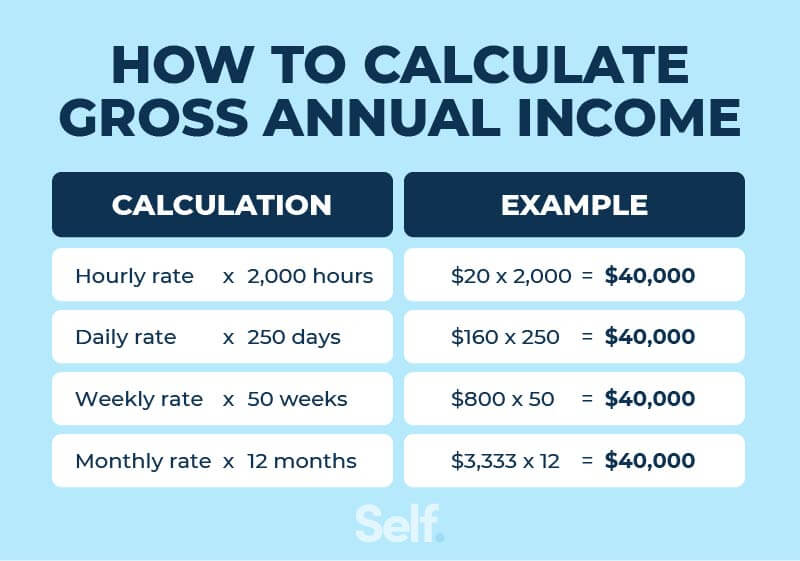
Primary Methods for Salaried and Hourly Employees
For those employed by a company, tracking yearly income is generally a matter of reviewing documentation provided by the employer and the government. Because these earnings are often standardized, the paper trail is relatively easy to follow.
Reviewing Year-to-Date (YTD) Pay Stubs
The most immediate way to check your yearly income is to look at your most recent pay stub. Most modern payroll systems, such as ADP, Gusto, or Workday, provide a detailed breakdown of your earnings. Look for the “Year-to-Date” (YTD) column. This figure represents the total amount you have earned from January 1st through the end of the current pay period.
If you are at the end of the year, your final pay stub will show your total annual earnings. However, if you are mid-year, you can estimate your total yearly income by projecting your current earnings. For example, if your YTD gross pay is $30,000 at the end of June, you can reasonably estimate a yearly income of $60,000, assuming your pay remains consistent.
Utilizing Form W-2 (Wage and Tax Statement)
For a definitive look at your income from the previous calendar year, the Form W-2 is the gold standard. Employers are required to provide this document by January 31st of each year. Box 1 of the W-2 shows your total wages, tips, and other compensation that is subject to federal income tax.
It is important to note that the figure on your W-2 might be lower than your actual “gross” salary if you contribute to pre-tax benefits like a 401(k) or a Health Savings Account (HSA). These deductions lower your taxable income, which is what the W-2 primarily tracks. To see your total compensation including these benefits, you may need to cross-reference your final pay stub of the year with your W-2.
Accessing Social Security Statements
If you want to check your yearly income history over a longer period, the Social Security Administration (SSA) maintains a comprehensive record of your taxed earnings. By creating an account on the “my Social Security” website, you can download a statement that lists your yearly earnings for every year you have been in the workforce. This is an excellent tool for verifying long-term income trends and ensuring that your employers have correctly reported your earnings to the government.
Calculating Annual Income for Freelancers and Business Owners
For individuals who are self-employed, work in the “gig economy,” or own a business, checking yearly income is more complex. Because income is often irregular and comes from multiple sources, the responsibility for tracking falls entirely on the individual.
Analyzing Profit and Loss (P&L) Statements
The most accurate way for a business owner to check their yearly income is through a Profit and Loss statement. This document summarizes the revenues, costs, and expenses incurred during a specific period. To find your “net” yearly income, you subtract your business expenses (rent, equipment, marketing, etc.) from your total gross revenue.
Digital accounting software like QuickBooks, FreshBooks, or Xero can generate these reports automatically if you consistently categorize your transactions. For self-employed individuals, your yearly income is essentially the net profit of your business operations.
Consolidating Form 1099s
Freelancers and independent contractors receive Form 1099-NEC (Nonemployee Compensation) or 1099-MISC from clients who paid them $600 or more during the year. To check your yearly income, you must aggregate all 1099 forms received.
However, relying solely on 1099s can be misleading if you have many small clients who paid you less than the $600 threshold. In these cases, you must rely on your own records. A dedicated business bank account is highly recommended; by reviewing your annual deposits, you can quickly identify your total gross income before expenses.
Tax Returns and Schedule C
When the tax season concludes, your federal tax return provides the most formal record of your self-employed income. Specifically, Schedule C (Form 1040) is used to report profit or loss from a business. Line 31 of Schedule C shows your net profit, which is the figure most lenders and financial institutions use when they ask for your yearly income. This figure reflects what you actually “earned” after the costs of doing business were subtracted.

Understanding the Nuances: Gross vs. Net vs. AGI
When someone asks, “What is your yearly income?” the answer depends entirely on why they are asking. In the world of personal finance, there are three distinct ways to categorize your earnings.
Gross Yearly Income
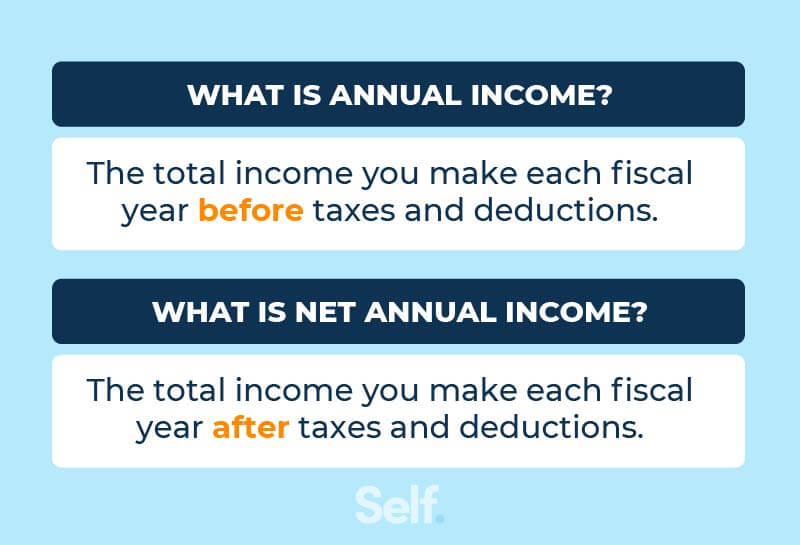
Gross income is the total amount of money you earn before any deductions or taxes are taken out. If you signed a contract for $75,000 a year, that is your gross income. Lenders typically use gross income to calculate debt-to-income ratios for mortgages and car loans because it represents your total earning potential.
Net Yearly Income (Take-Home Pay)
Net income is the amount of money that actually reaches your bank account. It is your gross income minus federal, state, and local taxes, Social Security contributions, health insurance premiums, and retirement contributions. For personal budgeting and lifestyle planning, net income is the only figure that truly matters, as it represents the actual liquidity available for spending and saving.
Adjusted Gross Income (AGI) and MAGI
Adjusted Gross Income (AGI) is a specific calculation used by the IRS. It starts with your gross income and subtracts specific “above-the-line” deductions, such as student loan interest, alimony payments, and contributions to a traditional IRA.
Modified Adjusted Gross Income (MAGI) adds back certain deductions to determine your eligibility for specific tax credits or your ability to contribute to a Roth IRA. Checking these figures requires looking at your most recent tax return (Form 1040). Understanding your AGI is critical for tax planning, as it determines your tax bracket and eligibility for various government programs.
Official Verification and Financial Documentation
There are moments when you cannot simply “tell” someone your income; you must prove it. Knowing how to access official documentation is a key skill in financial literacy.
Requesting IRS Tax Transcripts
If you have lost your tax returns or need a verified government document to prove your income to a lender, you can request a tax transcript from the IRS. This document provides a summary of your return and is often accepted as official proof of yearly income. Transcripts can be requested online through the “Get Your Tax Record” portal on the IRS website and are usually available for the current year and the prior three years.
Using Budgeting and Aggregation Tools
In the modern digital age, you don’t have to wait for a tax form to check your income. Financial aggregation tools like Rocket Money, Monarch Money, or Empower allow you to link all your bank accounts and investment portfolios. These apps automatically categorize “Income” deposits. By filtering for the last 12 months, you can get a real-time view of your cash flow. This is particularly helpful for people with multiple income streams, such as rental properties, dividends, and side hustles.
The Importance of the “Income Folder”
A professional approach to personal finance involves maintaining an “Income Folder”—either physical or digital. This folder should contain your last three years of tax returns, your W-2s or 1099s, and your final pay stubs from each year. Having these documents readily available makes it significantly easier to track income growth over time and prepares you for unexpected financial opportunities or audits.
Why Your Yearly Income Matters for Your Financial Future
Checking your yearly income is not just about looking backward; it is about planning forward. The data you gather informs every major financial decision you will make.
Managing Debt-to-Income (DTI) Ratios
Lenders use your yearly gross income to determine your DTI ratio. This is the percentage of your gross monthly income that goes toward paying debts. Generally, a DTI of 36% or less is considered healthy. If you check your income and realize your DTI is creeping higher, it serves as a signal to pause new spending and focus on debt reduction before it impacts your creditworthiness.
Retirement Contribution Limits
Many retirement accounts have contribution limits based on your yearly income. For instance, high earners may find themselves “phased out” of the ability to contribute directly to a Roth IRA if their MAGI exceeds certain thresholds. By checking your yearly income mid-year, you can determine if you need to adjust your investment strategy, perhaps by utilizing a “Backdoor Roth” or increasing contributions to a 401(k) to lower your taxable income.
Tax Planning and Withholding Adjustments
One of the most common financial mistakes is having too much or too little tax withheld from your paycheck. If you check your yearly income and compare it to your tax withholdings, you can avoid a large, unexpected tax bill in April. If you find you are earning significantly more than the previous year—perhaps due to a bonus or a successful side business—you may need to increase your estimated tax payments or adjust your W-4 form with your employer.
In conclusion, checking your yearly income is a multi-faceted process that requires looking at pay stubs, tax documents, and digital tracking tools. By understanding the difference between gross, net, and adjusted income, you gain a clearer picture of your financial standing. This clarity allows you to make informed decisions about debt, investments, and long-term wealth building, ensuring that your financial foundation remains solid year after year.
aViewFromTheCave is a participant in the Amazon Services LLC Associates Program, an affiliate advertising program designed to provide a means for sites to earn advertising fees by advertising and linking to Amazon.com. Amazon, the Amazon logo, AmazonSupply, and the AmazonSupply logo are trademarks of Amazon.com, Inc. or its affiliates. As an Amazon Associate we earn affiliate commissions from qualifying purchases.