
The retirement landscape has shifted significantly over the last several decades, moving from a system dominated by defined-benefit pensions to one where individuals bear the brunt of their own financial planning via 401(k)s and IRAs. Amidst this volatility, Social Security remains the bedrock of American retirement. It functions as a government-backed, inflation-adjusted annuity that provides a guaranteed floor for your monthly income. However, for many, the actual math behind that monthly check remains a mystery. Understanding how to calculate your Social Security benefits is not just a mathematical exercise; it is a critical component of strategic financial planning that dictates when you can afford to retire and how you should allocate your other assets.

Understanding the Foundation of Social Security Benefits
Before diving into the complex formulas, it is essential to understand the raw data the Social Security Administration (SSA) uses to determine your benefit. The calculation is not based on your final salary or your total career contributions, but rather on a very specific average of your lifetime earnings.
The 35-Year Rule
The first step in the SSA’s process is identifying your highest-earning years. The SSA looks at your entire work history and selects the 35 years in which you earned the most, up to the annual taxable maximum (the “contribution and benefit base”). If you have worked for more than 35 years, your lowest-earning years are discarded. Crucially, if you have worked fewer than 35 years, the SSA will fill in the remaining slots with zeros. These zeros can significantly drag down your career average, which is why financial advisors often suggest working at least 35 years to maximize your benefit potential.
Average Indexed Monthly Earnings (AIME)
Social Security benefits are designed to keep pace with the standard of living. To do this, the SSA uses “indexing.” They don’t just look at the raw dollar amount you earned in 1985; they adjust those earnings to account for changes in general wage levels that have occurred since then. This process ensures that $20,000 earned decades ago is weighted appropriately against $80,000 earned today.
Once your 35 highest indexed years are identified, they are summed and divided by 420 (the number of months in 35 years). The resulting figure is your Average Indexed Monthly Earnings (AIME). This number serves as the baseline for the next, more complex stage of the calculation.
The Step-by-Step Calculation Process
Once the AIME is established, the SSA applies a progressive formula to determine your Primary Insurance Amount (PIA). The PIA is the monthly benefit you are entitled to receive if you claim benefits exactly at your Full Retirement Age (FRA).
The Concept of “Bend Points”
The Social Security benefit formula is intentionally progressive, meaning it replaces a higher percentage of income for lower-wage earners than for higher-wage earners. This is achieved through the use of “bend points.” For anyone reaching age 62 in 2024, the formula takes your AIME and applies three distinct percentages:
-
90% of the first $1,174 of your AIME.
-
32% of your AIME between $1,174 and $7,078.
-
15% of your AIME over $7,078.
The sum of these three figures, rounded down to the nearest dime, is your PIA. This tiered structure ensures that the system provides a safety net for those with lower lifetime earnings while still rewarding those who contributed more to the system over their careers.
Factoring in the Taxable Maximum
It is important to note that you only pay Social Security taxes (and earn credit) on income up to a certain limit each year. In 2024, that limit is $168,600. Any income earned above this threshold does not enter into the AIME calculation. This creates a “ceiling” on Social Security benefits, ensuring that while high earners receive a larger check than low earners, the disparity is not nearly as wide as their actual salary differences might suggest.
The Impact of Retirement Age on Your Benefit Amount
While the PIA represents your benefit at your Full Retirement Age, very few people actually receive exactly that amount. The age at which you choose to start receiving benefits is perhaps the most significant variable you can control in this calculation.
Identifying Your Full Retirement Age (FRA)
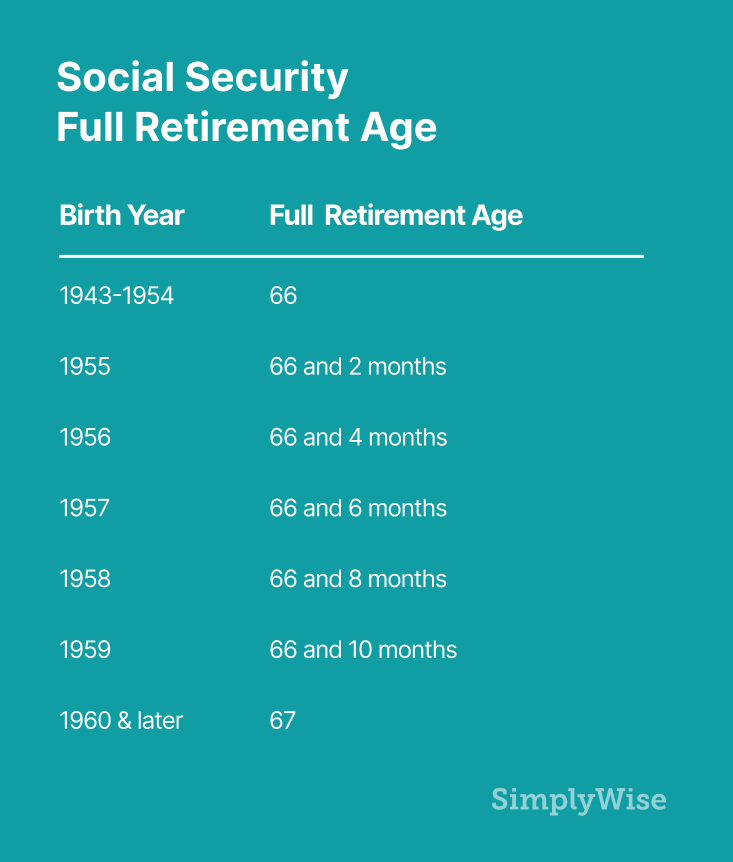
Your FRA depends on the year you were born. For those born between 1943 and 1954, the FRA is 66. For those born between 1955 and 1959, the FRA increases in two-month increments each year. For everyone born in 1960 or later, the FRA is 67. Claiming exactly at this age ensures you get 100% of your calculated PIA.
The Cost of Early Filing
You can begin taking Social Security as early as age 62, but there is a permanent “penalty” for doing so. If your FRA is 67 and you claim at 62, your monthly benefit is reduced by 30%. This reduction is calculated monthly: benefits are reduced by 5/9 of 1% for each month before FRA, up to 36 months, and 5/12 of 1% for each month beyond that. For many, the choice to take benefits early is driven by necessity or health concerns, but from a purely mathematical standpoint, it results in a significantly lower lifetime monthly payout.
The Reward for Delayed Retirement Credits
Conversely, if you delay claiming benefits beyond your FRA, your benefit increases by 8% for every full year you wait, up to age 70. This means that a person with an FRA of 67 who waits until age 70 to claim will receive 124% of their PIA. This “guaranteed” 8% annual return is virtually impossible to find in any other low-risk investment vehicle, making delayed filing a powerful strategy for those who have other assets to live on in their late 60s.
Strategic Variables That Change Your Monthly Check
Calculating your benefit is not just about your own work history. The Social Security system includes provisions for spouses, survivors, and those who continue to work while receiving benefits.
Spousal and Survivor Benefits
If you are married, you may be eligible for a spousal benefit that is up to 50% of your spouse’s PIA, rather than your own benefit, if the spousal amount is higher. This calculation happens automatically, but it requires that the primary earner has already filed for their own benefits. Furthermore, in the event of a spouse’s death, the survivor is typically eligible to inherit 100% of the deceased spouse’s monthly benefit (if it was higher than their own), provided they have reached their own FRA. This makes the decision of when the “high-earner” in a marriage files a crucial part of long-term financial security for the surviving spouse.
The Earnings Test and Taxation
If you choose to claim benefits before your FRA and continue to work, the “Earnings Test” may apply. In 2024, if you earn more than $22,320, the SSA will temporarily withhold $1 in benefits for every $2 you earn above that limit. Once you reach FRA, these withheld benefits are eventually added back into your monthly check, but the initial reduction can be a shock to those not expecting it.
Additionally, your Social Security benefits may be subject to federal income tax. If your “provisional income” (your adjusted gross income + tax-exempt interest + 50% of your Social Security benefits) exceeds $25,000 for individuals or $32,000 for couples, up to 50% to 85% of your benefits may be taxable. Calculating the “tax-drag” on your benefits is essential for an accurate retirement budget.
Modern Tools for Accurate Estimation
While you can manually calculate your AIME and apply the bend point percentages, the most accurate way to “calculate my Social Security” is to use the digital tools provided by the Social Security Administration.
The “my Social Security” Account
The SSA has largely moved away from mailing paper statements. To get an accurate calculation, every worker should create a “my Social Security” account online. This portal provides a personalized statement based on your actual earnings history reported by your employers. It offers estimates for your benefits at age 62, at your FRA, and at age 70.

Integration with Financial Planning
When using these estimates, it is vital to remember that they are presented in today’s dollars. While Social Security includes Cost of Living Adjustments (COLA) to account for inflation, your personal financial plan should account for the fact that your purchasing power requirements may change.
Financial professionals often use the SSA data as a starting point and then layer it into “Monte Carlo” simulations or cash-flow models. By understanding the core mechanics of how your 35 highest years, the bend point formula, and your filing age interact, you can make informed decisions. Whether you are aiming to retire early or maximize your legacy, the calculation of Social Security is the fundamental starting point for a secure financial future. It is not just a benefit; it is an earned asset that requires careful management and strategic timing.
aViewFromTheCave is a participant in the Amazon Services LLC Associates Program, an affiliate advertising program designed to provide a means for sites to earn advertising fees by advertising and linking to Amazon.com. Amazon, the Amazon logo, AmazonSupply, and the AmazonSupply logo are trademarks of Amazon.com, Inc. or its affiliates. As an Amazon Associate we earn affiliate commissions from qualifying purchases.