
For millions of Americans, Social Security isn’t just a government program; it’s a foundational pillar of their retirement security, a vital safety net in times of disability, and a source of support for surviving family members. Understanding how your monthly Social Security check is calculated is not merely an academic exercise; it’s a critical component of sound financial planning. The question, “How much will my Social Security check be?” is one of the most frequently asked, yet its answer is anything but simple, woven into a complex tapestry of your earnings history, claiming age, and various life circumstances.
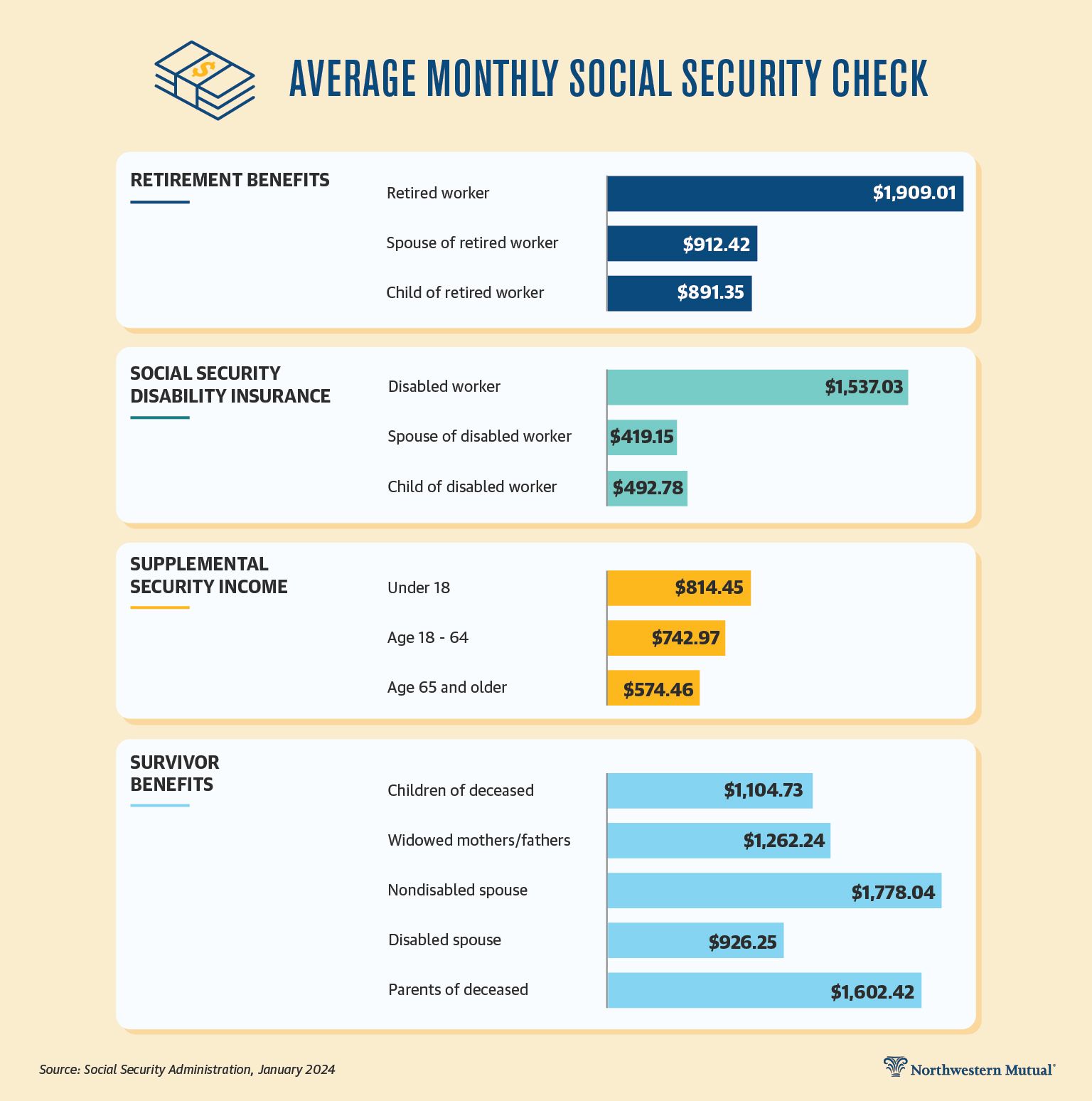
This article aims to demystify the intricacies behind your Social Security benefit amount. We’ll delve into the core calculations, explore the pivotal factors that influence your check, discuss various benefit types beyond just retirement, and guide you toward the resources available to help you estimate and plan for your future. By understanding these mechanics, you can make informed decisions that could significantly impact your financial well-being during your retirement years and beyond.
The Foundation: Understanding Your Social Security Benefit Calculation
At its heart, your Social Security benefit is designed to replace a portion of your pre-retirement earnings. The calculation is complex, but it begins with your earnings history, processes it through a series of indexing and averaging steps, and then applies a specific formula to arrive at your Primary Insurance Amount (PIA). This PIA is the basis for all your Social Security benefits, including retirement, disability, and survivor benefits.
Your Average Indexed Monthly Earnings (AIME)
The first crucial step in calculating your benefit involves determining your Average Indexed Monthly Earnings (AIME). The Social Security Administration (SSA) looks at your entire earnings history, specifically your highest 35 years of indexed earnings. Why “indexed”? Because a dollar earned in 1985 had more purchasing power than a dollar earned today. Indexing adjusts your past earnings to reflect the general wage level increase over time, bringing them up to a common standard relative to when you turn 60.
For example, if you earned $20,000 in 1990, that amount is “indexed” to what it would be worth in today’s economy (or, more precisely, in the year you turn 60). This ensures that your earliest significant earnings aren’t undervalued in the final calculation. After indexing, the SSA takes your 35 highest earning years, sums them up, and divides by 420 (the number of months in 35 years) to arrive at your AIME. If you have fewer than 35 years of earnings, the missing years are counted as zero, which will lower your AIME.
The Primary Insurance Amount (PIA) Formula
Once your AIME is established, it’s used to calculate your Primary Insurance Amount (PIA). The PIA is the monthly benefit you’re entitled to if you claim benefits exactly at your Full Retirement Age (FRA). The PIA formula is progressive, meaning it replaces a higher percentage of earnings for lower-income workers than for higher-income workers. This is achieved through what are called “bend points.”
The bend points are dollar amounts in the AIME formula that change annually. For instance, for individuals becoming eligible for retirement benefits in 2024, the formula is:
-
90% of the first $1,174 of your AIME
-
32% of your AIME over $1,174 up to $7,078
-
15% of your AIME over $7,078
You add these three amounts together to get your PIA. This progressive structure is a core tenet of Social Security, aiming to provide a vital safety net for those with lower lifetime earnings while still offering benefits to those with higher incomes.
The Role of Work Credits
Before any calculation can even begin, you must be “insured” for Social Security benefits. This means you must have accumulated enough work credits. You can earn up to four work credits each year. In 2024, you earn one credit for every $1,730 in earnings, up to the maximum of four credits for earning $6,920 or more. Most people need 40 work credits (10 years of work) to be eligible for retirement benefits. Fewer credits are required for disability benefits or for your survivors to be eligible for benefits. It’s crucial to understand that while more credits make you eligible, the amount of your earnings in those credited years is what ultimately determines your benefit amount, not just the number of credits past the minimum.
Key Factors Influencing Your Benefit Amount
While your PIA forms the bedrock of your Social Security benefit, several critical factors can significantly alter the final amount you receive each month. Understanding these levers is paramount for strategic planning.
Your Earning History: A Lifetime Perspective
As discussed, your highest 35 years of indexed earnings are used to calculate your AIME. This means that consistent, higher earnings over a longer career will result in a higher benefit. Conversely, periods of unemployment, low earnings, or working fewer than 35 years will reduce your AIME and, consequently, your PIA. It’s important to accurately report all earnings to the SSA throughout your working life, as any discrepancies could impact your future benefits. Regularly checking your Social Security Statement for accuracy is a good practice.
Your Full Retirement Age (FRA)
Your Full Retirement Age (FRA) is the age at which you are entitled to receive 100% of your PIA. The FRA is not universal; it depends on your birth year. For those born in 1937 or earlier, FRA was 65. For those born between 1943 and 1954, it’s 66. For individuals born in 1960 or later, FRA is 67. Understanding your specific FRA is fundamental because it serves as the benchmark for benefit adjustments.
The Impact of Claiming Age: Early vs. Delayed Benefits
This is arguably the most impactful decision you’ll make regarding your Social Security benefits. While your FRA dictates when you receive 100% of your PIA, you have the flexibility to claim benefits as early as age 62 or as late as age 70.
-
Claiming Early (Before FRA): If you claim benefits before your FRA, your monthly benefit will be permanently reduced. The reduction is approximately 6.67% per year for the first three years before FRA and an additional 5% per year for each year prior to that. For someone with an FRA of 67, claiming at 62 would result in a permanent reduction of about 30%. While you receive payments for more years, each check is smaller.
-
Claiming at FRA: You receive 100% of your calculated PIA.
-
Claiming Late (After FRA): If you delay claiming benefits past your FRA, your monthly benefit will be permanently increased. This increase comes in the form of Delayed Retirement Credits (DRCs), which accumulate at 8% per year up to age 70. So, if your FRA is 67 and you delay claiming until 70, you would receive an additional 24% (3 years * 8% per year) on top of your PIA. This significantly boosts your monthly income, a powerful incentive for those who can afford to wait.
The decision of when to claim is highly personal, influenced by factors such as your health, other retirement savings, marital status, and life expectancy.
Cost-of-Living Adjustments (COLAs)
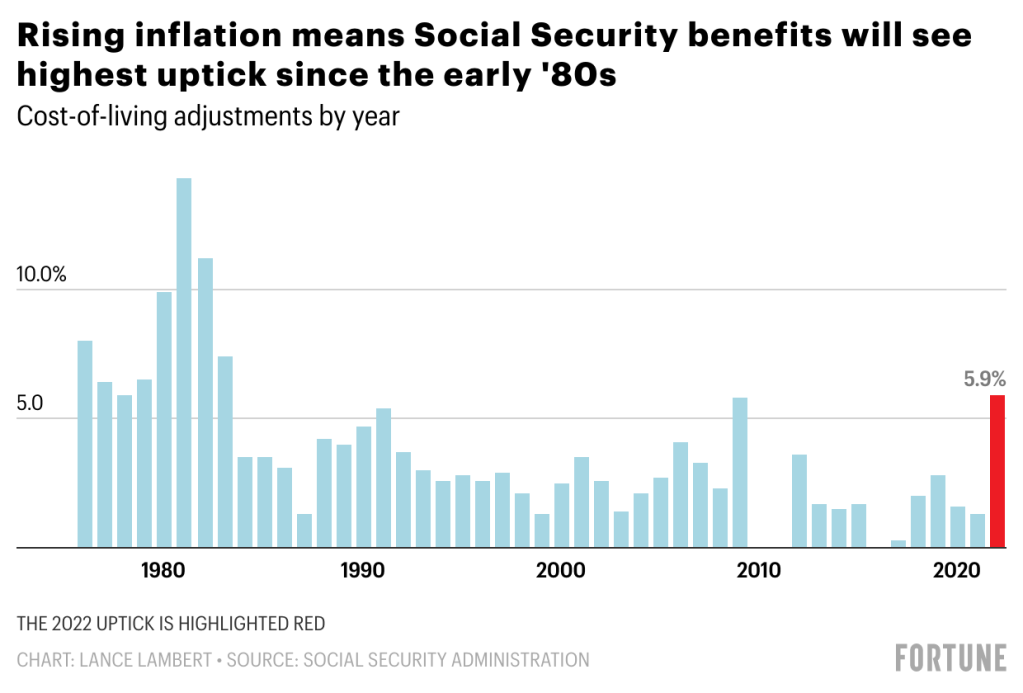
Once you begin receiving benefits, your payments are subject to annual Cost-of-Living Adjustments (COLAs). COLAs are designed to help Social Security benefits keep pace with inflation. Each year, if the Consumer Price Index for Urban Wage Earners and Clerical Workers (CPI-W) increases, your benefits will generally be adjusted upward to reflect that increase. These adjustments can significantly impact the long-term purchasing power of your benefits, helping to protect retirees from rising costs of living.
Beyond Your Own Record: Spousal, Survivor, and Disability Benefits
Social Security is more than just individual retirement; it’s a family protection program. It extends benefits to spouses, former spouses, children, and survivors, and provides crucial support in the event of a disability.
Spousal Benefits: Leveraging a Partner’s Record
If you are married or were married for at least 10 years and are now divorced, you may be eligible for spousal benefits based on your spouse’s or former spouse’s earnings record. A spouse can receive up to 50% of the primary earner’s PIA. To claim spousal benefits, the primary earner must generally have already filed for their own benefits, and the spouse must be at least 62 years old.
It’s important to note that if you are eligible for benefits on your own record and on your spouse’s record, the SSA will pay you the higher of the two amounts. If you are a divorced spouse, you may be able to claim spousal benefits even if your ex-spouse has not yet filed, provided certain conditions are met (e.g., married for 10+ years, divorced for at least 2 years, and both are age 62 or older).
Survivor Benefits: Support for Families
In the unfortunate event of a worker’s death, Social Security provides survivor benefits to eligible family members, including widows, widowers, children, and dependent parents. The amount of survivor benefit typically ranges from 75% to 100% of the deceased worker’s PIA, depending on the survivor’s relationship and age. For example, a widow or widower who waits until their own FRA to claim survivor benefits can receive 100% of the deceased worker’s benefit. Minor children or disabled adult children can also receive benefits. These benefits are a critical financial lifeline for families experiencing the loss of an income earner.
Social Security Disability Insurance (SSDI)
If you become severely disabled and are unable to work, Social Security Disability Insurance (SSDI) can provide a vital income stream. To qualify for SSDI, you must have worked long enough and recently enough to have accumulated the necessary work credits (typically 20 credits in the last 10 years, though requirements vary for younger workers). The monthly disability benefit is generally equal to your full PIA, as if you had reached your FRA. This means that if you are approved for SSDI, your benefit amount is based on your earnings record and not reduced for claiming before your FRA. The application process for SSDI can be lengthy and complex, often requiring significant medical documentation.
Navigating the System: Tools and Resources
Understanding the mechanics of Social Security is one thing; getting a personalized estimate and planning for your future is another. Fortunately, the Social Security Administration provides several invaluable tools and resources to help you.
Your Online Social Security Account
The single most important tool for most Americans is their personal “my Social Security” account. This free online service allows you to:
-
View your complete earnings record to ensure its accuracy.
-
Get personalized estimates of your future retirement, disability, and survivor benefits at various claiming ages.
-
Check the status of an application.
-
Request a replacement Social Security card.
-
Manage your benefits if you are already receiving them.
Creating and regularly reviewing your “my Social Security” account is essential for financial planning. It allows you to catch any errors in your earnings history and provides realistic benefit projections.
The Social Security Statement
Even without an online account, the SSA used to mail physical Social Security Statements to all workers over age 25. While these mailings are now less frequent (primarily for those age 60 and older who are not receiving benefits and do not have an online account), you can always access your statement through your “my Social Security” account. This statement summarizes your reported earnings, provides estimates of your benefits at different claiming ages, and offers general information about the program. It’s a snapshot of your current Social Security standing.
Benefit Calculators and Financial Planning
Beyond the SSA’s official tools, many reputable financial planning websites offer Social Security benefit calculators. These tools can often simulate various claiming strategies, factor in spousal benefits, and help you integrate Social Security into your broader retirement income plan. Financial advisors specializing in retirement planning can also provide invaluable assistance, helping you analyze your personal circumstances, understand the trade-offs of different claiming ages, and develop a comprehensive strategy that maximizes your Social Security income alongside your other assets.
Maximizing Your Social Security Benefits and Integrating into Financial Planning
Understanding how your Social Security check is calculated is merely the first step. The true value lies in using this knowledge to make strategic decisions that enhance your overall financial security in retirement.
Strategic Claiming Decisions
The choice of when to claim Social Security is often the most significant financial decision for retirees. It’s rarely a one-size-fits-all answer.
-
Health and Longevity: If you are in excellent health and have a family history of longevity, delaying benefits to maximize your monthly check could be a wise move, effectively serving as longevity insurance. Conversely, if you have health issues or a shorter life expectancy, claiming earlier might provide more total benefits over your lifetime.
-
Other Income and Savings: If you have substantial other retirement savings or plans to continue working part-time, delaying Social Security might be feasible and beneficial. If Social Security will be your primary income source, or if you face unexpected financial needs, claiming earlier might be necessary.
-
Spousal Coordination: For married couples, coordinating claiming strategies can lead to significantly higher combined lifetime benefits. This often involves one spouse claiming early while the other delays, or a “file and suspend” strategy (though this option has been largely eliminated for new filers since 2016). Consulting with a financial advisor is highly recommended for optimizing spousal benefits.
Integrating Social Security with Your Retirement Portfolio
Social Security should not be viewed in isolation but as one component of your overall retirement income strategy. It acts as a reliable, inflation-adjusted annuity, providing a stable income floor.
-
Minimizing Portfolio Withdrawals: A higher Social Security benefit can allow you to draw less from your investment portfolio in the early years of retirement, giving your assets more time to grow.
-
Risk Management: The guaranteed nature of Social Security benefits can offset some of the market risk associated with your investment portfolio.
-
Tax Planning: Understand that a portion of your Social Security benefits may be taxable, depending on your “provisional income” (which includes adjusted gross income, tax-exempt interest, and half of your Social Security benefits). Effective tax planning can help manage this liability.
Understanding Taxes on Benefits
It’s a common misconception that Social Security benefits are tax-free. Depending on your provisional income, up to 85% of your Social Security benefits may be subject to federal income tax. Some states also tax Social Security benefits. Understanding these thresholds and planning your other retirement income withdrawals accordingly can help minimize your tax burden in retirement.
Conclusion
The question, “How much will my Social Security check be?” opens the door to a complex but profoundly important area of personal finance. Your Social Security benefit is a dynamic figure, shaped by a lifetime of earnings, your unique claiming choices, and the specific circumstances of your life. While the formulas and rules can seem daunting, the resources provided by the Social Security Administration, coupled with careful personal planning, empower you to understand, estimate, and even optimize your future income.
By actively engaging with your earnings record, understanding the implications of your claiming age, and exploring the various types of benefits available, you can transform uncertainty into informed decision-making. Social Security is a powerful financial tool; mastering its nuances is a crucial step towards securing a stable and confident retirement. Don’t wait until retirement is on your doorstep to ask this vital question; begin exploring your options today to ensure your Social Security check works as hard for you as you did for it.
aViewFromTheCave is a participant in the Amazon Services LLC Associates Program, an affiliate advertising program designed to provide a means for sites to earn advertising fees by advertising and linking to Amazon.com. Amazon, the Amazon logo, AmazonSupply, and the AmazonSupply logo are trademarks of Amazon.com, Inc. or its affiliates. As an Amazon Associate we earn affiliate commissions from qualifying purchases.