
As the global energy landscape undergoes a fundamental shift toward decentralization and sustainability, solar photovoltaic (PV) technology has emerged as the cornerstone of the modern renewable stack. For homeowners, engineers, and tech enthusiasts, the most pressing question often begins with a singular unit of measurement: how much power does one solar panel actually produce? To answer this, one must look beyond the sticker price and delve into the hardware specifications, the physics of semiconductor efficiency, and the technological innovations that are currently pushing the boundaries of what a single panel can achieve.
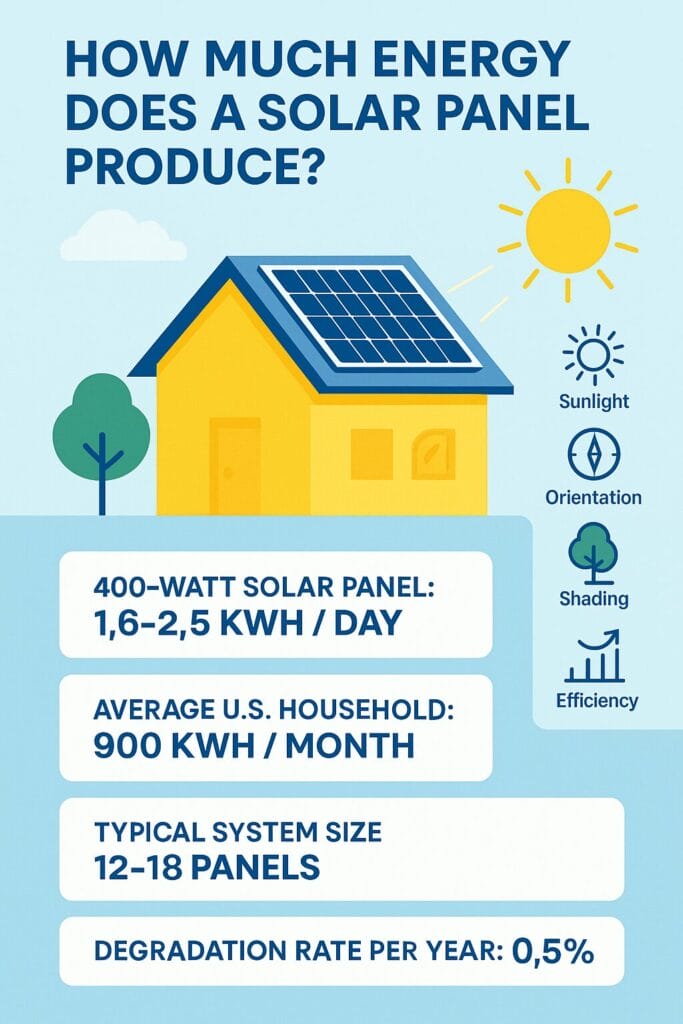
In the current market, a standard residential solar panel typically produces between 320 and 450 watts of peak power. However, this figure is a moving target, influenced by rapid advancements in cell architecture and manufacturing processes. Understanding the output of a solar panel requires a technical deep dive into how wattage is rated, the hardware variables that influence performance, and the emerging technologies that are redefining the theoretical limits of solar energy harvesting.
Decoding the Wattage Rating: From Laboratory to Rooftop
When a manufacturer labels a solar panel as “400 Watts,” they are referring to its performance under Standard Test Conditions (STC). These laboratory conditions are rigorous and standardized: an irradiance of 1,000 watts per square meter, a cell temperature of 25°C (77°F), and an air mass of 1.5. This allows for an apples-to-apples comparison between different brands and models, but it rarely reflects the dynamic environment of a real-world installation.
Standard Test Conditions (STC) vs. NMOT
While STC provides a benchmark for peak performance, savvy tech adopters look toward the Nominal Module Operating Temperature (NMOT) rating. NMOT simulates more realistic conditions, such as 800 watts per square meter of sunlight, an ambient temperature of 20°C, and a light breeze. Under NMOT, a 400W panel might only produce 300 to 320 watts. This discrepancy is crucial for system sizing and battery integration, as it represents the “working wattage” of the hardware during a typical afternoon.
The Rise of High-Output Modules
Over the last decade, the industry has seen a significant “wattage creep.” In 2014, a 250W panel was considered high-end. Today, advancements in cell size—specifically the transition from M2 to M10 and G12 large-format wafers—have allowed manufacturers to produce panels that exceed 500W or even 600W for commercial applications. These higher ratings are achieved not just by making panels larger, but by packing more active photovoltaic surface area into the same footprint through half-cut cell technology and multi-busbar designs.
The Evolution of Photovoltaic Technology and Efficiency
The amount of power a panel produces is fundamentally capped by its efficiency rating—the percentage of sunlight hitting the panel that is converted into usable electricity. Most modern silicon panels fall within the 19% to 23% efficiency range. While this may seem low, it represents a massive leap in semiconductor engineering compared to the early days of the industry.
Monocrystalline PERC and N-Type Technology
The current gold standard in the tech space is the Monocrystalline PERC (Passivated Emitter and Rear Cell). PERC technology adds a reflection layer to the back of the solar cell, allowing unabsorbed light to bounce back through the cell for a second chance at conversion. However, the industry is currently pivoting toward N-Type silicon, specifically TOPCon (Tunnel Oxide Passivated Contact) and HJT (Heterojunction Technology).
N-type cells use phosphorus instead of boron, making them immune to Light-Induced Degradation (LID). From a power production standpoint, N-type panels offer higher efficiency ceilings and better performance in low-light conditions, ensuring that “one panel” produces more kilowatt-hours (kWh) over its 25-year lifespan than its P-type predecessors.
Half-Cut Cells and Multi-Busbar (MBB) Designs
If you look closely at a modern high-output panel, you will notice the cells are cut in half. This is a deliberate engineering choice to reduce resistive losses. Because the current flowing through each cell is halved, the internal resistance is lowered, which directly increases the power output. Similarly, moving from 3 or 5 busbars (the silver wires running across the cells) to 9 or 12 busbars (MBB) shortens the distance electrons must travel, further boosting the panel’s total wattage and improving its resilience against micro-cracks.
Engineering Factors That Impact Energy Yield
A solar panel does not operate in a vacuum. Its actual power output is a result of a complex interplay between its internal hardware and external environmental variables. For those designing high-tech energy systems, understanding these variables is the difference between a system that meets its targets and one that falls short.
Temperature Coefficients and Thermal Management
Counter-intuitively, solar panels perform worse as they get hotter. The “temperature coefficient” is a technical spec that indicates how much power output drops for every degree Celsius above the 25°C STC mark. High-quality panels typically have a coefficient of -0.3% to -0.35% per degree. On a hot summer day where the panel surface reaches 65°C, a panel can lose nearly 15% of its rated power. Engineering solutions, such as raised mounting systems and specialized glass coatings, are utilized to mitigate these thermal losses and maintain peak output.
The Role of Shading and Bypass Diodes
One of the greatest technical challenges in solar power production is shading. Because cells in a panel are traditionally wired in series, shading even a small portion of one cell can “choke” the flow of electricity through the entire string. Modern panels integrate bypass diodes, which act as “detours” for current. If one section of the panel is shaded by a chimney or a leaf, the bypass diode allows electricity to flow around the obstructed section, ensuring the rest of the panel continues to produce power, albeit at a reduced capacity.
Integrating Solar Tech: Micro-inverters and Power Optimizers
To maximize the power produced by a single panel, the industry has moved toward Module-Level Power Electronics (MLPE). In traditional “string” configurations, the weakest panel in a row dictates the performance of all the others. This is the “Christmas light” problem applied to renewable energy.
Micro-inverters
A micro-inverter is a small computer and power converter mounted to the back of each individual panel. It converts the Direct Current (DC) produced by the panel into Alternating Current (AC) right at the source. This allows each panel to operate independently at its Maximum Power Point (MPP). If one panel is performing at 90% due to dust and another at 100%, the micro-inverter ensures the 100% panel isn’t throttled.
Power Optimizers
Similar to micro-inverters, power optimizers are DC-to-DC converters. They don’t convert the power to AC at the panel, but they “condition” the DC electricity before sending it to a central inverter. This technology allows for real-time tracking of the panel’s IV curve (current-voltage), ensuring that the panel is always producing the maximum possible wattage regardless of what is happening to the rest of the array.
The Next Frontier: Bifaciality and Tandem Cell Architecture
As we look toward the future of solar hardware, the goal is to break the Shockley-Queisser limit—the theoretical maximum efficiency of a single-junction silicon solar cell (approximately 33.7%).
Bifacial Technology
Bifacial solar panels are a growing trend in the tech sector. These panels have glass on both sides, allowing them to capture sunlight that reflects off the ground or nearby surfaces onto the back of the panel. Depending on the “albedo” (reflectivity) of the surface below, a bifacial panel can produce 5% to 30% more power than a traditional monofacial panel of the same size. This effectively turns a 400W panel into a 450W+ producer through clever structural engineering.
Tandem Cells and Perovskites
The most exciting development in solar tech is the tandem cell. By layering a thin film of Perovskite—a synthetic material with a crystalline structure—over a traditional silicon base, engineers can capture different parts of the solar spectrum. Silicon is excellent at capturing red and infrared light, while Perovskite can be tuned to capture blue and ultraviolet light. Recent laboratory prototypes have achieved efficiencies exceeding 30%. When these reach mass production, the power output of a single standard-sized panel could realistically jump from 400W to over 550W without increasing the physical dimensions of the unit.
Calculating the Tech Footprint: From Watts to Kilowatt-Hours
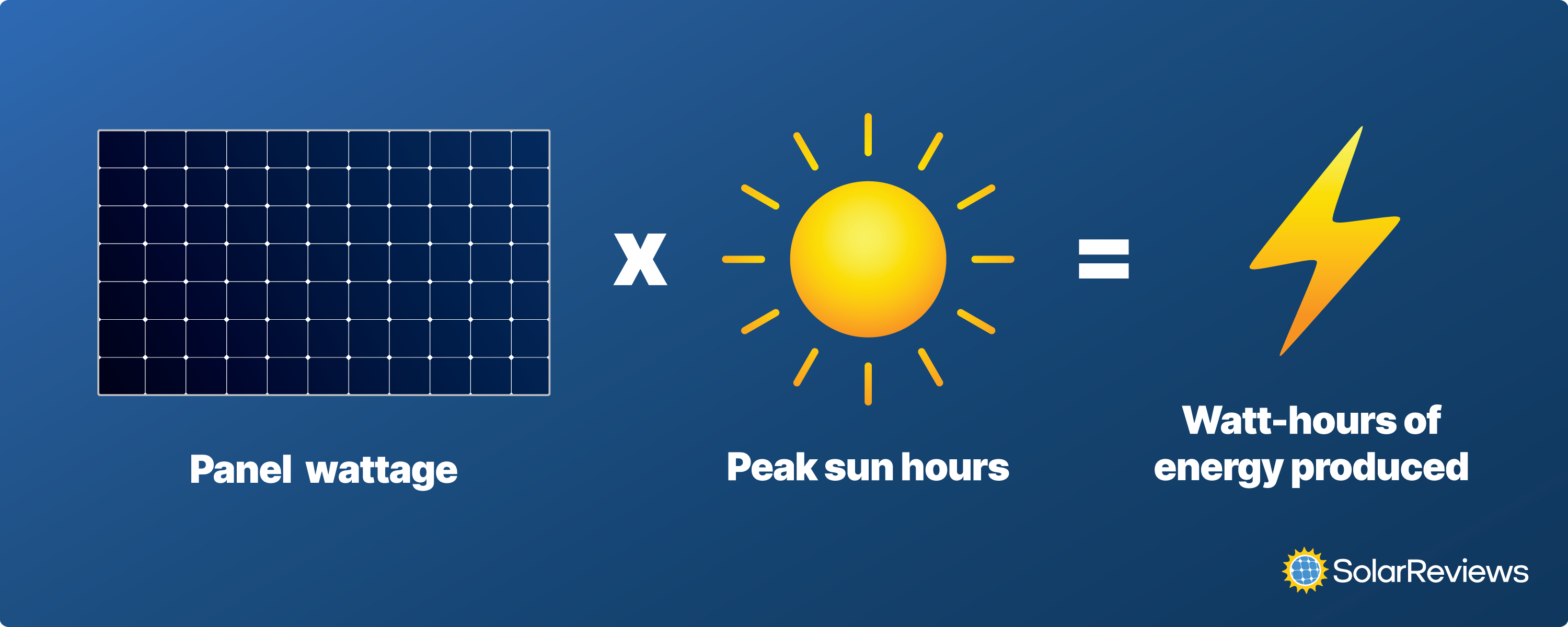
Ultimately, the power a solar panel produces is measured by its “yield” over time, calculated in kilowatt-hours (kWh). To find the daily production of a single panel, one must multiply its real-world wattage by the “peak sun hours” of its location. For instance, a 400W panel in a region with 5 peak sun hours would produce approximately 2,000 watt-hours, or 2 kWh, per day.
Over a year, that single piece of hardware could generate roughly 730 kWh. In the context of modern gadgets and smart homes, that is enough energy to run a high-end workstation for 10 hours a day, power a modern refrigerator indefinitely, or provide enough charge for an electric vehicle to travel over 2,500 miles.
As solar panels become more efficient, more durable (with many now guaranteed for 25 to 40 years), and more technologically integrated, the power output of a single panel continues to rise. We are no longer looking at passive sheets of glass, but at sophisticated semiconductor devices capable of sophisticated power management and record-breaking energy conversion. For anyone tracking the evolution of green tech, the single solar panel remains one of the most impressively scaling pieces of hardware in the modern world.
aViewFromTheCave is a participant in the Amazon Services LLC Associates Program, an affiliate advertising program designed to provide a means for sites to earn advertising fees by advertising and linking to Amazon.com. Amazon, the Amazon logo, AmazonSupply, and the AmazonSupply logo are trademarks of Amazon.com, Inc. or its affiliates. As an Amazon Associate we earn affiliate commissions from qualifying purchases.