
For many American workers, the line item labeled “FICA” or “Social Security Tax” on a bi-weekly paycheck is a standard, almost invisible deduction. It is often viewed as a sunk cost—a mandatory reduction in take-home pay that vanishes into a vast government bureaucracy. However, viewing these contributions as a lost expense is a mistake. In reality, the money you pay into Social Security represents one of the most significant financial pillars of your retirement strategy. Understanding exactly how much you have paid, how those funds are tracked, and how they translate into future income is essential for any robust personal finance plan.

Tracking your lifetime contributions is not merely an exercise in curiosity; it is a vital step in auditing your financial health. Because your future monthly benefits are calculated based on your highest 35 years of indexed earnings, ensuring that the Social Security Administration (SSA) has an accurate record of every dollar you have contributed is paramount. Errors in reporting can lead to a lower monthly check during your golden years, potentially costing you tens of thousands of dollars over the course of your retirement.
Understanding the Social Security Payroll Tax (FICA)
The foundation of your Social Security contribution lies in the Federal Insurance Contributions Act (FICA). This federal law mandates a tax on the earnings of employees and employers to fund the Social Security and Medicare programs. When you look at your pay stub, the Social Security portion is specifically designated for Old-Age, Survivors, and Disability Insurance (OASDI).
The Breakdown of Contributions
For the vast majority of employees, the Social Security tax rate is 6.2% of your gross wages. Your employer matches this amount, contributing another 6.2%, for a total of 12.4% put into the system on your behalf. If you are self-employed, you are responsible for the full 12.4% via the Self-Employment Contributions Act (SECA), though the tax code allows you to deduct the “employer” half of this tax when calculating your adjusted gross income.
It is important to distinguish this from the Medicare tax. While often grouped together under FICA, the Medicare portion is a separate 1.45% (matched by the employer). Unlike Social Security, which has an earnings cap, the Medicare tax applies to all earned income, with an additional 0.9% surtax for high earners.
The Social Security Wage Base
One of the most critical aspects of understanding your contributions is the “Wage Base.” The SSA does not tax every dollar you earn if you are a high-income earner. There is a maximum limit on the amount of earnings subject to the Social Security tax each year. For 2024, this limit is set at $168,600.
If you earn $200,000 in a year, you only pay the 6.2% tax on the first $168,600. Any income above that threshold is “Social Security tax-free.” This cap is adjusted annually based on national average wage trends. Because of this cap, your lifetime “paid-in” amount is capped per year, which also means there is a maximum possible monthly benefit that any individual can receive upon retirement.
How to Access Your Official Earnings Record
The most effective way to see exactly how much you have paid into the system is to access your “my Social Security” account through the official SSA website. Historically, the government mailed paper statements to workers annually, but this practice has largely been phased out in favor of digital access to save costs and increase security.
Creating a “my Social Security” Account
To view your records, you must create a secure account. This process involves identity verification to ensure your sensitive financial data remains protected. Once logged in, you can download your Social Security Statement. This document provides a year-by-year breakdown of your taxed Social Security earnings and your taxed Medicare earnings, along with the specific amount of taxes you paid.
Reviewing this statement at least once a year is a hallmark of good financial hygiene. It allows you to see the cumulative total of your lifetime contributions and provides an estimate of your future monthly benefits based on different retirement ages (62, Full Retirement Age, and 70).
Reviewing Your Earnings History for Accuracy
When you review your statement, you are looking for more than just a grand total. You are looking for mistakes. Employers occasionally misreport income, or clerical errors can occur during the processing of W-2 forms. If a year of income is missing or underreported, your “average” earnings will be skewed lower.
Since the benefit calculation is a weighted average of your career earnings, even one missing year can have a measurable impact on your retirement income. If you find a discrepancy, you must provide the SSA with proof of earnings—such as a W-2 or a tax return—to have your record corrected. The sooner you identify these errors, the easier they are to fix.
Why Your Lifetime Contributions Matter for Future Benefits
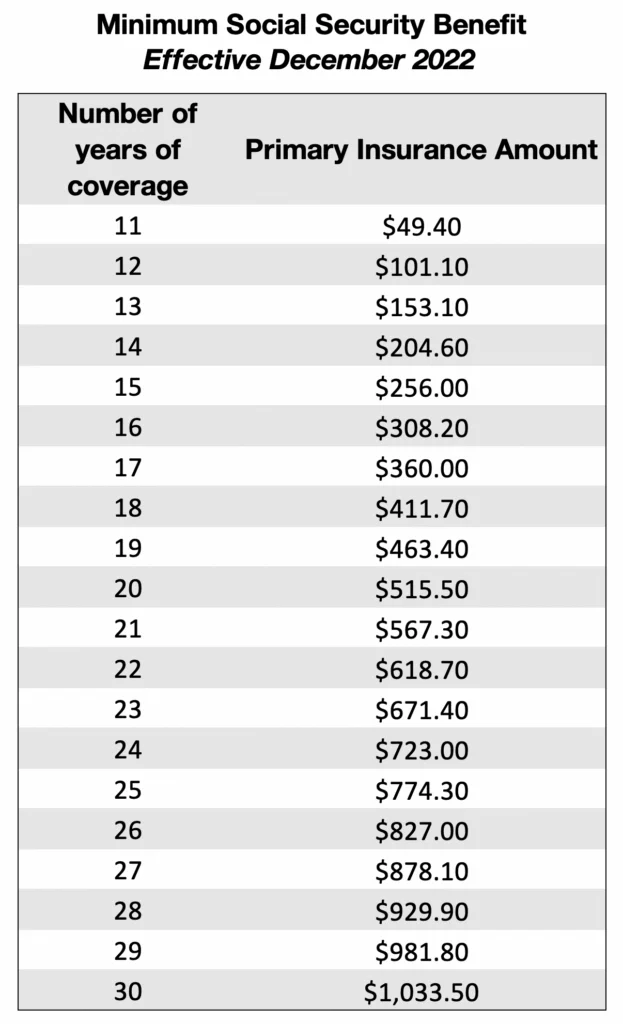
The amount you pay in is the primary “input” for the “output” you receive in retirement. However, the relationship between what you pay and what you get is not a simple 1:1 ratio. Social Security is designed to be progressive, meaning it replaces a higher percentage of income for lower-wage earners than for higher-wage earners.
The Primary Insurance Amount (PIA) Calculation
To determine your benefit, the SSA first calculates your Average Indexed Monthly Earnings (AIME). This involves taking your 35 highest-earning years, adjusting them for inflation (indexing), and dividing the total by 420 (the number of months in 35 years).
Once the AIME is established, the SSA applies a formula to determine your Primary Insurance Amount (PIA). The formula uses “bend points” to ensure that the first portion of your average monthly earnings results in a higher percentage of benefits than the subsequent portions. This is why understanding your lifetime contributions is so important: every dollar contributed (up to the cap) helps build that AIME, which in turn dictates your monthly check.
The Role of the “35 Highest-Earning Years”
Many people wonder what happens if they don’t work for 35 years. If you only have 25 years of earnings on your record, the SSA will still use a 35-year divisor. This means 10 years of “zeros” will be averaged into your calculation, significantly dragging down your monthly benefit.
Conversely, if you have worked for 40 years, only the 35 highest-earning (inflation-adjusted) years are used. Your lower-earning years from your youth or part-time college jobs are dropped out of the calculation. By knowing how much you have paid in and which years are currently being counted, you can make informed decisions about whether working a few extra years later in life might replace some of those early-career low-earning years, thereby boosting your benefit.
Strategies to Maximize Your Social Security ROI
While the Social Security tax is mandatory, how you manage your career and your retirement timing can drastically change the “Return on Investment” (ROI) of the taxes you have paid. Once you know your total contributions, you can begin to strategize.
The Impact of Retirement Timing
Knowing how much you have paid in helps you visualize the “break-even” point. If you start taking benefits at age 62, your monthly check is permanently reduced by up to 30% compared to your Full Retirement Age (FRA). If you delay until age 70, you receive “delayed retirement credits,” which increase your benefit by 8% for every year you wait past your FRA.
For those who have paid the maximum into the system for most of their careers, the difference between taking benefits at 62 versus 70 can be hundreds of thousands of dollars over a lifetime. Understanding your contribution history helps you see that Social Security is an asset you have “purchased” over decades; deciding when to liquidate that asset is a major financial decision.
Self-Employment Tax Considerations
For entrepreneurs and freelancers, the “paid-in” amount is often a point of contention because they feel the sting of the full 12.4%. However, self-employed individuals have a unique opportunity to control their Social Security future. By maximizing deductible business expenses, a business owner can lower their taxable income, which reduces their current tax bill.
The trade-off, however, is that a lower reported income results in lower Social Security contributions and, eventually, a lower retirement benefit. By tracking what you have paid in, you can strike a balance between saving on taxes today and ensuring a sufficient benefit for tomorrow.

The Future Outlook of Your Contributions
A common concern among younger workers is whether the money they are paying into Social Security today will be there when they retire. This skepticism often leads people to ignore their Social Security statements entirely. However, professional financial planners advise against this “all or nothing” outlook.
While it is true that the Social Security Trust Fund is projected to face challenges in the coming decades, the system is funded primarily by ongoing payroll taxes. As long as people are working, money is flowing into the system. Even in a worst-case scenario where the trust fund reserves are exhausted, the SSA estimates that incoming tax revenue would still cover roughly 77% to 80% of scheduled benefits.
By knowing exactly how much you have paid in and tracking your estimated benefits, you can plan for this contingency. You can view Social Security as a “floor” for your retirement income, using your 401(k), IRA, and other investments to build the “ceiling.” Knowing your contributions allows you to quantify that floor with precision, rather than relying on guesswork.
Ultimately, the money you pay into Social Security is a foundational element of your net worth. It is a government-backed, inflation-adjusted annuity that you have spent your entire working life funding. By taking the time to understand your FICA contributions, auditing your earnings record, and calculating the impact of your work history on your future PIA, you transform a mundane tax deduction into a powerful tool for financial security. Monitoring your Social Security account is not just about looking at the past—it is about securing the financial future you have already worked so hard to pay for.
aViewFromTheCave is a participant in the Amazon Services LLC Associates Program, an affiliate advertising program designed to provide a means for sites to earn advertising fees by advertising and linking to Amazon.com. Amazon, the Amazon logo, AmazonSupply, and the AmazonSupply logo are trademarks of Amazon.com, Inc. or its affiliates. As an Amazon Associate we earn affiliate commissions from qualifying purchases.