
Deciding when to claim Social Security benefits is one of the most critical financial decisions a retiree will ever make. While age 62 is the earliest point at which most workers can begin receiving retirement benefits, it is rarely the most lucrative. The Social Security Administration (SSA) uses a complex formula to penalize early filers and reward those who delay. For every month you wait past your 62nd birthday, your monthly benefit amount increases incrementally until you hit your maximum possible payment at age 70.
Understanding the specific math behind these monthly increases is essential for building a robust retirement strategy. It is not merely a matter of waiting for a yearly “bump”; rather, Social Security is calculated on a month-by-month basis. This allows for a high degree of granularity when planning your exit from the workforce.
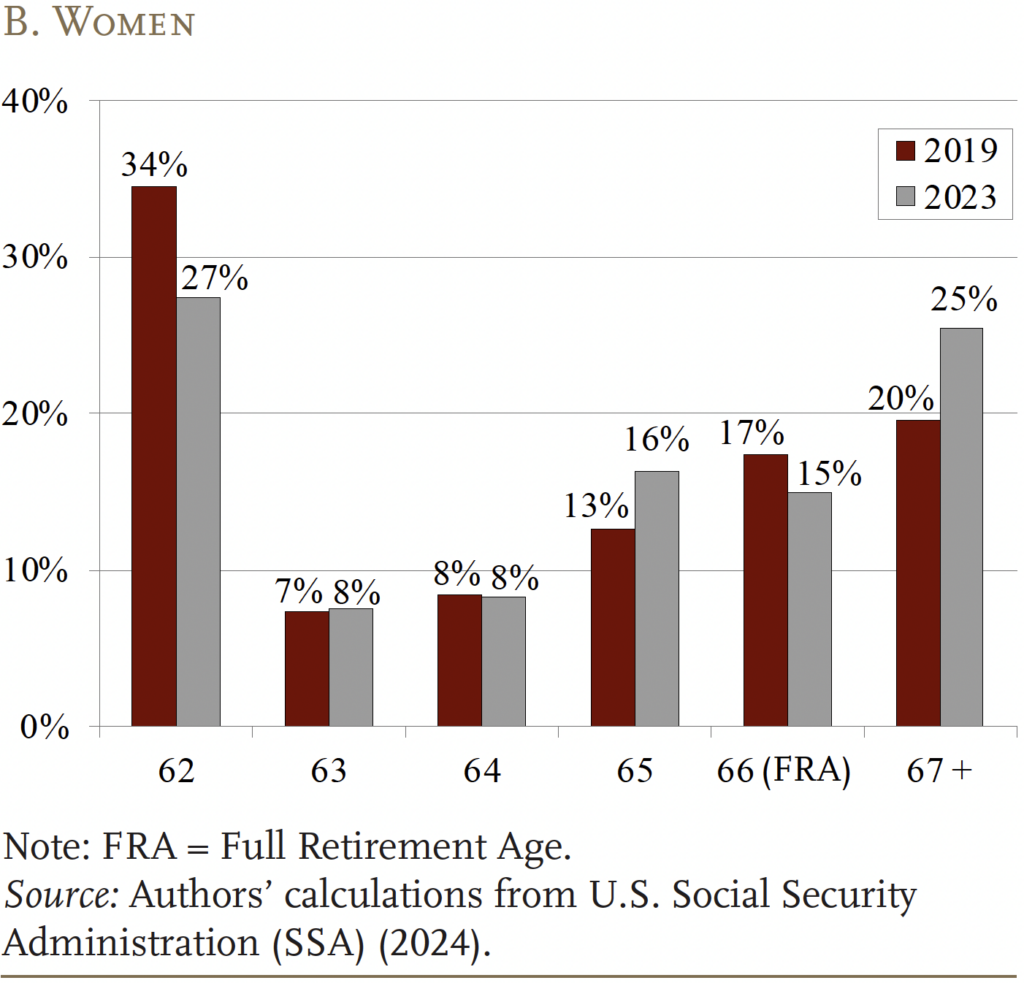
The Foundation: Full Retirement Age (FRA) and the Reduction Factor
To understand how much your benefit increases each month, you must first identify your Full Retirement Age (FRA). For anyone born in 1960 or later, the FRA is 67. If you were born earlier, your FRA might be 66 or 66 and a few months. Your FRA is the point at which you are entitled to 100% of your Primary Insurance Amount (PIA)—the benefit calculated based on your highest 35 years of indexed earnings.
The Cost of Early Retirement
Claiming at age 62 results in a permanent reduction of benefits. If your FRA is 67 and you claim at 62, your monthly check will be roughly 30% lower than it would have been at 67. This reduction is not a one-time penalty; it is locked in for the duration of your life, subject only to annual Cost-of-Living Adjustments (COLA).
The reduction is calculated using specific fractions. For the first 36 months before your FRA, your benefit is reduced by 5/9 of 1% for each month. If you retire even earlier than that (more than 36 months before FRA), any additional months result in a reduction of 5/12 of 1% per month.
How Waiting Translates to Growth
Conversely, when you ask how much the benefit “increases” after 62, you are essentially looking at the reversal of these penalties. By choosing not to claim at 62, you are avoiding those monthly reductions. For every month you delay between age 62 and your FRA, your future monthly check grows by approximately 0.41% to 0.55%. While this may seem like a small percentage in isolation, the cumulative effect over several years is substantial.
The Monthly Progression: Calculating the Incremental Gain
The increase in Social Security benefits from age 62 to age 70 can be divided into two distinct phases: the “Reduction Avoidance” phase (from 62 to FRA) and the “Delayed Retirement Credit” phase (from FRA to 70).
The 5/9 of 1% Rule (The 36-Month Window)
During the three years (36 months) immediately preceding your Full Retirement Age, the SSA increases your potential benefit by 5/9 of 1% for every month you delay. In decimal form, this is approximately 0.556% per month.
On an annual basis, this results in a 6.67% increase in your benefit amount. For example, if your FRA is 67 and you are deciding between claiming at 66 or waiting until 67, waiting those 12 months will increase your check by 6.67%. If your projected benefit at age 67 is $2,000, waiting from age 66 to 67 adds approximately $133 to your monthly payment for life.
The 5/12 of 1% Rule (Months 37 to 60)
If you are more than 36 months away from your FRA (which applies to everyone with an FRA of 67 who is looking at the window between age 62 and 64), the monthly increase for delaying is slightly lower. During this period, the benefit increases by 5/12 of 1% for each month you wait, or approximately 0.417% per month.
This equates to a 5% annual increase. Therefore, the growth of your benefit is actually “back-loaded.” The closer you get to your Full Retirement Age, the more valuable each month of waiting becomes in terms of percentage growth.
The Power of Waiting: Delayed Retirement Credits Beyond FRA
Once you reach your Full Retirement Age, the math changes significantly—and in your favor. If you choose to delay claiming benefits past your FRA, the SSA applies “Delayed Retirement Credits.”
The 8% Annual Bump
From the month you reach your FRA until the month you turn 70, your benefit increases by 2/3 of 1% for every month you delay. This is a straight linear increase that calculates to exactly 8% per year.
This is often cited by financial planners as one of the best “guaranteed returns” available in the financial world. There are very few low-risk investment vehicles that can guarantee an 8% annual increase in cash flow. For a retiree with an FRA of 67 who waits until 70, the total benefit will be 124% of their Primary Insurance Amount. Compared to claiming at 62 (where they would receive only 70% of their PIA), the monthly check at age 70 is approximately 77% larger than the check at age 62.
Why Age 70 is the Hard Ceiling
It is important to note that the monthly increases stop the moment you turn 70. There is no financial incentive to delay claiming Social Security past age 70. If you wait until 70 and one month, you have simply lost a month of benefits with no corresponding increase in the monthly amount.
Strategic Factors Beyond the Numbers
While the math of 0.5% to 0.6% monthly increases is straightforward, the decision of when to claim involves broader financial considerations. The “break-even point” is the age at which the total cumulative benefits of waiting (larger checks for fewer years) surpass the total cumulative benefits of claiming early (smaller checks for more years).
Health and Longevity Considerations
For most individuals, the break-even point for waiting until age 70 versus age 62 falls somewhere in the late 70s or early 80s. If you have reason to believe you will live past age 82, waiting is almost always the superior financial move. However, if you have chronic health issues or a family history of shorter lifespans, claiming earlier to ensure you receive some return on your years of payroll taxes may be the more pragmatic choice.
The Impact of Continued Employment (The Earnings Test)
If you are still working after age 62 but have not yet reached your FRA, the SSA applies an “Earnings Test.” In 2024, if you earn more than $22,320, the SSA withholds $1 in benefits for every $2 you earn above that limit.
This is often a misunderstood aspect of the program. These withheld benefits are not “lost” forever; instead, when you reach your FRA, the SSA recalculates your monthly benefit upward to account for the months where benefits were withheld. Effectively, working while claiming early forces a “delay” in your benefits, resulting in a higher monthly check later on. However, from a tax-efficiency and cash-flow perspective, it is often simpler to just delay claiming until you stop working or reach FRA.
Tax Implications of Higher Benefits
A larger Social Security check can sometimes push a retiree into a higher tax bracket or trigger the “tax torpedo,” where a greater percentage of Social Security benefits become taxable (up to 85%). Additionally, higher income can lead to IRMAA (Income Related Monthly Adjustment Amount) surcharges on Medicare Part B and Part D premiums. When calculating the value of the monthly increase, it is wise to consult with a tax professional to understand the “net” increase after Uncle Sam takes his share.

The Decision Matrix: When Should You Claim?
The monthly increase in Social Security is a powerful tool for inflation-protected income. When deciding whether to capitalize on these increases, consider the following scenarios:
-
The High Earner/Longevity Hedge: If you were the higher-earning spouse, delaying until 70 not only maximizes your own benefit but also maximizes the survivor benefit for your spouse. This is a crucial piece of life insurance-style planning.
-
The “Bridge” Strategy: Some retirees use their 401(k) or IRA funds to “bridge” the gap between age 62 and age 70. By spending down personal savings early to allow Social Security to grow, they are essentially “buying” a larger, government-guaranteed, inflation-adjusted annuity.
-
The Immediate Need: If you are unemployed, lack sufficient savings, or have pressing health needs, the 0.5% monthly increase may be a luxury you cannot afford. In these cases, claiming at 62 provides immediate liquidity that outweighs the long-term gain.
In conclusion, the increase in Social Security each month after 62 is a predictable, structured progression. It starts at roughly 0.41% per month, accelerates to 0.55% as you approach full retirement age, and peaks at 0.66% per month between your FRA and age 70. By understanding these increments, you can move away from the “all or nothing” mentality of retirement ages and choose the exact month that aligns with your financial needs and life expectancy.
aViewFromTheCave is a participant in the Amazon Services LLC Associates Program, an affiliate advertising program designed to provide a means for sites to earn advertising fees by advertising and linking to Amazon.com. Amazon, the Amazon logo, AmazonSupply, and the AmazonSupply logo are trademarks of Amazon.com, Inc. or its affiliates. As an Amazon Associate we earn affiliate commissions from qualifying purchases.