
The question “how much do I need?” echoes through countless minds, a seemingly simple query that, upon closer inspection, reveals a labyrinth of personal values, societal expectations, and economic realities. It’s a question without a universal answer, as individual circumstances, aspirations, and definitions of security and fulfillment vary wildly. For one, it might mean enough to cover basic living expenses without stress; for another, it could signify the capital to launch a dream business; for yet another, the financial freedom to travel the world or retire decades early. This article delves into the multifaceted nature of this fundamental financial inquiry, guiding you through the process of defining your personal “enough” and equipping you with the insights to pursue it.
At its core, “how much do I need?” isn’t just about a specific dollar figure; it’s about understanding your desired lifestyle, planning for the unexpected, and strategically building a future that aligns with your deepest values. It’s a journey of self-discovery as much as it is a financial exercise, demanding introspection, honest assessment, and proactive planning. Without a clear understanding of your current financial landscape and future aspirations, any effort to determine your “number” will be an exercise in futility.
Defining Your Financial Needs: Beyond Basic Survival
Before we can calculate “how much,” we must first define “need.” This extends far beyond the absolute minimum for survival, encompassing the quality of life you desire, your ability to handle emergencies, and your capacity to enjoy discretionary pursuits. A comprehensive understanding of your needs forms the bedrock of any sound financial plan.
The Baseline: Essential Living Expenses
Your essential living expenses represent the absolute minimum you require each month to sustain your current lifestyle. This is your financial foundation, and understanding it precisely is paramount.
-
Housing: Rent or mortgage payments, property taxes, homeowner’s insurance. These are often the largest single expense.
-
Utilities: Electricity, gas, water, internet, and phone bills.
-
Groceries: Food is a non-negotiable, but the cost can vary significantly based on dietary choices and shopping habits.
-
Transportation: Car payments, fuel, public transport fares, maintenance, and insurance. Even if you don’t own a car, calculate ride-sharing or public transit costs.
-
Insurance: Health, life, disability, and any other policies critical for your protection.
-
Debt Payments: Minimum payments on credit cards, student loans, or personal loans. While ideally, you’d pay more, these are essential obligations.
Creating a detailed budget is the most effective way to identify and track these expenses. Many free apps and online tools can help categorize your spending, revealing where your money truly goes. This exercise often illuminates overlooked recurring costs and can be an eye-opening experience for many. Without knowing your monthly baseline, any further financial calculation is simply guesswork.
Quality of Life & Discretionary Spending
Once your essential needs are covered, the next layer comprises expenses that contribute to your overall quality of life and personal enjoyment. These are not strictly necessary for survival but are vital for mental well-being, personal growth, and social connection.
-
Entertainment: Movies, concerts, subscriptions (streaming services, gym memberships), hobbies.
-
Dining Out: Restaurants, cafes, social gatherings.
-
Travel: Vacations, weekend getaways.
-
Personal Care: Haircuts, salon services, gym memberships, personal training.
-
Shopping: Clothing, electronics, home decor beyond the absolute essentials.
-
Gifts & Donations: Giving to others or charitable causes.
The cost of these items defines the difference between merely existing and truly living. Your “how much do I need” figure will inevitably inflate as you factor in the activities and purchases that enrich your life. It’s a critical balancing act: enjoying life today while still planning for tomorrow. Understanding your priorities here helps you allocate funds wisely, distinguishing between deeply satisfying experiences and impulsive purchases that offer fleeting pleasure.
Unexpected Events: Building an Emergency Fund
Life is unpredictable, and unexpected expenses can quickly derail even the most meticulously planned budget. A robust emergency fund is not merely a luxury; it’s a non-negotiable component of financial security.
-
Purpose: To cover unforeseen costs like job loss, medical emergencies, major home repairs, or unexpected vehicle breakdowns without resorting to high-interest debt.
-
Recommendation: Financial experts typically advise having 3 to 6 months’ worth of essential living expenses saved in an easily accessible, liquid account (like a high-yield savings account). Some recommend up to 12 months for greater peace of mind, especially for single-income households or those in unstable job markets.
-
Calculation: If your essential monthly expenses (as determined above) are $3,000, you’d aim for an emergency fund of $9,000 to $18,000.
Building this fund should be a top priority after covering basic needs. It acts as a financial shock absorber, allowing you to weather storms without compromising your long-term financial goals or falling into debt. It’s an investment in peace of mind.
Quantifying Your Short-Term and Mid-Term Goals
Beyond daily living and emergency preparedness, your financial needs are heavily influenced by your personal goals. These aspirations, whether immediate or several years away, require specific monetary allocations and careful planning.
Short-Term Aspirations (1-3 years)
These are the goals you want to achieve in the near future, often requiring dedicated savings over a relatively short period.
-
Vacation Fund: A trip abroad, a family holiday, or a local adventure.
-
New Gadget or Appliance: Upgrading your phone, buying a new laptop, replacing a washing machine.
-
Down Payment for a Car: If you plan to purchase a vehicle, saving for a substantial down payment can reduce loan interest and monthly payments.
-
Education or Skill Development: A short course, certification, or workshop to enhance your career prospects or personal interests.
For each short-term goal, determine its estimated cost and the timeline for achieving it. Then, divide the cost by the number of months until your target date to figure out your required monthly savings. This simple calculation transforms vague desires into concrete financial objectives.
Mid-Term Milestones (3-10 years)
Mid-term goals typically involve larger sums of money and require more sustained savings efforts. These often represent significant life transitions or investments.
-
Down Payment for a House: This is often the largest mid-term financial goal for many, requiring tens of thousands, or even hundreds of thousands, of dollars.
-
Funding a Child’s Education: While college might be long-term, saving for private schooling or initial tuition fees falls into this category.
-
Starting a Business: Initial capital for a new venture can be substantial, covering equipment, inventory, marketing, and operational costs.
-
Major Home Renovation: A kitchen remodel, an extension, or significant landscaping can add up quickly.
Projecting the costs for these goals requires research. Real estate prices, university tuition fees, and business startup costs can be estimated, allowing you to set realistic savings targets. Mid-term goals often benefit from investments beyond a basic savings account, potentially utilizing instruments like diversified mutual funds or ETFs, keeping in mind the balance between risk and return given the timeframe.
The Power of S.M.A.R.T. Goals
To make your financial goals actionable and achievable, apply the S.M.A.R.T. framework:
-
Specific: Clearly define what you want to achieve. (e.g., “Save for a 20% down payment on a $400,000 home” vs. “Save for a house.”)
-
Measurable: Quantify your goal. (e.g., “$80,000 for the down payment.”)
-
Achievable: Ensure the goal is realistic given your income and existing obligations.
-
Relevant: Does the goal align with your broader life values and priorities?
-
Time-bound: Set a realistic deadline. (e.g., “by December 2030.”)
Applying S.M.A.R.T. principles to each financial goal clarifies your path and provides a roadmap for how much you need to save and by when. It transforms abstract desires into concrete, manageable steps.

Preparing for the Long Haul: Retirement and Legacy
Perhaps the most significant and often daunting aspect of “how much do I need?” relates to long-term financial independence, particularly retirement. This requires extensive planning, sustained investment, and a clear vision of your desired later life.
The Retirement Enigma: How Much is “Enough”?
Defining “enough” for retirement is complex, influenced by multiple variables that change over time.
-
Desired Lifestyle: Do you envision lavish travel, quiet hobbies, or something in between? Your post-retirement spending will dictate your needs.
-
Life Expectancy: People are living longer, meaning retirement savings need to last for 20, 30, or even 40 years.
-
Inflation: The purchasing power of money erodes over time. What costs $1 today might cost $2 or $3 in 20-30 years. Your retirement savings must account for this.
-
Healthcare Costs: These can be substantial in later life and are often a significant concern, especially in countries without universal healthcare.
-
Social Security/Pensions: Factor in any anticipated government or employer benefits, but don’t rely solely on them.
Common rules of thumb include saving 10-15 times your pre-retirement income, or using the “4% rule” (where you can withdraw 4% of your portfolio’s value annually without running out of money, theoretically). However, these are general guidelines; a personalized approach is always best. A financial advisor can help model different scenarios based on your specific situation.
Investment Strategies for Long-Term Growth
Simply saving money in a bank account won’t be enough to achieve substantial long-term goals like retirement, primarily due to inflation. Investing is crucial for your money to grow over time.
-
Compound Interest: Albert Einstein reportedly called compound interest the “eighth wonder of the world.” It’s the process where your investments earn returns, and those returns then earn returns themselves, leading to exponential growth over decades. Starting early is key to maximizing this effect.
-
Diversification: Don’t put all your eggs in one basket. Spread your investments across different asset classes (stocks, bonds, real estate, commodities) and within those classes (various industries, geographies). This helps mitigate risk.
-
Asset Allocation: Your mix of investments should align with your risk tolerance and time horizon. Younger investors with a longer time horizon can typically afford to take on more risk (e.g., higher allocation to stocks), while those nearing retirement might opt for a more conservative approach (e.g., higher allocation to bonds).
-
Retirement Accounts: Utilize tax-advantaged accounts like 401(k)s, IRAs (Traditional or Roth), and other employer-sponsored plans. The tax benefits offered by these accounts can significantly boost your long-term returns.
Consistent contributions, disciplined investing, and periodic rebalancing are the pillars of successful long-term wealth accumulation.
Estate Planning and Legacy Considerations
“How much do I need?” can also extend beyond your lifetime. For many, leaving a legacy or providing for loved ones after they’re gone is an important consideration.
-
Wills and Trusts: These legal documents ensure your assets are distributed according to your wishes and can minimize tax implications for your heirs.
-
Beneficiaries: Regularly review and update beneficiaries on your retirement accounts, life insurance policies, and other financial assets.
-
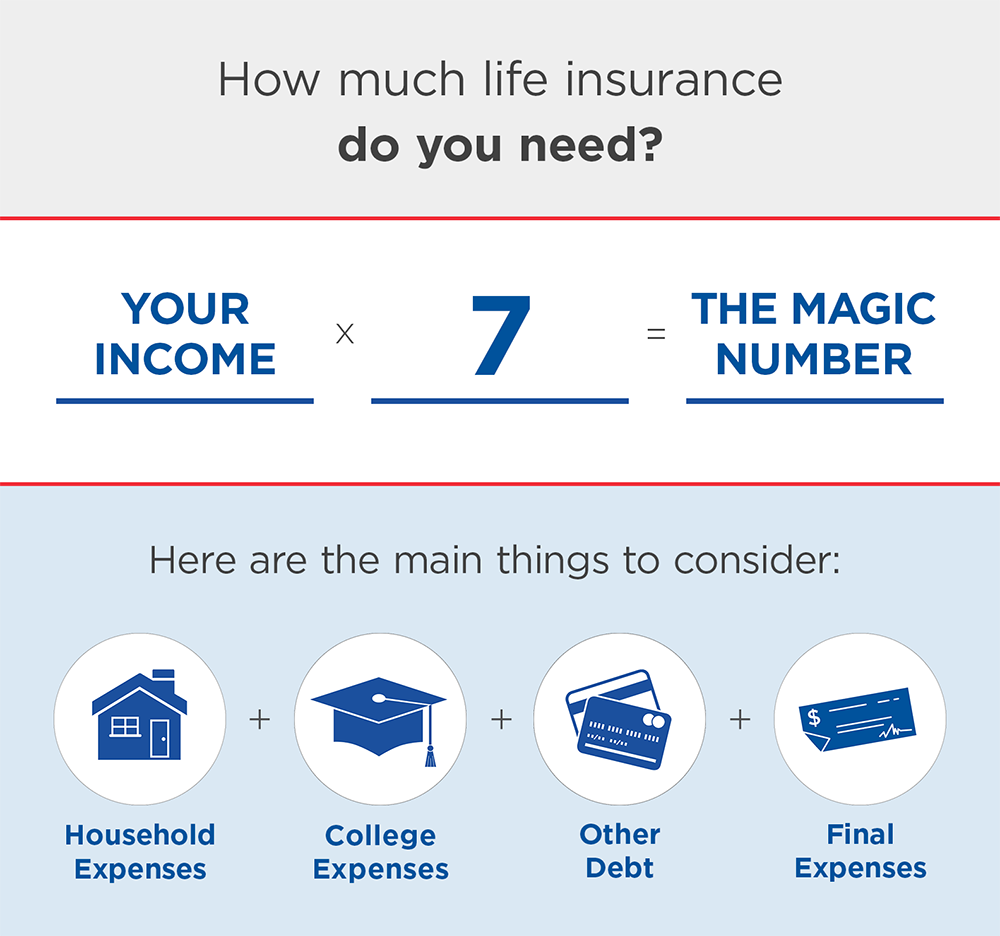
Life Insurance: Provides a financial safety net for your dependents in the event of your premature death. The amount needed depends on your outstanding debts, income replacement needs, and future financial obligations of your family.
-
Charitable Giving: If leaving a philanthropic mark is important, incorporating charitable giving into your estate plan can be a powerful way to make an impact.
Considering these aspects adds another layer to your financial planning, ensuring that your wealth continues to serve your intentions even after you’re no longer here.
Calculating Your “Number”: Tools and Methods
Armed with a clear understanding of your needs, goals, and long-term aspirations, you can now begin to calculate your personalized “number.” This isn’t a static figure but an evolving target that requires regular assessment.
Budgeting Software and Financial Planners
Numerous resources are available to help you consolidate your financial picture and project your future needs.
-
Budgeting Apps: Tools like Mint, YNAB (You Need A Budget), Personal Capital, and countless others can track your spending, categorize expenses, and help you visualize your cash flow. Many offer goal-setting features that calculate how much you need to save monthly to reach specific targets.
-
Online Calculators: Websites of financial institutions and independent financial planning sites offer calculators for retirement, college savings, mortgage affordability, and more. While useful for quick estimates, they often lack personalization.
-
Professional Financial Planners: For complex situations, significant assets, or simply peace of mind, a certified financial planner (CFP) can be invaluable. They can help you create a comprehensive financial plan, model different scenarios, optimize investments, and ensure you’re on track to meet your goals, considering taxes, estate planning, and risk management.
Leveraging these tools can simplify the daunting task of piecing together your financial puzzle, providing clarity and actionable steps.
The “Financial Independence, Retire Early” (FIRE) Movement
The FIRE movement offers a radical perspective on “how much do I need?” by prioritizing extreme savings rates to achieve financial independence (FI) decades earlier than traditional retirement age.
-
Core Principle: Accumulate enough invested assets so that passive income (from investments) covers your annual living expenses.
-
Savings Rates: FIRE enthusiasts often save 50-75% of their income, dramatically accelerating their path to FI.
-
Withdrawal Rates: The “4% rule” is commonly used, meaning if your annual expenses are $40,000, you’d aim for an investment portfolio of $1,000,000 ($40,000 / 0.04).
-
Variations:
-
Lean FIRE: Living a minimalist lifestyle with lower expenses.
-
Fat FIRE: Maintaining a comfortable or luxurious lifestyle.
-
Barista FIRE: Working part-time to cover some expenses and benefits, reducing the required investment portfolio.
-
Coast FIRE: Saving enough in early career that your investments grow without further contributions to cover retirement in your 60s.
-
While extreme, the FIRE movement illustrates that “how much do I need?” is deeply personal and can be drastically reduced or expanded based on lifestyle choices and financial discipline. It challenges conventional notions of work and retirement, empowering individuals to reclaim their time.
Regular Review and Adjustment
Your financial “number” is not static. Life happens. Your income may change, expenses might fluctuate, new goals could emerge, or economic conditions might shift.
-
Life Events: Marriage, children, job changes, divorce, illness, or inheritance will inevitably alter your financial landscape and require adjustments to your plan.
-
Economic Shifts: Inflation rates, market performance, interest rates, and tax laws can all impact your financial projections.
-
Goal Re-evaluation: As you grow and evolve, your priorities might shift. What was important five years ago might be less so today, and new aspirations might take its place.
It’s crucial to review your financial plan at least annually, or whenever a significant life event occurs. This ensures your “how much do I need?” figure remains relevant and that your strategies are aligned with your current reality and future desires. Flexibility and adaptability are hallmarks of successful long-term financial planning.

Conclusion
The question “how much do I need?” is arguably the most pivotal financial inquiry anyone can pose. It transcends mere monetary values, delving into the very essence of what constitutes a secure, fulfilling, and purposeful life. There is no singular, universal answer because the answer is as unique as the individual asking it.
The journey to define your personal “enough” is an ongoing process of introspection, diligent planning, and continuous adjustment. It begins with understanding your basic living expenses, extends to the discretionary spending that enhances your quality of life, and critically incorporates an emergency fund for peace of mind. From there, it expands to quantifying your short-term desires and mid-term milestones, transforming abstract dreams into concrete financial targets through the S.M.A.R.T. goal framework. Finally, it culminates in the long-term vision of retirement and potentially a legacy, requiring strategic investing and careful estate planning.
Empowering yourself with the knowledge, tools, and discipline to answer “how much do I need?” means taking ownership of your financial destiny. It means making informed choices that align your money with your values. Whether your journey leads you to a traditional retirement, the pursuit of financial independence, or simply a greater sense of security, remember that every step counts. Start today, even if it’s just by tracking your expenses or setting one S.M.A.R.T. goal. The clarity and control you gain will be invaluable, paving the way for a future where you not only have enough but truly thrive.
aViewFromTheCave is a participant in the Amazon Services LLC Associates Program, an affiliate advertising program designed to provide a means for sites to earn advertising fees by advertising and linking to Amazon.com. Amazon, the Amazon logo, AmazonSupply, and the AmazonSupply logo are trademarks of Amazon.com, Inc. or its affiliates. As an Amazon Associate we earn affiliate commissions from qualifying purchases.