
Navigating the complexities of Social Security benefits while considering supplemental income can feel like walking a tightrope. For millions of Americans, Social Security is a foundational pillar of their retirement or disability income, yet the desire or necessity to earn additional money often remains. The crucial question, then, becomes: how much can you make without jeopardizing or significantly reducing those hard-earned benefits?
This guide delves into the specifics of earning income while receiving Social Security, exploring the intricate rules, potential impacts on your benefits, and strategic approaches to maximize your financial well-being. Understanding these nuances is essential for anyone looking to supplement their Social Security income, whether you’re transitioning into retirement, managing a disability, or simply seeking financial flexibility. We’ll break down the earnings limits, discuss the implications of working at different ages, and offer insights into effective financial planning.

Understanding Social Security’s Earnings Limit
The Social Security Administration (SSA) implements specific rules regarding how much you can earn from work before your benefits are affected. These rules are primarily designed for individuals who are receiving retirement or survivor benefits and have not yet reached their Full Retirement Age (FRA).
What is the Earnings Limit?
The earnings limit is a threshold set by the SSA that determines how much you can earn from wages or self-employment income in a calendar year before your Social Security benefits are reduced. This limit is adjusted annually to account for inflation and changes in average wages. It’s crucial to understand that only earned income (from work) counts towards this limit; income from investments, pensions, annuities, or government benefits typically does not.
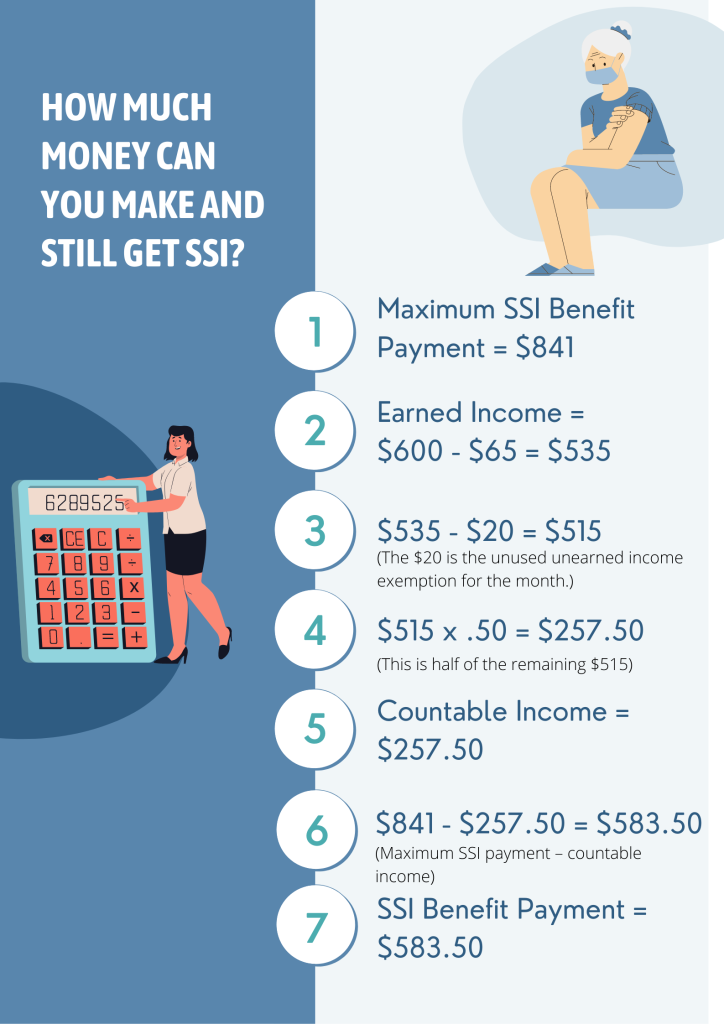
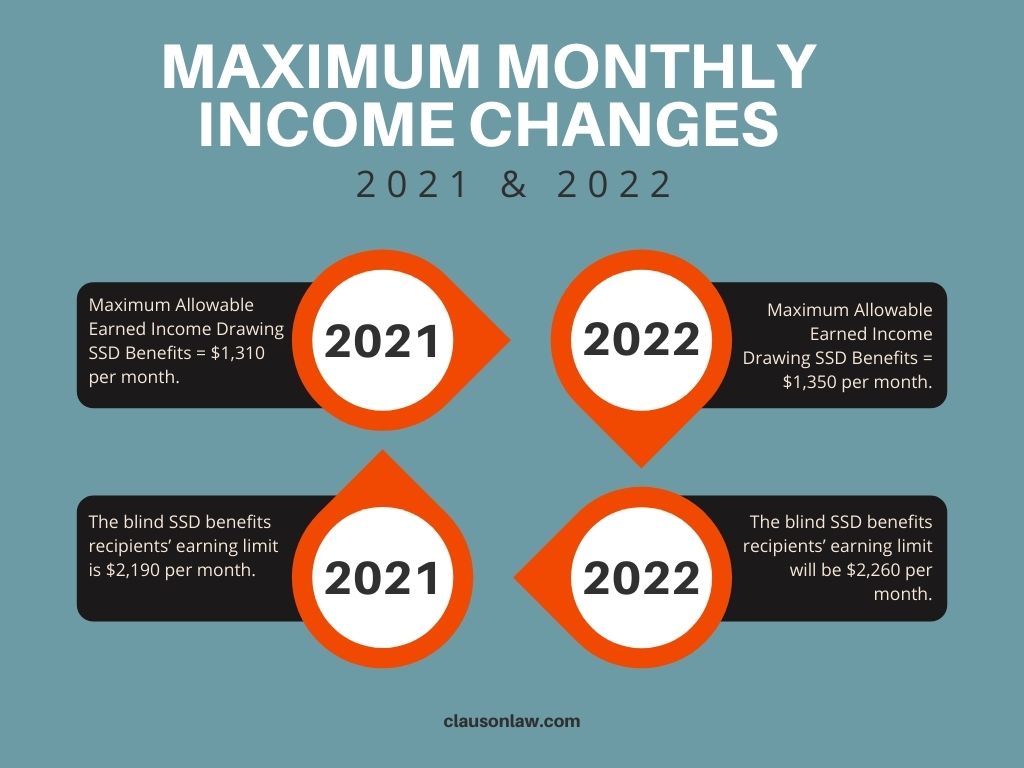
For those receiving Social Security disability (SSDI) or Supplemental Security Income (SSI), different earnings rules apply. SSDI has a “Substantial Gainful Activity” (SGA) limit, which determines if your work is considered substantial enough to indicate you are no longer disabled. SSI has stricter income and resource limits that affect eligibility and payment amounts. This article will primarily focus on retirement and survivor benefits, as the original title implies a broader earning context.
How the Limit Changes Based on Age
The earnings limit is not a one-size-fits-all figure; it changes significantly based on whether you are working before or during the year you reach your Full Retirement Age (FRA), and it disappears entirely after you reach your FRA.
-
Before Full Retirement Age: If you are below your FRA for the entire year, the SSA will deduct $1 from your benefits for every $2 you earn above a specific annual limit. For example, in 2024, this limit is $22,320. If you earn $24,320, you’ve exceeded the limit by $2,000. The SSA would then deduct $1,000 from your total annual benefits.
-
During the Year You Reach Full Retirement Age: A more generous limit applies in the year you reach your FRA. In this scenario, the SSA deducts $1 from your benefits for every $3 you earn above a much higher annual limit, and they only count earnings before the month you reach your FRA. For instance, in 2024, this limit is $59,520. Once you hit your FRA month, the earnings limit no longer applies to your subsequent earnings.
-
At or After Full Retirement Age: This is where the rules become much simpler and more favorable for earners. Once you reach your Full Retirement Age, the earnings limit completely disappears. You can earn as much as you want from work, and your Social Security benefits will not be reduced. This is a significant milestone for many retirees.
The Impact on Your Benefits
When your benefits are reduced due to exceeding the earnings limit, it’s important to understand that this reduction is not necessarily permanent. Any benefits withheld are not “lost” forever. The SSA will factor these withheld amounts into a recalculation of your benefits once you reach your Full Retirement Age. This recalculation will generally result in a slightly higher monthly benefit payment for the rest of your life, effectively giving you credit for the benefits that were withheld earlier. This adjustment is often referred to as the “Adjusted Reduction Factor” or “Delayed Retirement Credits.”
Therefore, working while receiving benefits before your FRA can provide immediate income, but it might mean a temporary reduction in your Social Security payments. However, this trade-off can lead to higher monthly benefits down the line, potentially balancing out the initial reduction over your lifetime.
Strategies for Earning While Receiving Benefits
Understanding the earnings limits is the first step; the next is strategizing how to earn income effectively while navigating these rules. Your approach will largely depend on your age relative to your Full Retirement Age (FRA) and your financial goals.
Working Before Full Retirement Age (FRA)
For those who choose to start receiving Social Security benefits early (as early as age 62) and continue working, careful planning is paramount. The earnings limit applies directly, meaning a portion of your benefits will be withheld if you earn above the annual threshold.
-
Part-Time Work: One common strategy is to manage your work hours and income to stay below the earnings limit. Part-time employment, consulting, or gig work can provide supplemental income without triggering significant benefit reductions. This allows you to ease into retirement while still contributing to your finances.
-
Income Timing: If you anticipate exceeding the limit, consider if your work income can be strategically timed. For instance, if you expect a bonus or a lump-sum payment, consult with the SSA or a financial advisor to understand how it might impact your benefits in that specific year. Sometimes, deferring income until after your FRA, if feasible, can be advantageous.
-
Benefit Recalculation Advantage: Remember that withheld benefits contribute to a future increase in your monthly payment at FRA. Some individuals view early work and subsequent benefit reductions as a way to “invest” in higher future benefits, especially if they anticipate a long retirement.
Working At or After Full Retirement Age
This is the most straightforward scenario for earning income. Once you reach your Full Retirement Age, the earnings limit is removed entirely. This means you can work as much as you want, earn any amount of income, and your Social Security benefits will remain unaffected by your work earnings.
-
Unlimited Earning Potential: This freedom allows retirees to pursue full-time work, start a business, or take on significant consulting roles without worrying about benefit reductions. It provides a robust income stream by combining full Social Security benefits with unlimited earned income.
-
Health Insurance Considerations: While not directly related to the earnings limit, it’s worth noting that continued employment often provides access to employer-sponsored health insurance, which can be a significant advantage, especially if you’re not yet eligible for Medicare or prefer employer plans.
-
Delayed Retirement Credits: If you continue working and delay claiming Social Security benefits past your FRA (up to age 70), you can earn Delayed Retirement Credits, which will further increase your monthly benefit payment. This is often an optimal strategy for those who don’t need their benefits immediately and want to maximize their lifetime income.
Self-Employment and Passive Income Considerations
The rules for self-employment income are generally the same as for wage income when it comes to the earnings limit. Your net earnings from self-employment (after business expenses) count towards the limit.
-
Net Earnings: For self-employed individuals, it’s crucial to accurately calculate your net earnings. Deductible business expenses reduce your net income, which in turn reduces the amount that counts against the earnings limit. Keeping meticulous records is vital.
-
Passive Income: Importantly, income that is not earned from work does not count against the Social Security earnings limit. This includes:
-
Investment income: Dividends, interest, capital gains from stocks, bonds, mutual funds.
-
Rental income: From properties you own, unless you are actively involved in managing the property to the extent it’s considered self-employment.
-
Pensions and annuities: Payments from retirement plans or insurance products.
-
Other government benefits: Veterans’ benefits, railroad retirement, etc.
-
This distinction highlights a powerful strategy: if you need to supplement your income before FRA, focusing on generating passive income streams can allow you to receive full Social Security benefits without reductions, regardless of the amount of passive income earned.
Maximizing Your Social Security Benefits
Beyond just managing earnings limits, there are broader strategies to ensure you get the most out of your Social Security benefits. These often involve decisions made around when to claim and understanding how benefits are calculated and adjusted.
Deferring Benefits for Higher Payments
One of the most impactful decisions you can make is when to start receiving your Social Security benefits. While you can claim as early as age 62, doing so results in a permanent reduction in your monthly payment.
-
Early Claiming (Age 62-FRA): Claiming at age 62 reduces your monthly benefit by approximately 25-30% compared to claiming at your FRA. This reduction is permanent.
-
Full Retirement Age (FRA): Claiming at your FRA allows you to receive 100% of your primary insurance amount (PIA).
-
Delayed Claiming (FRA-Age 70): For each year you delay claiming benefits past your FRA, up to age 70, you earn Delayed Retirement Credits (DRCs). These credits permanently increase your monthly benefit by 8% per year. By waiting until age 70, you could receive 124% to 132% of your FRA benefit, depending on your birth year.
For individuals who can afford to work longer or have other income sources, delaying Social Security can be an incredibly effective strategy for maximizing lifetime benefits, particularly if you anticipate a long lifespan.
Spousal and Survivor Benefits
Social Security also provides benefits for spouses and survivors, which can be a crucial component of financial planning for many families.
-
Spousal Benefits: If your spouse is collecting retirement or disability benefits, you might be eligible for spousal benefits, even if you haven’t worked or haven’t worked enough to qualify for your own benefits. A spousal benefit can be up to 50% of your spouse’s Full Retirement Age benefit.
-
Survivor Benefits: After a spouse dies, the surviving spouse, children, or dependent parents may be eligible for survivor benefits. These benefits can be a lifeline for families, often providing a higher monthly payment than the deceased spouse’s individual benefit.
-
“File and Suspend” (Limited): While the original “file and suspend” strategy was largely eliminated, there are still some limited situations where individuals can coordinate benefits. It’s essential to consult with the SSA or a financial advisor to understand the current rules regarding spousal and survivor benefit coordination, especially if you or your spouse were born before certain dates.
Understanding Cost-of-Living Adjustments (COLAs)
Social Security benefits are subject to annual Cost-of-Living Adjustments (COLAs). These adjustments are designed to help benefits keep pace with inflation and maintain the purchasing power of retirees and other beneficiaries.
-
Annual Review: The SSA reviews the Consumer Price Index for Urban Wage Earners and Clerical Workers (CPI-W) annually. If there’s an increase in the CPI-W, Social Security benefits receive a COLA, which is announced in October and goes into effect the following January.
-
Impact on Planning: While COLAs are not something you can directly control, understanding their role is important for long-term financial planning. They help protect your benefits from erosion due to inflation, ensuring that your fixed income retains more of its value over time.
Navigating Taxation of Social Security Benefits
Beyond the earnings limit, another critical financial consideration for those earning income while on Social Security is the taxation of their benefits. Depending on your total income, a portion of your Social Security benefits may be subject to federal income tax.
When Your Benefits Become Taxable
The IRS uses a metric called “provisional income” to determine if your Social Security benefits are taxable. Provisional income is calculated as:
Adjusted Gross Income (AGI) + Non-taxable Interest + Half of Your Social Security Benefits
-
First Threshold: If your provisional income is between $25,000 and $34,000 for an individual ($32,000 and $44,000 for married filing jointly), up to 50% of your Social Security benefits may be taxable.
-
Second Threshold: If your provisional income is above $34,000 for an individual (or $44,000 for married filing jointly), up to 85% of your Social Security benefits may be taxable.
It’s important to note that very few people pay taxes on 100% of their benefits; the maximum is 85%. This taxation applies at the federal level.
Provisional Income and Tax Brackets
The additional income from work, investments, or other sources, when combined with half of your Social Security benefits, directly influences your provisional income. If your work income pushes your provisional income over these thresholds, a portion of your Social Security benefits will become subject to federal income tax, potentially increasing your overall tax liability.
-
Tax Planning: This requires careful tax planning. For instance, if you’re close to a threshold, managing your earned income or Roth conversions might help keep your provisional income lower.
-
Withholding: You can choose to have federal income tax withheld from your Social Security benefits to avoid a large tax bill at the end of the year. This can be done by completing IRS Form W-4V and sending it to the SSA.
State-Specific Tax Rules
In addition to federal taxes, some states also tax Social Security benefits. While the majority of states do not, it’s crucial to check the specific tax laws of your state of residence.
-
States That Tax Benefits: As of 2024, a handful of states (e.g., Colorado, Connecticut, Kansas, Minnesota, Montana, New Mexico, Rhode Island, Utah, Vermont, West Virginia) tax Social Security benefits to some extent, often with their own income thresholds and exemptions.
-
Impact on Net Income: If you live in a state that taxes Social Security, this will further reduce your net income from benefits, necessitating even more careful financial planning when considering supplemental work income.
Practical Financial Planning Considerations
Integrating earned income with Social Security benefits requires a holistic approach to financial planning. Beyond just the mechanics of limits and taxes, it’s about building a sustainable and comfortable financial future.
Budgeting with Social Security and Work Income
Creating a comprehensive budget is paramount when combining Social Security with work income. This budget should account for all income sources and all expenses.
-
Fixed vs. Variable Income: Social Security provides a relatively fixed income stream (adjusted for COLAs), while work income can be more variable, especially with part-time or gig work. Your budget should reflect this variability.
-
Expense Management: Clearly outline your essential expenses (housing, utilities, food, healthcare) and discretionary spending. Prioritize needs over wants, especially if your combined income is modest.
-
Emergency Fund: Maintaining an emergency fund is even more critical in retirement. Aim for 3-6 months of living expenses to cover unexpected costs without having to dip into long-term savings or accrue debt.
Retirement Savings Integration
Your Social Security benefits and any earned income should be viewed in conjunction with your broader retirement savings (401(k)s, IRAs, pensions).
-
Withdrawal Strategies: Plan your withdrawal strategy from retirement accounts. Integrating earned income might allow you to draw less from your savings in early retirement, preserving capital for later years.
-
Tax Efficiency: Coordinate withdrawals from different account types (pre-tax, Roth, taxable brokerage) to minimize your overall tax burden, especially considering the potential for Social Security benefits to become taxable.
-
Long-Term Goals: Revisit your long-term financial goals regularly. Does working longer or earning more help achieve a specific goal, like leaving an inheritance, funding a major purchase, or covering potential long-term care costs?
Seeking Professional Financial Advice
The rules surrounding Social Security, earnings limits, taxation, and retirement planning can be complex and are subject to change. For personalized guidance, consulting with a qualified financial advisor is highly recommended.
-
Personalized Strategy: A financial advisor can help you develop a customized strategy based on your individual circumstances, goals, health, and anticipated lifespan.
-
Benefit Optimization: They can help you determine the optimal time to claim Social Security benefits, coordinate spousal/survivor benefits, and strategize how much you can earn without unduly impacting your overall financial picture.
-
Tax Planning: Advisors specializing in retirement planning can offer crucial insights into minimizing your tax liability on both your earned income and your Social Security benefits.
In conclusion, understanding how much you can make while on Social Security is not just about knowing a number; it’s about grasping a sophisticated set of rules that interweave with your personal financial decisions. By being informed, strategic, and proactive, you can effectively combine work income with your Social Security benefits to achieve a more secure and fulfilling financial future.
aViewFromTheCave is a participant in the Amazon Services LLC Associates Program, an affiliate advertising program designed to provide a means for sites to earn advertising fees by advertising and linking to Amazon.com. Amazon, the Amazon logo, AmazonSupply, and the AmazonSupply logo are trademarks of Amazon.com, Inc. or its affiliates. As an Amazon Associate we earn affiliate commissions from qualifying purchases.