
When it comes to significant life purchases, few decisions impact a household budget as immediately or as long-term as buying a vehicle. For many, the central question is not just which car to buy, but how to pay for it. Specifically, the question of “how much down payment for a car” is a critical pivot point in personal finance. A down payment is more than just an upfront cost; it is a strategic tool used to manage debt, mitigate depreciation, and lower the total cost of ownership.

In the modern financial landscape, where interest rates fluctuate and vehicle prices remain at historic highs, understanding the mathematics behind the down payment is essential for maintaining a healthy balance sheet. This guide explores the financial mechanics of car down payments, the “20% rule,” and how to align your vehicle purchase with your broader wealth-building goals.
The Financial Mechanics of a Down Payment
A down payment serves several functions in the architecture of an auto loan. At its core, it represents your initial equity in an asset that, unlike a home, is guaranteed to lose value over time. From a personal finance perspective, the down payment is your primary defense against financial instability during the life of the loan.
The Impact on Loan-to-Value (LTV) Ratio
Lenders use the Loan-to-Value (LTV) ratio to assess risk. This is the ratio of the loan amount to the value of the vehicle. If you put 0% down, your LTV is 100% (or higher, if you roll in taxes and fees). A high LTV makes you a riskier borrower in the eyes of financial institutions. By providing a substantial down payment, you lower the LTV, which often unlocks lower interest rates (APR). In the world of finance, less risk for the lender translates to lower costs for the borrower.
Combating Immediate Depreciation
The moment a new car is driven off the dealership lot, it typically loses about 10% to 20% of its value. If you have not made a significant down payment, you immediately enter a state of “negative equity,” often referred to as being “underwater” on the loan. This means you owe more to the bank than the car is worth. A robust down payment acts as a buffer, ensuring that your equity remains positive even as the vehicle’s market value drops.
Reducing Total Interest Paid
Interest is the price you pay for the privilege of using someone else’s money. Because interest is calculated based on the principal balance, a larger down payment reduces the principal from day one. Over a 60-month or 72-month loan term, a difference of $5,000 in a down payment can save a consumer thousands of dollars in cumulative interest payments, depending on the APR.
The Gold Standard: Understanding the 20/4/10 Rule
In personal finance circles, the “20/4/10 rule” is often cited as the benchmark for responsible vehicle ownership. While not every buyer can meet these exact specifications, understanding the logic behind them is vital for making an informed decision.
The 20% Down Payment Benchmark
The rule suggests putting at least 20% down on a new car. The logic is tied directly to the depreciation mentioned earlier. By starting with 20% equity, you stay ahead of the curve. For a used car, some experts suggest 10% is acceptable because the steepest part of the depreciation curve has already occurred, but 20% remains the safest harbor for your net worth.
The 4-Year Loan Term
The “4” in the rule stands for a loan term of no more than four years (48 months). While 72-month and even 84-month loans have become common to make monthly payments “affordable,” they are often a trap. Longer terms result in paying significantly more interest and increase the likelihood of staying underwater for the duration of the loan. A higher down payment makes a shorter 48-month term more manageable for the average monthly budget.
The 10% Rule for Monthly Expenses
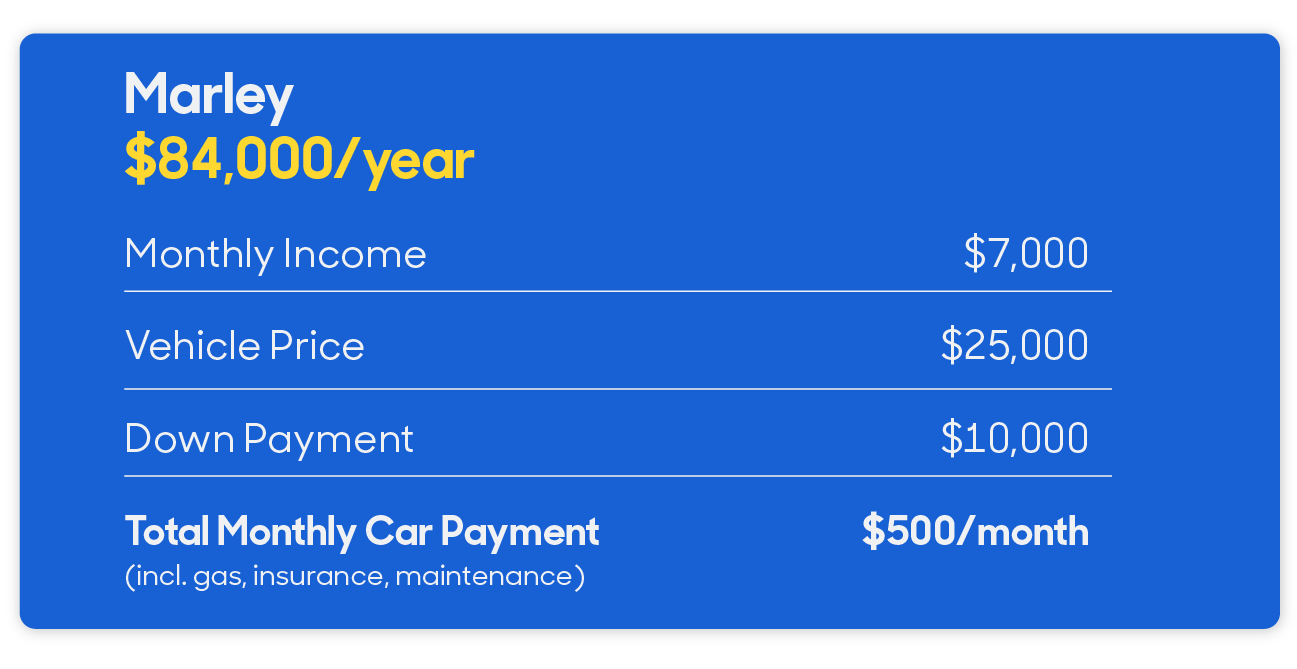
The final part of the rule suggests that your total vehicle expenses—including the loan payment, insurance, and maintenance—should not exceed 10% of your gross monthly income. A larger down payment is the most effective lever you have to pull your monthly payment down into this 10% “safe zone,” ensuring that your car does not cannibalize your ability to save for retirement or an emergency fund.
Strategic Allocation: When to Pay More (or Less) Down

While the 20% rule is a sturdy guideline, personal finance is rarely one-size-fits-all. There are specific economic scenarios where a buyer might strategically choose to deviate from the standard advice.
Assessing the Opportunity Cost of Capital
Every dollar you put into a car down payment is a dollar that cannot be invested elsewhere. This is the “opportunity cost.” If a manufacturer is offering a promotional 0% or 1.9% APR, and you can earn 5% in a high-yield savings account or 7-10% in the stock market, it may be mathematically superior to make the minimum required down payment and keep your cash in appreciating assets. However, this strategy requires disciplined investing rather than simply spending the “saved” cash.
The Role of Credit Scores in Down Payment Strategy
Your credit score heavily influences the “required” down payment. Borrowers with “Deep Subprime” scores (below 580) may be required by lenders to put down significant cash to mitigate risk. Conversely, “Super Prime” borrowers (above 780) may be offered the flexibility of zero down. In this context, the down payment is a tool to overcome credit hurdles or a luxury afforded to those with excellent credit history.
Trade-In Equity as a Down Payment
A down payment does not have to be strictly cash. For many, the equity in their current vehicle serves as the primary down payment. It is crucial to get an independent appraisal of your trade-in (using tools like Kelly Blue Book or getting a quote from a third-party buyer) to ensure you are receiving the full “value” of that down payment. If you owe $10,000 on a car worth $15,000, you have a $5,000 “down payment” ready to go.
The Risks of Low or Zero Down Payments
Marketing campaigns often highlight “$0 Down” offers to entice buyers into showrooms. While these offers lower the barrier to entry, they carry significant financial risks that can destabilize a personal financial plan.
The Necessity of GAP Insurance
If you choose a low down payment, you will likely be required (or strongly advised) to purchase Guaranteed Asset Protection (GAP) insurance. This insurance covers the “gap” between what the insurance company pays if the car is totaled and what you still owe the bank. This is an additional monthly or upfront cost that essentially functions as a “tax” on low down payments.
The Cycle of Negative Equity
The most dangerous outcome of a low down payment is the cycle of “rolling over” debt. When a buyer wants to trade in a car but still owes more than it is worth, dealers often offer to roll that negative equity into the new loan. This creates a compounding debt problem where the borrower is paying for two cars but driving only one. A solid down payment at the start of every car purchase is the only way to break this cycle.
Psychological vs. Mathematical Benefits
Beyond the math, there is a psychological benefit to a larger down payment. A lower monthly obligation provides “breathing room” in the event of job loss or unexpected medical expenses. In financial planning, liquidity is king, but so is the reduction of fixed monthly overhead. A high down payment effectively “pre-pays” your future expenses, lowering your monthly financial “burn rate.”
Practical Steps to Saving and Applying Your Down Payment
Once you have determined the ideal amount—whether it is the 20% standard or a custom figure based on your APR—the final step is execution.
Building a Sinking Fund
A “sinking fund” is a targeted savings account for a specific future expense. Instead of pulling from your emergency fund, you should set up a dedicated account for your car down payment. Automating a monthly transfer into a high-yield savings account ensures that the money is ready when you hit the dealership, and it also allows you to “test drive” the future car payment to see how it feels in your budget.
Timing the Purchase
The car market has seasonal cycles. Often, the end of the year or the end of a model cycle offers the best prices. By timing your purchase, you can make your down payment go further. A $5,000 down payment represents 20% of a $25,000 car, but if you negotiate the price down to $22,500, that same $5,000 now represents 22% equity, further strengthening your financial position.
Conclusion: The Down Payment as a Foundation
Ultimately, the question of how much down payment to put on a car is a question of financial foundation. A car is a tool for mobility, but it should not be a weight on your financial future. By aiming for at least 20%, keeping loan terms short, and understanding the interplay between interest rates and opportunity costs, you transform a simple purchase into a calculated move toward long-term financial stability. In the world of money, the best way to move forward is to ensure you aren’t starting from behind.
aViewFromTheCave is a participant in the Amazon Services LLC Associates Program, an affiliate advertising program designed to provide a means for sites to earn advertising fees by advertising and linking to Amazon.com. Amazon, the Amazon logo, AmazonSupply, and the AmazonSupply logo are trademarks of Amazon.com, Inc. or its affiliates. As an Amazon Associate we earn affiliate commissions from qualifying purchases.