
The rapid rise of Bitcoin from a niche cryptographic experiment to a trillion-dollar asset class has sparked one of the most fundamental questions in modern economics: What is Bitcoin actually backed by? For decades, the global understanding of money was tethered to physical commodities like gold or the sovereign guarantees of nation-states. When an asset exists purely as code on a decentralized ledger, skeptics and investors alike struggle to pinpoint the source of its intrinsic value.
To understand what backs Bitcoin, one must first look beyond the traditional definition of “backing”—which usually implies the ability to redeem a currency for a physical commodity—and instead examine the financial principles of scarcity, mathematical certainty, and the evolving nature of trust in a digital economy.
The Evolution of “Backing” in Traditional and Digital Finance
To answer what backs Bitcoin, we must first define what backs the money already in our pockets. Historically, money followed a “commodity standard.” For much of the 19th and early 20th centuries, the U.S. dollar was backed by physical gold held in vaults. You could, in theory, exchange your paper notes for a fixed amount of the yellow metal.
Commodity Money vs. Fiat Currency
In 1971, the world shifted decisively away from the gold standard. Today, nearly all global currencies—including the Dollar, Euro, and Yen—are “fiat” currencies. They are not backed by gold, silver, or any physical reserve. Instead, they are backed by the “full faith and credit” of the issuing government. Their value is derived from government decree, the ability of the state to collect taxes, and the stability of the legal system that enforces their use.
Bitcoin represents a third category: a decentralized digital asset. It is not backed by a government (fiat) nor is it redeemable for a physical commodity (traditional commodity money). Instead, it is backed by the properties of the network itself—specifically, its code, its security, and its mathematical properties.
The Shift from Physical Collateral to Algorithmic Trust
The transition from gold-backed money to fiat money was a transition from physical trust to institutional trust. Bitcoin represents the next leap: a transition from institutional trust to algorithmic trust. In this context, Bitcoin is “backed” by the immutable laws of mathematics and the massive computational power required to secure its network. This shift removes the “human element”—the risk of mismanagement by central banks or political instability—and replaces it with a transparent, predictable protocol.
The Mathematical Foundation of Bitcoin’s Value
In the world of personal finance and investing, an asset’s value is often tied to its production cost and its supply-demand dynamics. Bitcoin’s “backing” can be viewed through the lens of Proof of Work (PoW), the consensus mechanism that secures the network.
Proof of Work and Unforgeable Costliness
Bitcoin is backed by the massive amount of energy and specialized hardware required to secure its blockchain. This concept is often referred to as “unforgeable costliness.” Because it requires immense physical resources (electricity and hardware) to “mine” Bitcoin and validate transactions, the network has a real-world cost of production.
This energy consumption isn’t a byproduct; it is the security wall that protects the asset. To “fake” a Bitcoin or reverse a transaction, an attacker would need to control more than 51% of the network’s computational power, a feat that would cost billions of dollars in hardware and electricity. Therefore, the value of Bitcoin is partially anchored in the physical reality of the energy expended to maintain its integrity.
Scarcity and the Hard Cap of 21 Million
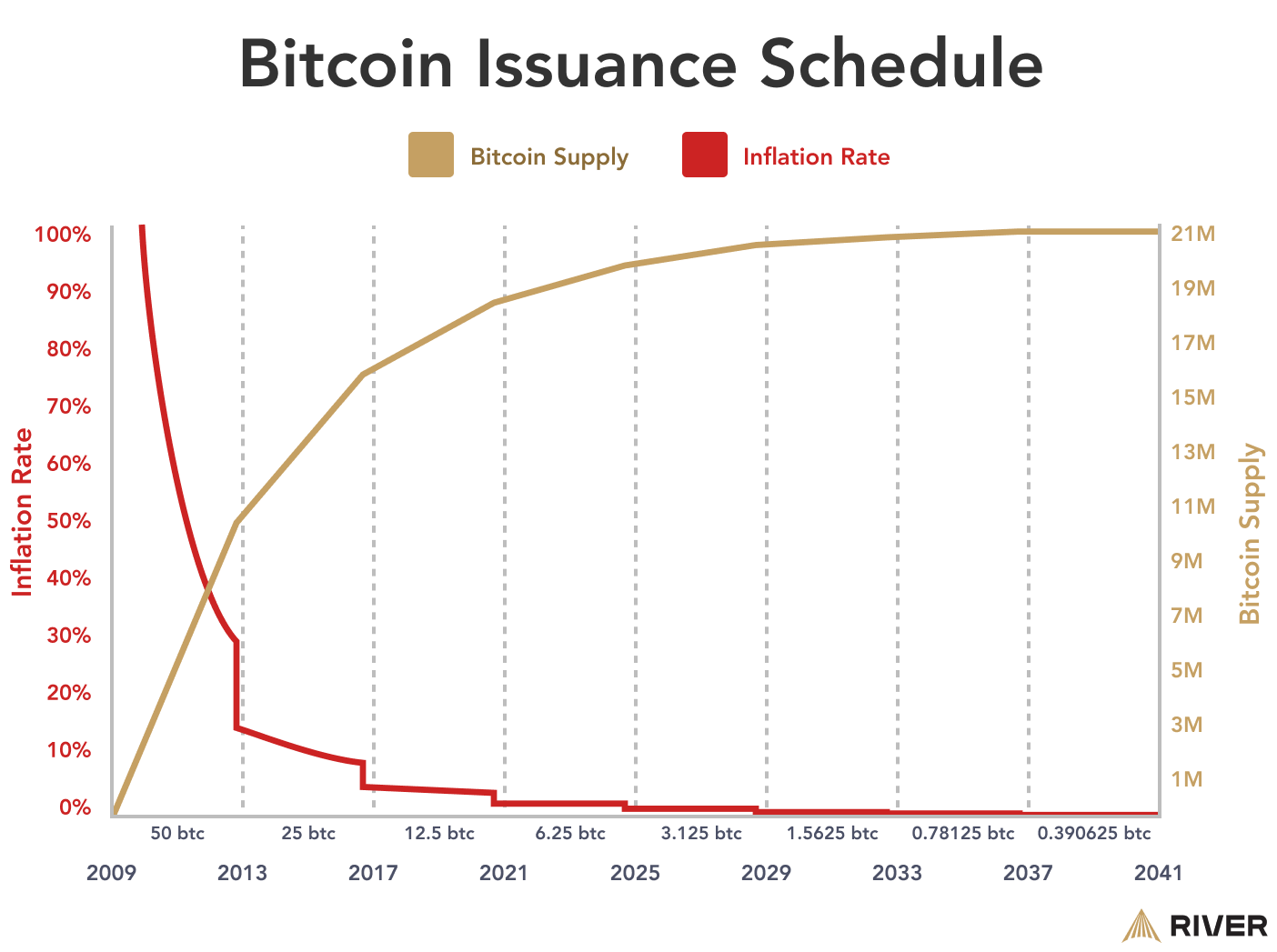
In traditional finance, “backing” often serves as a check against inflation. If a central bank prints too much money, the value of each unit drops. Bitcoin addresses this through its fixed monetary policy. There will only ever be 21 million Bitcoins.
This absolute scarcity is enforced by code, not by the promises of a committee. Every four years, an event known as “The Halving” reduces the rate at which new Bitcoin is created. For investors, this predictable, transparent supply schedule acts as a form of backing. It provides a guarantee that the asset cannot be debased, making it a “hard” money comparable to gold, but with the portability of a digital file.
Bitcoin as Digital Gold: Store of Value and Market Demand
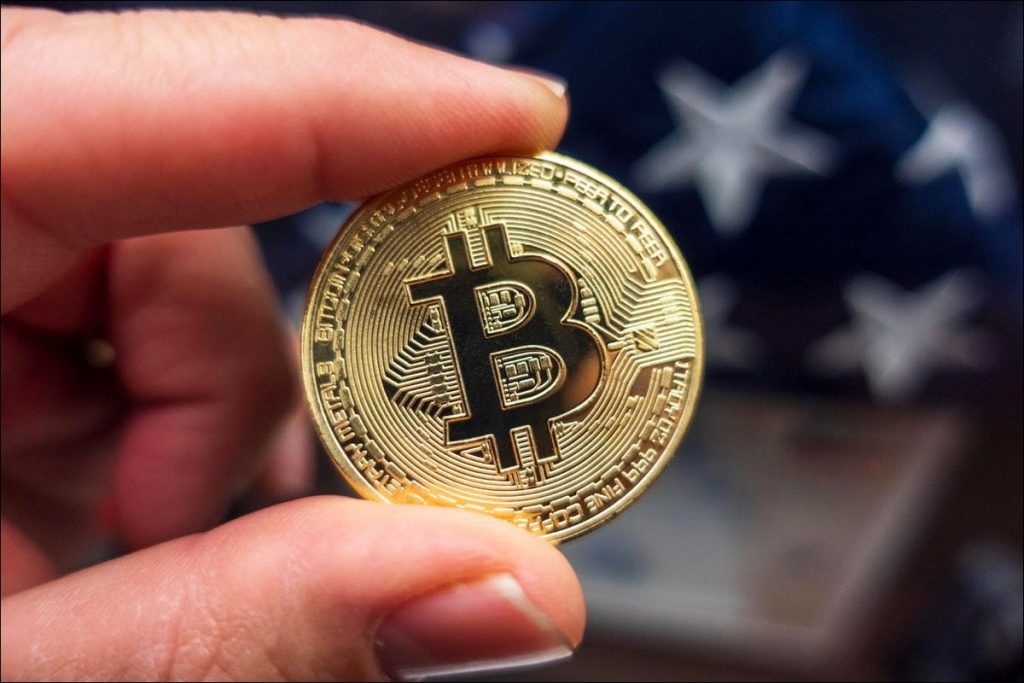
Many financial analysts categorize Bitcoin not as a medium of exchange like a daily currency, but as “Digital Gold.” This comparison helps clarify what gives the asset value in a diversified investment portfolio.
Decentralization and Resistance to Censorship
A significant portion of Bitcoin’s value is backed by its utility as a censorship-resistant store of value. Unlike a bank account, which can be frozen by a third party, or a physical asset like real estate, which can be seized, Bitcoin is a bearer asset that can be held privately via cryptographic keys.
For individuals in regions with unstable banking systems or hyperinflated fiat currencies, Bitcoin’s “backing” is its independence. It provides a financial exit ramp from failing local economies. This utility—the ability to move value across borders instantly without a central intermediary—creates a constant global demand that supports its market price.
The Network Effect and Global Adoption
In the modern economy, the value of a network is often proportional to the number of its users (Metcalfe’s Law). Bitcoin is backed by its “Network Effect.” As more institutional investors, public companies (like MicroStrategy and Tesla), and nation-states (like El Salvador) integrate Bitcoin into their balance sheets, the network becomes more robust and the asset more liquid.
When we ask what backs a brand or a social network, we point to its user base. In the financial world, Bitcoin is backed by a global infrastructure of miners, developers, exchanges, and millions of holders. This collective agreement—that Bitcoin has value—becomes a self-fulfilling prophecy supported by a decade of 99.9% network uptime.
Comparing Bitcoin to Sovereign Currencies
To truly understand Bitcoin’s place in a financial portfolio, it is helpful to contrast its backing with that of sovereign currencies. This comparison highlights why many investors view Bitcoin as a hedge against traditional financial systemic risk.
Central Bank Policies vs. Algorithmic Monetary Policy
Sovereign currencies are subject to the whims of monetary policy. During periods of economic crisis, central banks often engage in quantitative easing (printing money) to stimulate the economy. While this can prevent short-term collapse, it often leads to long-term currency devaluation.
Bitcoin offers a counter-narrative. Its monetary policy is “programmed” and public. There is no “Bitcoin Central Bank” that can decide to increase the supply to pay off debts. For many, Bitcoin is backed by the certainty that it cannot be manipulated. In an era of record-high global debt, the “backing” of a debt-free, non-discretionary asset becomes highly attractive to capital looking for a safe haven.
Risk Profiles and Institutional Integration
While Bitcoin is backed by math and energy, it is not without risk. Its value is highly volatile compared to established fiat currencies. However, the nature of its “backing” is changing as it enters the traditional financial system. With the approval of Bitcoin Spot ETFs (Exchange-Traded Funds) in various jurisdictions, Bitcoin is increasingly backed by the legal and regulatory frameworks of the world’s largest financial markets.
This institutional “wrapper” allows pension funds and insurance companies to hold the asset, further solidifying its status as a legitimate financial tool. In this sense, Bitcoin is starting to be backed by the same institutional infrastructure that supports stocks and bonds.
Conclusion: The Evolution of Money in the 21st Century
The question “what is Bitcoin backed by?” reflects a transition in how humanity perceives value. For centuries, we required a physical object or a king’s seal to trust in money. In the 21st century, we are learning that math, code, and decentralized networks can provide a foundation that is arguably more secure and transparent than traditional alternatives.
Bitcoin is backed by:
- The Law of Thermodynamics: The physical energy required to secure the network.
- Mathematics: The cryptographic proofs that prevent fraud and double-spending.
- Absolute Scarcity: The hard limit of 21 million units that protects against inflation.
- Social Consensus: The collective trust of millions of participants worldwide.
While it lacks a physical vault of gold or a government’s military power, Bitcoin’s backing is found in its resilience. It is a financial system that operates without a central point of failure, providing a global, permissionless, and immutable ledger. As the world becomes increasingly digital, the “backing” of Bitcoin—rooted in technology and logic—may become the gold standard for the modern age. For the savvy investor, understanding this shift is not just about technology; it is about understanding the future of money itself.
aViewFromTheCave is a participant in the Amazon Services LLC Associates Program, an affiliate advertising program designed to provide a means for sites to earn advertising fees by advertising and linking to Amazon.com. Amazon, the Amazon logo, AmazonSupply, and the AmazonSupply logo are trademarks of Amazon.com, Inc. or its affiliates. As an Amazon Associate we earn affiliate commissions from qualifying purchases.