
The question “what is the price of Bitcoin?” is perhaps the most frequently asked query in the modern financial world. However, for the seasoned investor and the curious newcomer alike, the answer is far more complex than a single numerical value flashing on a digital exchange. Bitcoin’s price represents a paradigm shift in how we perceive value, scarcity, and the future of global finance. Unlike traditional fiat currencies backed by government decree or commodities with industrial utility, Bitcoin’s price is a real-time reflection of global liquidity, investor sentiment, and the growing demand for a decentralized store of value.

In this guide, we will explore the fundamental drivers of Bitcoin’s market price, the macroeconomic factors that influence its volatility, and the strategic frameworks investors use to navigate this high-stakes asset class.
Understanding the Economic Foundation of Bitcoin’s Value
To understand why Bitcoin trades at its current price, one must first understand its unique economic architecture. Unlike the US Dollar or the Euro, which can be printed in unlimited quantities by central banks, Bitcoin is governed by a transparent, immutable code that dictates its supply.
The Power of Absolute Scarcity
At the heart of Bitcoin’s price discovery is the hard cap of 21 million coins. This absolute scarcity is the cornerstone of its value proposition. In a world characterized by inflationary monetary policies, Bitcoin serves as a “deflationary” counterweight. As the supply remains fixed and the demand grows—whether from retail investors or multinational corporations—the price must theoretically rise to reach a new equilibrium. This “stock-to-flow” model is a primary reason why many institutional investors view Bitcoin as “Digital Gold.”
The Impact of the Halving Cycles
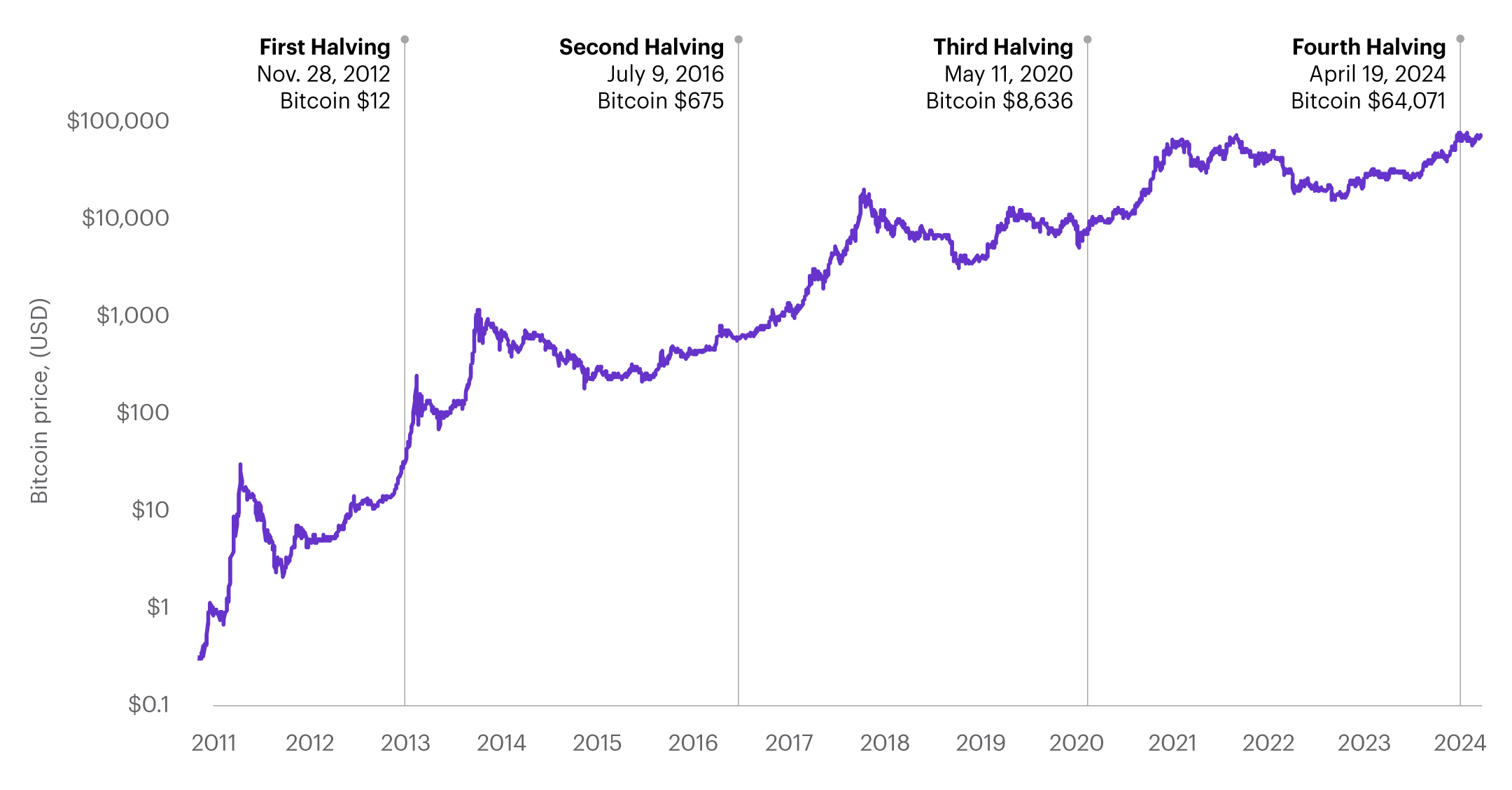
Every four years, a pre-programmed event known as the “Halving” occurs, which reduces the reward for mining new blocks by 50%. This effectively cuts the rate of new supply entering the market. Historically, these halving events have served as catalysts for significant “bull runs.” By understanding the supply-side mechanics, investors can see that the price is not merely a product of speculation but is rooted in a predictable, programmatic schedule of diminishing supply.
Market Sentiment and Behavioral Finance
While scarcity provides the floor, human emotion often dictates the ceiling. Bitcoin’s price is highly sensitive to market sentiment. Concepts like “FOMO” (Fear of Missing Out) can drive prices to irrational heights during a bull market, while “FUD” (Fear, Uncertainty, and Doubt) can lead to rapid corrections. For the disciplined investor, recognizing these psychological patterns is essential for maintaining a long-term perspective.
Macroeconomic Drivers Influencing Bitcoin’s Market Price
Bitcoin does not exist in a vacuum. Although it was created to be an alternative to the traditional financial system, its price is heavily influenced by global economic conditions and the actions of regulatory bodies.
Institutional Adoption and the “ETF Effect”
One of the most significant shifts in Bitcoin’s price history occurred with the approval of Spot Bitcoin Exchange-Traded Funds (ETFs) in major financial markets. This allowed trillions of dollars in traditional institutional capital to flow into the asset class without the need for investors to manage private keys or digital wallets. The entry of firms like BlackRock and Fidelity has provided a layer of legitimacy and liquidity that has stabilized the price relative to the “Wild West” days of early crypto trading.
Global Monetary Policy and Inflation
Bitcoin often trades as a “risk-on” asset, meaning its price tends to rise when there is high liquidity in the global markets. When central banks, such as the Federal Reserve, lower interest rates or engage in quantitative easing, the resulting “cheap money” often finds its way into Bitcoin. Conversely, when interest rates rise to combat inflation, Bitcoin’s price may face headwinds as investors move toward safer, interest-bearing assets like Treasury bonds. Ironically, while it is sensitive to interest rates, many hold Bitcoin specifically as a hedge against the long-term devaluation of fiat currency.
The Regulatory Landscape
Government regulation remains one of the most volatile variables in Bitcoin’s pricing. Positive regulatory clarity—such as frameworks that allow banks to custody digital assets—tends to drive the price upward. Negative news, such as potential bans or restrictive tax policies in major economies like the U.S., China, or the EU, can lead to short-term price drops. As the asset class matures, the “regulatory premium” is gradually being replaced by a more stable environment as Bitcoin becomes integrated into national financial infrastructures.
Strategic Frameworks for Investing in Bitcoin
Because Bitcoin is more volatile than traditional stocks or bonds, investors must approach it with a clear strategy. Success in this market is rarely about timing the exact bottom or top; it is about managing risk and time horizons.
Dollar-Cost Averaging (DCA)
The most recommended strategy for the average investor is Dollar-Cost Averaging. Instead of trying to “time the market” and buy when the price seems low, an investor commits to buying a fixed dollar amount of Bitcoin at regular intervals (e.g., $100 every month), regardless of the price. This strategy mitigates the impact of volatility; you buy more units when the price is low and fewer when the price is high, resulting in a lower average cost basis over time.
The “HODL” Philosophy and Long-Term Holding
The term “HODL” (originally a misspelling of “hold”) has become a foundational investment philosophy in the Bitcoin space. It refers to the practice of holding Bitcoin through market cycles, ignoring short-term price fluctuations. Historical data suggests that Bitcoin has rewarded those with a multi-year time horizon. By viewing Bitcoin as a 5-to-10-year investment rather than a “get rich quick” scheme, investors can avoid the stress of daily price swings.
Risk Management and Portfolio Allocation
Bitcoin should rarely constitute 100% of an individual’s portfolio. Financial advisors often suggest a “barbell” approach or a small percentage allocation (such as 1% to 5%) to Bitcoin. This allows the investor to benefit from Bitcoin’s massive upside potential (asymmetry) while ensuring that a potential market crash does not jeopardize their entire financial future. Diversification remains the only “free lunch” in finance.
Analyzing the Price: Fundamental vs. Technical Analysis
How do professionals determine if the current price is “fair”? They generally use two different lenses: Fundamental Analysis and Technical Analysis.
Fundamental Analysis: On-Chain Metrics
In the Bitcoin world, fundamental analysis involves looking at “on-chain” data. This includes metrics such as the number of active wallet addresses, the total hash rate (the computing power securing the network), and the “Exchange Reserve” (how much Bitcoin is sitting on exchanges versus in private storage). If the price is falling but the number of users and network security are increasing, fundamental analysts may view the asset as undervalued.
Technical Analysis: Charts and Trends
Technical analysis (TA) focuses on price action and volume. Traders use tools like Moving Averages, the Relative Strength Index (RSI), and Fibonacci retracement levels to predict future price movements based on historical patterns. While TA is often criticized as being “astrology for men,” it is a self-fulfilling prophecy in liquid markets; because so many traders use these indicators, the price often reacts at specific technical “support” and “resistance” levels.
The Role of Scarcity Metrics (S2F)
The Stock-to-Flow (S2F) model is a specific type of fundamental analysis that compares the current supply of Bitcoin (Stock) to the amount being produced annually (Flow). Historically, Bitcoin’s price has followed the S2F trajectory quite closely, though deviations occur during extreme market events. While not a crystal ball, it provides a mathematical framework for understanding why the price tends to increase over the long term.

Conclusion: The Future Outlook of Bitcoin Pricing
The price of Bitcoin is more than just a ticker symbol; it is a barometer for the global transition toward digital, sovereign money. While the volatility can be daunting, it is a natural byproduct of a new asset class attempting to find its true value in real-time.
As we look toward the future, the price will likely be driven by three main pillars: continued institutional integration, the development of “Layer 2” technologies that make Bitcoin more usable for daily transactions, and the ongoing search for an “inflation-proof” store of value in an uncertain global economy. For the savvy investor, “what the price of Bitcoin is” today is far less important than what Bitcoin represents: a decentralized, transparent, and finite financial system for the digital age. By focusing on education, long-term strategy, and disciplined risk management, investors can navigate the Bitcoin market with confidence and poise.
aViewFromTheCave is a participant in the Amazon Services LLC Associates Program, an affiliate advertising program designed to provide a means for sites to earn advertising fees by advertising and linking to Amazon.com. Amazon, the Amazon logo, AmazonSupply, and the AmazonSupply logo are trademarks of Amazon.com, Inc. or its affiliates. As an Amazon Associate we earn affiliate commissions from qualifying purchases.