
In the dynamic world of brand building and marketing, intellectual property (IP) is the invisible backbone that underpins a company’s identity, value, and competitive edge. Yet, two of the most commonly discussed forms of IP protection—trademark and copyright—are often misunderstood or conflated. For brand strategists, marketers, and business owners, a clear understanding of the distinctions between these two critical legal instruments is not just about compliance; it’s about safeguarding brand assets, fostering recognition, and securing a unique position in the marketplace.
This article delves into the fundamental differences between trademarks and copyrights, explaining what each protects, why they are indispensable for brand integrity, and how their strategic application can fortify a brand’s presence and longevity.

Foundations of Intellectual Property for Brands
Intellectual property represents the creations of the human mind, and in the commercial sphere, it encompasses everything from a company’s name and logo to its unique marketing campaigns and proprietary designs. For brands, IP isn’t merely a legal concept; it’s a tangible asset that can drive significant value, influence consumer perception, and establish market dominance.
Defining Intellectual Property
At its core, intellectual property provides creators and innovators with exclusive rights over their creations for a certain period. This legal protection allows them to control how their intellectual assets are used, reproduced, and commercialized, thereby incentivizing innovation and creativity. For brands, IP assets are often among their most valuable possessions, differentiating them from competitors and forming the basis of their unique market proposition. These assets can be licensed, sold, or used as collateral, highlighting their profound financial and strategic importance.
Why IP Matters for Brand Strategy
A strong brand strategy hinges on distinctiveness and consistent messaging. Intellectual property rights, particularly trademarks and copyrights, are the legal mechanisms that enable a brand to cultivate and protect these qualities. Without robust IP protection, a brand risks dilution, infringement, and ultimately, a loss of identity and market share.
For instance, a compelling brand name or a memorable slogan, protected by a trademark, becomes a powerful shorthand for a brand’s promise and values. Similarly, engaging website content, striking visual designs, or innovative advertising copy, secured by copyright, ensures that a brand’s unique narrative and aesthetic cannot be simply copied by others. By strategically leveraging IP, brands can:
-
Build Recognition: Ensure consumers can easily identify and associate products or services with a specific source.
-
Prevent Confusion: Legally prevent competitors from using similar identifiers that could mislead consumers.
-
Enhance Value: Create goodwill and brand equity, which are crucial for market valuation and investment appeal.
-
Drive Innovation: Protect original creative efforts, encouraging further investment in unique content and design.
-
Maintain Exclusivity: Preserve the unique elements that make a brand stand out, allowing it to control its image and message.
Decoding Trademarks: The Brand Identifier
A trademark is arguably the most direct form of IP protection for a brand’s core identity. It serves as a badge of origin, guiding consumers to the source of goods or services and differentiating one brand from another in a crowded marketplace.
What a Trademark Protects
Fundamentally, a trademark protects specific elements that identify and distinguish the source of goods or services. This includes a wide array of brand assets, such as:
-
Brand Names: The word or words used to identify a product or service (e.g., “Coca-Cola,” “Nike”).
-
Logos: Distinctive symbols, designs, or images (e.g., the Nike swoosh, Apple’s bitten apple).
-
Slogans/Taglines: Short, memorable phrases associated with a brand (e.g., “Just Do It,” “Think Different”).
-
Shapes: The distinctive shape of a product or its packaging (e.g., the Coca-Cola bottle contour).
-
Colors: In rare cases, a specific color or color combination if it has acquired distinctiveness (e.g., Tiffany blue).
-
Sounds: Unique sounds associated with a brand (e.g., the MGM lion’s roar, the Windows startup sound).
-
Scents: Even certain scents have been trademarked, though this is less common.
The key characteristic is that these elements must be distinctive—they must be capable of identifying the source of the goods or services and distinguishing them from those of others.
The Purpose of a Trademark in Branding
For brands, the purpose of a trademark extends far beyond mere legal protection; it’s a cornerstone of market differentiation and consumer trust. Trademarks:
-
Build Brand Recognition: A registered trademark solidifies a brand’s exclusive right to its identifiers, making it easier for consumers to recognize and recall the brand amidst competition.
-
Prevent Consumer Confusion: By preventing others from using similar marks for similar goods or services, trademarks ensure consumers are not misled about the origin of what they are purchasing. This protects the brand’s reputation and prevents free-riding on its goodwill.
-
Establish Unique Market Presence: A strong trademark becomes synonymous with quality, reliability, and specific brand values. It allows a brand to carve out its unique niche and communicate its identity effectively to its target audience.
-
Serve as a Marketing Tool: Trademarked elements are integral to all marketing and advertising efforts. They become visual and verbal anchors for campaigns, reinforcing the brand’s identity across all touchpoints.
The Registration Process and Lifecycle
While trademark rights can arise from mere use in commerce (common law rights), federal registration offers significantly stronger and more enforceable protections. The process typically involves:
-
Trademark Search: Conducting a thorough search to ensure the proposed mark is not already in use or too similar to existing marks. This is a critical step for avoiding costly disputes and re-branding efforts.
-
Application: Filing an application with the relevant intellectual property office (e.g., USPTO in the U.S.).
-
Examination: The application is reviewed by an examiner to ensure it meets legal requirements and does not conflict with prior marks.
-
Publication and Opposition: The mark is published for public opposition, allowing third parties to challenge its registration.
-
Registration: If no valid opposition is filed, the mark is registered.
Trademark rights can last indefinitely, provided the mark is continuously used in commerce and renewed periodically (typically every 10 years). This enduring protection is vital for brands aiming for long-term market presence and legacy.
Understanding Copyright: Protecting Creative Brand Assets
While trademarks protect a brand’s identifiers, copyright safeguards the original creative expression embodied within a brand’s content and design. It is the legal tool that protects the unique stories, aesthetics, and informative materials a brand creates to engage its audience.
What Copyright Encompasses
Copyright protects “original works of authorship” fixed in a tangible medium of expression. For brands, this vast category includes:
-
Written Content: Website copy, blog posts, articles, marketing brochures, ad scripts, social media captions, whitepapers, press releases.
-
Visual Arts: Logos (as artistic works), illustrations, photographs, infographics, product designs, packaging designs, website layouts, user interface (UI) designs.
-
Audiovisual Works: Commercials, promotional videos, animations, podcasts, brand anthems, jingles.
-
Software and Code: The underlying code for brand-specific apps, websites, or digital tools.
-
Music and Sound Recordings: Any original musical compositions or sound effects created for brand purposes.
The key here is “originality”—the work must be independently created by the author and possess at least a minimal degree of creativity. It does not protect ideas, facts, systems, or methods of operation, but rather the expression of those ideas.
The Role of Copyright in Brand Content Creation
In the content-driven digital age, copyright is indispensable for brands that invest heavily in creating unique and engaging content to connect with their audience. It ensures that a brand’s narrative, visual identity, and educational materials remain exclusive to them:
-
Protecting Unique Marketing Campaigns: Safeguarding original ad copy, visual concepts, and multimedia elements of a campaign from unauthorized duplication.
-
Securing Website and Digital Assets: Protecting the proprietary design, layout, and content of a brand’s website, mobile apps, and other digital platforms.
-
Enabling Content Monetization: Providing the legal framework for licensing original content to other parties, creating additional revenue streams.
-
Building Brand Authority: By protecting unique research, educational materials, and thought leadership content, copyright helps establish a brand as an authoritative voice in its industry.
-
Maintaining Brand Authenticity: Ensuring that a brand’s unique voice, style, and visual identity are preserved and not diluted by unauthorized copying.
Automatic Protection vs. Registration Benefits
Unlike trademarks, copyright protection for an original work of authorship arises automatically the moment the work is created and fixed in a tangible medium. No registration is required for copyright to exist.
However, copyright registration (e.g., with the U.S. Copyright Office) offers significant strategic advantages for brands:
-
Public Record: Creates a public record of your copyright claim.
-
Right to Sue: Allows the copyright owner to file an infringement lawsuit in federal court.
-
Statutory Damages and Attorney’s Fees: If registered prior to infringement or within specific timeframes, the copyright owner may be entitled to statutory damages and attorney’s fees, which can be far more substantial and easier to prove than actual damages.
-
Prima Facie Evidence: Registration provides prima facie evidence of the validity of the copyright and the facts stated in the certificate.
For brands that rely heavily on original content and creative assets, registration is a crucial step for robust enforcement and deterring potential infringers.
Copyright and Digital Brand Presence
The digital realm is a constant source of both opportunity and risk for copyrighted brand content. Brands must protect their online presence diligently. This includes:
-
Social Media Content: Unique images, videos, and text created for platforms like Instagram, TikTok, or LinkedIn.
-
Email Marketing Campaigns: Original copy, graphics, and design of email newsletters.
-
Digital Advertising Creatives: Banner ads, video ads, and interactive content.
-
User-Generated Content Guidelines: Establishing clear terms for how user-generated content (UGC) can be used, often requiring licenses.
Effective copyright management in the digital space involves clear “all rights reserved” notices, digital rights management (DRM) technologies where applicable, and proactive monitoring for unauthorized use of brand content.
Key Distinctions and Overlapping Synergies for Brands
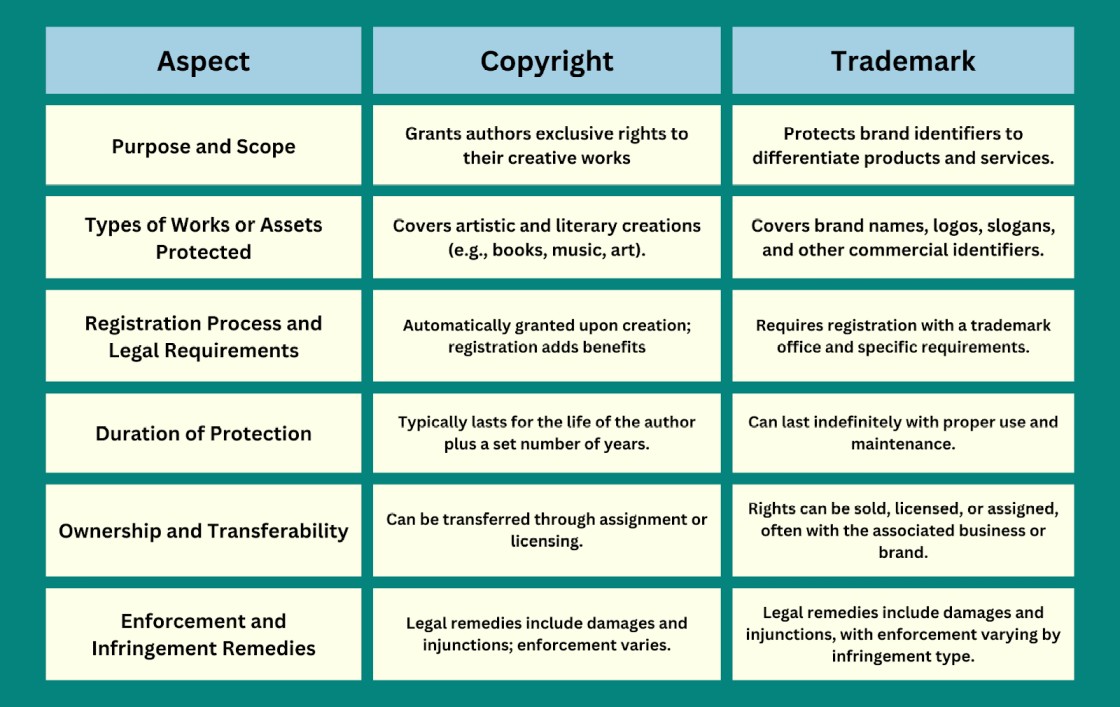
While both trademark and copyright are vital for brand protection, their scope, purpose, and duration differ significantly. Understanding these distinctions is crucial for developing a comprehensive intellectual property strategy.
The Core Difference in Focus
The most fundamental difference lies in their primary focus:
-
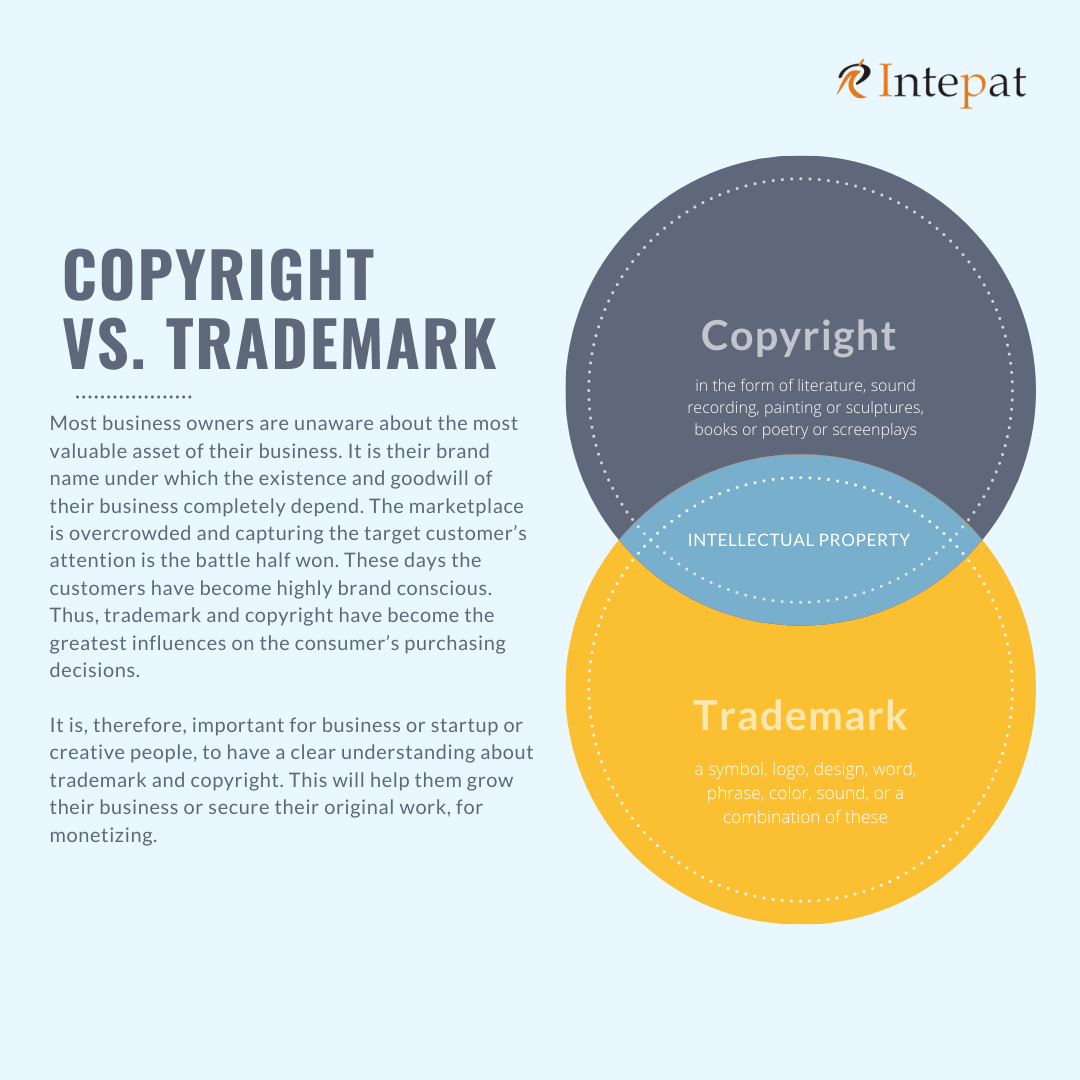
Trademark: Protects identifiers that indicate the source of goods or services. Its goal is to prevent consumer confusion regarding who is providing a product or service. Think of it as protecting the brand’s name tag.
-
Copyright: Protects original works of authorship (creative expressions). Its goal is to give creators control over the reproduction, distribution, and adaptation of their unique content. Think of it as protecting the brand’s stories, art, and content.
Duration and Scope of Protection
-
Trademark: Can potentially last forever, provided it is continuously used in commerce and renewed periodically. Its scope is tied to specific goods and services and geographic territories.
-
Copyright: Typically lasts for the life of the author plus 70 years, or for works made for hire (like corporate content), 95 years from publication or 120 years from creation, whichever is shorter. Its scope covers the specific expression of the creative work.
When Both Apply (and Why It Matters)
In many instances, brand assets can benefit from both trademark and copyright protection, creating a layered defense. This synergy is particularly evident with visual brand elements:
-
Brand Logos: A logo serves as a brand identifier (trademark) but also as an original artistic work (copyright). The distinctive design of the logo is copyrighted, while its use to identify goods/services is trademarked.
-
Website Design: The overall layout, visual elements, and written content of a brand’s website are copyrighted. However, any brand names, logos, or slogans prominently displayed on the website are trademarked.
-
Marketing Campaigns: The creative text, images, and videos within an advertising campaign are copyrighted. The brand name and product names featured in the campaign are trademarked.
This dual protection is incredibly powerful for brands. If a competitor copies a brand’s logo, it could be both trademark infringement (confusing consumers about the source) and copyright infringement (unauthorized reproduction of an artistic work).
Strategic Brand Protection: A Holistic Approach
For brands, the most effective approach is to view trademark and copyright not as isolated legal concepts, but as complementary tools within a holistic IP strategy. A truly protected brand leverages both to secure its identity and its creative output. This means:
-
Identifying all brand assets: Categorizing which elements are identifiers (trademark candidates) and which are creative expressions (copyright candidates).
-
Prioritizing registration: Understanding the benefits of registering both trademarks and copyrights for core brand assets.
-
Integrating IP into brand guidelines: Ensuring designers, marketers, and content creators understand the importance of creating protectable assets and respecting existing IP.
Practical Implications for Brand Builders and Marketers
Understanding trademark and copyright isn’t just theoretical; it has profound practical implications for how brands operate, innovate, and defend themselves in the marketplace.
Developing a Robust IP Strategy
From the moment a new brand name is conceived or a marketing campaign is drafted, IP considerations should be front and center. A robust IP strategy involves:
-
Early Identification: Recognizing all potential trademark and copyrightable assets from the outset of any new brand initiative.
-
Budget Allocation: Dedicating resources for IP searches, applications, and legal counsel.
-
Global Considerations: Understanding that IP rights are often territorial and planning for protection in key markets.
-
Employee Education: Training marketing, design, and product development teams on basic IP principles to prevent inadvertent infringement and ensure new creations are protectable.
Due Diligence and Clearance
Before launching any new brand element—a product name, a logo, a marketing jingle—rigorous due diligence is essential. This typically involves:
-
Trademark Clearance Searches: Comprehensive searches to ensure that a proposed brand name or logo is not already in use or too similar to existing registered or common law trademarks. Failing to do so can lead to costly re-branding or litigation.
-
Copyright Clearance: Verifying that any third-party content (images, music, stock footage) used in brand materials is properly licensed, or that original content does not inadvertently infringe on existing copyrights.
Enforcement and Monitoring
Once IP rights are secured, active enforcement and monitoring become crucial. Brands must be vigilant against infringement to maintain the exclusivity and value of their assets:
-
Monitoring Services: Subscribing to services that monitor new trademark applications or online use of copyrighted content.
-
Cease and Desist Letters: Issuing formal letters to infringers, demanding they stop unauthorized use.
-
Legal Action: Pursuing litigation when necessary to protect brand assets and recover damages.
-
DMCA Takedowns: Utilizing digital millennium copyright act (DMCA) procedures for online copyright infringement.
Educating Your Team
The entire team involved in brand creation and promotion—from creative directors and graphic designers to copywriters and social media managers—must understand the basics of trademark and copyright. This proactive education helps to:
-
Foster Originality: Encourage the creation of unique, protectable content.
-
Prevent Infringement: Reduce the risk of inadvertently using someone else’s IP without permission.
-
Empower Protection: Enable team members to identify and report potential infringements of the brand’s own IP.
Conclusion
The distinction between trademark and copyright is more than a legal nuance; it is a strategic imperative for any brand aiming for lasting success. Trademarks safeguard a brand’s identity, ensuring its names, logos, and slogans exclusively identify its origin. Copyright protects the original creative expressions—the stories, designs, and content—that give a brand its unique voice and aesthetic.
By understanding what each protects and how they can synergistically reinforce each other, brand builders and marketers can develop robust intellectual property strategies. This comprehensive approach not only mitigates risks of infringement and confusion but actively cultivates brand recognition, fosters consumer trust, and secures a brand’s invaluable assets for years to come. In an increasingly competitive and content-rich landscape, mastering the interplay of trademark and copyright is not just good practice—it is essential for building, protecting, and scaling a truly impactful brand.
aViewFromTheCave is a participant in the Amazon Services LLC Associates Program, an affiliate advertising program designed to provide a means for sites to earn advertising fees by advertising and linking to Amazon.com. Amazon, the Amazon logo, AmazonSupply, and the AmazonSupply logo are trademarks of Amazon.com, Inc. or its affiliates. As an Amazon Associate we earn affiliate commissions from qualifying purchases.