
In the vast ecosystem of the internet, the infrastructure behind the pages we visit varies significantly. While dynamic websites powered by complex databases and server-side processing often steal the limelight, static websites remain the fundamental bedrock of the web. Understanding what a static website is, how it functions, and why it is experiencing a renaissance in modern web development is essential for anyone involved in digital projects, from developers to business owners.
Defining the Static Website Architecture
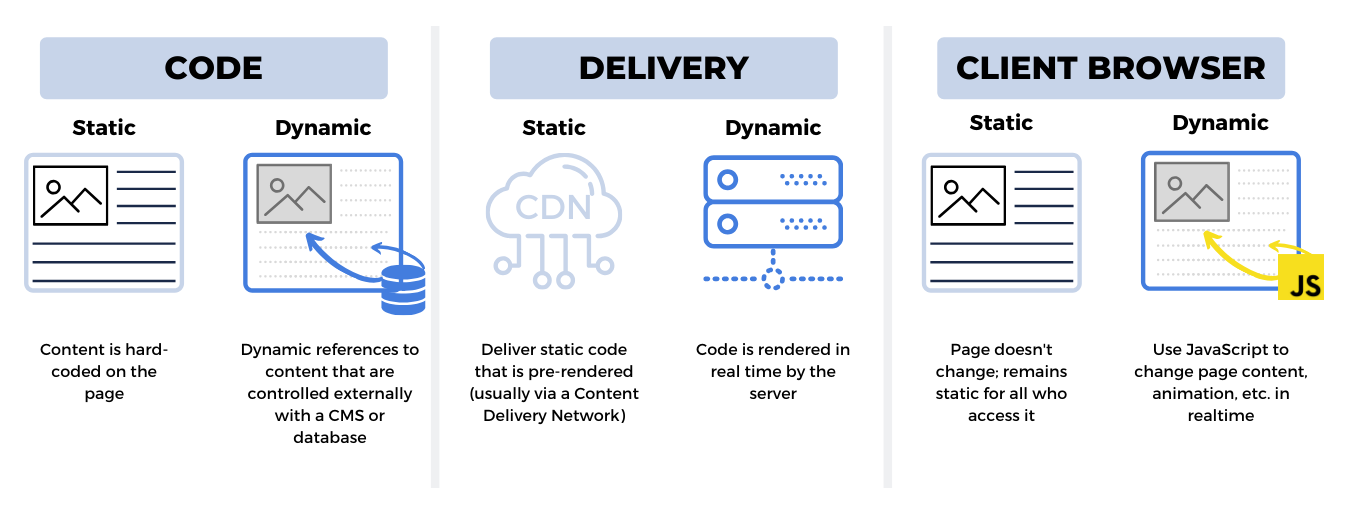
At its core, a static website is a collection of files—typically HTML, CSS, and JavaScript—that are delivered to a user’s browser exactly as they are stored on a server. Unlike dynamic websites, which assemble pages on the fly based on user interaction or database queries, a static site consists of “pre-rendered” files.

The Mechanism of Delivery
When you request a static website, the web server acts as a simple file retriever. It does not need to execute scripts, query a backend database, or interpret complex logic before sending the data. It simply looks for the specific file path requested, such as index.html, and serves that document directly to your browser. Because there is no “processing” required between the request and the response, the interaction is lightning-fast.
Static vs. Dynamic: The Core Differences
The primary distinction lies in the separation of the content from the server-side logic. A dynamic site (like those built on WordPress) relies on a database (like MySQL) and a server-side language (like PHP). Every time a user visits, the server performs a series of operations: it queries the database, fills a template with the retrieved data, and sends the final output to the user. A static site eliminates these steps, as the template and content are already merged into a single, permanent file before the user even arrives.
The Advantages of the Static Approach
There is a reason static websites are enjoying a massive resurgence, often referred to as the “Jamstack” movement. The technical benefits are profound, impacting performance, security, and scalability.
Unparalleled Loading Speed
Speed is a critical metric for user experience and search engine optimization. Because static files do not require database calls or server-side rendering, they can be served with near-instantaneous latency. This efficiency is further bolstered by Content Delivery Networks (CDNs), which cache static files on servers distributed globally. When a user requests a page, the CDN serves the file from the server physically closest to them, minimizing distance and delay.
Heightened Security Profiles
Security is perhaps the most compelling argument for static architecture. Because a static site is essentially a set of flat files, it has no database to inject malicious code into, no server-side software to patch, and no user-login interfaces to compromise. Common web attacks, such as SQL injection or Cross-Site Scripting (XSS) that exploit server-side vulnerabilities, are rendered ineffective against a properly configured static site. Since there is no backend to attack, the attack surface is reduced to near zero.
Scalability and Cost-Effectiveness
Scaling a dynamic website often requires upgrading server infrastructure, managing database load balancing, and increasing memory allocation. Static sites scale effortlessly. Whether a site receives ten visitors or ten million visitors, the server load remains virtually the same because it is simply serving static files. This reliability also translates into lower operational costs; hosting simple files is inexpensive, and many providers offer free or extremely low-cost static hosting options.
Modern Development: The Rise of Static Site Generators (SSGs)
In the early days of the web, “static” meant manually writing each HTML file by hand—a tedious and unsustainable practice. Today, we use Static Site Generators (SSGs) like Jekyll, Hugo, Next.js, and Eleventy. These tools allow developers to write content in intuitive formats like Markdown, which the generator then compiles into a full, production-ready static website.
Managing Content with Decoupled Systems
One of the historical drawbacks of static sites was the lack of a user-friendly interface for non-technical content creators. Modern workflows have solved this by using Headless Content Management Systems (CMS). In this architecture, content is managed in a separate, user-friendly dashboard (the “Headless” CMS) and is pushed to the static site generator via an API. This gives marketers and editors the convenience of a traditional CMS while maintaining the performance and security benefits of a static site.
Version Control and Automation
Static sites integrate seamlessly with modern DevOps practices. Because the site is just a folder of files, it can be version-controlled using Git. Every change can be tracked, reverted, and audited. Furthermore, CI/CD (Continuous Integration and Continuous Deployment) pipelines can automatically “build” the static site whenever a developer pushes a code update. This means a website can be updated in seconds without the developer ever needing to log into the production server.
Limitations and Use Cases: When is Static Not Enough?
While the static approach is powerful, it is not a “one-size-fits-all” solution. Understanding the limitations is just as important as understanding the strengths.
Handling User-Specific Data
If your website requires functionality that changes based on the individual user—such as social media feeds, personalized shopping carts, real-time banking dashboards, or private membership portals—a purely static approach is insufficient. These systems require real-time database interaction and session management, which are the hallmarks of dynamic applications.
Frequent Content Updates
While SSGs make updating a static site easy, they still require a “build” process to reflect changes globally. For massive sites with millions of pages that update every millisecond (like a high-frequency news site or a large e-commerce marketplace), the build time required to regenerate the entire site can become a bottleneck. However, modern techniques like Incremental Static Regeneration (ISR) are rapidly closing this gap by allowing developers to update specific parts of a site without rebuilding the entire structure.
Ideal Applications for Static Sites
Given their strengths, static sites are the gold standard for several types of projects:
- Documentation Sites: Where readability and speed are paramount.
- Marketing Landing Pages: Where conversion rates are heavily tied to page-load speed.
- Portfolios and Personal Blogs: Where security and low maintenance are key priorities.
- Corporate Websites: Where the structure is relatively stable, and high traffic volume is expected.

The Future of the Static Web
The boundary between “static” and “dynamic” is becoming increasingly blurred. With the advent of Edge Computing, developers can now inject small amounts of dynamic logic into static pages at the “edge” of the network, just before the content reaches the user. This allows for personalization and real-time features without sacrificing the performance and security of the static foundation.
As we move toward a more performance-oriented web, static websites provide the most resilient architecture available. By leveraging the simplicity of HTML, the power of automated build pipelines, and the reach of global CDNs, developers can create digital experiences that are not only fast and secure but also sustainable for the long term. Whether you are building a simple landing page or a complex corporate hub, the static-first mindset represents the modern standard for professional web development.
aViewFromTheCave is a participant in the Amazon Services LLC Associates Program, an affiliate advertising program designed to provide a means for sites to earn advertising fees by advertising and linking to Amazon.com. Amazon, the Amazon logo, AmazonSupply, and the AmazonSupply logo are trademarks of Amazon.com, Inc. or its affiliates. As an Amazon Associate we earn affiliate commissions from qualifying purchases.