
In the dynamic world of business and finance, uncertainty is an ever-present force. From market fluctuations and credit defaults to operational disruptions and strategic missteps, potential pitfalls lurk around every corner. Navigating this intricate landscape successfully requires more than just foresight; it demands a systematic and proactive approach to understanding and managing the unknown. This is precisely where risk analysis steps in – an indispensable discipline that underpins sound decision-making, strategic planning, and long-term financial stability.
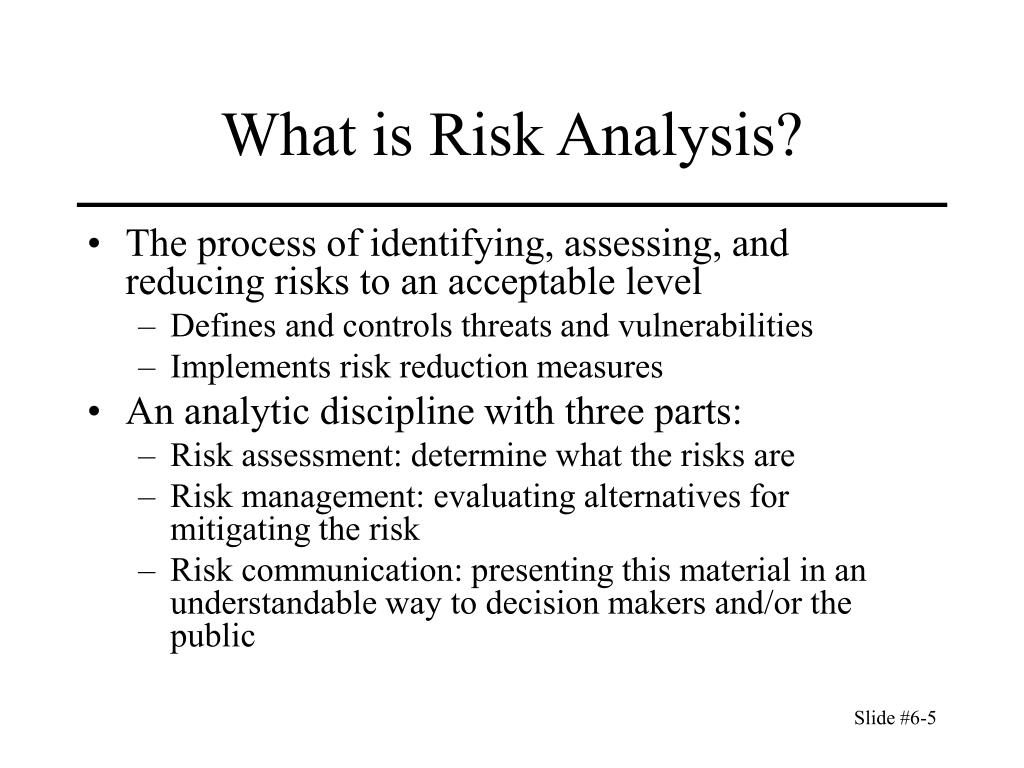
At its core, risk analysis is the process of identifying, assessing, and evaluating potential risks that could negatively impact an organization’s operations, projects, and financial objectives. It’s not merely about pinpointing threats; it’s about understanding their likelihood, potential severity, and interconnectedness, thereby empowering stakeholders to make informed choices that mitigate adverse outcomes and capitalize on opportunities. For businesses, investors, and even individuals managing their personal finances, a robust understanding of risk analysis is not a luxury but a fundamental necessity for survival and growth in an increasingly complex global economy.

The Foundational Role of Risk Analysis in Finance and Business
Risk analysis is deeply embedded in the fabric of financial management and business strategy. It serves as the compass that guides organizations through volatile markets, informs investment decisions, and safeguards against potential financial ruin. Without a systematic approach to understanding risk, financial ventures become mere gambles, and business strategies lack the resilience needed to withstand unforeseen challenges.
Defining Risk and Uncertainty in a Financial Context
To truly grasp risk analysis, it’s crucial to differentiate between “risk” and “uncertainty.” While often used interchangeably, in finance, they carry distinct meanings. Uncertainty refers to situations where future outcomes are unknown, and their probabilities cannot be objectively determined. It’s the realm of the truly unpredictable. Risk, conversely, relates to situations where multiple outcomes are possible, but the probabilities of these outcomes, and their potential impacts, can be estimated or measured. Financial risk analysis primarily operates within this sphere, transforming amorphous uncertainty into quantifiable, manageable metrics.
In a financial context, risk often translates to the potential for financial loss, deviation from expected returns, or the inability to meet financial obligations. It encompasses a vast array of exposures, from the volatility of stock prices to the creditworthiness of a borrower, and the potential failure of an internal system.
Why Risk Analysis is Indispensable for Decision-Making
For any entity dealing with financial resources, risk analysis is the bedrock of intelligent decision-making. It provides a structured framework for:
-
Informed Investment Choices: Whether a company is deciding on a new capital project, an investor is allocating funds across assets, or a bank is underwriting a loan, risk analysis helps evaluate potential returns against potential losses.
-
Strategic Planning: It allows businesses to identify potential threats to their strategic objectives – be it market shifts, competitive pressures, or regulatory changes – and develop contingency plans.
-
Resource Allocation: By understanding which risks pose the greatest threat and which are most likely to occur, organizations can allocate capital, time, and personnel more effectively to mitigation efforts.
-
Regulatory Compliance: Many financial sectors operate under stringent regulatory frameworks that mandate robust risk assessment and management practices, such as Basel Accords for banks or Solvency II for insurers.
-
Building Resilience: Proactively identifying and addressing risks helps build a more robust and resilient organization, capable of weathering economic downturns or unexpected crises.
The Spectrum of Financial Risks
Financial risks are diverse and multifaceted, categorized broadly to facilitate analysis and management:
-
Market Risk: The risk of losses in positions arising from movements in market prices (e.g., interest rates, exchange rates, equity prices, commodity prices).
-
Credit Risk: The risk of loss due to a debtor’s non-payment of a loan or other line of credit (e.g., bond default, loan default).
-
Operational Risk: The risk of loss resulting from inadequate or failed internal processes, people, and systems, or from external events (e.g., fraud, system failures, human error).
-
Liquidity Risk: The risk that an entity will not be able to meet its short-term financial obligations. This can be further divided into funding liquidity risk (inability to pay liabilities) and market liquidity risk (inability to exit a position at a reasonable price).
-
Strategic Risk: Risks associated with business strategies, such as poor decision-making, flawed execution, or failure to adapt to industry changes.
-
Compliance/Regulatory Risk: The risk of legal sanctions, material financial loss, or loss to reputation an organization may suffer as a result of its failure to comply with laws, regulations, rules, and prescribed practices.
Key Methodologies and Approaches to Financial Risk Analysis
Risk analysis employs a variety of methodologies, broadly categorized as qualitative and quantitative, each offering unique insights into the nature and impact of financial risks. A comprehensive approach often integrates both, leveraging their respective strengths.
Qualitative Risk Analysis: Understanding the “What Ifs”
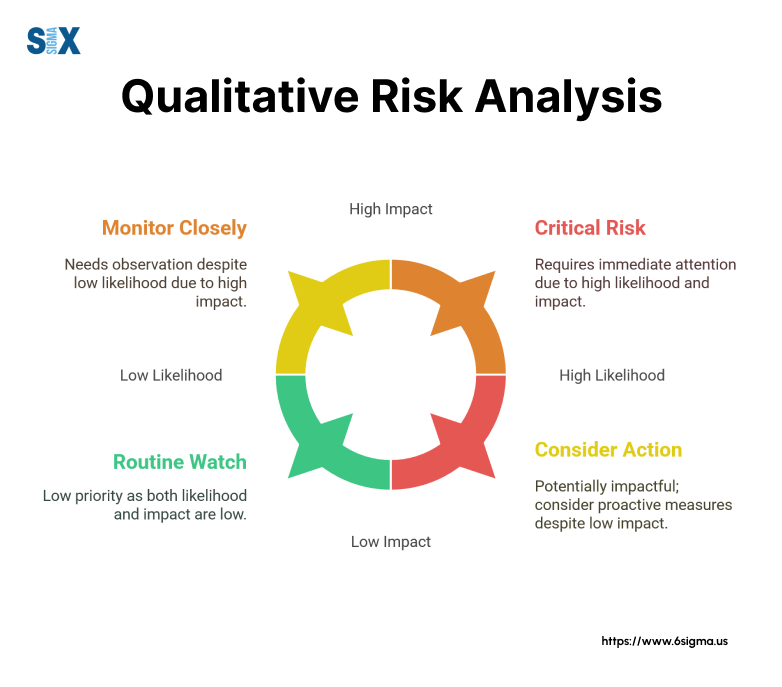
Qualitative risk analysis focuses on subjective evaluation, prioritizing risks based on their potential impact and likelihood of occurrence using descriptive scales rather than numerical values. It’s particularly useful in the early stages of a project or strategy formulation when hard data might be scarce, or for risks that are difficult to quantify.
Techniques include:
-
Risk Identification Workshops: Brainstorming sessions with stakeholders to identify potential risks.
-
Delphi Technique: A structured communication technique designed to obtain expert opinions through a series of questionnaires.
-
SWOT Analysis (Strengths, Weaknesses, Opportunities, Threats): While broader, the “Threats” component directly aids in identifying risks.
-
Risk Registers: Documentation of identified risks, their potential impact, likelihood, and proposed mitigation strategies. This helps in tracking and monitoring.
-
Risk Matrix (Probability/Impact Matrix): A simple visual tool that plots risks based on their likelihood and impact, allowing for quick prioritization (e.g., low, medium, high).
Qualitative analysis helps build a foundational understanding of the risk landscape, highlighting critical areas that warrant deeper investigation.
Quantitative Risk Analysis: Measuring the Impact
Quantitative risk analysis delves into numerical assessments, assigning specific values to risk likelihood and impact. It seeks to measure the financial implications of risks, providing a more objective basis for decision-making and resource allocation. This approach requires reliable data and sophisticated analytical tools.
Key techniques include:
-
Sensitivity Analysis: Examines how the output of a model or system changes when individual input variables are altered. For instance, how much does a project’s Net Present Value (NPV) change if interest rates increase by 1%?
-
Scenario Planning: Develops plausible future scenarios (e.g., best-case, worst-case, most likely) and analyzes their potential impact on financial outcomes. This helps organizations prepare for different futures.
-
Monte Carlo Simulation: A computer-based technique that models the probability of various outcomes in a process that cannot easily be predicted due to the intervention of random variables. It runs thousands of simulations, using randomly selected values for uncertain inputs, to generate a distribution of possible results.
-
Value at Risk (VaR): A widely used metric in financial services that estimates the maximum potential loss over a specified time period at a given confidence level (e.g., 95% VaR over one day is $1 million, meaning there’s a 5% chance of losing more than $1 million in a day).
-
Expected Monetary Value (EMV): Calculates the average outcome when the future includes scenarios that may or may not happen. It’s the product of an event’s probability and its monetary impact.
-
Decision Tree Analysis: A visual representation of decision points and possible outcomes, used to evaluate potential courses of action under uncertainty.
Quantitative methods provide a rigorous, data-driven perspective, translating potential risks into actionable financial figures.
Implementing Risk Analysis Across Business Functions
Effective risk analysis isn’t confined to a single department; it’s a cross-functional discipline that permeates various aspects of an organization, informing decisions from the C-suite down to operational teams.
Strategic Planning and Capital Allocation
At the highest level, risk analysis is integral to strategic planning. Before committing to major investments, market expansions, or new product development, organizations must assess the inherent risks. This involves evaluating market volatility, competitive threats, regulatory changes, and potential macroeconomic shifts. By understanding these risks, companies can formulate robust strategies, allocate capital wisely, and build in flexibility to adapt to changing conditions. For example, a firm considering entering a new emerging market would conduct extensive risk analysis on political stability, currency convertibility, legal frameworks, and consumer behavior.
Project Management and Investment Decisions
In project management and investment appraisal, risk analysis helps prevent costly overruns and failures. Each project, whether it’s building a new factory or developing a software system (even in a tech context, the financial risk of the project is paramount here), carries specific risks related to budget, schedule, resources, and technical feasibility. Quantitative tools like Monte Carlo simulations can model the probability of project completion within budget and schedule. For investment decisions, a thorough risk-adjusted return analysis helps investors choose assets that offer the best compensation for the risks undertaken, comparing potential gains against the likelihood and impact of losses.
Operational Resilience and Business Continuity
Operational risks, though sometimes less direct than market or credit risks, can cripple a business. Risk analysis identifies vulnerabilities in supply chains, IT systems, human processes, and infrastructure. This enables organizations to develop robust operational frameworks, implement internal controls, and establish business continuity plans. In the event of a disaster (natural, technological, or human-induced), a well-analyzed operational risk framework ensures that critical functions can continue, minimizing financial losses and reputational damage.
Compliance and Regulatory Adherence
Many industries, particularly finance, are heavily regulated. Risk analysis plays a crucial role in ensuring compliance with a myriad of laws, regulations, and industry standards. It helps identify areas where non-compliance could lead to fines, legal action, or reputational harm. By systematically analyzing regulatory risks, organizations can implement appropriate controls, establish monitoring systems, and train personnel to meet compliance obligations, thereby safeguarding against significant financial penalties and operational disruptions.
Benefits and Challenges of Effective Risk Analysis
Implementing a comprehensive risk analysis framework yields significant benefits but also presents its own set of challenges.
Enhancing Decision Quality and Strategic Foresight
The primary benefit of effective risk analysis is the substantial improvement in decision quality. By providing a clear, data-driven understanding of potential outcomes and their associated uncertainties, it empowers decision-makers to move beyond intuition and make choices grounded in thorough evaluation. This leads to more robust strategies, better investment outcomes, and a clearer strategic foresight, allowing organizations to anticipate future challenges and opportunities.
Optimizing Resource Allocation and Minimizing Losses
A well-executed risk analysis enables businesses to prioritize risks and allocate resources – financial, human, and technological – where they will have the most impact. This optimization minimizes the likelihood and severity of losses, ensures capital is deployed efficiently, and helps maintain financial stability. It shifts an organization from a reactive posture to a proactive one, reducing crisis management costs and safeguarding profitability.
Navigating Data Complexity and Predictive Limitations
One of the significant challenges in risk analysis is dealing with data complexity and inherent predictive limitations. Financial markets are influenced by innumerable factors, many of which are non-linear and unpredictable. Obtaining accurate, comprehensive, and timely data can be difficult. Furthermore, all models are simplifications of reality, and past performance is not always indicative of future results. “Black swan” events – rare, high-impact, unpredictable occurrences – can defy even the most sophisticated predictive models, highlighting the need for continuous adaptation and the inclusion of qualitative judgment.
Fostering a Risk-Aware Culture
Another challenge is fostering a pervasive risk-aware culture throughout an organization. Risk analysis is not just a technical exercise; it requires a mindset shift where every employee understands their role in identifying and mitigating risks. This involves ongoing training, clear communication channels, and leadership commitment to integrate risk considerations into daily operations and strategic discussions. Without such a culture, even the most sophisticated risk frameworks can falter.
The Future of Risk Analysis in a Dynamic Financial Landscape
The field of risk analysis is continuously evolving, driven by technological advancements, increasing global interconnectedness, and a rapidly changing regulatory environment.
The Impact of Technology: AI, Machine Learning, and Big Data
Technological innovation is revolutionizing risk analysis. The advent of Artificial Intelligence (AI) and Machine Learning (ML) algorithms, coupled with the explosion of Big Data, is enabling unprecedented capabilities. These technologies can process vast amounts of financial data, identify subtle patterns, detect anomalies indicative of fraud or emerging risks, and build more accurate predictive models. AI-driven systems can monitor real-time market data, assess credit risk with greater precision, and even simulate complex scenarios more effectively than traditional methods, leading to more dynamic and adaptive risk management strategies.
Evolving Regulatory Environments and Global Interconnectedness
The global financial landscape is characterized by increasing interconnectedness and an ever-evolving regulatory framework. Major financial crises have spurred regulators worldwide to demand more stringent risk assessment and reporting from financial institutions. This necessitates continuous adaptation of risk analysis methodologies to meet new compliance requirements, such as stress testing and capital adequacy frameworks. Furthermore, the global nature of modern finance means that risks in one part of the world can quickly cascade across markets, requiring risk analysis to adopt a more holistic, interconnected, and real-time perspective.
In conclusion, risk analysis is far more than a technical exercise; it is an essential strategic imperative for any entity operating within the financial sphere. By systematically identifying, assessing, and responding to potential risks, businesses and investors can enhance their decision-making, optimize resource allocation, build resilience, and ultimately secure their financial future in an unpredictable world. As technology advances and global markets become more intricate, the sophistication and importance of risk analysis will only continue to grow, solidifying its position as a cornerstone of prudent financial management.
aViewFromTheCave is a participant in the Amazon Services LLC Associates Program, an affiliate advertising program designed to provide a means for sites to earn advertising fees by advertising and linking to Amazon.com. Amazon, the Amazon logo, AmazonSupply, and the AmazonSupply logo are trademarks of Amazon.com, Inc. or its affiliates. As an Amazon Associate we earn affiliate commissions from qualifying purchases.