
In an era increasingly defined by digital transformation, artificial intelligence, and sophisticated navigation systems, some foundational concepts remain surprisingly vital. Among these are “port side” and “starboard”—terms that have guided mariners for centuries and continue to be indispensable in the high-tech world of modern shipping, recreational boating, and autonomous maritime operations. Far from being archaic relics, port and starboard are integral to the language of marine technology, ensuring clarity, safety, and efficiency across complex digital platforms and automated systems.
At their core, port and starboard are simple, unambiguous designations for the left and right sides of a vessel when facing forward. Port refers to the left side of a ship, boat, or aircraft, while starboard refers to the right side. This seemingly straightforward convention carries immense weight, primarily because it eliminates the confusion that can arise from relative terms like “left” and “right,” which depend on the observer’s orientation. On a ship, “left” could mean different things to different crew members depending on where they are standing and which way they are facing. Port and starboard, however, are absolute. They are fixed to the vessel itself, providing a universal reference point crucial for everything from basic navigation commands to the intricate workings of advanced sensor arrays and AI-driven control systems.
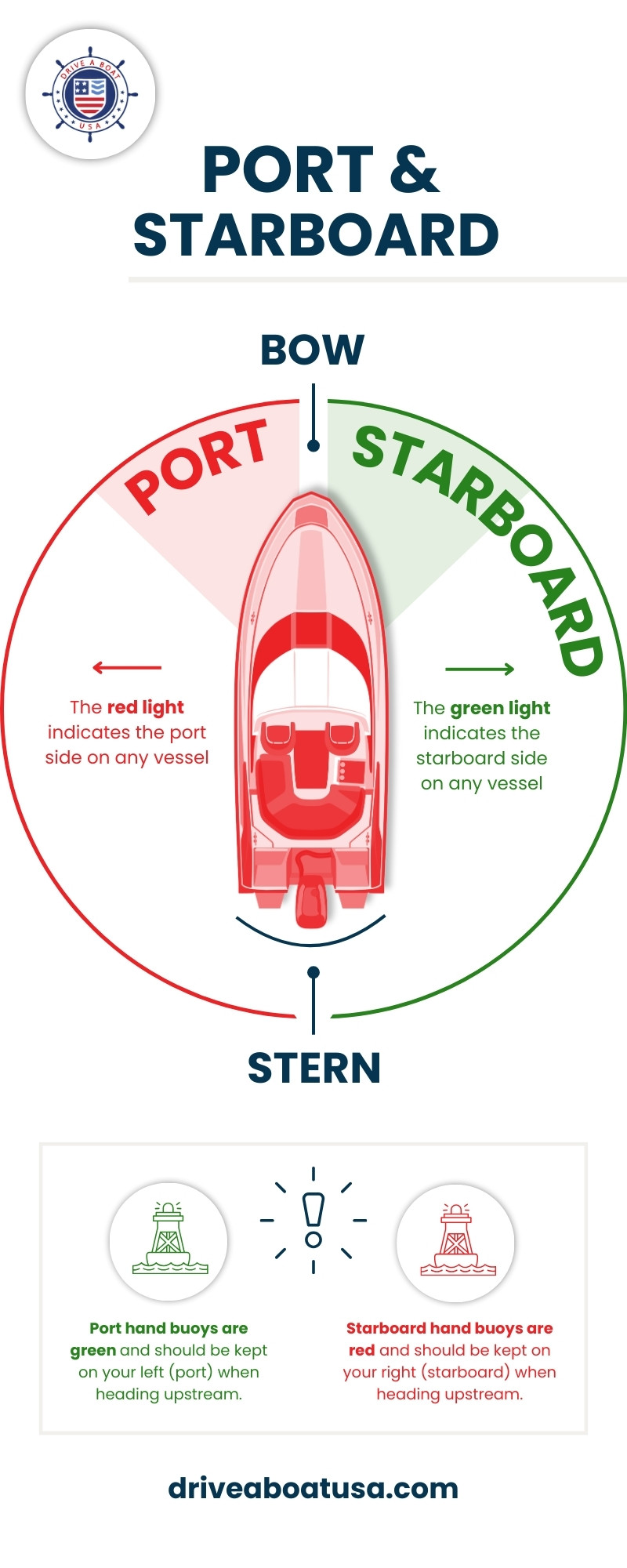
This article delves into why these traditional terms not only persist but thrive within the tech ecosystem, exploring their integration into cutting-edge maritime solutions, from software design to virtual reality training.
The Enduring Significance of Port and Starboard in a High-Tech World
The maritime industry has undergone a profound technological revolution, moving from paper charts and celestial navigation to integrated digital bridges, satellite communication, and autonomous vessel prototypes. Despite these advancements, the absolute and universally understood nature of “port” and “starboard” has proven resilient, acting as foundational pillars in the architecture of modern marine technology. Their precision is not just a matter of tradition; it’s a critical component of operational safety and effective human-machine interaction.
Beyond Simple Directions: Why Precision Matters
In any complex system, ambiguity is the enemy of efficiency and safety. On a vessel, especially one operating in crowded waterways or challenging conditions, a miscommunication about direction can have catastrophic consequences. Imagine a scenario where a helmsman receives an instruction to “turn right.” If the helmsman is facing aft (towards the back) at that moment, “right” would be the ship’s left. Such relative commands are simply untenable. Port and starboard resolve this by providing absolute directions that are independent of the observer’s position or orientation on the vessel.
For modern technology, this precision is even more critical. When programming an autopilot system, designing a user interface for an electronic chart, or developing algorithms for collision avoidance, the system needs unambiguous, fixed reference points. Port and starboard fulfill this role perfectly. They allow for the creation of standardized protocols, interfaces, and data points that transcend language barriers and the individual perspectives of human operators. This foundational clarity allows developers to build sophisticated systems with confidence, knowing that the basic directional parameters are rock-solid.
Historical Context Meets Modern Demands
The origins of “port” and “starboard” trace back to Norse languages, specifically “stýri” (rudder) and “borð” (board), indicating the side from which the steering oar was operated (the right side for most right-handed people). The left side was then designated the “larboard,” which was later changed to “port” due to its phonetic similarity to starboard, causing confusion. The term “port” gained traction because it was the side traditionally moored to the dock to avoid damaging the steering oar.
Today, this historical legacy provides a globally recognized lexicon. Every mariner, regardless of nationality or primary language, understands port and starboard. This shared understanding is vital for international shipping and naval operations, where diverse crews and collaborating entities must communicate seamlessly. Modern technology leverages this established universality. Navigation software, for example, displays port and starboard aspects of other vessels in real-time, allowing for immediate comprehension by any trained professional. This blend of historical nomenclature and modern technological application underscores the enduring power of clear, concise, and universally adopted terminology.
Integrating Port and Starboard into Modern Navigation and Communication Systems
The digital revolution has transformed how vessels navigate, communicate, and operate. Electronic systems now manage everything from course plotting to engine diagnostics. Within this highly integrated environment, port and starboard are not just terms; they are embedded data points and critical reference frames that ensure the accuracy and safety of these advanced technologies.
Electronic Chart Display and Information Systems (ECDIS)
ECDIS has replaced traditional paper charts on most commercial vessels, offering real-time positioning, route planning, and collision avoidance tools. Within ECDIS, every aspect of a vessel’s movement, a waypoint, or an approaching hazard is referenced relative to the vessel’s fixed axes, where port and starboard play a crucial role. For instance, when depicting a safe passing distance, ECDIS might highlight clear “port” or “starboard” pathways. Target tracking features will indicate if another vessel is approaching on your port or starboard bow, directly influencing the recommended evasive actions. The visual representation on these digital charts is meticulously designed to leverage the ingrained understanding of port and starboard, making complex navigational scenarios immediately intelligible to the operator.
Automated Identification Systems (AIS) and Collision Avoidance
AIS is a crucial safety system that broadcasts a vessel’s identity, position, course, and speed to other vessels and shore stations. It also receives similar information from other ships, displaying them on integrated navigation screens. When an AIS target appears on a bridge display, its relative bearing to your vessel is often described in terms of port or starboard. “Target bearing 020 degrees relative, closing on your starboard bow” is far more precise than “something ahead and to your right.”
Collision avoidance algorithms, a key component of modern navigation suites, heavily rely on the fixed references of port and starboard. These systems constantly calculate potential collision courses and recommend maneuvers based on International Regulations for Preventing Collisions at Sea (COLREGs), which themselves are steeped in port/starboard rules (e.g., a power-driven vessel seeing another power-driven vessel on its starboard side must give way). The tech translates these rules into actionable digital alerts and suggestions, directly using port and starboard as operational parameters.
Digital Communications and Standardized Terminology
Effective communication is paramount at sea. Digital communication systems, including very high frequency (VHF) radio, satellite phones, and integrated messaging platforms, are standard on modern vessels. When conveying critical information, such as the location of a casualty, a hazardous spill, or an object in the water, specifying “off the port quarter” or “broad on the starboard beam” eliminates confusion and ensures rapid, accurate response. These precise digital communications reinforce the global standard set by port and starboard, proving that even in an age of sophisticated data transfer, clear, unambiguous terminology remains the bedrock of safety and efficiency.
Port, Starboard, and the Evolution of Autonomous Maritime Technology
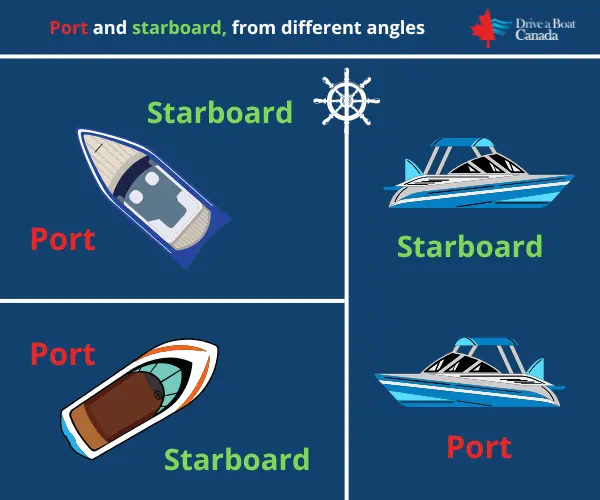
The frontier of maritime technology is undoubtedly autonomous shipping. Self-navigating vessels, often referred to as “uncrewed surface vessels” (USVs) or “maritime autonomous surface ships” (MASS), are being developed to revolutionize everything from cargo transport to oceanographic research. Within this highly advanced domain, port and starboard take on new significance, forming part of the core logical framework for AI and remote control systems.
AI-Driven Navigation and Situational Awareness
For an autonomous vessel, the concepts of port and starboard are fundamental to its perception and decision-making architecture. AI systems rely on sensor data (radar, LiDAR, cameras, sonar) to build a real-time “situational awareness” model of their environment. When detecting other vessels, obstacles, or navigational aids, the AI must classify their position relative to its own fixed axes. Is that buoy on my port side? Is that approaching vessel crossing from starboard to port? These are not trivial questions; they are data points that directly feed into the AI’s COLREGs compliance module, its path planning algorithms, and its obstacle avoidance routines. The AI’s “understanding” of the world is inherently framed by these absolute directional references, allowing it to interpret its environment and execute maneuvers safely.
Remote Operations and Virtual Bridge Systems
While fully autonomous vessels are still evolving, many operations are now remotely monitored and controlled from shore-based “virtual bridges.” Operators hundreds or thousands of miles away rely on high-fidelity digital twins and real-time data feeds to command these vessels. In this context, the visual representation of the vessel’s environment, displayed on large screens, adheres strictly to the port and starboard conventions. When a remote operator issues a command like “alter course 10 degrees to starboard,” the system understands precisely which way to turn the virtual rudder, demonstrating how these age-old terms seamlessly integrate into cutting-edge human-machine interfaces.
The Human-Machine Interface in Future Vessels
As automation increases, the interface between humans and machines becomes paramount. Future vessels, whether partially or fully autonomous, will feature highly intuitive dashboards and augmented reality displays. These interfaces will use visual cues, overlays, and warnings that leverage the universal understanding of port and starboard. For example, a virtual reality display might highlight a potential collision risk with a red overlay on the “port bow,” or an augmented reality system might project safe passing zones to the “starboard side.” This consistent use of established maritime terminology ensures that human operators can quickly and accurately interpret complex data, reducing cognitive load and enhancing safety in hybrid human-AI operational environments.
Training and Simulation: Mastering Nautical Concepts with Technology
For any mariner, from a cadet to a seasoned captain, a deep understanding of port and starboard is non-negotiable. Technology has revolutionized how this essential knowledge is imparted, making training more immersive, effective, and accessible than ever before. Simulation and virtual reality platforms are at the forefront of this educational shift, consistently reinforcing the importance of these foundational terms.
VR and AR for Immersive Maritime Education
Virtual Reality (VR) and Augmented Reality (AR) tools are transforming maritime training. Instead of static diagrams or theoretical explanations, trainees can now immerse themselves in realistic virtual bridge environments. In these simulations, understanding port and starboard is immediately practical and visceral. A trainee might be asked to identify a navigation light on the “port quarter” of an approaching vessel or to execute a maneuver to “pass on the starboard side.” These interactive scenarios, powered by sophisticated graphics and physics engines, drill the concepts into the user’s mind more effectively than traditional methods. AR applications can overlay directional information onto real-world views, helping new mariners to identify and understand port/starboard relative bearings in actual vessel operations.
Simulator-Based Drills for Critical Maneuvers
High-fidelity maritime simulators mimic the exact behavior of various vessels, allowing trainees to practice complex maneuvers and emergency procedures in a safe, controlled digital environment. Whether practicing docking, navigating through dense fog, or responding to an engine failure, the commands and situational awareness within the simulator are all framed by port and starboard. Instructors can introduce various scenarios, testing a trainee’s ability to interpret information (e.g., “vessel bearing 030 relative on your starboard side, making way at 10 knots”) and execute appropriate actions, reinforcing the absolute nature of these directional terms under pressure.
Digital Twins and Performance Optimization
The concept of a “digital twin”—a virtual replica of a physical vessel—is gaining traction in maritime operations for everything from design validation to predictive maintenance and crew training. For training purposes, a digital twin can simulate an exact vessel with incredible accuracy. When a crew is trained using a digital twin, every action, every command, every navigational decision is made within the precise framework of the vessel’s port and starboard axes. This allows for unparalleled performance analysis, identifying patterns, optimizing procedures, and ensuring that all crew members, and the technologies they operate, are perfectly aligned in their understanding of the vessel’s orientation and movements.
From Ship Design to Digital Security: P&S Across the Tech Spectrum
The influence of port and starboard extends beyond navigation and training, subtly weaving into other critical technological domains within the maritime sector. From the initial blueprints of a vessel to the cybersecurity protocols safeguarding its systems, these core directional concepts provide a universal framework.
CAD/CAM in Vessel Construction and Layout
Computer-Aided Design (CAD) and Computer-Aided Manufacturing (CAM) software are indispensable in modern shipbuilding. Engineers and designers use these tools to model every component of a vessel, from hull forms to internal compartments and machinery spaces. Within CAD/CAM environments, the entire vessel is designed and structured around a fixed coordinate system where the port and starboard sides are fundamental references. When specifying the placement of equipment, bulkheads, or piping runs, designers refer to the port or starboard side to ensure accuracy and prevent costly errors during construction. This digital precision, rooted in the clear distinction between port and starboard, is crucial for efficient build processes and optimal vessel performance.
Cybersecurity Implications for Navigational Systems
As maritime systems become increasingly interconnected and reliant on digital networks, cybersecurity is a paramount concern. Navigational systems, including ECDIS, GPS, and radar, are potential targets for cyber-attacks. When developing secure software and protocols for these systems, developers must consider how data is processed and presented in relation to the vessel’s orientation. For instance, an intrusion detection system might monitor data anomalies related to a vessel’s bearing relative to objects on its “port” or “starboard” side, as deviations could indicate malicious interference. Ensuring the integrity of directional data, rooted in port and starboard definitions, is thus a quiet but critical component of protecting maritime technology from digital threats.

The Future of Maritime Safety and Efficiency
Ultimately, the persistent relevance of port and starboard in the digital age boils down to safety and efficiency. As maritime technology continues to evolve, pushing towards greater automation, connectivity, and data-driven decision-making, the need for unambiguous, universal reference points will only intensify. Whether it’s an AI learning to navigate a congested port, a remote operator monitoring a vessel in stormy seas, or a designer optimizing a ship’s layout, port and starboard remain the steadfast compass points that keep the complex world of maritime technology oriented and secure. Their journey from ancient sailing practices to the core logic of modern software is a testament to the enduring power of clear, precise communication in a technologically advanced world.
aViewFromTheCave is a participant in the Amazon Services LLC Associates Program, an affiliate advertising program designed to provide a means for sites to earn advertising fees by advertising and linking to Amazon.com. Amazon, the Amazon logo, AmazonSupply, and the AmazonSupply logo are trademarks of Amazon.com, Inc. or its affiliates. As an Amazon Associate we earn affiliate commissions from qualifying purchases.