
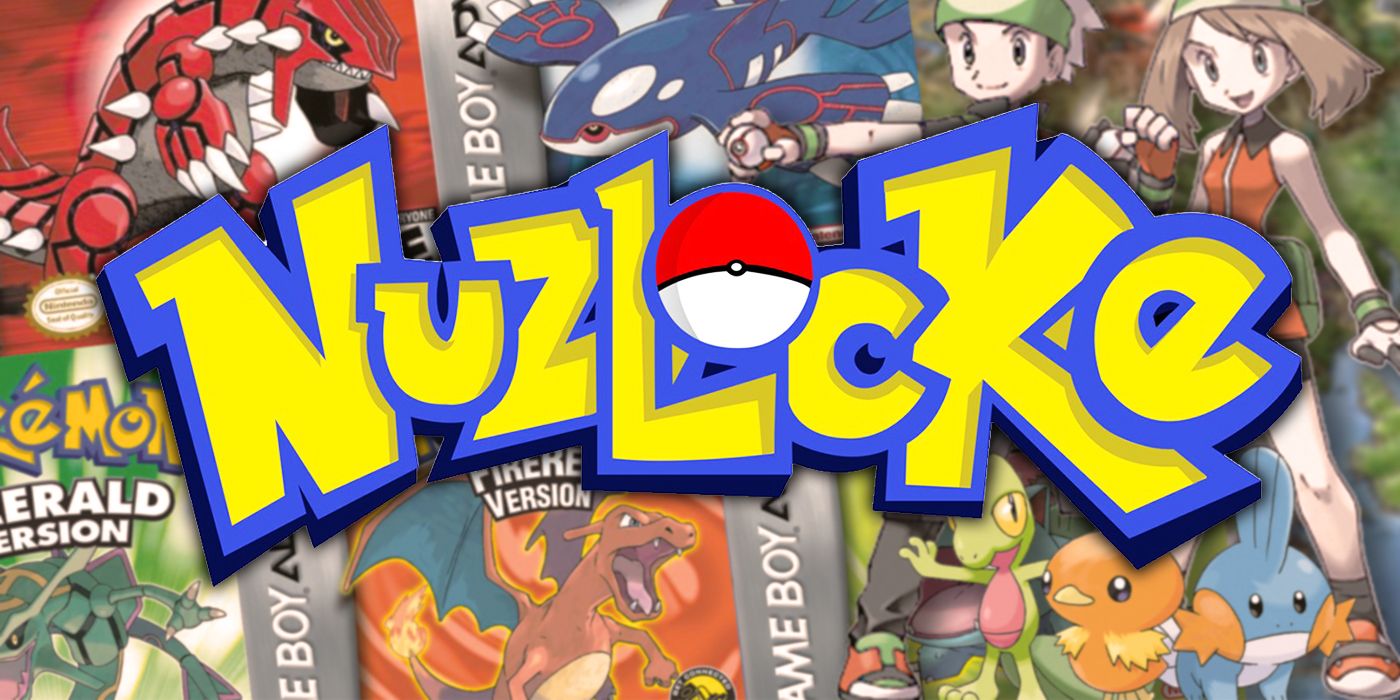
In the vast and evolving landscape of video games, player communities often transcend the boundaries set by developers, crafting new ways to interact with beloved titles. Among the most prominent examples of such organic innovation is the Pokémon Nuzlocke challenge. Far from a mere variant, Nuzlocke represents a sophisticated, fan-created ruleset that fundamentally re-engineers the player’s experience of the iconic Pokémon role-playing games. It transforms a typically accessible and often forgiving adventure into a high-stakes, strategic crucible, demanding meticulous planning, adaptability, and a resilient mindset. At its core, Nuzlocke is a set of self-imposed digital constraints designed to elevate difficulty, foster deeper emotional connections to virtual companions, and inject a profound sense of consequence into every decision within the game’s intricate software framework.

This unique approach to gameplay originated from a webcomic in 2009 by an artist known as Nuzlocke, blending the “nuzzle” attack from a Pokémon with the character Locke from the TV show Lost. The rules, initially simple, rapidly proliferated and evolved across online forums, social media, and streaming platforms, becoming a global phenomenon that has breathed new life into every generation of Pokémon titles. For tech enthusiasts, digital strategists, and game design students, understanding Nuzlocke offers a fascinating case study in user-generated content, community-driven game modification without code, and the psychological impact of digital mechanics on player engagement. It’s a testament to the versatility of digital entertainment and the boundless creativity inherent in its user base, demonstrating how simple rule additions can entirely recalibrate a software product’s user interface and user experience (UI/UX).
The Core Mechanics: A Digital Ruleset for Enhanced Gameplay
The foundation of any Pokémon Nuzlocke challenge lies in a strict adherence to a specific set of primary rules. These aren’t optional additions but fundamental axioms that recalibrate the game’s intrinsic difficulty and player decision-making algorithms. They force players to engage with the game’s underlying mechanics—from capture rates to type matchups—with unprecedented criticality, treating every digital entity and encounter as a potentially irreplaceable resource.
The Permadeath Clause: Simulating Irreversible Loss
Perhaps the most impactful and emotionally resonant rule is the “Permadeath Clause.” In a Nuzlocke run, any Pokémon that faints in battle is considered “dead” and must be permanently removed from the player’s active roster and storage systems. This typically means releasing the Pokémon back into the digital wild or depositing it into a designated “graveyard” box within the game’s PC system, never to be used again. This digital obliteration of hard-earned allies introduces a layer of irreversible consequence absent in standard gameplay, where fainting merely means a trip to the Pokémon Center for a quick digital revival.
From a technological standpoint, this rule transforms the game’s resource management. Pokémon are no longer expendable units that can be endlessly regenerated; they become finite, precious assets. This forces players to drastically alter their combat strategies, prioritizing survival over offense and often making difficult tactical retreats rather than risking a beloved team member. The permadeath mechanic leverages the player’s emotional investment, an often-overlooked aspect of game design, amplifying the stakes of every digital interaction and battle sequence. It’s a masterful piece of psychological engineering, implemented purely through player self-discipline, turning a routine game over into a genuine moment of digital loss.
The First Encounter Rule: Procedural Team Generation
The second cornerstone of the Nuzlocke challenge is the “First Encounter Rule.” This dictates that in each new area or route visited, the player is only allowed to capture the very first Pokémon they encounter. If that Pokémon faints or runs away, there are no second chances in that specific area. This rule introduces a significant element of procedural generation into team building, removing the player’s agency in curating a perfectly optimized or aesthetically pleasing team. Instead, players must adapt to whatever digital luck provides.
This mechanic profoundly impacts strategic planning. Players can no longer scout for specific powerful Pokémon, nor can they “grind” repeatedly in an area until a rare or desired species appears. The team composition becomes a dynamic, often unpredictable variable, forcing players to master a wider array of Pokémon types and abilities than they might otherwise. It challenges conventional game progression by demanding versatility and an intimate understanding of every available Pokémon’s stat allocation and move pool, irrespective of personal preference. This randomized team construction pushes players to explore deeper into the game’s creature database, turning unforeseen captures into strategic opportunities rather than disappointments.
Nicknaming Protocol: Forging Digital Bonds
The final foundational rule, often overlooked but surprisingly potent, is the “Nicknaming Protocol.” Every Pokémon captured must be given a unique nickname. While seemingly a minor aesthetic choice, this rule serves a crucial psychological function: it fosters a deeper emotional connection between the player and their digital companions. By assigning a personalized identifier, players move beyond viewing their Pokémon as generic data packets and begin to perceive them as unique characters with individual personalities and stories.
This personalized nomenclature intensifies the impact of the permadeath rule. Losing a Pokémon named “Sparky” or “Tank” feels far more significant than losing an anonymous “Pikachu” or “Snorlax.” It transforms the game’s internal narrative, elevating each playthrough into a personalized epic filled with triumphs and tragedies. This humanization of digital assets highlights how subtle alterations in UI/UX design—even player-driven ones—can dramatically alter emotional engagement and perceived value within a software environment. It’s a testament to the power of narrative and personalization in digital experiences, turning a simple game into a personal journey of companionship and loss.
Technical Adaptation and Strategic Algorithmic Thinking
Beyond the basic rules, Nuzlocke compels players to engage with Pokémon’s technical infrastructure and game mechanics at an entirely different level. It transforms casual play into a complex exercise in risk management, resource allocation, and predictive algorithmic thinking, challenging players to master the game’s underlying systems to survive.
Resource Management Under Duress: Optimizing Finite Digital Assets
In a Nuzlocke run, the concept of “resources” extends far beyond simple items and money. Every living Pokémon is a critical, finite resource. This mandates a hyper-vigilant approach to team management. Players must constantly evaluate the strengths and weaknesses of their available Pokémon, anticipating future threats and considering how the loss of even one team member could cripple their entire strategy. This translates into a sophisticated form of digital asset optimization where resilience and redundancy often outweigh raw power.
For instance, saving a powerful Pokémon for a future, more challenging boss battle might mean risking a weaker one in a current encounter, but losing the weaker one prematurely could leave a critical type weakness exposed. This continuous risk assessment requires players to process vast amounts of in-game data—type charts, move learn-sets, base stats, enemy encounter probabilities—and run mental simulations of potential battle outcomes. It’s a real-time, high-stakes exercise in dynamic programming within a gaming context, where optimal solutions are rarely straightforward and often involve difficult trade-offs.
Type Matchup Prioritization and Team Composition: Strategic Diversity
The “First Encounter Rule” often leaves players with an unconventional assortment of Pokémon. This necessitates an even deeper understanding of the game’s intricate type matchup system. Players cannot simply rely on their favorite powerful Pokémon; they must meticulously build a balanced team from disparate elements, ensuring coverage against as many potential opposing types as possible. Every new capture is analyzed not just for its individual strength but for how it synergizes with the existing team, patching up weaknesses or offering new strategic avenues.
This forces players to move beyond rote memorization of super-effective attacks and delve into more nuanced strategies like “switching in” to absorb attacks with resistant Pokémon or strategically sacrificing a less vital Pokémon to heal or set up another. The technical depth of Pokémon’s type chart becomes a core strategic pillar, transforming battles into intricate puzzles where optimal moves require careful consideration of a multi-layered matrix of interactions, probabilities, and irreversible consequences. It’s an exercise in maintaining strategic diversity with constrained inputs, a common challenge in various computational fields.
The “What If” Scenario Planning: Algorithmic Pre-computation

The looming threat of permadeath elevates “what if” scenario planning to an art form. Before every significant battle, and often even before entering a new area, Nuzlocke players engage in extensive mental (or even written) pre-computation. They analyze the known opponents, predict potential moves, calculate damage outputs, and consider contingency plans for various adverse outcomes. What if a critical Pokémon faints? What if a powerful enemy lands a critical hit? What if the opponent has an unexpected move?
This level of foresight mirrors algorithmic design, where developers plan for edge cases and potential failures within a system. Players learn to identify potential pitfalls, exploit environmental advantages, and minimize risks. This detailed pre-analysis, combined with real-time adaptation, is a hallmark of high-level Nuzlocke play. It demonstrates how a simple rule can drive players to engage with a game’s underlying algorithms and mechanics in a deeply analytical and predictive manner, transforming spontaneous play into a calculated strategic endeavor.
Community, Innovation, and Digital Subcultures
Beyond its inherent gameplay challenges, the Nuzlocke phenomenon is a powerful testament to the influence of digital communities in shaping and extending the life of software products. It’s a prime example of how user-generated content, collaboration, and shared experiences can create entirely new subcultures within the broader gaming landscape.
The Origins and Evolution of a Fan-Made Protocol: Collaborative Development
The Nuzlocke challenge began not as a developer-intended feature but as a narrative conceit in a webcomic. Its rapid spread across diverse online platforms—from dedicated forums and Reddit threads to YouTube and Twitch—underscores the power of digital communication in fostering collective innovation. The core rules were openly debated, refined, and codified by the community itself, leading to a dynamic, evolving protocol that adapted to new game releases and player preferences.
This organic development mirrors open-source software projects, where a foundational idea is iteratively improved and expanded upon by a decentralized network of contributors. The Nuzlocke community acts as a distributed development team, constantly testing, documenting, and disseminating best practices and new variations, ensuring the challenge remains fresh and relevant across generations of Pokémon games. It’s a compelling example of how a passionate user base can effectively “mod” a game’s experience without ever touching its source code, purely through agreed-upon behavioral constraints.
Varied Rule Extensions and “Hardcore” Mods: Customizing the Digital Experience
The core Nuzlocke rules serve as a base, but the community has developed a myriad of optional “hardcore” rules and extensions that further customize and intensify the challenge. These include:
-
Level Caps: Pokémon cannot exceed the level of the next Gym Leader’s strongest Pokémon.
-
No Items in Battle: Healing or stat-boosting items cannot be used during combat, only outside.
-
Set Mode: The player is not informed which Pokémon the opponent is sending out next.
-
Shiny Clause: Shiny Pokémon (rare variants) can be caught regardless of the first encounter rule.
-
Drought Clause: Specific Pokémon (e.g., legendary or exceptionally powerful ones) might be banned.
These numerous clauses function much like user-created “mods” or “patches” for a game, each designed to fine-tune the difficulty curve and introduce specific strategic hurdles. They demonstrate the community’s desire to continuously push the boundaries of the original software, tailoring the experience to individual preferences for difficulty and unique challenges. This modular approach to rule-setting allows for an incredible diversity of Nuzlocke runs, each with its own specific strategic demands and narrative potential.
Streaming and Content Creation: Narrating Digital Journeys
Nuzlocke has become a staple content format for video game streamers and YouTubers, transforming individual playthroughs into engaging, narrative-driven performances. The inherent drama of permadeath, the unpredictability of team composition, and the high stakes of every battle provide a compelling framework for storytelling. Viewers become emotionally invested in the digital fates of the streamer’s Pokémon, celebrating victories and commiserating over losses.
This synergy with digital media platforms has propelled Nuzlocke into mainstream gaming culture. It showcases how a fan-made ruleset can generate an endless stream of unique, shareable content, fostering audience interaction and community engagement. Streamers often involve their audience in decision-making, naming Pokémon, or predicting outcomes, turning a solo gaming experience into a communal event. It’s a powerful illustration of how innovative gameplay mechanics can drive robust content ecosystems within the digital entertainment industry.
The Psychological and Emotional Interface of Nuzlocke
Ultimately, the enduring appeal of Pokémon Nuzlocke lies not just in its technical challenges but in its profound impact on the player’s psychology and emotional landscape. It fundamentally alters the interface between human and digital, transforming a lighthearted adventure into a deeply personal and often harrowing journey.
Heightened Stakes and Emotional Investment: The Value of Virtual Life
By instituting permadeath, Nuzlocke creates an artificial scarcity for digital entities. Each Pokémon, now irreplaceable, gains immense subjective value. Players experience a heightened sense of responsibility for their team, leading to a much deeper emotional investment than in standard playthroughs. The joy of victory is amplified, but the pain of loss becomes genuinely poignant, eliciting real emotions for virtual companions. This mechanism explores the complex psychological bond humans can form with digital representations, blurring the lines between game data and perceived sentient life. It’s a compelling example of how game design, even through player-imposed rules, can tap into fundamental human emotions like grief, attachment, and triumph.
Learning from Digital Failure: Resilience and Strategic Re-evaluation
A Nuzlocke run is often a cycle of failure and redemption. Many players will experience multiple “wipes”—where their entire team is defeated, forcing a restart—before successfully completing a challenge. Each failure, however, is a profound learning experience. Players are forced to meticulously analyze what went wrong, adapt their strategies, and refine their understanding of the game’s mechanics. This iterative process of learning from digital setbacks builds resilience, strategic foresight, and a deeper appreciation for incremental progress. It mirrors real-world problem-solving methodologies, where analysis of past failures is critical for future success, reinforcing analytical thinking and perseverance in the face of adversity.
Redefining “Winning” in a Digital Space: The Achievement of Perseverance
For many Nuzlocke participants, simply completing a run is a monumental achievement, regardless of the efficiency or power of their final team. The goal shifts from merely “beating the game” to “overcoming the Nuzlocke challenge.” This redefinition of victory fundamentally alters player motivation. It’s no longer about speedrunning or optimizing every statistical advantage but about navigating the gauntlet of self-imposed rules and emerging victorious against the odds. This focus on perseverance and adapting to constraints highlights how digital challenges can provide a deep sense of accomplishment, driven by internal motivation rather than external rewards, showcasing the rich psychological returns of mastering a complex, user-defined digital system.
Conclusion
Pokémon Nuzlocke stands as a powerful testament to the dynamic interplay between game developers, their software, and the boundless creativity of player communities. It’s a sophisticated, community-driven modification that leverages the existing technical framework of the Pokémon games to deliver an entirely new, deeply engaging, and highly challenging experience. From its core rules that re-engineer game mechanics and resource management to its evolution into a rich digital subculture of streaming and content creation, Nuzlocke exemplifies how players can take ownership of a digital product and innovate within its boundaries. It pushes the envelope on what a video game can be, transforming a beloved franchise into an enduring platform for strategic thinking, emotional engagement, and collaborative digital storytelling. For anyone interested in the technical aspects of game design, community-driven innovation, or the psychology of digital engagement, the Nuzlocke challenge offers a compelling and insightful case study.
aViewFromTheCave is a participant in the Amazon Services LLC Associates Program, an affiliate advertising program designed to provide a means for sites to earn advertising fees by advertising and linking to Amazon.com. Amazon, the Amazon logo, AmazonSupply, and the AmazonSupply logo are trademarks of Amazon.com, Inc. or its affiliates. As an Amazon Associate we earn affiliate commissions from qualifying purchases.