
In the dynamic and often unpredictable world of finance and risk management, traditional insurance models, while foundational, have sometimes struggled to keep pace with the demand for speed, transparency, and tailored solutions. Enter parametric insurance – an innovative financial instrument that is revolutionizing how businesses and individuals protect themselves against specific, measurable risks. Far from a mere tweak to existing policies, parametric insurance represents a fundamental shift in how insurance contracts are structured, triggered, and paid out, making it an increasingly vital tool in modern business finance and personal financial planning.
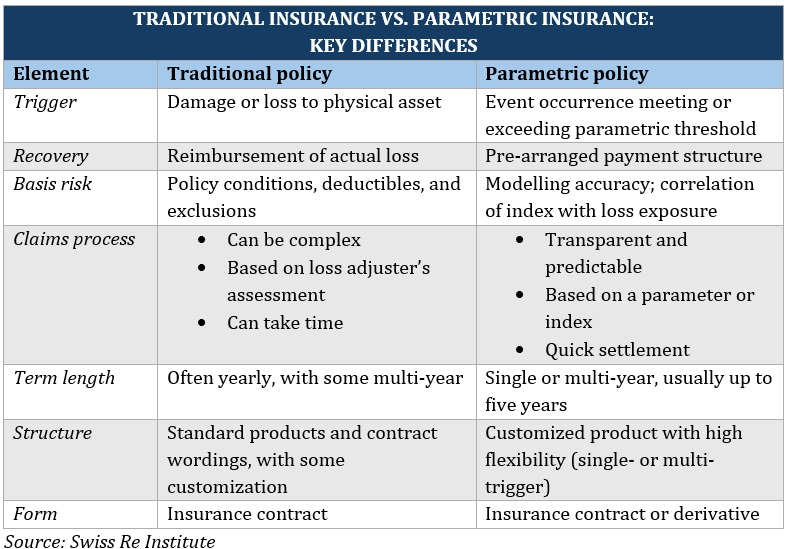
Unlike conventional indemnity-based insurance, which pays out based on the actual financial loss incurred (requiring extensive damage assessments and claims processes), parametric insurance operates on a much simpler principle: if a predefined event occurs and reaches a predetermined intensity or threshold, a fixed payout is automatically issued. This straightforward, objective approach cuts through the complexities of traditional claims, offering unparalleled speed and clarity. It’s a financial innovation that moves the focus from quantifying damage after the fact to quantifying the event itself, thus streamlining the entire risk transfer mechanism. For businesses operating in volatile environments or individuals seeking direct, no-fuss protection, understanding parametric insurance is no longer a niche curiosity but a strategic necessity.
The Mechanics Behind Parametric Policies: A Financial Tool Dissected
At its core, parametric insurance simplifies the often intricate world of risk transfer by replacing subjective loss assessments with objective data points. This shift fundamentally alters the contractual relationship and the speed of financial recovery, making it a powerful financial tool.
Defining the Trigger Event
The bedrock of any parametric policy is the clearly defined “trigger event.” This is a specific, measurable parameter that, when met or exceeded, activates the insurance payout. The beauty and power of parametric insurance lie in this objectivity. Instead of assessing “how much damage did this hurricane cause to your property,” a parametric policy might ask, “did the hurricane’s sustained wind speed exceed 120 mph at this specific location?”
These triggers are diverse and can be tailored to an enormous range of risks across various sectors of the economy:
-
Weather-Related Events: For agricultural businesses, triggers could be insufficient rainfall (drought), excessive rainfall (flood), or temperature extremes affecting crop yields. For coastal businesses or homeowners, it might be hurricane wind speeds, storm surge height, or earthquake magnitude measured by a specific seismic sensor.
-
Market Indices: For financial institutions or businesses exposed to commodity price volatility, a trigger could be a significant drop in a particular stock market index, commodity price, or even a currency exchange rate. This allows for hedging against market fluctuations that indirectly impact profitability.
-
Operational Metrics: In logistics, a trigger might be the closure of a critical port for a certain number of days due to a natural disaster. For energy companies, it could be a sustained period of low wind speeds affecting wind farm output.
The key characteristic of these triggers is their objectivity and verifiability. They must be measurable by independent, third-party data sources, leaving no room for subjective interpretation or dispute, which is a major financial advantage.
Predetermined Payouts
Once a trigger event is met or exceeded, the policy dictates a predetermined payout amount. This is another crucial differentiator from traditional insurance. There is no negotiation over the extent of the loss; the payout is fixed based on the intensity of the trigger event or simply whether the threshold was crossed.
For example, a policy might state:
-
If wind speed exceeds 100 mph, payout is $50,000.
-
If wind speed exceeds 120 mph, payout is $100,000.
-
If rainfall is below 50% of the historical average for three consecutive months, payout is $X per acre.
This transparency provides financial clarity and predictability. Policyholders know exactly what they will receive if a trigger is met, aiding in their financial planning and risk modeling. The payout is not intended to perfectly indemnify every single dollar of loss, but rather to provide rapid liquidity to cover immediate costs, lost revenue, or to bridge a financial gap caused by the triggering event.
Data Sources and Verification
The integrity and reliability of the data sources used to monitor the trigger events are paramount to the success and trustworthiness of parametric insurance. These sources must be:
-
Independent: Not controlled by either the insurer or the policyholder, ensuring impartiality.
-
Objective: Based on scientific measurement rather than human assessment.
-
Verifiable: Data should be publicly accessible or auditable.
Common data sources include:
-
Weather Stations: Local, national, or global meteorological networks provide data on wind speed, rainfall, temperature, and humidity.
-
Seismic Sensors: Monitoring earthquake magnitudes and locations.
-
Satellite Imagery and Remote Sensing: For broad-area monitoring of vegetation health, floodwaters, or forest fires.
-
Public Market Data: Stock exchanges, commodity markets, and financial data providers for market-based triggers.
-
IoT Devices: In some advanced applications, Internet of Things (IoT) sensors can provide highly localized data, although their independence and security need careful vetting.
-
Blockchain Technology: Increasingly, blockchain is being explored to create immutable, transparent records of trigger data and automate payout processes via smart contracts, further enhancing trust and efficiency in this financial instrument.
The robustness of these data mechanisms underpins the entire parametric model, transforming it into a highly efficient and trustless financial contract.
Key Advantages in Business Finance and Risk Management
Parametric insurance isn’t just an alternative; it offers distinct financial and operational advantages that make it a compelling choice for businesses and individuals grappling with specific types of risk.
Speed and Efficiency of Payouts
Perhaps the most significant financial benefit of parametric insurance is the unparalleled speed of payouts. Traditional insurance claims can be protracted affairs, often taking weeks or months to process, especially after widespread catastrophic events where adjusters are stretched thin. This delay can be crippling for businesses, leading to cash flow crises, operational disruptions, and even bankruptcy.
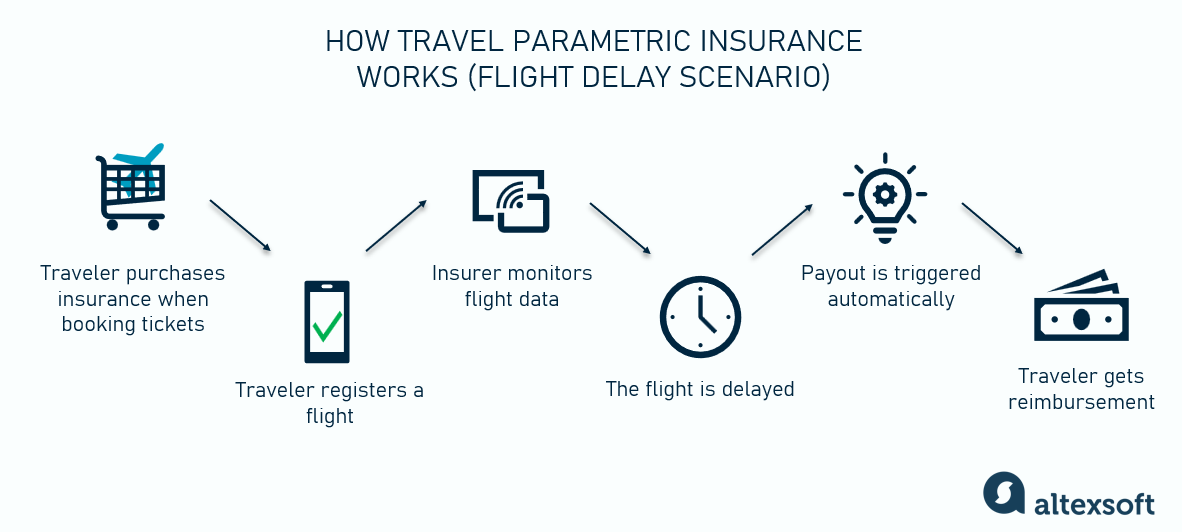
With parametric policies, once the objective data confirms the trigger has been met, the payout is typically processed within days, if not hours. This rapid injection of capital is crucial for:
-
Business Continuity: Enabling quick repairs, restocking inventory, or managing immediate operational expenses.
-
Liquidity Management: Preventing financial distress by ensuring funds are available when most needed.
-
Disaster Recovery: Providing immediate financial relief for individuals or communities to begin rebuilding.

Transparency and Simplicity
The inherent simplicity of “if X happens, you get Y” fosters an unmatched level of transparency. Policy terms are straightforward, and the absence of complex loss adjustments minimizes disputes between the insurer and the policyholder. This clarity makes it easier for financial managers to:
-
Understand Coverage: Precisely what risks are covered and under what conditions.
-
Forecast Cash Flows: With predictable payouts, businesses can better anticipate financial inflows post-event.
-
Administer Policies: Reduced administrative burden for both parties compared to traditional claims.
Covering Uninsurable Risks & Basis Risk Management
Parametric insurance shines in protecting against risks that are difficult or impossible to cover with traditional indemnity policies. These often include:
-
Indirect Losses: Losses that are not directly physical but are a consequence of an event, such as loss of tourist revenue after a hurricane (even if the hotel itself is undamaged) or supply chain disruptions.
-
Emerging Risks: New types of risks where historical loss data is scarce.
-
Systemic Risks: Widespread events like pandemics or market crashes, where traditional insurance might struggle to assess individual losses efficiently.
However, a critical concept associated with parametric insurance is basis risk. This occurs when the payout from the parametric policy does not perfectly align with the actual financial loss incurred by the policyholder. For instance, a policy might trigger a payout based on high wind speed, but the policyholder’s specific damage was primarily from flooding, which wasn’t fully covered by the wind-speed trigger. Or, the payout might be less than the actual damage, or even more. Managing basis risk involves:
-
Careful Parameter Selection: Choosing triggers that are highly correlated with the potential financial losses.
-
Granular Data: Utilizing localized and precise data sources to minimize geographical or temporal mismatch.
-
Policy Stacking: Combining parametric policies with traditional indemnity insurance to create comprehensive coverage.
Understanding and mitigating basis risk is a key consideration in optimizing this financial tool for specific needs.
Budgeting and Financial Planning
For financial departments, parametric insurance offers a distinct advantage in budgeting and financial planning. Premiums are typically clear, and the potential payouts are fixed, allowing for more predictable expense management and revenue forecasting related to risk mitigation. It integrates smoothly into enterprise risk management frameworks, offering a quantifiable and actionable plan for financial resilience against specific threats.
Applications Across Industries: Financial Strategies in Action
The versatility of parametric insurance means its applications span numerous sectors, addressing unique financial vulnerabilities with precision.
Agriculture
Farmers are perennially exposed to weather risks. Parametric crop insurance, based on triggers like rainfall deficits, temperature extremes, or even satellite-measured vegetation indices, provides swift financial relief to cover replanting costs, lost yield, or income stabilization, without the lengthy process of crop loss assessment. This is a critical financial lifeline for a sector with tight margins.
Energy and Utilities
Companies in the energy sector can use parametric policies to hedge against natural phenomena impacting their operations. A wind farm might have a policy triggered by sustained periods of low wind speed, compensating for reduced energy generation. Similarly, utilities can insure against extreme temperatures leading to surges in demand or infrastructure stress.
Tourism and Events
Businesses heavily reliant on favorable weather, such as outdoor event organizers, resorts, or theme parks, face significant revenue loss from adverse conditions. Parametric policies can be triggered by excessive rain, high winds, or low temperatures during critical periods, providing funds to offset lost ticket sales or bookings.
Supply Chain Risk
Modern supply chains are globally interconnected and vulnerable to localized disruptions. A parametric policy could trigger a payout if a key port is closed for more than a specified number of days due to a natural disaster, or if a critical transportation route becomes impassable, providing immediate capital to reroute, expedite, or absorb increased logistics costs.
Catastrophe Bonds and Reinsurance
In the broader financial markets, parametric principles are fundamental to catastrophe bonds (cat bonds) and certain forms of reinsurance. Cat bonds are financial instruments issued to investors, providing coverage for specific natural disasters. If a predefined trigger (e.g., an earthquake of a certain magnitude) occurs, the bond’s principal is used to pay claims, and investors lose their investment. This offers an alternative source of capital for insurers and corporations to manage massive, low-frequency, high-severity risks, effectively transferring risk to capital markets.
Small Businesses and Individuals
Parametric insurance is also becoming accessible for smaller entities and even individuals. For instance, flood insurance based on river gauge levels or hurricane policies triggered by wind speed at a specific location can provide rapid funds for immediate recovery efforts, offering a simpler alternative to complex homeowner claims processes, particularly useful in areas prone to natural disasters where traditional insurance may be expensive or limited.
Considerations and Future Trends in Financial Tools
While revolutionary, parametric insurance is not without its nuances and evolving considerations that financial professionals must weigh.
Basis Risk: The Primary Challenge
As discussed, basis risk remains the most significant consideration. It’s the mismatch between the actual financial loss experienced and the payout received. While strategies exist to mitigate it through careful parameter selection and data granularity, it can never be entirely eliminated. Financial managers must perform a thorough cost-benefit analysis, understanding that the trade-off for speed and simplicity might be a less-than-perfect correlation with actual financial damages. The value often lies in the liquidity provided when it’s needed most, rather than absolute dollar-for-dollar indemnification.
Cost-Benefit Analysis and Customization
When evaluating parametric insurance, businesses need to assess whether the benefits of rapid payouts, transparency, and coverage for indirect losses outweigh the potential for basis risk. This requires a deep understanding of their specific financial vulnerabilities and the correlation between the chosen triggers and their potential losses. The increasing sophistication of data analytics allows for highly customized policies, where triggers and payout structures are meticulously designed to align with a policyholder’s unique risk profile and financial needs, optimizing the financial protection.
Technological Advancements and Financial Innovation
The future of parametric insurance is intrinsically linked to technological advancements.
-
AI and Machine Learning: These technologies are revolutionizing the selection of triggers by identifying complex correlations between events and losses, leading to more accurate and less prone-to-basis-risk policies. AI can also enhance predictive modeling, allowing for more precise risk pricing.
-
Blockchain and Smart Contracts: The use of blockchain to record immutable data and smart contracts to automate payouts can further enhance trust, transparency, and efficiency. Once the trigger condition is met and verified on the blockchain, the smart contract can automatically release funds, eliminating human intervention and accelerating the financial transaction. This positions parametric insurance as a leading edge of FinTech.
-
Satellite and IoT Data: The proliferation of high-resolution satellite imagery and connected IoT sensors provides an ever-increasing array of objective, localized data sources, allowing for even finer-tuned triggers and broader application of parametric models.
Growing Market Adoption
The market for parametric insurance is experiencing significant growth. Corporations, governments, and even NGOs are increasingly recognizing its value for managing complex risks, especially in the face of climate change and increasing natural disaster frequency. It’s being adopted as a complementary financial tool alongside traditional insurance, creating a hybrid risk management approach that leverages the strengths of both. Furthermore, its potential for developing nations and vulnerable communities, offering rapid humanitarian aid tied to specific disaster triggers, underscores its role as an impactful financial instrument for global resilience.
In conclusion, parametric insurance stands as a testament to innovation in the financial sector. By shifting the paradigm from loss assessment to event quantification, it offers a powerful, efficient, and transparent mechanism for risk transfer. As technology continues to evolve and the demand for agile financial solutions grows, parametric insurance is poised to become an even more central component of comprehensive financial planning and risk management strategies across the globe, solidifying its place as an indispensable financial tool for a volatile world.
aViewFromTheCave is a participant in the Amazon Services LLC Associates Program, an affiliate advertising program designed to provide a means for sites to earn advertising fees by advertising and linking to Amazon.com. Amazon, the Amazon logo, AmazonSupply, and the AmazonSupply logo are trademarks of Amazon.com, Inc. or its affiliates. As an Amazon Associate we earn affiliate commissions from qualifying purchases.