
When evaluating the market position of Pandora, one must look beyond the aesthetic appeal of its charms and bracelets to understand the brand’s strategic approach to material sourcing and product differentiation. Pandora has successfully carved out a unique niche in the jewelry industry by democratizing luxury through specific metallurgical choices. By balancing accessible pricing with high-quality components, the company has built a global brand identity centered on the concept of “affordable luxury.” Understanding the composition of their jewelry provides a masterclass in how a brand can leverage product consistency and material transparency to foster deep consumer trust.

The Metallurgical Strategy: Sterling Silver and Gold
At the heart of the Pandora brand strategy lies a commitment to high-quality base metals, most notably sterling silver. Unlike fashion jewelry brands that rely heavily on base metal alloys coated in thin layers of precious metal, Pandora’s core product line is built on a foundation of genuine 925 sterling silver. This decision is a deliberate pillar of their brand identity; it signals value to the consumer while ensuring the longevity of the product.
The Role of 925 Sterling Silver
The term “925” refers to the purity standard of the silver used. It consists of 92.5% pure silver and 7.5% other metals—usually copper—added to increase the strength and durability of the material. By standardizing this blend, Pandora ensures that their charms and bracelets have the necessary structural integrity to withstand daily wear, which is essential for a brand whose primary value proposition is the “collection” of memories via charms.
From a marketing perspective, utilizing sterling silver allows the brand to position itself firmly above costume jewelry while remaining accessible to a broad demographic. This is a critical element of their business model: by using precious metals, they remove the risk of “green skin” or rapid tarnishing associated with low-quality alloys, thereby reinforcing the premium perception of the brand.
14k Gold and Gold Plating
While silver serves as the entry-level anchor, Pandora’s strategic use of gold—both solid 14k gold and their proprietary gold-plated blends—allows them to tier their product offerings. Solid gold remains the gold standard for long-term value, but the brand’s innovation lies in how they market gold-plated items. By using a base of sterling silver and applying a layer of 14k gold, they provide the aesthetic of high-end jewelry at a price point that facilitates impulse purchases and repeat visits. This tiered strategy is a brilliant exercise in product line architecture, ensuring there is an offering for every segment of their target audience.
Material Innovation as a Brand Differentiator
Pandora’s market success is not merely a result of using precious metals; it is the result of constant material innovation. The brand has developed proprietary metal blends that allow them to offer unique color profiles—such as Pandora Rose and Pandora Shine—that competitors cannot replicate. This is a vital component of their brand strategy, as it creates a “moat” around their product line.
Proprietary Metal Blends
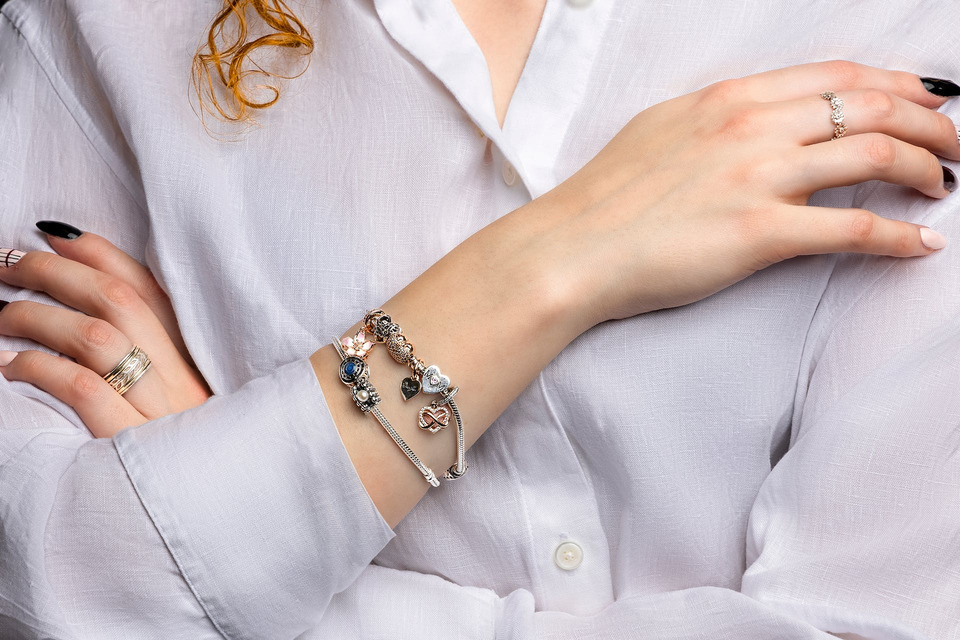
Pandora Rose is perhaps the most notable example of this strategic pivot. By creating a unique blend of copper and silver, plated with a 14k rose gold finish, the brand tapped into a massive trend in the jewelry market. This was not a passive reaction to fashion cycles; it was a proactive move to diversify the product portfolio without abandoning their core manufacturing processes.
By controlling these proprietary blends, Pandora maintains a consistent visual language across all their global stores. Whether a customer is in London, New York, or Tokyo, the “Pandora Rose” or “Pandora Shine” products look and feel identical. This consistency is essential for maintaining brand equity on a global scale. When customers know exactly what they are getting regardless of location, the brand’s credibility increases, turning one-time buyers into loyal brand ambassadors.
Lab-Grown Diamonds and Sustainability
In recent years, Pandora has strategically pivoted toward lab-grown diamonds, a move that aligns perfectly with modern consumer values regarding ethical sourcing and environmental sustainability. By replacing mined diamonds with lab-grown alternatives, Pandora is not only reducing its carbon footprint but also engaging in savvy brand positioning. They are signaling to a younger, more socially conscious consumer base that the brand is forward-thinking and committed to responsible corporate identity.
This shift also addresses the supply chain vulnerabilities inherent in the mining industry. By opting for laboratory-produced stones, the brand gains greater control over quality, quantity, and cost, allowing for better inventory management and more predictable profit margins. This is a strategic masterstroke in supply chain resilience.
Craftsmanship and the Value of Branding
Ultimately, what Pandora jewelry is made of serves as a tangible manifestation of the brand’s promise to its customers. The manufacturing process involves a high degree of hand-finishing, which justifies the premium placed on their items compared to mass-produced, machine-made alternatives.
The Human Element in Manufacturing
A significant portion of Pandora’s marketing narrative focuses on the “hand-finished” nature of their jewelry. Every piece undergoes a multi-step process involving skilled craftspeople who polish, set stones, and check quality. This narrative is crucial for brand differentiation. In a digital age where customers are wary of mass-produced goods, the emphasis on human craftsmanship adds a layer of intimacy and value to the product.
When a consumer buys a Pandora charm, they are not just buying a piece of silver; they are buying into a brand story that emphasizes craftsmanship, personal expression, and durability. The materials serve as the canvas, but the craftsmanship is the paint that brings the brand’s vision to life.
Material Consistency as Customer Retention
The consistency of their materials—the reliability of the 925 silver, the specific hue of their rose gold plating, and the uniformity of their enamel and stone settings—creates a “collectible” ecosystem. Because Pandora products are designed to be compatible across various collections, the material standards must be exact. If the silver quality varied, or if the gold plating hues didn’t match across years, the system would collapse.
By maintaining strict material specifications, Pandora ensures that a charm bought today will fit perfectly on a bracelet bought a decade ago. This creates a high switching cost for the consumer. Once an individual has invested in the ecosystem, they are psychologically and financially committed to continuing their journey with the brand. This strategy is a cornerstone of their long-term customer lifetime value (CLV) initiatives.

Strategic Outlook: Building Value through Transparency
Looking at the materials used in Pandora jewelry reveals a company that understands the delicate balance between product quality and market accessibility. They have avoided the trap of “fast fashion” by ensuring their base materials are durable and high-quality, while simultaneously avoiding the exclusivity of “high jewelry” by offering tiered collections that cater to different economic brackets.
Their transition toward sustainable materials and lab-grown diamonds suggests a brand that is keenly aware of shifting global consumption patterns. As consumers demand more transparency regarding the environmental impact of their luxury goods, Pandora is positioning itself as a leader in ethical jewelry production. By clearly articulating what their pieces are made of—and why they choose those materials—the brand is not just selling jewelry; it is selling a secure and verifiable investment in personal style.
For competitors and industry observers, the Pandora model remains a case study in effective brand architecture. By focusing on a “core and expand” material strategy—starting with the reliable 925 silver and expanding into innovative proprietary blends—they have built a brand that is resilient, scalable, and deeply embedded in the consumer psyche. The materials are the physical proof of the brand’s promise, and in the case of Pandora, that promise is one of consistent quality, emotional value, and strategic relevance in a crowded retail landscape.
aViewFromTheCave is a participant in the Amazon Services LLC Associates Program, an affiliate advertising program designed to provide a means for sites to earn advertising fees by advertising and linking to Amazon.com. Amazon, the Amazon logo, AmazonSupply, and the AmazonSupply logo are trademarks of Amazon.com, Inc. or its affiliates. As an Amazon Associate we earn affiliate commissions from qualifying purchases.