
In the intricate tapestry of modern technology, where precision timing, seamless communication, and automated processes are paramount, a fundamental component often works tirelessly behind the scenes: the oscillator. At its core, an oscillator is an electronic circuit that produces a repetitive, oscillating electronic signal, typically a sine wave or a square wave, without the need for an input signal. It’s a self-sustaining engine of electrical pulses, converting direct current (DC) power from a power supply into an alternating current (AC) signal at a specific frequency. From the quartz crystal ticking inside your wristwatch to the sophisticated signal generators driving satellite communications, oscillators are the rhythmic heartbeat of virtually every electronic system. Their ability to generate predictable, stable frequencies makes them indispensable for timing, synchronization, data transmission, and a myriad of other critical functions that underpin our digital world. Understanding the principles, types, and applications of oscillators is key to appreciating the foundational engineering that powers contemporary technology.
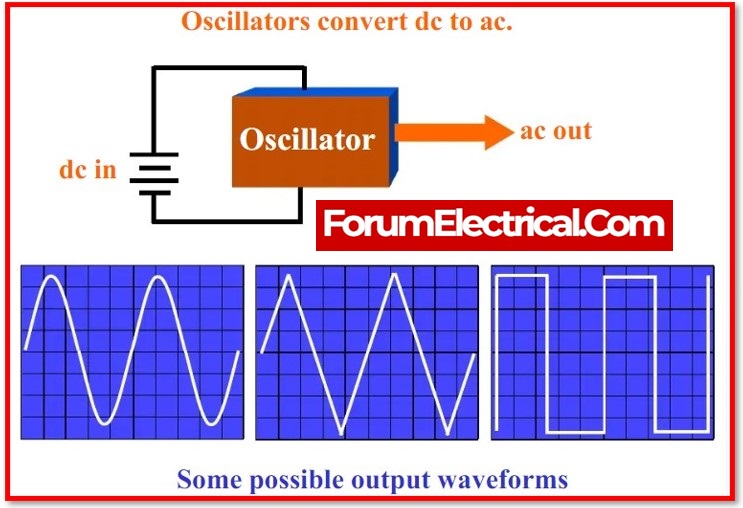
The Fundamental Principle of Oscillation
The essence of an oscillator lies in its ability to create and sustain a continuous, periodic waveform. Unlike amplifiers, which merely boost an input signal, an oscillator generates its own output from scratch. This seemingly magical feat is rooted in two core concepts: positive feedback and resonance.
The Positive Feedback Loop
The bedrock of continuous oscillation is the principle of positive feedback. Imagine a system where a fraction of the output signal is fed back to the input, in phase with the original input. If the gain of the amplifier within this loop is greater than one, and the feedback ensures the signal returns in phase (0° or 360° phase shift), the signal will continuously reinforce itself, growing in amplitude until it’s limited by the power supply rails or the circuit’s intrinsic characteristics. This condition is formally known as the Barkhausen criterion, which states that for sustained oscillation, the loop gain (product of amplifier gain and feedback network attenuation) must be equal to or greater than one, and the total phase shift around the loop must be 0° or an integer multiple of 360°. Without positive feedback, any initial transient noise or signal would simply die out; with it, that tiny initial disturbance is amplified, fed back, and amplified again, quickly evolving into a stable, oscillating waveform.
Energy Conversion and Resonance
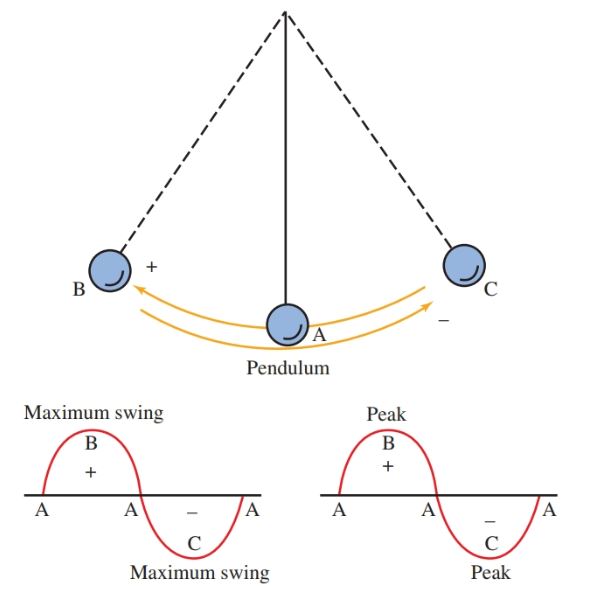
Oscillators are essentially energy converters. They take constant DC power and transform it into dynamic AC energy. This conversion often involves a resonant circuit, which is crucial for determining the frequency of oscillation. A resonant circuit typically consists of reactive components like inductors (L) and capacitors (C), or resistors (R) and capacitors (C). These components store and release energy, creating an electrical “pendulum” that naturally swings at a particular frequency. In an LC (inductor-capacitor) tank circuit, for example, energy oscillates between the magnetic field of the inductor and the electric field of the capacitor. The positive feedback loop in an oscillator replenishes the energy lost in the resonant circuit due to resistance, ensuring that the oscillations are sustained and stable. The natural resonant frequency of this circuit dictates the output frequency of the oscillator, providing the precision needed for countless applications.
Key Types of Oscillators
The diverse landscape of technological applications demands various forms of oscillators, each optimized for specific performance characteristics, frequency ranges, and waveform shapes. These can broadly be categorized into harmonic (sinusoidal) and relaxation (non-sinusoidal) types.
Harmonic Oscillators (Sinusoidal)
Harmonic oscillators are designed to produce smooth, continuous sine waves, often characterized by high spectral purity. These are vital for applications requiring precise frequency control and minimal distortion, such as radio frequency (RF) communications and signal generation.
-
LC Oscillators (Colpitts, Hartley, Clapp): These types utilize an inductor-capacitor (LC) tank circuit as their frequency-determining element. The Colpitts oscillator uses a tapped capacitive voltage divider, while the Hartley uses a tapped inductive divider. The Clapp oscillator is a variation of the Colpitts, adding an additional capacitor in series with the inductor to enhance frequency stability. They are widely used in radio transmitters and receivers, RF signal generators, and other high-frequency applications due to their ability to operate effectively at very high frequencies, sometimes into the gigahertz range. Their primary challenge is maintaining frequency stability against temperature and voltage fluctuations, though careful design can mitigate these issues.
-
RC Phase-Shift Oscillators: As the name suggests, these oscillators rely on resistor-capacitor (RC) networks to provide the necessary 180° phase shift for positive feedback (assuming the amplifier provides the other 180°). They are generally simpler in design and more suitable for lower frequencies, typically below 1 MHz, where large inductors would be impractical. Their primary advantages include simplicity and cost-effectiveness, often finding use in audio applications, function generators, and test equipment.
-
Crystal Oscillators: Among all oscillator types, crystal oscillators are renowned for their superior frequency stability and precision. They leverage the piezoelectric effect of a quartz crystal, which vibrates at a very precise frequency when an electric field is applied. These mechanical vibrations are then converted back into an electrical signal. Because the crystal’s resonant frequency is inherently stable and less susceptible to temperature and voltage variations than LC or RC circuits, crystal oscillators are the preferred choice for timing references in microprocessors, microcontrollers, real-time clocks, and critical communication systems where accuracy is paramount.
Relaxation Oscillators (Non-sinusoidal)
Relaxation oscillators, in contrast to harmonic oscillators, generate non-sinusoidal waveforms like square waves, sawteeth, or triangular waves. They operate by repetitively charging and discharging a reactive component (like a capacitor) until a threshold is reached, triggering a rapid discharge, and the cycle repeats.
-
Multivibrators (Astable, Monostable, Bistable): These are a family of relaxation oscillators. An astable multivibrator continuously generates a square wave or rectangular pulse train, often used as clock generators or simple blinking circuits. A monostable multivibrator (or one-shot) produces a single pulse of a defined duration in response to an input trigger, useful for timing and pulse shaping. A bistable multivibrator (or flip-flop) has two stable states and is a fundamental building block of digital memory, not strictly an oscillator but often discussed within this context due to its state-changing nature.
-
Voltage-Controlled Oscillators (VCOs): VCOs are a critical type of oscillator whose output frequency can be varied by an input voltage. This control voltage directly modulates the oscillation frequency, making VCOs invaluable in applications like frequency modulation (FM) synthesis, phase-locked loops (PLLs), and frequency shift keying (FSK) data transmission. They can be either harmonic (e.g., LC-tuned VCOs) or relaxation (e.g., integrator-based VCOs) depending on the desired waveform and frequency range.
Critical Parameters and Characteristics
Beyond merely generating a signal, the quality and stability of an oscillator’s output are crucial determinants of its utility in technological applications. Several key parameters define an oscillator’s performance.
Frequency Stability and Accuracy
Frequency stability refers to how well an oscillator maintains its intended output frequency over time and under varying environmental conditions. An ideal oscillator would produce a perfectly constant frequency, but in reality, factors like temperature changes, power supply variations, aging of components, and mechanical vibrations can cause the frequency to drift. Accuracy relates to how close the output frequency is to its nominal or desired value. For instance, a crystal oscillator might boast stability in parts per million (ppm) or even parts per billion (ppb), making it suitable for precise timing in digital systems or carrier generation in communication networks where even slight drifts can degrade performance or lose synchronization. Improving stability often involves temperature compensation, voltage regulation, or using high-Q (quality factor) resonant components.
Output Waveform Purity and Harmonics
The purity of an oscillator’s output waveform is particularly important for harmonic (sinusoidal) oscillators. A perfectly pure sine wave contains only its fundamental frequency. However, real-world oscillators often produce harmonics—integer multiples of the fundamental frequency—due to nonlinearities in the amplifier or saturation effects. These unwanted harmonics contribute to waveform distortion and can interfere with other signals in communication systems. Measuring total harmonic distortion (THD) indicates the level of impurity. For non-sinusoidal oscillators, waveform purity is less about harmonics and more about the precision of the edges (for square waves) or the linearity of the ramps (for triangular waves), and parameters like rise time, fall time, and duty cycle become important.
Phase Noise
Phase noise is a measure of the short-term random fluctuations in the phase of an oscillator’s output signal. It appears as a spectral spreading around the fundamental frequency in the frequency domain. Conceptually, it’s like a wobbling or jittering of the signal’s phase. While frequency stability describes long-term average drift, phase noise describes instantaneous, random variations. It is particularly critical in high-frequency applications such as radar, telecommunications, and high-speed data links. High phase noise can degrade signal-to-noise ratio, increase bit error rates, and limit the performance of frequency mixers and modulators. Minimizing phase noise is a major design challenge, often involving careful selection of active devices, optimizing the feedback network, and shielding.
Ubiquitous Applications of Oscillators in Technology
The seemingly simple act of generating a repetitive signal belies the profound impact oscillators have across nearly every sector of modern technology. They are the unsung heroes enabling the synchronous operation and coherent communication that define our digital age.
Communication Systems
Oscillators are absolutely foundational to all forms of electronic communication. In radio transmitters, oscillators generate the carrier frequency onto which information is modulated. In receivers, they act as local oscillators (LOs) in superheterodyne architectures, mixing with the incoming RF signal to produce an intermediate frequency (IF) that is easier to process. Without stable oscillators, precise tuning and demodulation of radio, television, Wi-Fi, Bluetooth, and cellular signals would be impossible. They synchronize data streams, generate timing pulses for networking protocols, and provide the stable references needed for everything from GPS satellites to fiber optic networks, ensuring that information travels accurately and reliably across vast distances.
Computing and Digital Electronics
The beating heart of every computer, microcontroller, and digital circuit is a crystal oscillator acting as the system clock. This clock provides the essential timing pulses that synchronize all operations within the device, dictating when data bits are processed, stored, and moved. From the gigahertz frequencies in a CPU that govern instruction execution speed to the megahertz clocks synchronizing memory access, oscillators ensure that every component works in perfect harmony. They are also crucial for timing circuits, serial communication protocols (like UART, SPI, I2C), and the accurate sampling of analog signals for analog-to-digital conversion. Without these precise timing signals, the complex choreography of digital logic would devolve into chaos, rendering all computational devices inert.
Sensing and Measurement
In the realm of scientific instrumentation and industrial measurement, oscillators are indispensable. They are the core of signal generators used to test other electronic circuits, providing precise waveforms for diagnostics and calibration. In medical devices, high-frequency oscillators power ultrasound transducers, generating sound waves that image internal body structures. Chemical sensors often rely on changes in an oscillator’s frequency due to environmental interactions to detect substances. Even in simpler applications like metal detectors, an oscillator’s frequency shift upon interaction with metal is detected. Their ability to produce stable, controllable frequencies makes them ideal for stimulating systems, acquiring data, and ensuring the accuracy of measurements across diverse fields.
Consumer Electronics
The presence of oscillators extends deeply into the consumer products we interact with daily. Every digital watch and clock owes its timekeeping accuracy to a tiny quartz crystal oscillator. Televisions, audio amplifiers, and media players rely on oscillators for various timing, synchronization, and signal generation tasks. In automotive electronics, they provide the timing for engine control units, infotainment systems, and safety features. From the frequency synthesizers in your car radio to the timing circuits in your washing machine, oscillators ensure that these devices operate precisely, consistently, and reliably, enhancing user experience and functionality.

Conclusion
The oscillator, in its myriad forms and applications, is far more than a simple electronic component; it is a fundamental pillar of modern technology. From generating the precise radio frequencies that carry our voices across continents to providing the rhythmic pulses that orchestrate the complex operations within a microprocessor, its role is indispensable. The relentless pursuit of higher frequency stability, lower phase noise, and greater efficiency continues to drive innovation in oscillator design, reflecting its enduring relevance. As technology evolves, demanding ever-greater precision, speed, and connectivity, the humble oscillator will continue to be a critical building block, quietly empowering the next generation of technological marvels and ensuring the seamless operation of our increasingly interconnected world.
aViewFromTheCave is a participant in the Amazon Services LLC Associates Program, an affiliate advertising program designed to provide a means for sites to earn advertising fees by advertising and linking to Amazon.com. Amazon, the Amazon logo, AmazonSupply, and the AmazonSupply logo are trademarks of Amazon.com, Inc. or its affiliates. As an Amazon Associate we earn affiliate commissions from qualifying purchases.