
In the complex landscape of business operations, particularly within the United States, understanding the mechanisms that govern risk and finance is paramount. Among the many entities that shape this environment, the National Council on Compensation Insurance, universally known as NCCI, stands as a quiet yet powerful cornerstone. For businesses, insurers, and policymakers alike, NCCI is far more than just an acronym; it represents a critical infrastructure for managing one of the most significant financial exposures any employer faces: workers’ compensation.
This article delves into the essence of NCCI, exploring its foundational role, its intricate functions, and its profound impact on the financial stability and operational realities of businesses across the nation. We will unpack how this non-profit organization, rooted in data science and actuarial expertise, contributes to a fair, stable, and sustainable workers’ compensation system, ultimately safeguarding both employers and employees.
Unpacking the National Council on Compensation Insurance
At its core, NCCI is an organization dedicated to the collection, analysis, and dissemination of workers’ compensation insurance data. Operating as a licensed rating and data collection agency, it provides statistical and actuarial support to nearly 40 states and the District of Columbia. Its influence is felt in every premium calculation, every classification code, and every regulatory filing within these jurisdictions.
A Cornerstone of Workers’ Compensation
The concept of workers’ compensation itself is a grand bargain: employees give up the right to sue their employers for workplace injuries in exchange for prompt medical treatment and wage replacement benefits, regardless of fault. Employers, in turn, gain predictable costs for these injuries, protecting them from potentially crippling lawsuits. NCCI plays a vital role in making this bargain work by providing the data and frameworks necessary to price this insurance fairly and accurately.
Without a centralized body like NCCI, each insurance carrier would have to independently collect and analyze vast amounts of data, leading to inconsistencies, potential market instability, and significant inefficiencies. NCCI aggregates data from thousands of insurers, creating a robust dataset that allows for a comprehensive understanding of risk trends, cost drivers, and actuarial projections across diverse industries and geographies. This collective intelligence is then used to develop advisory rates, classification codes, and experience rating modifications, all designed to foster a competitive yet financially sound insurance market.
Historical Roots and Evolution
The origins of NCCI trace back to the early 20th century, a period marked by rapid industrialization and a growing recognition of the need for social safety nets. As individual states began enacting workers’ compensation laws, the nascent insurance industry faced the challenge of pricing this new and complex line of coverage. There was a desperate need for standardized data and actuarial methodologies.
In 1922, NCCI was established by a consortium of insurance carriers to address this need. Its initial mission was clear: to serve as a central statistical agent and rating bureau for workers’ compensation insurance. Over the decades, NCCI’s role has expanded and adapted, evolving with changes in the economy, technology, and regulatory landscapes. From manual data collection to sophisticated predictive analytics, NCCI has consistently remained at the forefront of providing the critical information infrastructure that underpins the workers’ compensation system. It moved from simply collecting data to becoming a significant influencer in policy development and regulatory best practices, all while maintaining its core commitment to data integrity and actuarial soundness.
NCCI’s Core Functions and Data-Driven Insights
NCCI’s work is deeply rooted in the principles of actuarial science and statistical analysis. Its functions are designed to create a transparent, equitable, and stable workers’ compensation market, benefiting both the supply side (insurers) and the demand side (employers).
Data Collection and Analysis
The engine of NCCI is its unparalleled data collection capability. It gathers detailed information on workers’ compensation policies, premiums, and losses from thousands of insurance carriers across its member states. This data includes:
-
Premium Data: Information on the amount employers pay for coverage.
-
Loss Data: Details on injury claims, including medical costs, lost wages, and disability payments.
-
Exposure Data: Information on payrolls, which serves as the primary measure of risk exposure.
This colossal dataset is then subjected to rigorous actuarial analysis. NCCI’s actuaries identify trends, model future claims costs, and assess the impact of various factors (e.g., medical inflation, legislative changes, economic shifts) on the system. This analysis forms the basis for all of NCCI’s subsequent outputs and recommendations. The sheer volume and granularity of this data provide insights that no single insurer could achieve independently, ensuring a comprehensive and robust understanding of risk across the entire workers’ compensation ecosystem.
Rate Filings and Regulatory Support
One of NCCI’s most critical outputs derived from its data analysis is the development and filing of advisory loss costs and proposed rates. In most NCCI states, NCCI files these proposals with state insurance departments, which then review and approve them. While advisory, these loss costs provide a benchmark for insurance carriers to develop their own final rates. Insurers typically use NCCI’s loss costs as a starting point, adjusting them based on their own expenses, profit margins, and specific underwriting strategies.
NCCI also provides invaluable regulatory support to state insurance departments. This includes assisting with policy form development, conducting compliance oversight, and offering expert testimony on actuarial and rating issues. This ensures that state regulations are grounded in sound financial principles and reflective of current market realities. By standardizing policy language and classifications, NCCI helps create a level playing field and simplifies compliance for both insurers and employers.
Classifications and Experience Rating
Two fundamental financial tools that NCCI develops and maintains are its classification system and the experience rating plan.
-
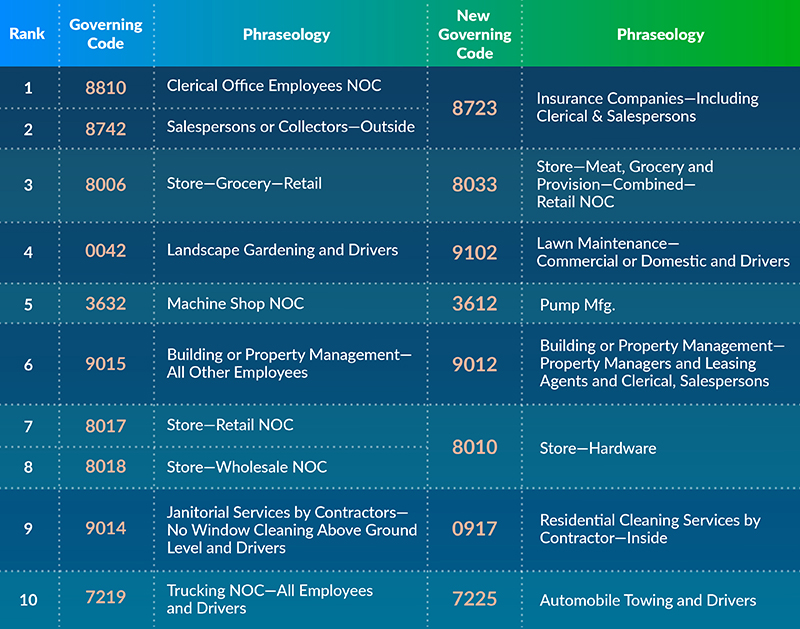
Classification Codes: NCCI assigns specific four-digit classification codes to different types of businesses based on the nature of their work and the inherent risks involved. For example, a clerical office worker will have a different code and associated risk profile than a construction worker or a manufacturing plant employee. These codes are crucial because they directly influence the base premium rate an employer pays. An incorrect classification can lead to either overpaying for insurance or being underinsured, posing significant financial risks. NCCI regularly reviews and updates these codes to reflect changes in industry practices and emerging risks, ensuring the system remains relevant and accurate.
-
Experience Rating: This is a mechanism that modifies an employer’s premium based on their own loss history compared to other businesses of similar size and classification. If a company has a better-than-average safety record and fewer claims, they will likely receive an “experience modification factor” (often called an “e-mod” or just “mod”) below 1.00, resulting in lower premiums. Conversely, a poor safety record leads to a mod above 1.00 and higher premiums. The experience rating system provides a direct financial incentive for employers to prioritize workplace safety, fostering a culture of risk management and ultimately reducing overall workers’ compensation costs for businesses that invest in safety.
The Impact of NCCI on Businesses and Insurers
NCCI’s work has far-reaching implications, creating a more predictable and equitable financial environment for all stakeholders in the workers’ compensation system. Its influence extends from the smallest local business to the largest national insurer.
Ensuring Fair and Stable Workers’ Comp Markets
By providing comprehensive data and actuarial expertise, NCCI helps create a competitive yet stable market for workers’ compensation insurance. Insurers can rely on NCCI’s loss costs and statistical data to develop accurate pricing strategies, preventing undercutting that could lead to insolvencies or overcharging that could burden businesses. This stability benefits employers by ensuring a robust market with multiple carriers, fostering competition and reasonable rates. Without NCCI’s data, pricing would be more speculative, leading to greater volatility in premiums and potential market disruptions, ultimately harming businesses’ financial planning.
Guiding Actuarial Soundness
NCCI is a bulwark of actuarial soundness within the insurance industry. Its rigorous methodologies and unbiased data analysis help ensure that premiums collected are sufficient to cover expected losses and expenses, but not excessive. This balance is critical for the long-term viability of the workers’ compensation system. It protects injured workers by ensuring funds are available for their benefits, and it protects businesses from market failures or sudden, drastic premium increases that could arise from inadequate pricing. NCCI’s work underpins the financial integrity of a system that serves as a vital safety net for millions of workers.
Empowering Employers with Understanding
While NCCI directly serves insurers and regulators, its ultimate benefit flows to employers. By establishing clear classification codes and an objective experience rating system, NCCI empowers businesses to understand how their premiums are calculated and, more importantly, how they can control their costs. A well-managed safety program that reduces claims will directly translate into a lower experience modification factor and, consequently, lower insurance premiums. This transparency allows employers to make informed decisions about workplace safety investments, risk management strategies, and budgeting for their insurance costs. Understanding NCCI’s frameworks enables businesses to be proactive rather than reactive in managing a significant operational expense.
Navigating NCCI: Key Concepts for Stakeholders
For businesses, particularly those managing their own finances and operations, familiarity with NCCI’s core concepts is not merely academic—it’s financially strategic.
Understanding Your NCCI Classification Codes
Incorrect classification is a common and costly error for businesses. Employers must ensure their operations are accurately classified according to NCCI standards. Misclassifying employees or entire operations can lead to paying too much for insurance, or worse, having inadequate coverage that could result in substantial financial liabilities in the event of a claim. Businesses should regularly review their classification codes with their insurance agent or broker, especially if their operations change or expand, to ensure they align with NCCI’s official descriptions and methodologies. Proper classification is the first step in accurate premium calculation and financial forecasting.
The Experience Modification Factor (Mod)
The experience modification factor is perhaps the most direct financial lever an employer has over their workers’ compensation costs. It’s a numerical representation of a company’s past workers’ compensation claims compared to the average for similar businesses.
-
Mod < 1.00: Indicates a better-than-average safety record and results in a discount on premiums.
-
Mod = 1.00: Indicates an average safety record.
-
Mod > 1.00: Indicates a worse-than-average safety record and results in a surcharge on premiums.
Businesses should actively manage their mod by focusing on workplace safety, injury prevention, and effective claims management. Understanding how the mod is calculated, what claims impact it, and how to dispute incorrect claims data are critical components of a sound financial strategy for any employer with an experience-rated policy.
Resources and Compliance
NCCI provides a wealth of resources, including its Basic Manual for Workers’ Compensation and Employers Liability Insurance, which details classification codes, rules, and experience rating plan specifics. While direct access to NCCI’s proprietary tools is often limited to insurers and licensed agents, businesses can work closely with their insurance professionals to understand NCCI’s rules and ensure compliance. Staying informed about NCCI circulars and rule changes can also help businesses anticipate changes that might impact their premiums or risk management strategies. Compliance with NCCI rules and state regulations is not just about avoiding penalties; it’s about ensuring accurate coverage and fair pricing.
The Future of Workers’ Compensation and NCCI’s Role
The world of work is constantly evolving, driven by technological advancements, demographic shifts, and new economic models. NCCI, as a data-centric organization, is uniquely positioned to adapt and guide the workers’ compensation system through these changes.
Adapting to Evolving Workforces and Technologies
The rise of the gig economy, remote work, automation, and new industries presents both challenges and opportunities for workers’ compensation. NCCI is continually researching how these shifts impact risk profiles, injury types, and claim patterns. Its classification system, for instance, must evolve to accurately categorize new job roles and emerging hazards. The rise of mental health claims and long-COVID-related issues also underscores the need for NCCI to incorporate new types of data and analysis into its models, ensuring the system remains responsive to the real-world experiences of workers. This adaptability ensures the financial mechanisms remain relevant in a dynamic employment landscape.
Data Analytics and Predictive Modeling
As data science advances, NCCI continues to enhance its analytical capabilities. The future will likely see even more sophisticated predictive modeling, allowing for more granular risk assessment and potentially more dynamic pricing mechanisms. This could lead to more tailored insurance solutions and greater incentives for proactive risk management. NCCI’s role as an objective data steward will be crucial in ensuring that these advanced analytics are applied ethically and fairly, maintaining the integrity and social purpose of workers’ compensation. Its ongoing investment in technology and data science will solidify its position as a thought leader in the industry.

Sustaining a Vital Safety Net
Ultimately, NCCI’s enduring importance lies in its contribution to sustaining a vital safety net for injured workers while providing financial predictability for businesses. By fostering a data-driven, actuarially sound, and transparent workers’ compensation system, NCCI helps ensure that businesses can manage their risks effectively, and injured workers receive the benefits they deserve. In an economic environment characterized by constant change and increasing complexity, the stable, professional, and insightful guidance provided by NCCI remains an indispensable element of sound business finance and responsible social policy. It is a testament to the power of collective data and expert analysis in creating a more equitable and financially robust system for all.
aViewFromTheCave is a participant in the Amazon Services LLC Associates Program, an affiliate advertising program designed to provide a means for sites to earn advertising fees by advertising and linking to Amazon.com. Amazon, the Amazon logo, AmazonSupply, and the AmazonSupply logo are trademarks of Amazon.com, Inc. or its affiliates. As an Amazon Associate we earn affiliate commissions from qualifying purchases.