
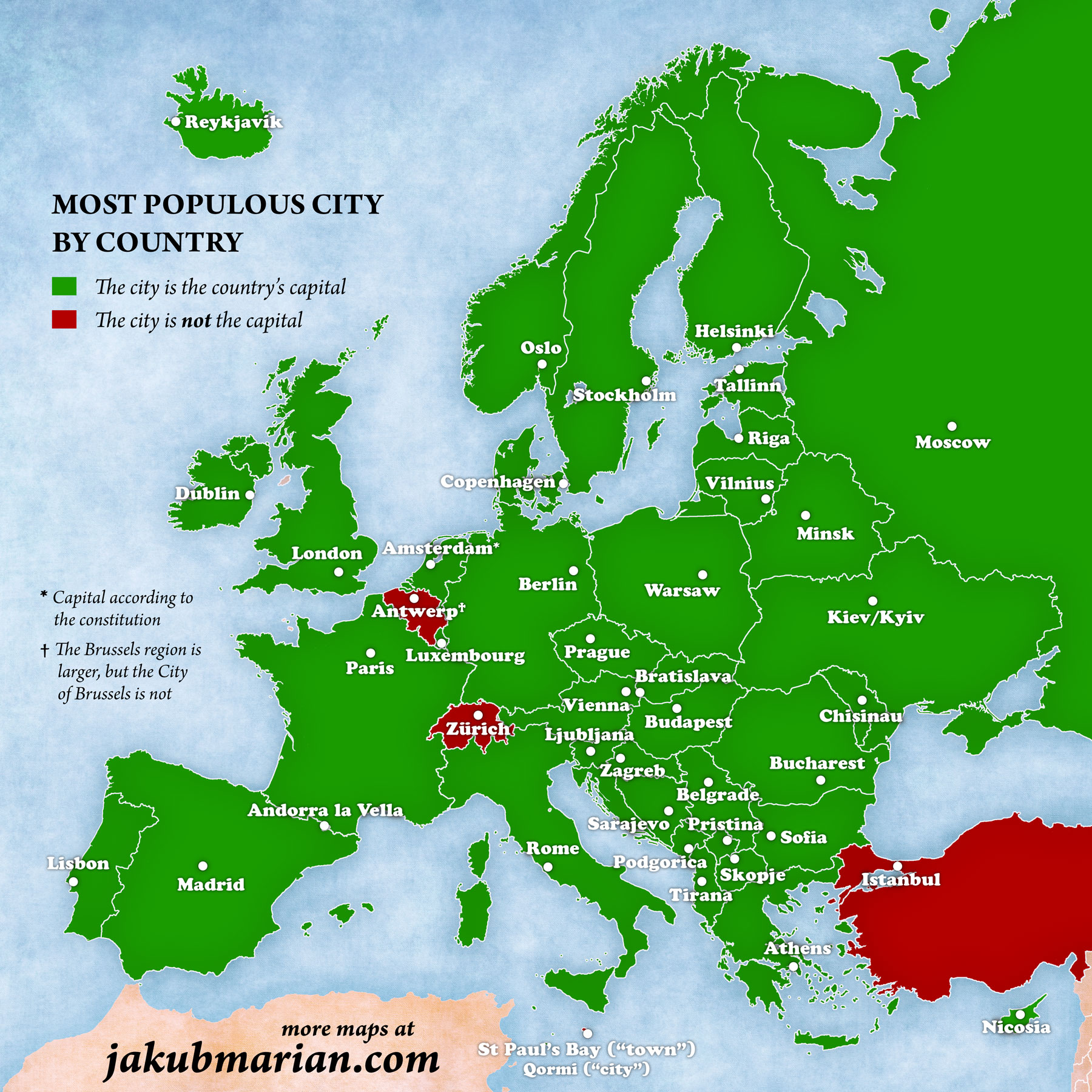
When investors, corporate strategists, and economists discuss the “biggest” city in Europe, they are rarely talking about simple geographic area or raw municipal boundaries. Instead, they are evaluating the concentration of financial capital, the density of corporate headquarters, and the total economic output of an urban agglomeration. Defining the continent’s largest city requires looking beyond traditional map borders to understand the monetary engines that drive the European economy. From a financial perspective, the title belongs to the Greater London area, which continues to function as the primary hub for global capital, banking, and high-stakes investment.

The Financial Dominance of London
London’s status as the financial heart of Europe remains largely unchallenged, even in a post-Brexit landscape. While regulatory shifts have caused some friction in passporting rights for financial services, the sheer density of institutional capital in the city creates an ecosystem that no other European center has yet replicated.
The Role of Institutional Capital
The City of London and Canary Wharf serve as the primary nodes for global investment banking, insurance, and wealth management. When we analyze Europe’s largest city through the lens of Money, we look at the concentration of assets under management (AUM). London serves as the primary gateway for international capital entering the European market. The liquidity available in London’s markets dwarfs that of its continental competitors, such as Paris or Frankfurt. For institutional investors, the “size” of a city is synonymous with market depth—the ability to execute large transactions without significantly impacting asset prices.
Corporate Headquarters and Taxation
From a business finance standpoint, London acts as the primary headquarters for a significant percentage of the FTSE 100 and a vast array of multinational corporations. The city’s infrastructure, despite the complexities of new trade agreements, remains optimized for corporate finance. The tax framework, legal stability, and availability of expert financial services—auditors, tax consultants, and corporate lawyers—create a self-reinforcing loop that keeps capital concentrated within the M25 motorway.
The Continental Challengers: Paris and Frankfurt
While London holds the title for total financial volume, other cities operate as specialized financial hubs that command significant portions of Europe’s economic activity. Analyzing these cities provides a clearer picture of how wealth is distributed and managed across the continent.
Paris: The Hub of European Equity and Luxury
Paris has seen a significant uptick in its financial relevance, particularly in the wake of the UK’s departure from the European Union. In terms of corporate identity and marketing-led business growth, Paris has successfully positioned itself as the premier hub for the European luxury sector and private equity. For investors focusing on European retail and high-end manufacturing, Paris is the essential financial address. The city’s ability to attract international talent and consolidate European equity markets makes it a formidable secondary giant in the financial landscape.
Frankfurt: The Engine of Monetary Policy
Frankfurt’s financial weight is anchored by the European Central Bank (ECB) and the dominance of the German banking sector. If London is the center of global trading, Frankfurt is the center of the continent’s monetary stability. For those involved in business finance, Frankfurt represents the nexus of institutional lending and industrial financing. The city’s influence is felt most strongly in the debt markets and the financing of Europe’s heavy industry, making it an indispensable player in the continent’s financial hierarchy.
Quantifying Urban Economic Power
When defining the “biggest” city through an economic lens, analysts rely on metrics such as GDP per capita, disposable income, and the volume of venture capital investment. These figures reveal the true prosperity of a city and its potential for long-term financial growth.
GDP Output and Purchasing Power
London’s GDP significantly outperforms most other European metropolitan areas, a testament to its role as a service-oriented powerhouse. When looking at money, we must account for the value-added services that originate in these urban hubs. The professional services sector—finance, consulting, and tech-driven financial services—produces a higher economic multiplier in London than in almost any other city on the continent. This high-output model allows London to maintain its status as the most significant financial center, despite the higher cost of living.
The Rise of Fintech and New Capital Streams
The definition of a “big” financial city is changing as technology disrupts traditional banking. London remains the undisputed leader in European fintech, attracting billions in venture capital annually. This investment is not merely incidental; it represents a fundamental shift in how money is managed, traded, and lent. Investors looking for growth opportunities in the financial sector prioritize cities with the highest density of tech-enabled financial startups. London’s ecosystem of incubators, accelerators, and venture firms ensures that it remains the primary destination for the next generation of financial innovation.
Investment Strategy: Navigating Europe’s Financial Centers
For the individual investor or the corporate entity looking to allocate resources, understanding which city is “biggest” is an exercise in risk assessment and opportunity identification. Each city offers a different profile for wealth creation and financial security.
Real Estate as a Financial Asset Class
Real estate remains the most tangible indicator of a city’s financial health. The property markets in London, Paris, and Frankfurt are major asset classes for global investors. By observing capital flows into these urban real estate markets, one can gauge the confidence that global investors place in these cities. London’s prime residential and commercial real estate markets have historically served as a “safe haven” for capital, further cementing its position as the largest financial hub.
The Impact of Regional Specialization
Business finance strategies today rely on regional specialization. Investors do not simply look for the “biggest” city; they look for the center that best matches their specific financial goals.
- London: Global capital, forex, and high-frequency trading.
- Paris: Private equity, luxury assets, and corporate mergers and acquisitions.
- Frankfurt: Bond markets, interest-rate sensitive instruments, and institutional lending.
By breaking down these cities into their functional roles, it becomes clear that Europe’s “biggest” city is a shifting concept depending on the specific asset class or financial instrument being traded. However, in terms of sheer influence on global financial markets, aggregate capital volume, and the density of corporate financial infrastructure, London maintains a lead that continues to dictate the flow of money throughout Europe and beyond.

Conclusion: The Future of Europe’s Financial Landscape
The title of Europe’s biggest city, when analyzed through the framework of money and finance, is a narrative of resilience and specialization. While regional competitors are gaining ground in specific sectors, the infrastructure of the global financial system remains heavily tilted toward the established hubs. For the professional investor, the primary takeaway is that “size” is not just about geography, but about the concentration of influence. As the financial world becomes more digitized and decentralized, the cities that can maintain a high density of human and financial capital will continue to dictate the direction of the European economy. Whether through the strength of the pound sterling, the influence of the ECB, or the influx of new venture capital, the financial geography of Europe is defined by these core urban centers, with London serving as the primary anchor for the continent’s most significant financial activities.
aViewFromTheCave is a participant in the Amazon Services LLC Associates Program, an affiliate advertising program designed to provide a means for sites to earn advertising fees by advertising and linking to Amazon.com. Amazon, the Amazon logo, AmazonSupply, and the AmazonSupply logo are trademarks of Amazon.com, Inc. or its affiliates. As an Amazon Associate we earn affiliate commissions from qualifying purchases.