
In the vast ecosystem of modern technology, energy storage plays a foundational role. From powering our essential gadgets to sustaining complex industrial systems, the reliability and efficiency of batteries are paramount. Among the diverse array of battery technologies, the “deep cycle battery” stands out as a critical component, uniquely engineered for sustained, long-duration power delivery. Unlike the ubiquitous starting batteries found in automobiles, deep cycle batteries are designed not for a quick burst of high power, but for the arduous task of providing consistent energy over extended periods, enduring repeated cycles of deep discharge and recharge without significant degradation. Understanding this distinction is key to unlocking optimal performance and longevity in numerous technological applications, from renewable energy systems to electric vehicles and remote sensing equipment. This article delves into the technical intricacies, types, and applications of deep cycle batteries, illuminating their indispensable role in today’s power-dependent world.

The Fundamental Difference: Deep Discharge Capability
At its core, the defining characteristic of a deep cycle battery is its ability to withstand repeated deep discharges, often to 50% or even 80% of its total capacity, without suffering detrimental damage to its internal structure or significantly reducing its overall lifespan. This contrasts sharply with starting, lighting, and ignition (SLI) batteries, which are optimized for delivering a large surge of current for a short period, primarily to start an engine, and are intended to be kept fully charged by an alternator.
Cycle Life vs. Starting Power
The design philosophy behind deep cycle batteries prioritizes “cycle life” – the number of charge/discharge cycles a battery can endure before its capacity drops below a certain percentage (e.g., 80% of its rated capacity). To achieve this resilience, deep cycle batteries are constructed with thicker, more robust lead plates and a denser active material on those plates. This structural integrity allows the plates to withstand the mechanical stress of repeated expansion and contraction during discharge and recharge cycles, preventing shedding of active material which is a common failure mode for SLI batteries subjected to deep discharges.
SLI batteries, conversely, use thinner, more numerous plates to maximize surface area, facilitating a rapid chemical reaction necessary for high current output. However, these thinner plates are susceptible to damage from deep discharges, where the lead sulfate crystals that form on the plates can harden and become difficult to convert back to lead and lead dioxide, leading to permanent capacity loss.
How Deep Cycle Batteries Endure
The endurance of deep cycle batteries is a testament to their specialized internal chemistry and mechanical design. When a battery discharges, lead sulfate forms on the plates. In a deep cycle battery, the thicker plates allow for a more uniform and manageable sulfation process. During recharge, these lead sulfate crystals are efficiently converted back, restoring the battery’s charge.
The “Depth of Discharge” (DoD) is a critical metric for deep cycle batteries. It refers to the percentage of the battery’s capacity that has been discharged. While an SLI battery might experience a DoD of less than 5% during a typical car start, deep cycle batteries are engineered for regular DoD of 50%, and in some chemistries, up to 80-100%. Maintaining a higher DoD generally reduces the total number of cycles a battery can achieve, but deep cycle batteries are designed to tolerate these deeper discharges far better than their SLI counterparts, making them indispensable for sustained power applications.
Types of Deep Cycle Batteries
The world of deep cycle batteries is not monolithic; various chemistries and constructions have evolved to meet specific technical requirements and budgetary constraints. Each type offers a unique balance of performance, cost, maintenance, and longevity, making the selection process critical for optimal system design.
Flooded Lead-Acid (FLA) Batteries
Often considered the traditional workhorse of deep cycle technology, Flooded Lead-Acid batteries contain liquid electrolyte (a mixture of sulfuric acid and water) that freely flows around the lead plates.
-
Description: These batteries are characterized by removable caps, allowing users to check and top off electrolyte levels with distilled water, as water is lost during the charging process (gassing).
-
Pros: They are generally the most cost-effective per amp-hour, robust, and tolerant to overcharging, making them a popular choice for budget-conscious applications.
-
Cons: Require regular maintenance (watering, cleaning terminals), release hydrogen gas (requiring ventilation), are sensitive to orientation (must remain upright), and have a lower energy density compared to newer technologies.
-
Applications: Widely used in golf carts, forklifts, basic solar power systems, RVs, and marine applications where cost and performance balance is key.
Sealed Lead-Acid (SLA) Batteries
Sealed Lead-Acid batteries overcome some of the maintenance and safety drawbacks of FLAs by immobilizing the electrolyte. Two primary types exist: AGM and Gel Cell.
AGM (Absorbent Glass Mat)
-
Description: In AGM batteries, the electrolyte is absorbed into fiberglass mats sandwiched between the lead plates. This construction prevents spillage, makes them maintenance-free, and allows for more flexible mounting positions.
-
Pros: Maintenance-free, spill-proof, resistant to vibration, excellent performance in cold temperatures, faster charging than FLAs, lower self-discharge rate, and no gassing under normal operating conditions.
-
Cons: Higher initial cost than FLAs, susceptible to damage from overcharging, and generally less tolerant to extreme temperatures than Gel cells.
-
Applications: Preferred for demanding applications such as high-end RVs, marine vessels, backup power (UPS), power wheelchairs, and advanced solar systems.
Gel Cell
-
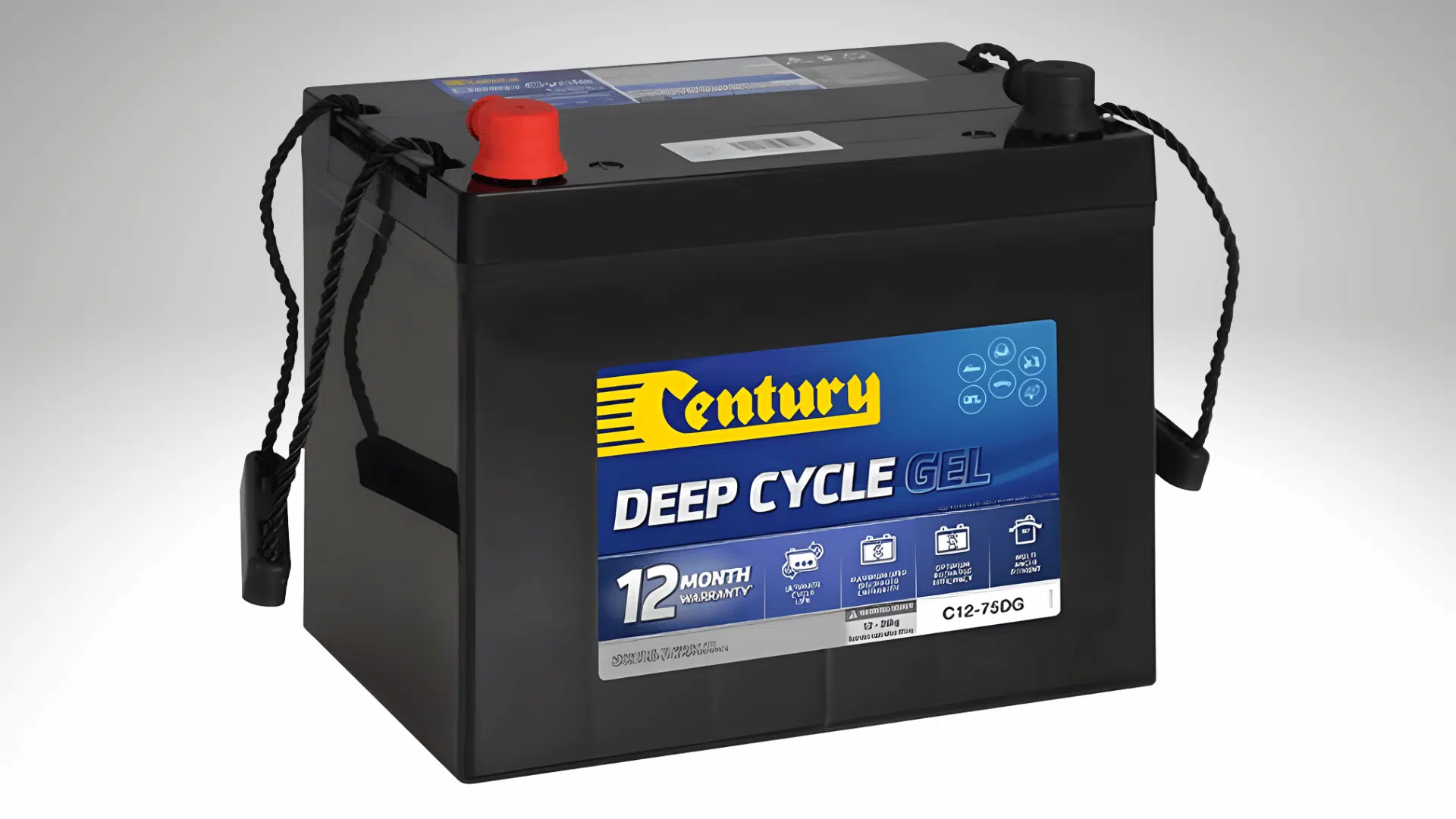
Description: Gel batteries use a silica-based gel to immobilize the electrolyte. This creates a thick, paste-like substance that surrounds the plates.
-
Pros: Highly resistant to vibration and shock, excellent performance in a wide range of temperatures (especially extreme heat), completely spill-proof, very low self-discharge, and can be mounted in any orientation. They are also highly tolerant of deep discharge.
-
Cons: Higher cost than AGMs, slower charging rates (due to the gel impeding ion movement), and generally lower peak current output compared to FLA or AGM.
-
Applications: Ideal for sensitive electronics, medical equipment, remote telecom sites, and applications requiring extreme durability and minimal maintenance, such as cathodic protection systems.
Lithium-Ion (LiFePO4) Deep Cycle Batteries
Lithium Iron Phosphate (LiFePO4 or LFP) batteries represent the cutting edge of deep cycle technology, rapidly gaining prominence for their superior performance characteristics.
-
Description: These batteries utilize lithium iron phosphate as the cathode material, offering a highly stable and safe chemistry. They typically include a Battery Management System (BMS) to protect against overcharging, over-discharging, over-current, and temperature extremes.
-
Pros: Exceptionally long cycle life (often 2,000 to 5,000+ cycles), lightweight, high energy density (more power in a smaller, lighter package), very fast charging capabilities, high continuous power output, deep discharge capability (up to 100% DoD without significant impact), and virtually maintenance-free. They also have a very low self-discharge rate.
-
Cons: Significantly higher initial cost compared to lead-acid technologies. The integrated BMS is essential but also adds to the complexity and cost.
-
Applications: Becoming the go-to choice for advanced solar energy storage, high-performance electric vehicles (e.g., electric boats, RVs), off-grid cabins, portable power stations, and any application where weight, space, long life, and premium performance are critical.
Key Technical Specifications and Considerations
When integrating deep cycle batteries into any technological system, understanding their fundamental technical specifications is paramount. These parameters dictate a battery’s suitability, performance, and longevity in a given application.
Capacity (Amp-Hours – Ah)
Battery capacity is expressed in Amp-Hours (Ah), which indicates how much current a battery can deliver for a specific duration. For example, a 100 Ah battery theoretically can provide 10 amps for 10 hours, or 1 amp for 100 hours. The Ah rating is usually given at a 20-hour discharge rate (C/20). When selecting a battery, designers must calculate the total energy demand of their loads (watt-hours) and divide by the system voltage to determine the required Ah capacity, always factoring in the desired DoD and anticipated autonomy (how long the system needs to run without recharging).
Voltage (V)
Deep cycle batteries are commonly available in 12V configurations, but can also be found in 6V (often for golf carts) or 2V (for large industrial systems). Multiple batteries are often wired in series to achieve higher system voltages (e.g., two 12V batteries in series for a 24V system, or four for a 48V system). Matching the battery bank voltage to the inverter, charge controller, and load requirements is crucial for system efficiency and compatibility.
Depth of Discharge (DoD)
As discussed, DoD is a critical factor for deep cycle battery life. While many deep cycle batteries can withstand significant DoD, consistently limiting discharges to shallower levels (e.g., 50% for lead-acid, 80% for LiFePO4) will significantly extend their overall cycle life. For example, a lead-acid battery rated for 300 cycles at 80% DoD might achieve 1000 cycles at 50% DoD. The application’s demands and the desired lifespan will dictate the practical DoD strategy.
Charge/Discharge Rates
The rate at which a battery is charged or discharged (often expressed as a C-rating, where 1C means discharging the entire capacity in one hour) affects its performance and lifespan. Charging too quickly can lead to overheating and damage, especially for lead-acid batteries. Discharging too quickly can cause a phenomenon known as “Peukert’s Law,” where the usable capacity of a lead-acid battery decreases at higher discharge rates. Lithium-ion batteries generally handle higher charge and discharge rates much more efficiently due to their lower internal resistance.
Temperature Sensitivity
All batteries are sensitive to temperature extremes. Cold temperatures reduce usable capacity and can slow charging. Hot temperatures accelerate internal chemical reactions, leading to faster degradation and a shorter lifespan. Optimal performance and longevity are typically achieved within a specific temperature range, usually around 20-25°C (68-77°F). Modern battery management systems (BMS) in lithium-ion batteries often include temperature monitoring and protection to ensure safe operation.
Applications in Modern Technology
Deep cycle batteries are the silent workhorses behind countless technological advancements, providing reliable power where conventional grid connections are impractical or insufficient. Their ability to deliver sustained energy makes them indispensable across a spectrum of industries.
Renewable Energy Systems (Solar, Wind)
Perhaps the most prominent application of deep cycle batteries is in renewable energy storage.
-
Off-grid and Grid-tied with Backup: For homes and businesses completely disconnected from the main power grid, deep cycle batteries store excess energy generated by solar panels or wind turbines, providing electricity when the sun isn’t shining or the wind isn’t blowing. Even for grid-tied systems, batteries offer crucial backup power during outages, ensuring continuity for critical loads.
-
Energy Storage and Load Leveling: In larger utility-scale applications, deep cycle batteries can store energy during periods of low demand and release it during peak demand, helping to stabilize the grid and maximize the efficiency of intermittent renewable sources.
Electric Vehicles and Marine
The inherent design for sustained discharge makes deep cycle batteries ideal for powering various electric vehicles and marine applications.
-
Golf Carts and Forklifts: These utility vehicles rely heavily on deep cycle batteries to provide the continuous power needed for their daily operations.
-
Trolling Motors and RVs: Electric trolling motors in fishing boats and house batteries in recreational vehicles (RVs) depend on deep cycle power to run lights, appliances, and electronic systems for extended periods away from shore power or generators.
Backup Power and UPS Systems
Ensuring uninterrupted power supply for critical infrastructure and sensitive electronics is another vital role for deep cycle batteries.
-
Uninterruptible Power Supplies (UPS): In data centers, hospitals, and telecommunications facilities, deep cycle batteries are at the heart of UPS systems, providing instantaneous backup power during grid fluctuations or outages, allowing for orderly shutdown or seamless transition to generator power.
-
Emergency Lighting: Public buildings and industrial facilities utilize deep cycle batteries to power emergency lighting systems, ensuring safety during power failures.
Portable Electronics and Remote Devices
For applications requiring power in isolated or mobile settings, deep cycle batteries offer reliable solutions.
-
Remote Sensors and Telecommunications Equipment: Weather stations, environmental monitors, and remote cellular towers often use deep cycle batteries, coupled with small solar panels, to operate autonomously for extended periods.
-
Portable Power Stations: Growing in popularity, these units integrate deep cycle batteries (increasingly LiFePO4) to provide portable AC/DC power for camping, tailgating, emergency preparedness, and remote work.
Conclusion: The Enduring Role of Deep Cycle Technology
The deep cycle battery, with its specialized engineering for sustained, repeated discharges, is far more than just a power source; it is an enabler of modern technological independence and resilience. From the robust, traditional flooded lead-acid systems that power golf carts to the sophisticated, lightweight lithium-ion solutions driving advanced renewable energy grids and electric vehicles, deep cycle technology underpins a vast array of applications that demand reliable, long-lasting energy storage.
As technology continues to evolve, especially in the realms of renewable energy and electrification, the importance of efficient and durable energy storage solutions will only grow. Future innovations will likely focus on further enhancing energy density, reducing costs, improving charging speeds, and integrating more intelligent battery management systems. However, the fundamental principle of the deep cycle battery – designing for endurance against repeated deep discharges – will remain a cornerstone. Understanding “what is deep cycle” is not merely grasping a technical definition; it is recognizing a critical component that empowers our increasingly power-dependent world to operate with greater efficiency, reliability, and autonomy. Choosing the right deep cycle battery for a specific technological need is an investment in the longevity and performance of the entire system it powers.
aViewFromTheCave is a participant in the Amazon Services LLC Associates Program, an affiliate advertising program designed to provide a means for sites to earn advertising fees by advertising and linking to Amazon.com. Amazon, the Amazon logo, AmazonSupply, and the AmazonSupply logo are trademarks of Amazon.com, Inc. or its affiliates. As an Amazon Associate we earn affiliate commissions from qualifying purchases.