
In an increasingly interconnected and complex world, the specter of Chemical, Biological, Radiological, and Nuclear (CBRN) threats looms large. From the battlefield to urban centers, the potential for intentional attacks or accidental releases involving these agents represents a critical challenge to global security, public health, and economic stability. Understanding “what is CBRN” transcends mere definition; it necessitates a deep dive into the nature of these threats and, crucially, the sophisticated technological solutions developed to detect, protect against, and respond to them.
CBRN refers to a category of unconventional weapons and incidents that pose catastrophic risks due to their capacity for mass casualties, widespread contamination, and long-term societal disruption. These threats can originate from state actors, non-state groups, or even industrial accidents, demanding a multi-faceted approach to preparedness. While the danger is inherent in the agents themselves, humanity’s primary defense lies in its ingenuity—the relentless pursuit and application of cutting-edge technology. This article explores CBRN through the lens of technology, highlighting the innovations that form the bedrock of modern defense and security against these formidable hazards.

The Core Components of CBRN Threats and Technological Countermeasures
Each element within the CBRN acronym presents unique challenges, demanding specialized technological responses. The development and deployment of these technologies are paramount in building resilient defense and response capabilities.
Chemical Threats: Detection and Decontamination Tech
Chemical agents are toxic substances designed to incapacitate, injure, or kill. They can be gases, liquids, or solids, and their effects can range from immediate and lethal to delayed and debilitating. Historically, agents like nerve gases (e.g., Sarin, VX), blister agents (e.g., Mustard Gas), choking agents (e.g., Phosgene), and blood agents (e.g., Hydrogen Cyanide) have been used in warfare and terrorism, demonstrating their horrific potential.
The technological response to chemical threats focuses primarily on rapid detection, precise identification, and effective decontamination.
-
Detection Technologies: The first line of defense is often early warning. Portable, handheld chemical detectors using technologies such as Ion Mobility Spectrometry (IMS) can rapidly identify chemical vapors in the air. More advanced systems integrate Gas Chromatography-Mass Spectrometry (GC-MS) for definitive identification of complex mixtures. Remote sensing capabilities, like Fourier Transform Infrared (FTIR) spectroscopy, allow for standoff detection of chemical clouds from a safe distance, often mounted on vehicles or drones. Sensor networks, deployed strategically in vulnerable areas, provide continuous monitoring and early alerts, often leveraging AI and machine learning algorithms to differentiate between benign industrial chemicals and hazardous agents.
-
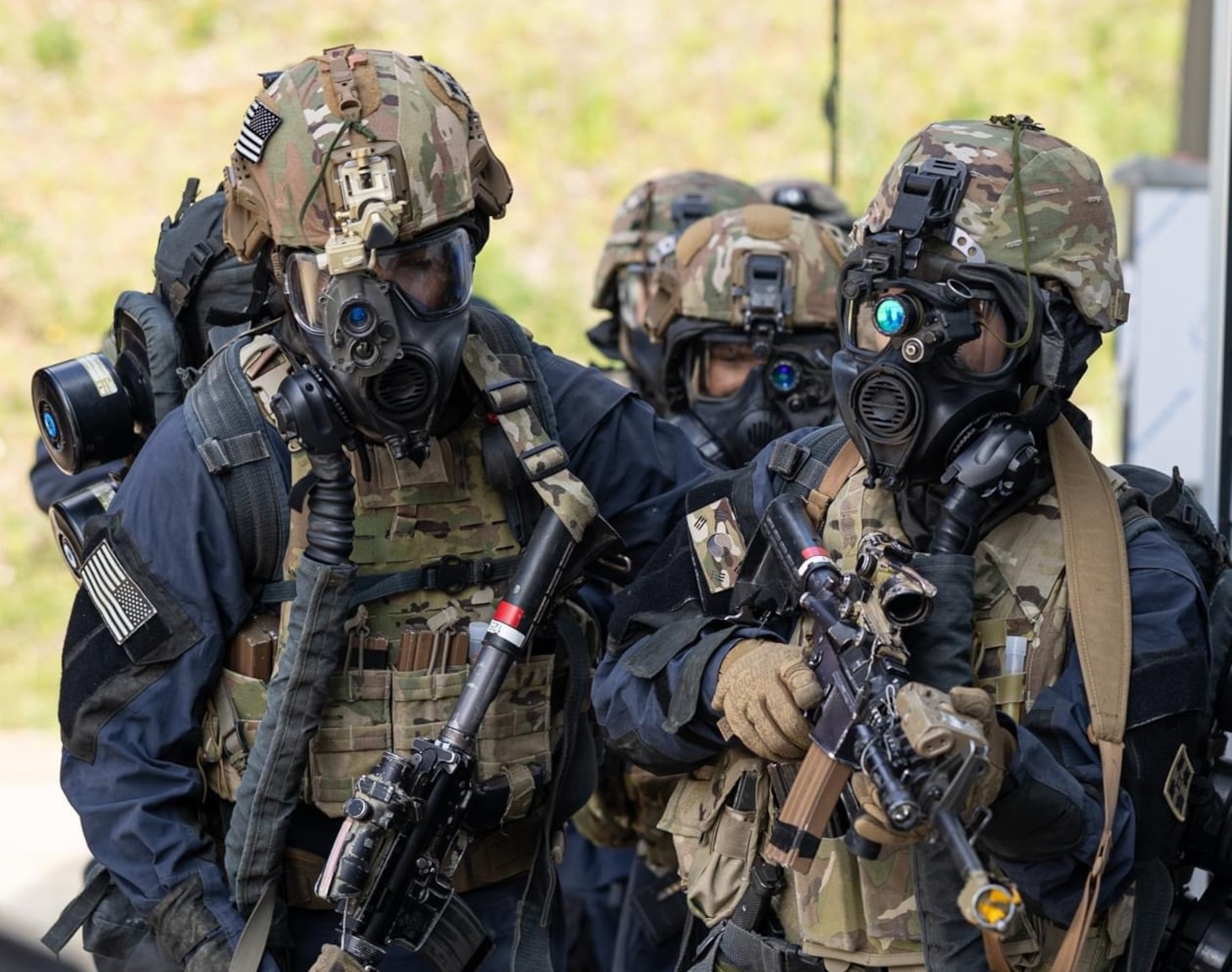
Protection and Decontamination: Personal Protective Equipment (PPE) for chemical threats has evolved significantly, incorporating advanced filtration systems in respirators and impermeable materials in suits to block agent penetration while allowing for breathability and mobility. For wide-area or personnel decontamination, technologies include specialized sprays and foams that chemically neutralize agents, often incorporating nanotechnology for improved penetration and efficacy. Robotic systems are increasingly utilized for reconnaissance and initial decontamination in highly contaminated zones, minimizing human exposure. Furthermore, research into bioremediation agents (e.g., enzymes) offers environmentally friendly alternatives for breaking down persistent chemical contaminants.
Biological Threats: Early Warning and Medical Tech
Biological agents are living organisms or toxins produced by them, intended to cause disease or death in humans, animals, or plants. These include bacteria (e.g., Anthrax, Plague), viruses (e.g., Smallpox, Ebola), and toxins (e.g., Botulinum Toxin, Ricin). Biological attacks are particularly insidious because of their potential for silent spread, incubation periods, and the difficulty in distinguishing them from natural disease outbreaks.
Technological advancements in biosurveillance, diagnostics, and medical countermeasures are critical in combating biological threats.
-
Early Warning and Diagnostics: Syndromic surveillance systems continuously monitor public health data (e.g., emergency room visits, pharmacy sales) for unusual patterns that might indicate an emerging biological threat. Genomic sequencing technologies enable rapid identification and characterization of pathogens, differentiating engineered strains from naturally occurring ones. Portable, rapid diagnostic kits, utilizing technologies like Polymerase Chain Reaction (PCR) and immunoassay techniques, allow for on-site identification of specific biological agents within minutes or hours, significantly speeding up response times. Air and water sampling technologies, integrated with advanced biodetectors, can continuously monitor environments for airborne or waterborne pathogens.
-
Medical Countermeasures: The development of next-generation vaccines and broad-spectrum antivirals/antibiotics is a continuous race against evolving biological threats. CRISPR gene-editing technology holds promise for rapid vaccine development and even therapeutic applications. Telemedicine and remote monitoring platforms become crucial during mass casualty events or pandemics, allowing medical professionals to assess and guide patients remotely, conserving resources and minimizing physical contact. Advanced manufacturing techniques, such as cell culture and fermentation technologies, are pivotal for scaling up vaccine and therapeutic production rapidly in response to a crisis.
Radiological and Nuclear Threats: Monitoring and Protection Systems
Radiological and nuclear threats involve the intentional or accidental release of radioactive materials. A Radiological Dispersal Device (RDD), or “dirty bomb,” combines conventional explosives with radioactive material to spread contamination. A Nuclear weapon attack, while less likely, represents the most catastrophic scenario. Even low-level radiological sources, if mishandled, can pose significant health risks and require extensive cleanup.
Technologies for radiological and nuclear threats focus on detection, dose assessment, and long-term consequence management.
-
Radiation Detection and Monitoring: Geiger counters, scintillation detectors, and spectrometers are essential tools for detecting and identifying radioactive isotopes. Personal dosimeters (e.g., Electronic Personal Dosimeters, Thermoluminescent Dosimeters) provide real-time or cumulative radiation dose information for individuals operating in contaminated areas. Advanced monitoring networks, including fixed detectors at critical infrastructure points and mobile units on vehicles or aircraft, continuously scan for elevated radiation levels. Aerial radiation surveys using helicopters or drones equipped with specialized sensors can quickly map large areas for contamination, aiding in evacuation and cleanup planning.
-
Protection and Consequence Management: While full nuclear blast protection is complex, technologies focus on shielding against radiation and managing fallout. Specialized PPE includes respirators with particulate filters and full-body suits to prevent inhalation and skin contamination. Remote handling systems and robotics are crucial for manipulating highly radioactive materials, minimizing human exposure during cleanup or disposal operations. Consequence management software integrates radiation mapping data, meteorological forecasts, and population demographics to model fallout patterns, predict health impacts, and optimize evacuation routes and shelter-in-place strategies. Research into radioprotectants and decorporation agents (drugs that help remove radioactive materials from the body) continues to advance medical countermeasures.

Advanced Technologies Driving CBRN Preparedness and Response
Beyond the specific technologies for each threat type, several overarching technological trends are revolutionizing CBRN preparedness and response capabilities, fostering greater efficiency, safety, and intelligence.
Robotics and Autonomous Systems in Hazardous Environments
The advent of advanced robotics and autonomous systems has been a game-changer for CBRN operations. These technologies allow responders to gather critical information and perform dangerous tasks without exposing human personnel to hazardous agents.
-
Unmanned Aerial Vehicles (UAVs/Drones): Drones equipped with chemical, biological, or radiological sensors can conduct aerial reconnaissance of contaminated zones, identify hazard plumes, collect air samples, and even spray decontaminants over affected areas. Their ability to access hard-to-reach locations and provide real-time data from a safe distance is invaluable.
-
Unmanned Ground Vehicles (UGVs): Ground robots are deployed for a variety of tasks, including initial entry into hazardous areas, sample collection, explosive ordnance disposal (EOD) in contaminated environments, surveillance, and remote handling of suspicious packages or materials. Advanced UGVs feature enhanced mobility over rugged terrain, sophisticated manipulators, and onboard analysis capabilities, significantly reducing the risk to human operators. The integration of AI-powered navigation and decision-making allows these robots to operate with increasing autonomy, especially in communication-denied environments.
AI, Machine Learning, and Big Data for Threat Intelligence
The ability to process, analyze, and derive insights from vast amounts of data is fundamentally transforming CBRN intelligence and response.
-
Predictive Modeling and Threat Assessment: AI and machine learning algorithms are used to analyze intelligence reports, open-source data, historical incident patterns, and even social media trends to predict potential CBRN threats, identify high-risk areas, and assess the likelihood of different attack vectors. This allows for proactive rather than reactive preparedness.
-
Automated Data Analysis for Early Warning: Sensor networks generate immense volumes of data. AI-powered analytics can quickly process these inputs, filter out false positives, and identify subtle anomalies that might indicate an emerging CBRN incident, providing earlier and more accurate alerts.
-
Decision Support Systems: During a CBRN incident, commanders and emergency managers face immense pressure to make rapid, critical decisions. AI-driven decision support systems integrate real-time sensor data, weather forecasts, population density maps, and resource availability to provide optimal recommendations for evacuation routes, resource allocation, and medical response strategies.
-
Simulation and Modeling: AI-powered simulation tools allow responders to train for various CBRN scenarios in virtual environments, testing response plans, evaluating equipment effectiveness, and refining operational procedures without real-world risk. These models can simulate agent dispersion, casualty rates, and resource strain, providing invaluable insights for strategic planning.
Digital Security and Interoperable Communication Systems
In a world reliant on digital infrastructure, the security and reliability of communication systems are paramount, especially during a crisis.
-
Protecting CBRN Infrastructure from Cyberattacks: Modern CBRN detection systems, sensor networks, and emergency response platforms are increasingly digital and interconnected. This makes them potential targets for cyberattacks designed to disrupt operations, provide false data, or disable critical infrastructure. Robust cybersecurity measures, including encryption, intrusion detection systems, and secure network architectures, are essential to protect these vital systems.
-
Interoperable Communication: Effective CBRN response requires seamless communication and coordination between diverse agencies—military, law enforcement, fire, EMS, public health, and government officials. Interoperable communication platforms that can bridge different radio systems, data networks, and geographic boundaries are critical. Technologies like software-defined radios (SDRs), secure mobile applications, and satellite communication ensure that all stakeholders can share information and coordinate efforts effectively, even when conventional communication infrastructure is compromised. The potential for blockchain technology to create secure, immutable ledgers for sharing sensitive data (e.g., medical records, sensor readings) among authorized parties without a central point of failure is also being explored.
The Future Landscape of CBRN Technology: Innovation and Challenges
The threat landscape is constantly evolving, demanding continuous innovation in CBRN technology. Future preparedness hinges on cutting-edge research and the ability to overcome significant integration and standardization challenges.
Emerging Technologies and Research Frontiers
The horizon of CBRN technology is marked by groundbreaking research promising even more advanced detection, protection, and response capabilities.
-
Next-Generation Biosensors: Research is pushing towards wearable and even implantable biosensors that can detect biological agents or exposure to chemical/radiological threats at a physiological level, providing extremely early warning for individuals. These often leverage nanotechnology for enhanced sensitivity and miniaturization.
-
Advanced Materials for Superior Protection: Scientists are developing smart materials that can self-decontaminate, autonomously detect threats, or adapt their protective properties based on environmental conditions. This includes fabrics for PPE that can neutralize chemical agents on contact or advanced filtration materials with higher efficiency and longer lifespan. Metamaterials are also being explored for radiation shielding applications, offering lighter and more effective protection.
-
CRISPR-Based Diagnostics and Therapeutics: The revolutionary CRISPR-Cas9 gene-editing technology is being adapted for ultra-rapid and highly specific diagnostic tests for biological agents, potentially identifying pathogens in minutes. Furthermore, its therapeutic potential for developing novel antivirals or targeted treatments for bioweapon exposure is a significant area of research.
-
Additive Manufacturing (3D Printing): The ability to 3D print specialized equipment, spare parts, or even custom-fit PPE rapidly on demand is transformative. In a CBRN crisis, this could significantly reduce logistical bottlenecks and ensure responders have the necessary tools quickly.
Integration and Standardization Challenges
Despite the incredible pace of technological advancement, several significant challenges must be addressed for these innovations to be fully effective.
-
Seamless Integration of Disparate Systems: The sheer variety of CBRN technologies from different manufacturers and agencies often leads to incompatible systems and data formats. Achieving seamless integration—where all sensors, communication devices, and software platforms can “talk” to each other—is a persistent challenge but crucial for a unified response.
-
Developing Common Standards: Establishing international and inter-agency standards for equipment, operational procedures, and data exchange is vital to ensure interoperability and effective collaboration during cross-border or multi-agency CBRN incidents. Without these standards, coordination can be severely hampered.
-
Cost and Accessibility: Acquiring, maintaining, and upgrading high-tech CBRN assets is extremely expensive. Ensuring that these advanced technologies are accessible not just to well-funded militaries but also to civilian first responders in diverse economic contexts is a global challenge.
-
Training and Human-Technology Interface: The most advanced technology is useless without skilled operators. Continuous and rigorous training is essential to ensure that personnel can effectively utilize sophisticated CBRN detection devices, robotic systems, and complex software platforms under extreme pressure. Designing intuitive human-technology interfaces is also critical for reducing cognitive load during emergencies.
In conclusion, understanding “what is CBRN” means acknowledging a pervasive and evolving threat that demands constant vigilance and unparalleled technological innovation. From the microscopic world of biological agents to the destructive power of nuclear materials, technology provides the critical edge in detection, protection, and response. The ongoing investment in advanced robotics, artificial intelligence, cutting-edge sensors, and resilient communication systems, coupled with efforts towards integration and standardization, forms the indispensable backbone of modern defense and security strategies aimed at safeguarding populations from these catastrophic hazards. The future of CBRN preparedness will undoubtedly be defined by our ability to continuously leverage technological progress to stay one step ahead of the ever-present danger.
aViewFromTheCave is a participant in the Amazon Services LLC Associates Program, an affiliate advertising program designed to provide a means for sites to earn advertising fees by advertising and linking to Amazon.com. Amazon, the Amazon logo, AmazonSupply, and the AmazonSupply logo are trademarks of Amazon.com, Inc. or its affiliates. As an Amazon Associate we earn affiliate commissions from qualifying purchases.